Prasutagus: Queen Boudicca’s Husband
Prasutagus, known primarily through his connection with the renowned warrior Queen Boudicca, was a significant yet somewhat enigmatic figure in ancient Britain during the Roman occupation.
As the ruler of the Iceni tribe, Prasutagus’s leadership and alliances played a crucial role in the socio-political landscape of first-century Britannia.
In the article below, World History Edu explores Prasutagus’s life, rule, and his pivotal role in setting the stage for one of the most famous revolts against Roman rule, led by his wife, Queen Boudicca.
Background of the Iceni Tribe
The Iceni were a Celtic tribe inhabiting what is now Norfolk and parts of Suffolk and Cambridgeshire in present-day England. Their society was agrarian, structured around a tribal system with local chieftains and a hierarchy that maintained control over resources and territories. The Iceni had their own traditions, language, and social norms that set them apart from the Romans, who viewed them as one of many “barbarian” tribes to be subdued or allied with for the greater expansion of the Roman Empire.
Prasutagus’s Reign
Prasutagus came into power as the king of the Iceni, leading during a time when the Romans were expanding their influence across Britain. His rule was marked by a duality of cooperation and autonomy. Unlike many of his contemporaries, who chose rebellion against the Roman incursion, Prasutagus opted for a strategy of allegiance, which secured a level of autonomy for his tribe.
Roman Alliances and Policy
Prasutagus’s relationship with Rome was complex. The Romans, under Emperor Claudius, had invaded Britain in AD 43, beginning a period of rapid conquest and establishment of client kingdoms. Prasutagus is thought to have become king around this period, aligning himself with Rome as a client ruler.
By maintaining peace with the occupiers, he ensured that the Iceni retained some of their lands, wealth, and internal governance, distinguishing his approach from that of other tribal leaders who were subjugated by Roman military might.
One of Prasutagus’s strategic decisions was to use diplomacy and tribute to secure favor with Rome. This alliance provided a semblance of stability to the region and allowed him to retain his status and the autonomy of his people. Yet, this allegiance was not without strain. Roman taxation policies, land confiscations, and the imposition of Roman laws created tension between the native Britons and the foreign rulers.
READ MORE: Roman Emperors who changed the course of history
Prasutagus’s Will and Legacy
A pivotal point in Prasutagus’s life and legacy was his will. According to Tacitus, the Roman historian, Prasutagus sought to safeguard his family and people by designating Emperor Nero as co-heir to his kingdom along with his own daughters. This decision was intended to curry favor with Rome and protect the Iceni from complete annexation. However, this plan backfired tragically after his death.
Prasutagus’s death, believed to have occurred around AD 60, exposed the fragility of his carefully constructed alliance. The Romans, disregarding the terms of his will, viewed his bequest as an excuse to seize total control of the Iceni lands and assets. This act of betrayal and the subsequent treatment of his family and tribe would ignite the fury of Queen Boudicca and spark a large-scale revolt.
The Context of Roman Betrayal
The Roman Empire’s approach to governance often included the use of client kings as a means of indirect rule, particularly in newly conquered territories.
Prasutagus’s cooperative stance was initially rewarded, but it was ultimately seen by the Romans as an opportunity for exploitation.
Following Prasutagus’s death, Roman officials moved quickly to consolidate power, seizing properties, pillaging resources, and imposing harsh conditions on the Iceni.
The most egregious example of Roman overreach was the treatment of Boudicca and her daughters. The seizure of Iceni lands came with brutal consequences: Boudicca herself was publicly flogged, and her daughters were assaulted. This humiliating and violent act demonstrated Rome’s complete disregard for the local leaders who had sought to coexist with them. It was this flagrant violation of trust that led to the eruption of one of the most significant uprisings in Roman Britain.
Prasutagus and Queen Boudicca
Prasutagus’s legacy is intrinsically tied to that of Boudicca. While Prasutagus himself chose a path of diplomacy, Boudicca became the embodiment of fierce resistance. The betrayal following Prasutagus’s death set the stage for Boudicca’s rise as a leader who would channel the collective rage of the Iceni and other disillusioned tribes into a formidable rebellion.
Boudicca’s revolt, which began in AD 60 or 61, saw the sacking of several Roman cities, including Camulodunum (modern Colchester), Londinium (London), and Verulamium (St. Albans). The scale of destruction was vast, and the revolt initially caught the Romans by surprise. This rebellion marked a turning point in Roman policy towards Britain, demonstrating both the potential volatility of client kingships and the deep-seated resistance of the native population.
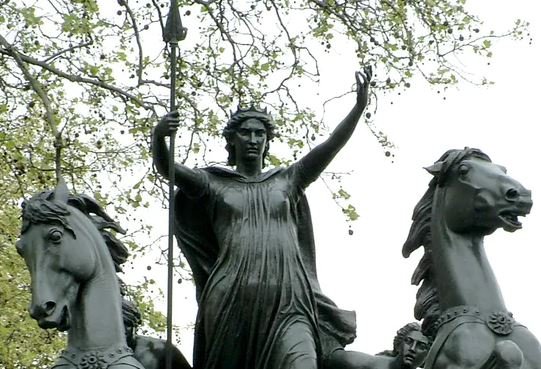
Image: Statue of Boudicca
Impact on Roman Policy
The aftermath of Boudicca’s rebellion led to significant changes in how the Romans managed their provinces. Governor Suetonius Paulinus, who ultimately defeated Boudicca’s forces, employed brutal measures to regain control, but the revolt highlighted the risks of heavy-handed governance. The Roman administration subsequently adopted a more conciliatory approach in some areas to prevent further large-scale uprisings.
Prasutagus’s attempt to balance allegiance with autonomy ultimately provided Rome with both a lesson and a warning. The events following his death showcased the limits of power-sharing arrangements and the explosive potential when such pacts were broken.
The Legacy of Prasutagus
While Prasutagus may not have achieved the same legendary status as Boudicca, his decisions and their repercussions were integral to the narrative of Roman Britain. His approach, characterized by diplomacy and strategic alliances, was ultimately undermined by Roman ambition and avarice. Prasutagus’s legacy is thus one of complex intentions and unintended consequences.
The historical sources on Prasutagus, primarily from Roman accounts such as Tacitus, emphasize the colonial perspective, often casting native leaders in limited or ambiguous roles. Prasutagus’s true character and motivations remain partially obscured by the biases of these accounts. Yet, his legacy lives on as an essential precursor to one of the most dramatic episodes of resistance in Roman history—Boudicca’s revolt.
Conclusion
In understanding Prasutagus, we gain a fuller appreciation of the complexities faced by native leaders under Roman rule. His story is one of attempted diplomacy and the harsh lessons learned when powerful empires breach trust. Though overshadowed by the dramatic narrative of Boudicca’s defiance, Prasutagus’s choices laid the groundwork for a resistance that would resonate through history as a symbol of the fight for freedom and justice.
READ MORE: 8 Major Cities Founded by the Romans
Frequently Asked Questions
What was Prasutagus’s relationship to Boudica?
Prasutagus was the husband of Boudica, the queen who later led a major revolt against Roman rule.
How did the Iceni come under Roman influence?
The Iceni came under Roman influence after the conquest of Britain in 43 AD, when several local kings, possibly including Prasutagus, surrendered to Emperor Claudius.
When might Prasutagus have become king, and why?
Prasutagus might have become king after the Iceni’s failed rebellion against Roman disarmament in 47 AD.
How did Prasutagus maintain peace with the Romans?
Prasutagus maintained peace by fostering a cooperative relationship with Rome, ensuring nominal independence and naming Emperor Nero co-heir to his kingdom alongside his daughters.
What happened after Prasutagus’s death around AD 60 or 61?
After Prasutagus’s death, the Romans ignored his will, seized the Iceni’s lands, and mistreated the royal family, including flogging Boudica and assaulting their daughters.
What were the consequences of the Roman mistreatment of the Iceni?
The mistreatment fueled resentment and led to a large-scale rebellion led by Boudica, resulting in the destruction of major Roman settlements.
What evidence supports the existence of Prasutagus and his era?
Archaeological evidence includes coins found in Suffolk inscribed SVB ESVPRASTO ESICO FECIT, sparking debate about Prasutagus’s true name or identity.
Some scholars believe “Esuprastus” might have been Prasutagus’s true name or a compound title meaning “under Lord Prasto-,” linking it to the god Esus.
How did numismatic evidence reflect changes in Icenian identity?
Coins from the 1st century AD spelled the tribe’s name as ECEN rather than ECE, hinting at shifts in identity and governance during Prasutagus’s reign.
What characterized Prasutagus’s reign?
Prasutagus balanced local autonomy with Roman allegiance, maintaining a delicate relationship that unraveled after his death, leading to the iconic Boudican revolt.