Princess Sitdjehuti of the 17th Dynasty of Egypt
Sijdtjehuti, also known as Satdjehuti, meaning “Daughter of Thoth,” was a significant royal figure in ancient Egypt’s Seventeenth Dynasty. She played a crucial role in the transitional period leading to the New Kingdom. As the daughter of Pharaoh Senakhtenre Ahmose and Queen Tetisheri, she belonged to one of the most influential families in Egyptian history.
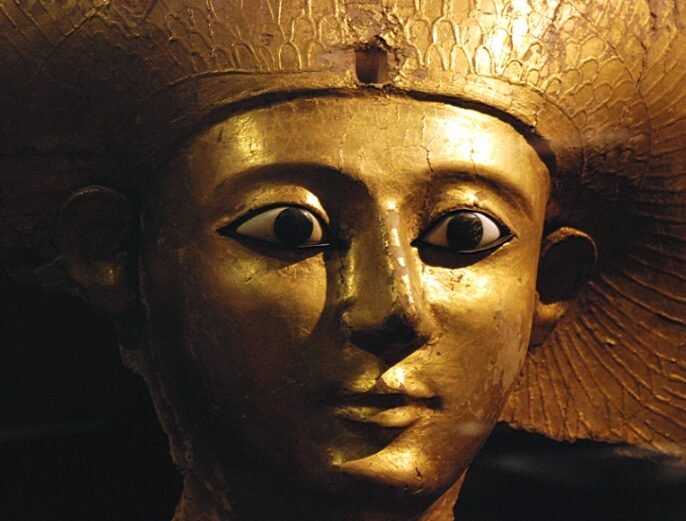
Sitdjehuti stands as a symbol of continuity and resilience in Egyptian history. Her life and legacy bridge the tumultuous period of Hyksos domination and the emergence of the New Kingdom. Image: Queen Sitdjehuti’s sarcophagus lid, housed in Munich’s Staatliches Museum Ägyptischer Kunst, commemorates her as daughter of Senakhtenre and wife of Seqenenre.
Life and Family
Sitdjehuti’s royal lineage and connections cemented her prominence in Egypt’s history. Her sarcophagus identifies her as the daughter of Tetisheri, a matriarch revered for her role in strengthening the Theban royal family. Sitdjehuti was likely the daughter of Pharaoh Senakhtenre Ahmose, making her the sister of Pharaoh Seqenenre Tao and queens Ahhotep and Ahmose Inhapy.
Marriage and Motherhood
Sitdjehuti married her brother (or half-brother) Seqenenre Tao, a common practice among Egyptian royals to preserve the purity of the royal bloodline. Their union produced at least one child, Princess Ahmose. The mummy shroud of Princess Ahmose, discovered in the Valley of the Queens (QV47), confirms her parentage and highlights Sitdjehuti’s role as both Queen and mother.
Royal Titles
Sitdjehuti held several prestigious titles that underscored her royal stature and multiple roles within the family. These include:
Sitdjehuti’s title as King’s Wife appears on the mummy shroud of her daughter, Princess Ahmose. This designation not only highlights her marriage to Seqenenre Tao but also situates her within the royal hierarchy as a queen consort.
The inscription on her sarcophagus names her mother as Tetisheri, aligning her with Pharaoh Senakhtenre Ahmose as her father. This title connects Sitdjehuti to the royal legacy of the Seventeenth Dynasty.
Sitdjehuti’s relationship as a sister to a reigning king is less explicitly documented, but it is presumed to refer to her brother and husband, Seqenenre Tao. This dual role reflects the intertwining familial and political alliances typical of the time.
Death and Legacy
Sitdjehuti lived through the critical period of Egypt’s liberation from the Hyksos and the establishment of the New Kingdom. She likely died during the reign of Amenhotep I (1545–1526 BC) or possibly during Thutmose I’s rule (1526–1513 BC). Evidence suggests she lived to an advanced age, outliving her husband Seqenenre Tao, her brother Ahmose I, and perhaps even Amenhotep I.
Burial Contributions by Ahmose-Nefertari
Her niece, Queen Ahmose-Nefertari, donated fine linen inscribed with her own titles for Sitdjehuti’s burial. The inscription reads:
“Given in the favor of the god’s wife, king’s wife, and king’s mother Ahmose-Nefertari, may she live, so Satdjehuti.”
This gesture reflects the close bonds within the Theban royal family and Sitdjehuti’s revered status.
https://worldhistoryedu.com/list-gods-and-goddesses-ancient-egypt/https://worldhistoryedu.com/list-gods-and-goddesses-ancient-egypt/
Burial Artifacts
Sitdjehuti’s burial was discovered around 1820 and included significant funerary items that highlight her royal status. Among these were her coffin, a golden mask, a heart scarab, and the donated linens.
The lid of her coffin, intricately decorated, is now housed in the Staatliche Sammlung für Ägyptische Kunst in Munich. Her golden funerary mask, showcasing the artistry of the period, is preserved in the British Museum (EA 29770).
Sitdjehuti stands as a symbol of continuity and resilience in Egyptian history.
The style of Sitdjehuti’s burial aligns with early Eighteenth Dynasty traditions, predating the common practices seen under Thutmose I. This transitional style provides valuable insights into the evolving burial customs of the time.
Historical Significance
Sitdjehuti stands as a symbol of continuity and resilience in Egyptian history. Her life and legacy bridge the tumultuous period of Hyksos domination and the emergence of the New Kingdom. Through her roles as a princess, queen, mother, and sister, Sitdjehuti contributed to the dynastic strength that allowed her family to reclaim and expand Egyptian sovereignty.





