Puritan migration to New England (1620–1640)
The Puritan migration to New England from 1620 to 1640, also called the “Great Migration,” involved thousands of English Puritans moving to the American colonies, primarily to the New England area. This wave of emigration was driven by religious motives, as Puritans sought the freedom to practice their faith in a society structured around their religious beliefs. The migration was not just a single movement but rather a series of smaller migrations, each with its own motivating factors and outcomes.
Origins and Religious Motivations
The roots of Puritan migration lay in the religious turmoil in England. Puritans were a Protestant group who felt that the Church of England had not moved far enough away from Catholic practices. They emphasized simpler worship, direct personal relationships with God, and a focus on the Bible. Their Calvinist beliefs, shaped by John Calvin’s teachings, stressed predestination, personal piety, and the rejection of ritualistic practices in church services. This clashed with the established Anglican Church, which maintained certain traditional rituals and was governed by a hierarchy that Puritans opposed.
Puritans desired a reformed version of Christianity with a presbyterian church polity (governance by elected elders rather than a hierarchy of bishops) and sought a church structure they felt aligned more closely with biblical principles.
Their critiques of the Anglican Church intensified under King Charles I, who came to the throne in 1625 and was less tolerant of religious dissent than his father, James I. Charles I and the Archbishop of Canterbury, William Laud, pushed for uniformity in religious practices across England, which the Puritans viewed as a threat to their spiritual ideals. As religious tension rose, Parliament, which had many Puritan members, openly resisted Charles’ efforts to consolidate power and enforce his policies.
In 1629, Charles I dissolved Parliament and began ruling without it, intending to silence Puritan voices and other opposition. Many Puritans felt that England was becoming increasingly hostile to their beliefs, which propelled them to seek freedom in a new land where they could establish a community based on their religious values.

Image: “Pilgrims Going to Church”, an 1867 painting by American painter George Henry Boughton depicting a group of Puritans heading towards a house of worship.
The Founding of Plymouth and Massachusetts Bay Colonies
The initial Puritan migration began with the Pilgrims, a separatist group who were the forerunners of the broader Puritan movement in New England. Having initially fled to the Netherlands, they feared that Dutch culture would erode their English identity, so they arranged to sail to America on the Mayflower. In 1620, they established Plymouth Colony in present-day Massachusetts. Although the Pilgrims’ numbers were relatively small, their success in founding Plymouth encouraged other Puritans to consider the New World as a haven for their religious practices.
The Massachusetts Bay Colony became the focal point of the larger migration wave. In 1629, a group of Puritan investors secured a royal charter to form the Massachusetts Bay Company, allowing them to establish a colony in New England. This charter granted the Puritans significant independence from English oversight. Under the leadership of John Winthrop, a well-connected and influential Puritan lawyer, around 700 settlers sailed on the Winthrop Fleet in 1630 and established the Massachusetts Bay Colony. Winthrop famously envisioned the colony as a “city upon a hill,” an example of Christian virtue for the world to follow.
The Scale and Impact of Migration
The migration picked up momentum throughout the 1630s. Over the decade, roughly 20,000 Puritans migrated to New England. Unlike many settlers in other colonies, Puritans arrived as family groups rather than isolated individuals, intending to establish self-sustaining communities. The Great Migration to New England was part of a broader movement of English emigration during this period, with other emigrants heading to places like Ireland, the West Indies, and the Netherlands.
The New England migrants were mostly middle-class and literate, consisting of farmers, tradespeople, artisans, and merchants. They often came from East Anglia and other regions of England and were generally in stable financial situations. These family-oriented, community-focused settlers aimed to build a cohesive society grounded in Puritan values, with a strong emphasis on education and moral discipline. Their relative prosperity allowed them to establish organized settlements quickly, which was vital for survival in the New England wilderness.
Religion and Governance in Puritan New England
In New England, Puritan settlers developed a society deeply rooted in their religious principles. Church attendance was central to community life, and only church members could participate in the political process. The Puritans practiced a form of direct democracy where male church members elected local leaders, including governors, magistrates, and other officials. While the Puritans sought religious freedom, they did not extend this tolerance to others. Their strict adherence to their beliefs led them to oppose religious practices different from their own, including Anglicanism, Quakerism, and Baptist beliefs. Dissenters faced fines, imprisonment, or even banishment.
Puritan ministers wielded significant influence, and religious doctrines guided many aspects of daily life, from education to law. The community’s emphasis on education led to the establishment of schools to ensure literacy, enabling individuals to read the Bible. This commitment to education also laid the foundation for the first American university, Harvard College, founded in 1636 to train ministers.
Conflicts with Native Americans
Initially, the Puritans had peaceful relationships with Native American tribes, forming alliances with groups such as the Wampanoag. However, as settlements expanded, tensions grew. The Puritans viewed Native beliefs as heathen and aimed to convert Native Americans to Christianity. Furthermore, as Puritans expanded their settlements, they began encroaching on Native land, leading to conflicts.
Two major wars marked the relationship between the Puritans and Native Americans: the Pequot War (1636–1638) and King Philip’s War (1675–1678). The Pequot War involved a coalition of New England colonies fighting against the Pequot tribe, ultimately decimating the tribe and setting a precedent for future hostilities. King Philip’s War was even more devastating, as it involved a large-scale uprising led by Metacom, known as King Philip, who sought to drive out the colonists. The conflict was brutal, with significant casualties on both sides, and it ended with a decisive victory for the Puritans, further expanding their control over New England.
Economic Development and Coinage
The Puritans quickly developed a stable economy based on agriculture, fishing, and trade. Massachusetts Bay Colony became a trading hub, exporting goods such as lumber, fish, and fur. They traded with England, Mexico, and the West Indies, engaging in a barter system and using various currencies, including English pounds, Spanish pieces of eight, and wampum (Native American shell money).
By the 1650s, a currency shortage prompted the colony to issue its own coins, known as the oak tree, willow tree, and pine tree shillings. These coins became some of the earliest currency minted in the American colonies and symbolized the colony’s growing economic independence.
Challenges with England and the Dominion of New England
As the English monarchy reasserted itself following the Restoration of Charles II, tensions arose between the Massachusetts Bay Colony and England. The Puritans resisted English efforts to impose Anglican practices on the colony and had begun to govern with considerable independence. These tensions led to the revocation of the Massachusetts Bay Colony’s charter in 1684. King James II subsequently created the Dominion of New England in 1686, a super-colony that consolidated all the New England colonies under one governor, Sir Edmund Andros. Andros’s rule was unpopular due to his authoritarian style and efforts to restrict the political autonomy of the colonies.
The Glorious Revolution in 1688, which overthrew James II and placed William and Mary on the throne, led to the collapse of the Dominion. In 1691, a new charter was issued for the Province of Massachusetts Bay, merging the Massachusetts Bay Colony with the Plymouth Colony and other territories. This new structure marked the end of the Massachusetts Bay Colony as an independent entity.
Legacy of the Puritan Migration
The Puritan migration to New England left an enduring legacy. The Puritans established many of the political, social, and educational institutions that would influence the future United States. Their emphasis on community governance, literacy, moral discipline, and social order shaped the New England colonies’ culture, which became the foundation of American ideals of hard work, civic duty, and education.
The Puritan vision of a “city upon a hill” resonated beyond their time, influencing later American ideals of exceptionalism and the concept of America as a moral example to the world. Although Puritan religious influence waned over time, their impact on American identity persisted, particularly in New England’s cultural heritage.
Frequently Asked Questions

How did the Puritans travel to New England?
Puritans often traveled in family units rather than as individuals, intending to build communities where they could freely practice their beliefs.
What religious beliefs did the Puritans follow?
Puritans followed Calvinism, emphasizing preaching, personal piety, and simple worship, and they preferred a Presbyterian form of church governance, contrasting with the Church of England’s episcopal structure.
Why did tension between the Puritans and English monarchy grow under King Charles I?
Charles I sought to consolidate power and dissolved Parliament, which included many Puritans. This move limited Puritan influence and increased tensions, prompting some to leave for New England.
Who led a significant phase of Puritan migration in 1630?
John Winthrop led the Winthrop Fleet in 1630, carrying about 700 settlers to the Massachusetts Bay Colony, symbolizing the beginning of a large migration wave.

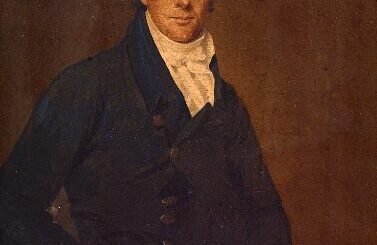
Image: John Winthrop
What happened to migration levels after 1640?
Migration to New England declined sharply after 1640 when Parliament reconvened, and some settlers returned to England to support the Puritans in the English Civil War.
How many people left England during the Great Migration, and where did they go?
Approximately 80,000 people left England during the Great Migration, with around 20,000 going to New England and others going to Ireland, the West Indies, and the Netherlands.
Who were the Puritans migrating to New England?
The Puritans were generally well-educated and financially stable families seeking a new way of life, with nearly half from East Anglia and other English counties.
What was the Puritans’ vision for their society in New England?
The Puritans aimed to establish a “nation of saints” or “redeemer nation,” a morally upright Christian society that could serve as an example for Europe.
Who was Roger Williams, and why was he significant?
Roger Williams was a religious leader who advocated for religious tolerance and separation of church and state. After being banished from Massachusetts Bay, he founded the Rhode Island Colony, promoting religious freedom.
What role did Rhode Island play for religious dissenters?
Rhode Island became a sanctuary for various religious dissenters, including Quakers and those with differing beliefs like Anne Hutchinson, who was expelled from Massachusetts Bay.
Who was Anne Hutchinson, and what happened to her?
Anne Hutchinson was a religious dissenter expelled from Massachusetts Bay for her beliefs. She later found refuge in Rhode Island, which supported religious tolerance.
When did Jewish refugees arrive in Rhode Island, and why?
In 1658, Jewish refugees fleeing the Inquisition in Spain and Portugal settled in Newport, Rhode Island, where they established the congregation known as Jeshuat Israel, now the second-oldest Jewish congregation in the United States.
What legacy did the Puritans leave in New England?
The Puritans’ emphasis on community governance, religious devotion, and strict moral codes influenced American culture, setting a foundation for societal and cultural norms in the United States.