Queen Nefertari
Queen Nefertari, also known as Nefertari Meritmut, was one of the most influential figures of ancient Egypt. As the first Great Royal Wife of Pharaoh Ramesses II (also known as Ramesses the Great), her life was intertwined with Egypt’s political, cultural, and religious development during the 19th Dynasty. Renowned for her beauty, intelligence, and high status, Nefertari’s legacy remains unparalleled.
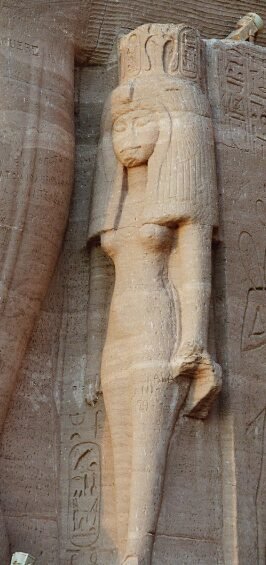
Nefertari beside a colossus of Ramesses II
Early Life and Origins
Nefertari’s lineage is uncertain, and no concrete evidence connects her to earlier royal families. Some scholars speculate a possible connection to Pharaoh Ay of the 18th Dynasty due to artifacts found in her tomb, though this theory remains unproven. Regardless of her origins, she rose to prominence through her marriage to Ramesses II before he became pharaoh, solidifying her position as a central figure in the royal court.
Marriage to Ramesses II

As a wife, mother, diplomat, and cultural figure, Nefertari played a pivotal role in Ramesses II’s reign and Egypt’s prosperity. Image: The colossal statues of Ramesses II at temple Abu Simbel
Nefertari married Ramesses II early in his career, becoming his most beloved consort. Her position as the Great Royal Wife placed her above other queens and consorts, making her a key partner in both governance and ceremonial life. Ramesses II’s deep affection for her is evident in the titles he bestowed upon her, such as “The one for whom the sun shines,” highlighting her importance and cherished status.
READ MORE: Great Royal Wife in Ancient Egypt
Children of Nefertari
Nefertari and Ramesses II had at least six children, including four sons and two daughters. Their eldest son, Amun-her-khepeshef, served as Crown Prince and military leader, while their second son, Pareherwenemef, also joined his father’s campaigns. Another son, Meryatum, was appointed High Priest of Re, underscoring the family’s religious influence. Nefertari’s daughters, Meritamen and Henuttawy, were prominently depicted on monuments, reflecting their royal significance.
Royal Titles and Honors
Nefertari held many prestigious titles, each emphasizing her beauty, grace, and divine favor. Among her most notable titles were “Great of Praises,” “Lady of Grace,” and “Mistress of Upper and Lower Egypt.” These titles reflected her multifaceted role as a queen, religious figure, and political partner. Her epithet, Meritmut, meaning “Beloved of the goddess Mut,” symbolized her divine connection and spiritual significance.
Public Appearances
As the Great Royal Wife, Nefertari was prominently featured in state and ceremonial events. She is depicted alongside Ramesses II in temples and statues, symbolizing her integral role in his reign. At Karnak and Luxor, she participated in significant religious ceremonies, such as the Festival of the Mast, where she led rituals and delivered speeches honoring the gods.

Nefertari depicted offering sistrums to the goddess Hathor in her smaller temple of Abu Simbel
Diplomatic Role
Nefertari’s education set her apart, as she was skilled in reading and writing hieroglyphs—a rare achievement for women of her time. This literacy allowed her to act as a diplomatic liaison. She maintained correspondence with foreign rulers, including Queen Puduhepa of the Hittites, fostering peaceful relations between Egypt and its neighbors. These letters, written in cuneiform, highlight her influence in international diplomacy.
Monumental Legacy
Nefertari’s influence extended beyond her lifetime through the monuments and temples dedicated to her. At Abu Simbel, a smaller temple was built in her honor alongside the great temple of Ramesses II. This extraordinary dedication underscored her elevated status and divine association. Her statues, equal in size to those of Ramesses II, depicted her as both queen and goddess, reflecting her unparalleled prominence.

Temple of Queen Nefertari at Abu Simbel
The Tomb of Nefertari
One of Nefertari’s most enduring legacies is her tomb, QV66, located in the Valley of the Queens. Covering over 520 square meters, it is one of the largest and most elaborately decorated tombs in Egypt. The walls are adorned with vivid paintings depicting her journey through the afterlife and interactions with gods like Hathor and Osiris. These scenes emphasize her grace, spirituality, and hoped-for eternal union with the divine.
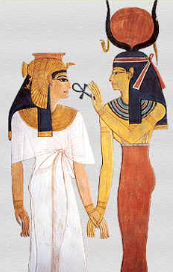
Egyptian goddess Hathor giving an ankh, representing “life”, to Nefertari
READ MORE: Ancient Egyptian Symbols and their Meanings
Artistic Achievements of QV66
The artistry of Nefertari’s tomb is unparalleled, with vibrant colors and intricate details that celebrate her beauty and piety. Unlike many royal tombs, hers does not feature images of Ramesses II, focusing solely on her achievements and spiritual journey. Though the tomb was looted in antiquity, fragments of jewelry and shabti figures remain as a testament to its original grandeur.
Final Years and Legacy
Nefertari’s death likely occurred in the early years of Ramesses II’s reign, as her appearances in monuments become less frequent over time. Despite her relatively short life, her legacy endured through the monuments, art, and records that celebrate her contributions to Egypt’s history. Her prominence in temples, diplomacy, and religious life ensured that she remained a cultural icon long after her death.





