Frequently Asked Questions about the Murder of Rasputin
The assassination of Grigori Rasputin, a Siberian mystic and confidant to Russia’s royal family, is one of history’s most enigmatic events. His significant influence over Tsar Nicholas II and Empress Alexandra made him a controversial figure, especially during the chaotic years preceding the Russian Revolution. Many in Russian high society viewed him as a destabilizing force, leading a group of aristocrats and political figures to conspire to eliminate him. Rasputin’s dramatic death in December 1916 remains steeped in legend and intrigue, highlighting the tensions and turbulence of a collapsing empire.
READ MORE: 10 Most Influential Russian Emperors and Empresses (Tsars and Tsarinas of Imperial Russia)
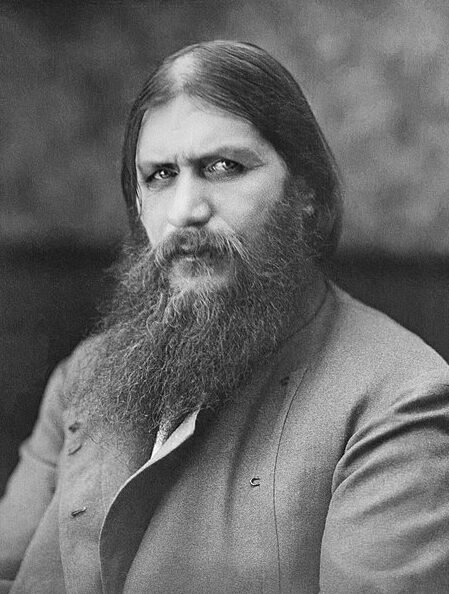
Rasputin’s unchecked influence eventually led to his assassination in December 1916 by members of the nobility. Image: A portrait of Rasputin during the 1910s.
Q&A:
What was Rasputin’s role in the royal family?
Rasputin, a Siberian mystic, gained the trust of Tsar Nicholas II and Empress Alexandra by seemingly alleviating their son Alexei’s hemophilia symptoms. His influence over Alexandra, in particular, extended to political matters, alarming the aristocracy.
Why was Rasputin resented by Russian society?
He symbolized corruption and incompetence during Nicholas II’s reign, becoming a scapegoat for Russia’s struggles in World War I. His closeness to the royal family fueled rumors of immorality and undue influence.
Who orchestrated Rasputin’s assassination?
The plot was led by Prince Felix Yusupov, Grand Duke Dmitri Pavlovich, and Vladimir Purishkevich, who believed his death would save the monarchy and stabilize the empire.

Felix Yusupov
What role did Felix Yusupov play in the murder?
Yusupov planned the assassination and lured Rasputin to his Moika Palace under false pretenses. He later documented the events in his memoirs, though some details remain contested.
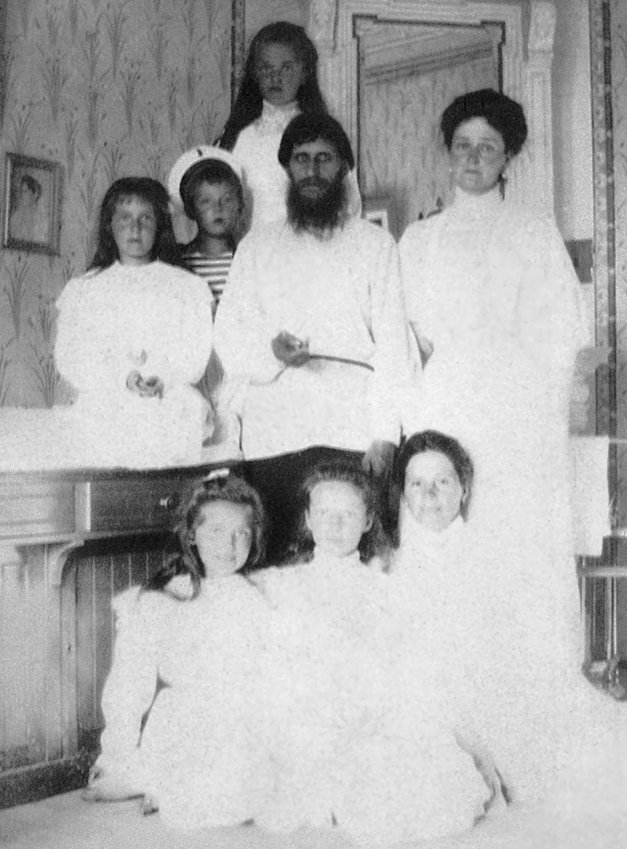
High-profile figures, including Grand Duke Nicholas Mikhailovich and Prince Georgy Lvov, pressured Tsar Nicholas II to distance Rasputin and Alexandra, proposing relocation to Yalta or Britain. However, Alexandra’s steadfast loyalty to Rasputin thwarted these efforts. Image: Empress Alexandra Feodorovna with Rasputin, her children and a governess.
Why was Grand Duke Dmitri Pavlovich significant to the plot?
As a Romanov family member, Dmitri lent legitimacy to the conspiracy. His involvement underscored the desperation within the aristocracy to rid the monarchy of Rasputin’s influence.
How did Vladimir Purishkevich contribute?
A vocal critic of Rasputin, Purishkevich provided ideological backing and represented the broader anti-Rasputin sentiment in the Duma. He also fired the fatal shots as Rasputin attempted to escape.
What were the methods used to kill Rasputin?
The conspirators tried poisoning Rasputin with cyanide-laced cakes and wine, which seemed ineffective. They then shot him multiple times, beat him, and ultimately drowned him in the Neva River.
Was Rasputin alive when thrown into the river?
Forensic evidence suggests Rasputin likely died from gunshot wounds. Myths of his survival stem from his bound hands being partially freed when his body was recovered.
How did the Russian public react to his death?
While some celebrated his demise, others saw it as too late to save the monarchy. Rasputin’s murder deepened the divide between the royal family and society, accelerating unrest.

Grigori Rasputin’s influence over the Russian imperial family, particularly Empress Alexandra Feodorovna, provoked widespread resentment during World War I as Russia faced severe military and social crises. Image: A 1916 caricature of Grigori Rasputin and the imperial couple
What happened to the conspirators after the murder?
Yusupov and Dmitri Pavlovich were exiled but later fled Russia during the revolution. Purishkevich supported the anti-Bolshevik White Army but died in exile.
Did Rasputin’s death prevent the Russian Revolution?
No. The monarchy fell just months after his assassination, with the February 1917 Revolution ending Nicholas II’s reign. The Bolsheviks seized power later that year.
What myths surround Rasputin’s assassination?
Legends claim Rasputin was supernaturally resilient, surviving poison, gunshots, and drowning. Speculations also persist about British intelligence involvement, though no conclusive evidence exists.
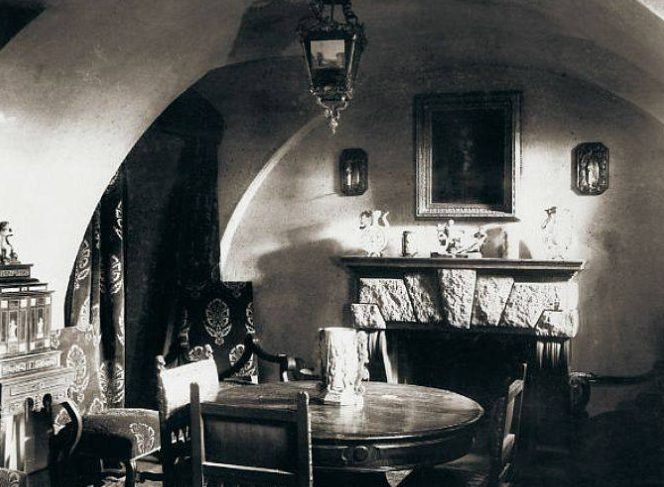
Basement of Yusupov Palace, Moika, St. Petersburg: site of Rasputin’s infamous assassination.
Did you know…?

On 2 November 1916, senior Russian politician Alexander Kerensky, speaking in the Duma, denounced the imperial ministers as “hired assassins” and “cowards,” accusing them of being manipulated by Rasputin, whom he derided as “the contemptible Grishka Rasputin.”
Initially buried near the imperial residence at Tsarskoye Selo, his remains became a target after the February Revolution of 1917. Senior Russian politician and one of the leaders of the February Revolution Alexander Kerensky, ordered Rasputin’s reburial in an unmarked countryside grave.
However, logistical difficulties, including snow and a breakdown of the transport vehicle, led to the incineration of his body in a boiler shop. This decisive act symbolized an attempt to erase Rasputin’s legacy, leaving no physical trace of his controversial presence in Russian history.
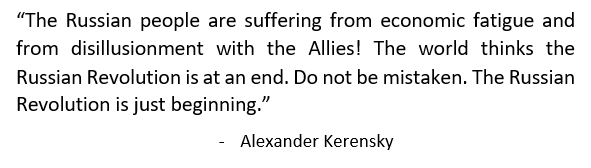
Alexander Kerensky led the short-lived Russian Provisional Government that was overthrown by the Bolsheviks in the October Revolution. The Bolsheviks were led by Vladimir Lenin.
Conclusion
The assassination of Rasputin reflects the desperation and disarray within late imperial Russia. While intended to save the monarchy, his murder instead symbolized the empire’s inevitable collapse, leaving a legacy shrouded in myth and fascination.

Grigori Rasputin