Vladimir Lenin: Life, Russian Revolution, & Death
Regarded by some as one of the greatest revolutionary leaders in modern history, Vladimir Lenin was a significant figure of the twentieth century. Lenin was the first and founding head of government of Soviet Russia after the Czars, serving from 1917 to 1924. He was instrumental in the Russian Revolution of 1917, which led to the end of the Romanov dynasty and the ultimate execution of the Czar’s family.

Vladimir Lenin (1870-1924) led the Bolsheviks during the Russian Revolution and Civil War
Early Life
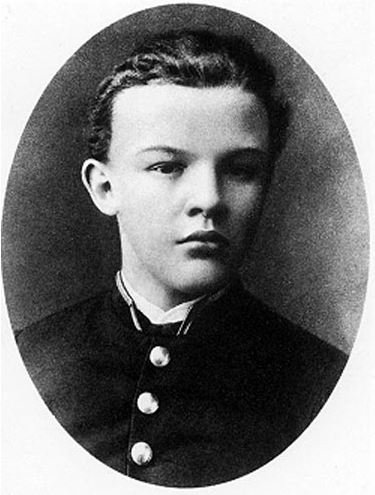
Born Vladimir Ilyich Ulyanov on April 22, 1870, to a middle-class family in Russia, he was the third child in a family of eight. Vladimir’s father was a physics and mathematics teacher who became an inspector of schools. Following in his father’s academic footsteps, young Vladimir excelled in his studies, topping his class in high school.
Although a bright, happy, and active child, Vladimir’s behavior became erratic after his father’s death. He renounced the Russian Orthodox Church, where he was baptized, and began to show signs of radicalization. The family tragedy continued when his older brother, Aleksandr, was arrested and executed in 1887 for attempting to assassinate Russian Emperor Alexander III. This event profoundly affected Vladimir, leading to his expulsion from Kazan Imperial University for participating in an illegal student protest.
Political Radicalization
In 1889, Vladimir became a Marxist after reading Karl Marx’s “Das Kapital.” The following year, he graduated from the University of St. Petersburg with first-class honors. Moving to St. Petersburg, he intensified his activism, leading to his arrest for involvement with the League of Struggle for the Emancipation of the Working Class. Consequently, he was sentenced to three years of exile in eastern Siberia, where he wrote “The Development of Capitalism in Russia.”
After his exile, Vladimir embarked on a Marxist pilgrimage to Switzerland, London, and Germany, during which he penned his influential publication, “What Is to Be Done?” in 1902. During this period, he adopted the name “Lenin” and his Bolsheviks (majority) faction took control of the Russian Social Democratic Labour Party in 1903. The Russo-Japanese War of 1904, resulting in Russian defeats, led to protests and the Military’s massacre of hundreds of protesters in the 1905 Revolution. Lenin’s writings during this time criticized the monarchy and advocated for violent revolution.
Lenin’s Role in the First World War
In August 1914, Russia’s alliance with Serbia, France, and Britain against Germany proved disastrous. Russia’s casualties were immense, resulting in widespread food shortages. Lenin seized the moment to call for an uprising against Czar Nicholas II, advocating for Russia’s defeat in the war to hasten capitalism’s decline. Hoping to destabilize Russia further, the Germans smuggled Lenin back to Russia in a sealed truck, a move famously described by Winston Churchill as transporting Lenin “like a plague bacillus.”
Lenin’s Role in the Russian Revolution

The February Revolution of 1917 saw industry workers strike over food shortages and poor working conditions, leading to Czar Nicholas II’s abdication and the establishment of the Russian Republic. Lenin continued to condemn the government and called for its overthrow. This resulted in a failed coup in August 1917 and the October Revolution, where the Bolsheviks toppled the Provisional Government and formed the Council of People’s Commissars, with Lenin becoming the first leader of a communist state.

Bolshevik Leaders of the Russian Revolution – Image (Left to Right) – Trotsky, Lenin and Lev Kamenev
Lenin’s Government
Initially agreeing to a coalition with other parties, Lenin appointed five representatives from the Mensheviks and Socialist-Revolutionaries to his cabinet. However, by 1918, these opposition members were dismissed, and Russia became a one-party state. Lenin issued several decrees, such as the Decree on Land, nationalizing lands for redistribution to peasants, and the Decree on the Press, which curtailed press freedom. He also enacted the Declaration of the Rights of the Peoples of Russia, leading to the independence of several regions.
Lenin’s government also limited work hours to eight per day, legalized abortion in the first trimester, and prohibited religious instruction in schools. Despite international criticism from Marxist socialists, Lenin’s regime maintained strict control and pursued radical policies.

Vladimir Lenin and Joseph Stalin
Lenin’s Red Terror
Following the 1918 famine, Lenin blamed the “kulaks” (wealthier peasants) and established the Cheka, a secret police force, to seize grain by force, leading to social disorder and clashes. By September 1918, the Red Terror was launched, targeting wealthy citizens and former Tsarist officials, resulting in over 100,000 deaths. Concentration camps were established, imprisoning opponents of the Bolshevik government, with the Russian Orthodox Church suffering significantly.
Russian Civil War
The decrees, famine, and Red Terror sparked anti-Bolshevik activities, giving rise to the White Army. In July 1918, Czar Nicholas II and his family were executed to prevent their rescue by the White Army, which launched a coup in Moscow in August. However, the White Army was defeated by 1920.
Lenin’s Ideology
Lenin’s interpretation of Marxism (sometimes called Leninism) aimed to achieve pure communism, envisioning a stateless and classless society. He believed that a dictatorship was necessary to suppress the affluent and maintain a classless state.
While many scholars acknowledge Lenin as an exceptional revolutionary, they view him as a less successful statesman. Nonetheless, his administration laid the framework for Soviet governance for the next 70 years, making him a polarizing but undeniably significant figure of the 20th century.

Death
Lenin’s health deteriorated over the years, with headaches, hyperacusis, and insomnia plaguing him. He reportedly contemplated suicide, requesting potassium cyanide from Joseph Stalin. After suffering three strokes within ten months, Lenin died on January 21, 1924. Millions braved the cold to pay their respects, and his body remains on display in Lenin’s Mausoleum on Red Square.

Lenin’s Mausoleum, located in Red Square, Moscow, displays Vladimir Lenin’s preserved body since 1924. Designed by Alexey Shchusev, it combines elements from ancient mausoleums and served as a viewing platform for Soviet leaders.
Frequently Asked Questions about Vladimir Lenin

Lenin is one of the most significant figures in modern history, known for leading the Bolshevik Revolution and establishing the foundations of the Soviet state.
What is Lenin best known for?
Lenin is best known for leading the Bolshevik Revolution in 1917, which overthrew the provisional government in Russia and led to the establishment of a communist government. He is also known for his contributions to Marxist theory and his role in founding the Soviet Union.
When and where was Lenin born?
Lenin was born on April 22, 1870, in Simbirsk, Russia (now Ulyanovsk).
What were Lenin’s main contributions to Marxist theory?
Lenin’s main contributions to Marxist theory include the concepts of the vanguard party, imperialism as the highest stage of capitalism, and the dictatorship of the proletariat. He believed in the need for a professional revolutionary party to lead the working class to overthrow capitalism.
How did Lenin come to power?
Lenin came to power through the October Revolution of 1917, where the Bolsheviks, under his leadership, seized key government institutions in Petrograd (now St. Petersburg) and effectively took control of Russia.
What was Lenin’s role in the Russian Civil War?
During the Russian Civil War (1918-1921), Lenin’s leadership was crucial in organizing and directing the Red Army and maintaining the Bolshevik regime against various anti-Bolshevik forces, including the White Army and foreign interventions.

Vladimir Lenin, born Vladimir Ilyich Ulyanov, was a Russian revolutionary, politician, and political theorist. He served as the head of government of Soviet Russia from 1917 to 1924 and of the Soviet Union from 1922 to 1924. Image: Painting of Lenin in front of the Smolny Institute by Soviet painter Isaak Brodsky
What were Lenin’s policies as the leader of Soviet Russia?
Lenin implemented policies such as War Communism during the Civil War, which included the nationalization of industry and the forced requisition of agricultural produce. Later, he introduced the New Economic Policy (NEP) in 1921, which allowed for a limited reintroduction of private trade and small-scale industry to revive the economy.
What happened to Lenin in his later years?
Lenin suffered from a series of strokes beginning in 1922, which gradually incapacitated him. He died on January 21, 1924, at the age of 53.
Where is Lenin buried?
Lenin’s embalmed body is displayed in a mausoleum on Red Square in Moscow, a site that has become a place of pilgrimage for many communist supporters and tourists.

Lenin’s legacy is complex and controversial. He is revered by some as a visionary leader who helped create a socialist state and improve the lives of many people. However, he is also criticized for his authoritarian methods, suppression of political dissent, and the harsh measures taken during the Civil War.