Religion in Ancient India
Religious developments in ancient India were profound and multifaceted, shaping not only the spiritual lives of its people but also influencing the cultural, social, and political landscapes. The period witnessed the birth and growth of several major religious traditions, notably Hinduism, Buddhism, and Jainism, as well as Vedic and later post-Vedic practices. Below is a comprehensive explanation of these developments.
The Early Vedic Period (c. 1500–500 BCE)
The earliest phase of religious development in India is marked by the Vedic period, which began around 1500 BCE with the arrival of the Indo-Aryans. The religion of the Indo-Aryans, commonly referred to as Vedic religion, was based on the Vedas, the oldest scriptures of Hinduism. The four Vedas—Rigveda, Yajurveda, Samaveda, and Atharvaveda—are collections of hymns, mantras, and rituals dedicated to various deities.
Key Features:
Pantheon of Deities: The Vedic religion was polytheistic, with gods representing natural forces like Indra (god of rain and thunderstorms), Agni (fire), and Surya (sun). These gods were worshipped through elaborate rituals, especially fire sacrifices known as yajnas.
Rituals and Sacrifices: Rituals and sacrifices were central to religious practice. The performance of sacrifices, overseen by Brahmins (priests), was believed to maintain cosmic order (rta) and secure prosperity.
Caste System: Religious duties were closely tied to the emerging social structure, particularly the caste system. The Brahmins held the highest status due to their role in performing religious rites.

The Indus Valley Civilization was known for its advanced urban centers with drainage systems, granaries, and public baths. Harappa and Mohenjo-daro are among the most prominent cities.
The Later Vedic Period and Upanishads (c. 800–500 BCE)
During the later Vedic period, religious thought began to shift from external rituals to internal spirituality and philosophical inquiry. This period saw the composition of the Upanishads, texts that explored the nature of reality, the self, and the universe.
Key Features:
Concept of Brahman and Atman: The Upanishads introduced the concept of Brahman (the ultimate reality or universal soul) and Atman (the individual soul). These texts taught that the Atman is identical to Brahman, and realizing this unity leads to liberation (moksha).
Karma and Rebirth: The idea of karma (the moral law of cause and effect) became central. Actions in one life determine the conditions of future lives, leading to a cycle of rebirth (samsara).
Shift to Internalization: Emphasis shifted from external sacrifices to personal meditation and knowledge as means of achieving spiritual liberation.

Agni – Fire god
The Rise of Jainism and Buddhism (6th Century BCE)
By the 6th century BCE, dissatisfaction with the ritualism and the hierarchical structure of Vedic society led to the rise of new religious movements, notably Jainism and Buddhism.
Jainism
Jainism was founded by Vardhamana Mahavira (c. 599–527 BCE), the 24th Tirthankara (spiritual teacher). Jainism rejected the authority of the Vedas and Brahmanical rituals, focusing instead on non-violence and asceticism.
Non-Violence (Ahimsa): Ahimsa, or non-violence, is the core principle of Jainism. Jains practice extreme non-violence towards all living beings, extending to their diet (vegetarianism) and occupations.
Karma and Liberation: Like the Upanishads, Jainism holds that souls are bound by karma and must undergo many rebirths. Liberation is achieved through strict ethical conduct and ascetic practices.
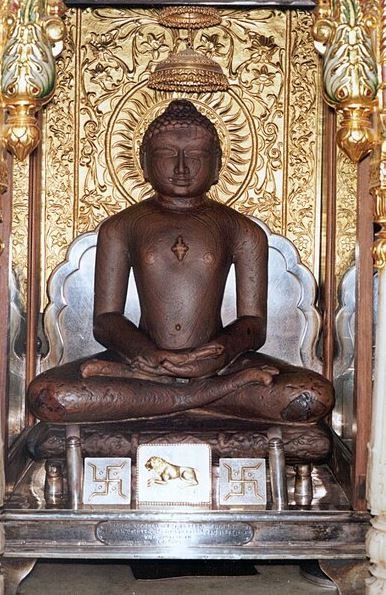
Image: A statue depicting Vardhamana Mahavira.
Buddhism
Buddhism was founded by Siddhartha Gautama (c. 563–483 BCE), known as the Buddha, meaning “the Enlightened One.” Buddhism also arose as a reaction to the ritualism of Vedic religion, emphasizing personal spiritual development and ethical conduct over the authority of the Brahmins.
The Four Noble Truths: The core of the Buddha’s teachings is the Four Noble Truths: (1) life is suffering (dukkha), (2) the cause of suffering is desire (tanha), (3) the cessation of suffering is possible, and (4) the path to cessation is the Eightfold Path, which includes ethical conduct, meditation, and wisdom.
Rejection of Caste System: Unlike Vedic religion, Buddhism rejected the caste system, opening spiritual practice to all, regardless of social standing.
Spread of Buddhism: The simplicity of Buddhist teachings and its emphasis on compassion led to its rapid spread across India and beyond, especially under the patronage of Emperor Ashoka in the 3rd century BCE.
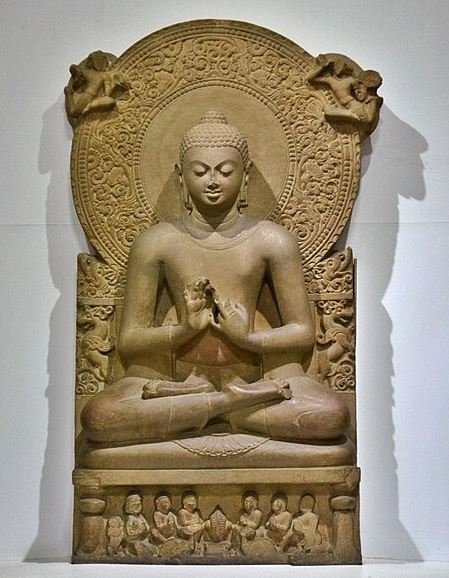
Image: A statue of Siddhartha Gautama
Post-Vedic Hinduism (c. 500 BCE–300 CE)
As Jainism and Buddhism flourished, Vedic traditions also underwent significant transformations. The period saw the emergence of what is often referred to as classical Hinduism, characterized by the synthesis of Vedic and non-Vedic elements.
The Epics and Puranas
The Ramayana and Mahabharata: Two great epics, the Ramayana and Mahabharata, composed during this time, played a crucial role in shaping Hindu values and practices. The Bhagavad Gita, a part of the Mahabharata, became a central text of Hindu philosophy, emphasizing devotion (bhakti), righteous action (dharma), and the path to liberation.
The Puranas: The Puranic texts, which emerged during this period, further elaborated on the myths and stories of the gods and goddesses of Hinduism, including Vishnu, Shiva, and Devi. These texts were important in promoting the worship of these deities and popularizing temple-based worship.
Rise of Bhakti and Temple Worship
Bhakti (Devotion): The bhakti movement, emphasizing personal devotion to a chosen deity, became increasingly popular. Unlike the earlier Vedic focus on rituals, bhakti stressed an emotional and personal connection with God, making religion more accessible to the masses.
Temple Worship: The development of temple architecture and the growth of temple-based worship marked a shift from earlier fire sacrifices. Temples became the center of religious life, where people could engage in puja (worship) to their deities.
The Gupta Period and Hindu Renaissance (c. 320–550 CE)
The Gupta Empire (c. 320–550 CE) is often referred to as the “Golden Age” of India, not only because of its achievements in art, science, and culture but also because it marked a renaissance of Hinduism. During this period, Hindu philosophy, art, and architecture flourished.
Key Developments:
Advaita Vedanta: One of the most influential philosophical schools that emerged during this time was Advaita Vedanta, which was articulated by the philosopher Adi Shankaracharya (c. 788–820 CE). Advaita teaches the non-dualistic nature of reality, emphasizing that the individual soul (Atman) and the ultimate reality (Brahman) are one.
The Growth of Vaishnavism and Shaivism: During this period, the sects dedicated to the worship of Vishnu (Vaishnavism) and Shiva (Shaivism) grew in prominence. These sects developed rich devotional traditions, theological literature, and temple architecture.

Decline of Buddhism and Jainism in India
While Buddhism and Jainism had significant influence in early Indian history, by the end of the first millennium CE, their presence in India began to decline.
Buddhism’s Decline:
Hindu Revival: The resurgence of Hinduism, particularly the bhakti movement, absorbed many of the elements that had made Buddhism popular, such as devotion and egalitarianism. The adaptability of Hinduism allowed it to integrate Buddhist ideas, leading many followers to return to Hindu practices.
Muslim Invasions: The invasions by Muslim rulers in the 12th and 13th centuries led to the destruction of many Buddhist monasteries and educational centers, contributing to the decline of Buddhism in India.
Jainism’s Decline:
While Jainism also saw a decline, it remained influential in certain regions, especially in western and southern India. Jain communities maintained their distinct religious identity and contributed to Indian culture through their promotion of non-violence, art, and architecture.
Tantrism and Other Esoteric Traditions (c. 6th Century CE Onward)
From the 6th century CE onward, Tantric traditions began to develop within both Hinduism and Buddhism. Tantrism focused on rituals, mantras, and mystical practices aimed at achieving spiritual power and liberation.
Tantric Features:
Ritual and Symbolism: Tantric practices often involve elaborate rituals and the use of sacred symbols, such as mandalas and mantras.
Focus on the Divine Feminine: Tantrism often emphasized the worship of the divine feminine, particularly in the form of the goddess (Shakti), reflecting a shift toward the recognition of female divinity in religious practice.
Influence on Hinduism and Buddhism: Tantrism had a significant impact on both Hindu and Buddhist practices, particularly in regions such as Nepal and Tibet, where Vajrayana Buddhism (a Tantric form of Buddhism) became dominant.
Frequently Asked Questions
The religious developments in ancient India were dynamic and multifaceted, marked by the evolution of Vedic practices, the rise of new religions like Jainism and Buddhism, and the later resurgence of Hinduism through movements like bhakti and Tantrism.
What ancient civilizations influenced the origins of Hinduism?
Hinduism has its roots in the ancient Indus Valley Civilization and the Vedic religion, which followed it.

What evidence of religious practices has been found in the Indus Valley?
The Indus Valley Civilization thrived between 3300 and 1300 BCE, primarily along the Indus River and the surrounding regions of modern-day Pakistan, India, Afghanistan, and Iran.
Archaeological findings such as steatite seals, figurines, and symbols suggest the presence of religious practices, with possible depictions of gods, rituals, and sacred animals.
Who were the likely deities worshipped by the Indus Valley people?
The Indus Valley people likely worshipped a mother goddess symbolizing fertility and a male god, possibly an early form of Shiva, known as Pashupati or “lord of beasts.”
What symbol found in the Indus Valley is still significant in Hinduism today?
The swastika, a symbol representing the universe and stability, appeared on some Indus Valley seals and remains important in Hinduism.
What period followed the decline of the Indus Valley Civilization, and what was its significance?
The decline, around 1900 BCE, may have been due to environmental changes or invasions.
The Vedic Age (1500–500 BCE) followed the decline and laid the foundation for Hinduism. During this period, the sacred Vedic texts were composed.
What are the Vedas, and what role did they play in Vedic religion?
The Vedas are sacred texts containing hymns dedicated to gods like Indra, Agni, and Soma. They were central to Vedic religion, with rituals and sacrifices performed to maintain cosmic order.
Vedic religion emphasized rituals, sacrifices, and fire ceremonies (yajnas) to honor the gods and ensure harmony between humans and the divine.

Image: The Vedas
How did Hinduism evolve from the Vedic religion?
Hinduism evolved by incorporating elements of the early Indus Valley beliefs and indigenous traditions. New religious ideas emerged by the end of the Vedic period, shaping classical Hinduism.
What are some of the core concepts that developed in classical Hinduism?
Key concepts include karma (the law of cause and effect), dharma (moral duty), and moksha (liberation from the cycle of rebirth).
What two epic tales are important in shaping Hindu thought, and what themes do they explore?
The Ramayana and Mahabharata are two key epics, exploring themes of heroism, duty, and devotion. The Bhagavad Gita, part of the Mahabharata, emphasizes righteousness and devotion to God.
How does Hindu mythology reflect the diversity and adaptability of Hinduism?
Hindu mythology’s fluid and evolving nature mirrors the adaptability of Hinduism itself, which has integrated various cultural and spiritual traditions over time, remaining a diverse and dynamic faith.