Republican Party: History & Major Facts
The Republican Party, often referred to as the GOP (Grand Old Party), is one of the two major political parties in the United States, alongside the Democratic Party. Founded in 1854, the Republican Party has played a central role in shaping American political, economic, and social policy.
Over its history, the GOP has undergone significant transformations, evolving from a party founded to oppose the expansion of slavery into western territories to the conservative, pro-business party that it is today.
In this detailed exploration, World History Edu takes an in-depth look at the Republican Party’s origins, major historical events, ideological shifts, key policies, influential leaders, and its ongoing influence in contemporary American politics.

From the Civil War and Reconstruction to the Reagan Revolution and the rise of Donald Trump, the GOP has played a central role in shaping the direction of the United States. Image: Logo of the Republican Party.
Origins and Founding of the Republican Party (1854)
The Republican Party was established in 1854 in response to the Kansas-Nebraska Act, which allowed new territories to decide for themselves whether to allow slavery. This act overturned the Missouri Compromise of 1820, which had prohibited slavery in certain U.S. territories. Outrage over the potential spread of slavery into the West united abolitionists, former Whigs, Free Soil Democrats, and other political factions, culminating in the formation of the Republican Party.
The early Republican Party was a diverse coalition of groups, including northern Protestants, factory workers, professionals, businessmen, and prosperous farmers. Its central platform was to prevent the expansion of slavery into new territories. While the Republican Party found strong support in the Northern United States, it struggled to gain traction in the South, where white Southerners largely aligned with the Democratic Party.
Abraham Lincoln and the Civil War Era (1860–1865)
The Republican Party’s rapid rise in influence culminated in the election of Abraham Lincoln as the first Republican president in 1860. Lincoln’s election was a pivotal moment in U.S. history, triggering the secession of several Southern states and the onset of the Civil War.
The Civil War (1861–1865) was a defining event for the GOP, as it sought to preserve the Union and end slavery.
READ MORE: Bloodiest Battles of the American Civil War
Lincoln’s leadership during the war solidified the Republican Party’s commitment to ending slavery, culminating in the Emancipation Proclamation in 1863. This executive order declared that all slaves in Confederate-held territories were to be freed. Although it did not immediately end slavery across the nation, the proclamation redefined the purpose of the war and strengthened the Union’s moral cause.

Image: Abraham Lincoln
In 1865, the passage of the Thirteenth Amendment officially abolished slavery in the United States. The Republican Party was instrumental in this effort, further entrenching its identity as the party of abolition and national unity.
What were the sociocultural effects of the American Civil War?
Reconstruction and Post-Civil War Dominance (1865–1877)
Following the Civil War, the Republican Party led the Reconstruction effort, aimed at rebuilding the South and integrating formerly enslaved African Americans into American society. Radical Republicans, a faction within the party, pushed for more stringent measures to ensure civil rights for freedmen and to restructure Southern political systems.
The Reconstruction Acts, passed by the Republican-led Congress, divided the South into military districts and required Southern states to adopt new constitutions guaranteeing voting rights for African Americans.
During this period, the Republican Party enjoyed widespread support in the North and among African Americans in the South. Several African Americans were elected to Congress and held other political offices during Reconstruction, thanks to Republican efforts to expand voting rights.
However, white Southern Democrats vehemently opposed Reconstruction policies, leading to significant political conflict and the eventual rise of segregationist laws in the South.
Reconstruction effectively ended in 1877 when Republican Rutherford B. Hayes became president following the contentious election of 1876. Hayes agreed to withdraw federal troops from the South in exchange for Southern Democrats’ acquiescence to his presidency, marking the end of federal enforcement of Reconstruction policies. This compromise allowed the Southern states to implement Jim Crow laws, which disenfranchised African Americans and reversed many of the gains made during Reconstruction.

Image: Rutherford B. Hayes
Gilded Age and the Rise of Big Business (1877–1900)
Following Reconstruction, the Republican Party shifted its focus toward economic growth and industrialization during the Gilded Age (approximately 1877–1900). The GOP became closely associated with pro-business policies, advocating for high tariffs to protect American industry, the gold standard to stabilize currency, and infrastructure development, particularly railroads.
Republican leaders like William McKinley championed these economic policies, which aligned the party with industrialists, bankers, and other business interests. The GOP’s support for big business and a limited role for government in regulating the economy contrasted with the Democratic Party’s growing association with agrarian interests and populist movements advocating for more economic reforms.
During this period, the Republican Party consolidated its political dominance, particularly in the North and among middle-class voters. However, the party’s association with big business and its reluctance to address the excesses of industrial capitalism led to growing public dissatisfaction, setting the stage for reform movements in the early 20th century.
The Progressive Era and the Split of 1912
The early 20th century saw a wave of progressive reform in response to the social and economic inequalities of the Gilded Age. Many within the Republican Party supported progressive policies aimed at regulating big business, improving working conditions, and expanding government oversight of the economy. This movement was led by figures like Theodore Roosevelt, who served as president from 1901 to 1909.
Roosevelt’s presidency was marked by his “Square Deal” policies, which sought to curb corporate power, protect consumers, and conserve natural resources. However, after leaving office, Roosevelt grew dissatisfied with his successor, Republican President William Howard Taft, who he believed had abandoned the progressive agenda.
In 1912, Roosevelt challenged Taft for the Republican nomination but was rejected by the party’s conservative wing. In response, Roosevelt formed the Progressive Party, also known as the “Bull Moose Party,” and ran as a third-party candidate in the 1912 presidential election. This split in the Republican vote allowed Democrat Woodrow Wilson to win the presidency.
The 1912 election highlighted a growing ideological divide within the Republican Party between progressives and conservatives. After Roosevelt’s defeat, the party gradually shifted to the right, embracing more conservative economic policies and moving away from the progressive reforms of the early 20th century.

Image: Theodore Roosevelt
The Republican Party and the Roaring Twenties
During the 1920s, the Republican Party enjoyed a period of political dominance, winning three consecutive presidential elections with Warren G. Harding, Calvin Coolidge, and Herbert Hoover. The GOP’s policies during this era were characterized by laissez-faire economics, low taxes, and minimal government intervention in the economy.
The “Roaring Twenties” were marked by economic growth and technological innovation, particularly in industries like automobiles, aviation, and telecommunications. Republican policies that favored business interests were credited with contributing to this economic prosperity. However, the party’s failure to address the underlying structural weaknesses in the economy—such as income inequality and speculative investments—contributed to the onset of the Great Depression in 1929.

Warren G. Harding
The Great Depression and the New Deal Era (1930s–1940s)
The Great Depression had a profound impact on American politics and the Republican Party. In the 1932 presidential election, Republican incumbent Herbert Hoover was overwhelmingly defeated by Democrat Franklin D. Roosevelt, who promised bold government intervention to combat the economic crisis.
Roosevelt’s New Deal, a series of programs aimed at providing relief, recovery, and reform during the Depression, redefined the role of the federal government in American life. The Republican Party, which had previously been associated with limited government and laissez-faire economics, found itself in opposition to the New Deal’s expansive vision of government.
The GOP struggled to regain political influence during the New Deal era, as Roosevelt’s Democratic Party built a broad coalition that included labor unions, African Americans, farmers, and urban workers. This “New Deal Coalition” dominated American politics from the 1930s through the 1960s, leaving the Republican Party in the minority for much of this period.
Post-World War II and the Rise of Modern Conservatism (1950s–1960s)
After World War II, the Republican Party began to recover politically, particularly with the election of Dwight D. Eisenhower as president in 1952. Eisenhower, a moderate Republican, sought to strike a balance between supporting business interests and maintaining some aspects of the New Deal. His administration invested in infrastructure, most notably the construction of the interstate highway system, and sought to contain the spread of communism during the Cold War.
During this period, the seeds of modern American conservatism were planted. Conservative thinkers like William F. Buckley Jr. and political activists such as Barry Goldwater began to advocate for a return to limited government, lower taxes, and a strong national defense. This conservative movement gained momentum in the 1960s, culminating in Goldwater’s candidacy for president in 1964.
Goldwater’s defeat in the 1964 election was a setback for conservatives, but it marked the beginning of a shift in the Republican Party’s ideology toward a more conservative platform. This shift was further solidified by opposition to the civil rights movement, which alienated many Southern white voters from the Democratic Party.
The Southern Strategy and Political Realignment (1960s–1980s)
The 1960s were a period of significant political realignment in the United States. The passage of the Civil Rights Act of 1964 and the Voting Rights Act of 1965, both supported by the Democratic Party, led many white Southern voters to abandon the Democrats and align with the Republican Party. The GOP’s “Southern Strategy,” pioneered by figures like Richard Nixon, sought to capitalize on this shift by appealing to conservative white voters in the South.
The political realignment of the 1960s and 1970s transformed the Republican Party’s base. Historically, the party had been strongest in the North, but the Southern Strategy helped the GOP gain a foothold in the South, where it remains a dominant force today. This shift also marked the beginning of the Republican Party’s growing emphasis on cultural conservatism, including opposition to abortion and support for traditional family values.
Richard Nixon’s election as president in 1968 symbolized the success of the Southern Strategy and the Republican Party’s new conservative orientation. Nixon’s presidency was marked by a mixture of conservative economic policies and pragmatic foreign policy, including the pursuit of détente with the Soviet Union and the opening of relations with China. However, Nixon’s resignation in 1974 amid the Watergate scandal damaged the GOP’s reputation and temporarily set back its political fortunes.
The Reagan Revolution and the Rise of Modern Conservatism (1980s)
The election of Ronald Reagan in 1980 marked a transformative moment for the Republican Party and American conservatism. Reagan, a former actor and governor of California, articulated a clear conservative vision for the country, calling for reduced government spending on social programs, deregulation of industries, lower taxes, and a strong national defense.
Reagan’s presidency, often referred to as the “Reagan Revolution,” reshaped the Republican Party and American politics. His economic policies, known as “Reaganomics,” focused on supply-side economics, which argued that lowering taxes on businesses and individuals would stimulate economic growth. While these policies led to economic recovery and growth in the 1980s, critics argued that they also contributed to growing income inequality and federal deficits.
Reagan’s foreign policy was defined by a strong stance against the Soviet Union, which he famously called the “evil empire.” His administration increased military spending and played a key role in the eventual end of the Cold War. Reagan’s presidency left a lasting legacy on the Republican Party, establishing it as the party of modern conservatism, with an emphasis on free-market economics, limited government, and a strong national defense.
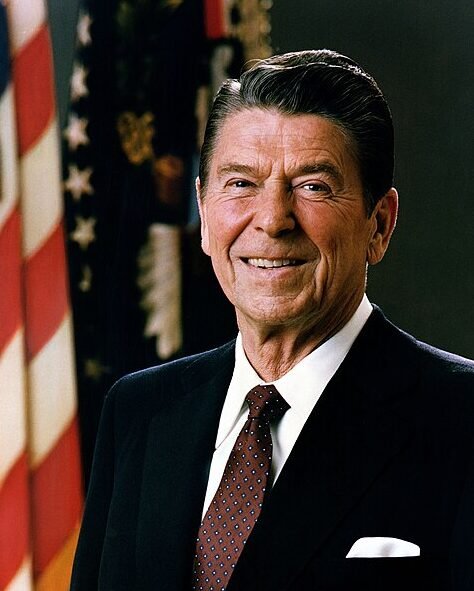
Image: Ronald Reagan
The Republican Party in the 21st Century: George W. Bush, Barack Obama, and Donald Trump
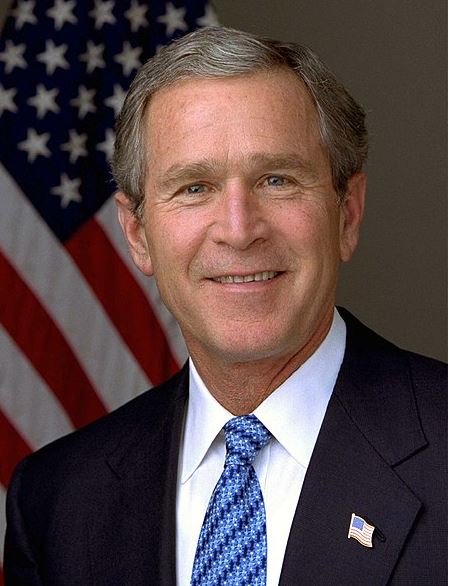
Image: George W. Bush in 2003
The Republican Party entered the 21st century with a renewed focus on conservative values, but it also faced new challenges and internal divisions. The election of George W. Bush in 2000 marked the beginning of a new era for the GOP. Bush’s presidency was defined by the response to the September 11, 2001, terrorist attacks, which led to the wars in Afghanistan and Iraq, as well as the implementation of the Patriot Act and other security measures.
Domestically, Bush pursued conservative economic policies, including tax cuts and deregulation, but his administration also expanded the federal government’s role in education with the No Child Left Behind Act. Bush’s handling of the Iraq War and the response to Hurricane Katrina damaged his popularity, and the 2008 financial crisis further weakened the Republican Party’s standing.
The election of Democrat Barack Obama in 2008, the nation’s first African American president, marked a major setback for the Republican Party. Obama’s presidency saw the passage of the Affordable Care Act (Obamacare), financial regulation reforms, and efforts to combat climate change. In response, the Republican Party increasingly positioned itself as the party of opposition, with many Republicans criticizing Obama’s policies as government overreach.
The rise of the Tea Party movement in 2010, a conservative grassroots movement opposed to government spending and taxation, reflected growing divisions within the Republican Party. The Tea Party’s influence pushed the GOP further to the right, contributing to the polarization of American politics.
In 2016, businessman and reality TV star Donald Trump won the Republican nomination for president and went on to defeat Hillary Clinton in the general election. Trump’s candidacy represented a significant shift in the GOP, as he embraced populist and nationalist rhetoric, promising to “drain the swamp” of Washington corruption and protect American jobs from global competition.
Trump’s presidency was marked by controversial policies, including immigration restrictions, trade wars, and efforts to repeal Obamacare. His administration also saw the appointment of conservative judges to the federal courts, including three Supreme Court justices. Trump’s leadership further divided the Republican Party, with a “Trumpist” faction on one side and more traditional, moderate Republicans on the other.
Despite losing the 2020 presidential election to Joe Biden, Trump’s influence on the Republican Party remains strong. The GOP continues to grapple with internal divisions between pro-Trump populists and establishment conservatives, as well as its role in shaping the future of American politics.
Questions and Answers
These questions cover the key aspects of the Republican Party’s history, evolution, and influence in American politics.
When was the Republican Party founded and what was its main purpose?
The Republican Party was founded in 1854 to oppose the expansion of slavery into the western territories, particularly in response to the Kansas-Nebraska Act.
Who made up the early coalition of the Republican Party?
The early Republican Party was a coalition of northern Protestants, factory workers, professionals, businessmen, prosperous farmers, and freed African Americans after the Civil War.
What were some of the key policies supported by the early Republican Party?
The early Republican Party supported the national banking system, the gold standard, railroads, and high tariffs to protect American industry. It was also firmly opposed to the expansion of slavery.
How did the election of Abraham Lincoln in 1860 impact the Republican Party?
Abraham Lincoln’s election as the first Republican president marked a turning point for the party. Under his leadership, the Union was preserved during the Civil War, slavery was abolished, and the Republican Party became a dominant force in American politics.
What caused the ideological shift in the Republican Party after 1912?
Former President Theodore Roosevelt’s departure from the GOP to form the Progressive Party in 1912, after his social reform proposals were rejected, marked the beginning of an ideological shift within the Republican Party toward more conservative policies.
How did the Republican Party lose its dominance during the Great Depression?
The Great Depression led to the rise of the Democratic Party and Franklin D. Roosevelt’s New Deal coalition, which dominated American politics from the 1930s until the 1960s, diminishing the Republican Party’s influence during this time.
What is the “Southern Strategy,” and how did it change the Republican Party’s base?
The “Southern Strategy” was a political strategy adopted by the Republican Party in the 1960s to attract white Southern voters, especially after the Civil Rights Act of 1964 and the Voting Rights Act of 1965. This shift made the South a key Republican stronghold in subsequent elections.
How did the Republican Party’s platform on abortion evolve?
After the Supreme Court’s 1973 decision in Roe v. Wade, the Republican Party adopted a strong stance against abortion in its platform, which helped it gain significant support from evangelical Christians.

How did Donald Trump’s presidency impact the Republican Party?
Donald Trump’s presidency shifted the Republican Party further to the right, emphasizing populist and nationalist themes. His leadership created divisions within the GOP, with a “Trumpist” faction on one side and more traditional, moderate Republicans on the other.

Since the 1990s, the Republican Party’s core support has primarily come from the Southern states, the Great Plains, the Mountain West, and rural areas in the North. Image: Donald Trump.
What is the Republican Party’s stance on constitutional interpretation?
The Republican Party supports originalism, which is a strict interpretation of the U.S. Constitution based on its original meaning at the time it was written.
How many U.S. presidents have been members of the Republican Party?
As of 2024, the Republican Party has produced 19 U.S. presidents, more than any other political party in American history.





This was a nice synopsis of the Republican Party History. There is a glaring incorrect statement regarding the Party and the Civil Right Movement. Civil Rights are complex in the 50’s and 60’s era. The 1960 Civil Rights act was championed by Republican President Eisenhower. Eisenhower, who signed it into law. In the Senate, 42 Democrats and 29 Republicans voted in favor. 18 Democrats voted against. No Republican Senators voted against the bill.
Many if not all of the Democrat Senators, known as Dixiecrats, from the Southern States opposed the bill. They left the Party following passage of the 1964 Civil Right Act, feeling betrayed. They joined the Republican Party, not because it was less inclined towards Civil Rights, but because it was the only other major party upon which to hitch their cart.
Most famous and outspoken of these was Strom Thurmond of South Carolina. His face became synonymous with the opposition to Civil Rights in the Republican Party, even though Republicans had been unanimous in their support for Civil Rights.
The subsequent 1964 Civil Rights act had strong bi-partisan support in Congress and was signed into law by then Democratic President Lyndon Johnson. By then the Democrats had managed to consign the Republican Part as opposing Civil Rights, in spite of the fact that those Republicans in opposition had been Democrats, (and members of the KKK). Many of these Democrats known as the Dixiecrats were opposed to Civil Rights and remained Democrats, such as Senator Byrd from West VA, and continued to voice opposition.
This is a bit long, and you will need to edit it down if you want to issue a correction in the essay on the Republican Party history. It does need a major correction though.