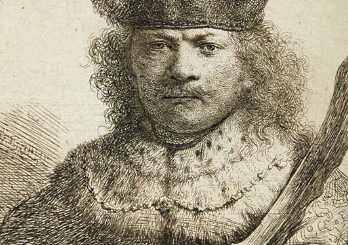
Dutch master Rembrandt
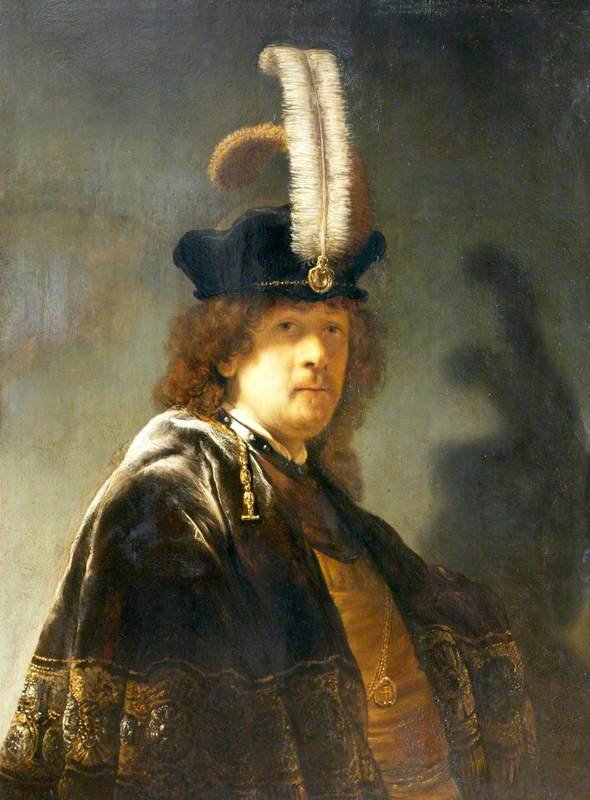
Self-Portrait of Rembrandt Wearing a White Feathered Bonnet (1635)
Rembrandt is celebrated as one of the greatest artists of all time, and his works are housed in major museums worldwide, including the Rijksmuseum in Amsterdam, the Louvre in Paris, and the Metropolitan Museum of Art in New York. His life and art continue to be the subject of extensive study, appreciation, and admiration, affirming his place in the pantheon of great masters.
READ MORE: Most Famous Pupils of Rembrandt
Life of Rembrandt
Rembrandt Harmenszoon van Rijn, born on July 15, 1606, in Leiden, Netherlands, is considered one of the greatest Dutch painters and etchers of the Golden Age. He was the ninth child of Harmen Gerritszoon van Rijn, a miller, and Neeltgen Willemsdochter van Zuytbrouck. Coming from a relatively comfortable middle-class family, Rembrandt received a good education. He attended Latin school and later enrolled at the University of Leiden, but his true passion was art.
At the age of 14, he apprenticed with Jacob van Swanenburgh, a local painter known for his historical scenes. This early training provided him with foundational skills in the use of light and perspective. Later, he moved to Amsterdam to study under Pieter Lastman, a renowned painter specializing in historical and biblical subjects. Lastman introduced Rembrandt to the dramatic use of light and shadow, known as chiaroscuro, a technique that became a hallmark of his style.
Career Beginnings in Leiden

Rembrandt was probably the greatest artist of the Dutch Golden Age.
In 1625, Rembrandt returned to Leiden and opened his own studio with his friend Jan Lievens. He quickly gained a reputation for his innovative style and dramatic use of light, which distinguished him from other artists of the time. His early works, such as “The Stoning of St. Stephen” (1625), showcased his interest in biblical themes and his mastery of chiaroscuro.
During this period, Rembrandt also began experimenting with etching, a medium that allowed him to explore different textures and effects. His etchings, characterized by their fine detail and dynamic compositions, helped establish his reputation as a skilled printmaker.
Move to Amsterdam and Rise to Prominence
In 1631, Rembrandt moved to Amsterdam, which was then a booming economic and cultural center. He joined the studio of Hendrick Uylenburgh, an art dealer and entrepreneur, where he gained access to a wealthier clientele. Rembrandt’s reputation continued to grow, particularly for his portraits. His unique ability to capture the inner life and character of his subjects made him highly sought after by Amsterdam’s elite.
During this time, he painted some of his most famous early works, including “The Anatomy Lesson of Dr. Nicolaes Tulp” (1632), a group portrait of Amsterdam’s Guild of Surgeons. This painting displayed his mastery of composition, his innovative use of light to highlight the central figures, and his ability to convey psychological depth. It was a critical and commercial success, establishing Rembrandt as a leading portraitist.
Marriage and Personal Life

Image: Rembrandt’s portrait of Saskia van Uylenburgh (c. 1635)
In 1634, Rembrandt married Saskia van Uylenburgh, the cousin of Hendrick Uylenburgh. Saskia came from a well-to-do family, and their marriage brought Rembrandt greater social standing and financial security. The couple lived in a grand house in Amsterdam, where Rembrandt began collecting art, antiques, and curiosities, reflecting his wide-ranging interests.
Rembrandt and Saskia had four children, but only one, Titus, survived infancy. Saskia herself suffered from ill health and died in 1642, which was a severe emotional blow to Rembrandt. Her death marked the beginning of a period of personal and financial turmoil for the artist.

“The Prodigal Son in the Brothel” (c. 1635) is a self-portrait by Rembrandt with his wife Saskia van Uylenburgh, depicting them as the biblical prodigal son and a tavern girl in a lively scene.
Artistic Development and Major Works

Rembrandt, born in Leiden in 1606, is widely regarded as one of history’s greatest painters. Image: Self-Portrait in a Gorget (c. 1629) by Dutch painter Rembrandt
Despite his personal losses, Rembrandt continued to produce some of his most important works during the 1640s and 1650s. His style evolved towards a more restrained, introspective manner, characterized by a more subtle use of light and a greater emphasis on emotional depth. He began to focus on biblical subjects, portraiture, and self-portraits, exploring the human condition in a profound and introspective way.
Key Works:
- “The Night Watch” (1642): One of Rembrandt’s most famous paintings, this group portrait of a militia company is notable for its dynamic composition and dramatic use of light and shadow. Unlike traditional group portraits, where each figure is given equal prominence, Rembrandt created a sense of movement and drama by arranging the figures in a lively, diagonal composition. The painting was initially misunderstood and criticized for its unconventional approach but is now considered one of his masterpieces.
- “The Jewish Bride” (c. 1667): A tender depiction of a couple, this painting showcases Rembrandt’s mature style, with its rich textures, muted colors, and expressive use of light to convey intimacy and emotion. The identities of the sitters are unknown, but the painting is admired for its deep emotional resonance.
- “Self-Portraits: Rembrandt created around 80 self-portraits throughout his career, which provide a unique insight into his personal and artistic development. These portraits, painted over several decades, show the artist at various stages of his life, from his youthful self-confidence to his later years, marked by hardship and introspection. They are celebrated for their psychological depth and technical mastery.
Financial Troubles and Later Years
By the late 1640s, Rembrandt’s financial situation began to deteriorate. Despite his success, he lived extravagantly, buying a large house in 1639 and amassing a vast collection of art and antiques. His spending habits, combined with a decline in portrait commissions and the economic downturn in Amsterdam, led to severe financial difficulties.
In 1656, Rembrandt was declared bankrupt and forced to sell his house, his collections, and many of his works. He continued to paint and teach, but his style had fallen out of favor with the changing tastes of the time. He also faced personal challenges, including conflicts with his creditors and the death of his longtime partner, Hendrickje Stoffels, in 1663.
Despite these hardships, Rembrandt continued to produce remarkable works, including some of his most profound religious paintings and self-portraits. His late works are characterized by a deeper sense of introspection, emotional intensity, and a more subdued color palette. They reflect his personal struggles and his unrelenting commitment to his craft.

Rembrandt’s 1659 oil painting “Moses Breaking the Tablets of the Law” portrays Moses about to shatter the Ten Commandments tablets; now in Berlin’s Gemäldegalerie.
Death and Legacy
Rembrandt died on October 4, 1669, in Amsterdam, in relative obscurity and poverty. He was buried in an unmarked grave in the Westerkerk, and his death went largely unnoticed by his contemporaries. However, his influence on the art world grew steadily after his death.
Today, Rembrandt is recognized as one of the greatest artists in history. His innovative techniques, mastery of light and shadow, and profound psychological insight have left an enduring legacy. His works are celebrated for their humanity, empathy, and ability to capture the complexities of the human condition.
Major Works of Rembrandt

Self-Portrait in a Black Cap (c. 1637) by Dutch Golden Age painter Rembrandt
- The Anatomy Lesson of Dr. Nicolaes Tulp (1632)
This painting is one of Rembrandt’s earliest masterpieces and showcases his remarkable ability to capture human expression and detail. It portrays Dr. Tulp demonstrating an anatomy lesson to a group of surgeons. Rembrandt’s use of light and composition draws the viewer’s attention to the central figure of Dr. Tulp and the dissected body, creating a sense of drama and realism. This work established Rembrandt’s reputation as a leading portrait artist in Amsterdam.

The Anatomy Lesson of Dr. Nicolaes Tulp (1632) – oil painting by Rembrandt
- The Night Watch (1642)
Officially titled “The Company of Captain Frans Banning Cocq and Lieutenant Willem van Ruytenburch,” “The Night Watch” is arguably Rembrandt’s most famous painting.
This monumental group portrait is one of Rembrandt’s most famous paintings. It depicts members of a civic guard in dynamic poses and dramatic lighting, showcasing Rembrandt’s mastery of composition and use of light.
This large-scale group portrait revolutionized the genre by depicting the members of the militia in a dynamic, almost theatrical composition, rather than in a static, formal arrangement. The play of light and shadow, the sense of movement, and the use of vivid details make this painting a masterpiece of Baroque art.
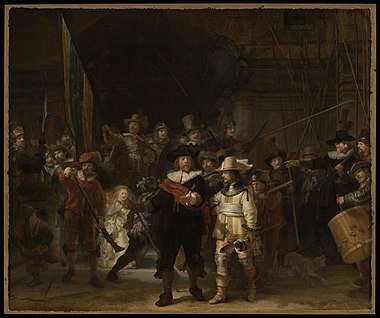
“The Night Watch” (1642) is one of Rembrandt’s most famous paintings. It depicts members of a civic guard in dynamic poses and dramatic lighting, showcasing Rembrandt’s mastery of composition and use of light.
- Self-Portraits (c. 1628-1669)
Rembrandt painted, drew, and etched nearly 80 self-portraits throughout his life, offering a unique window into his changing appearance, moods, and emotions. These self-portraits are considered some of the most compelling in Western art, depicting the artist in a range of expressions, from confident and assertive in his youth to reflective and vulnerable in his later years. They are notable for their psychological depth and technical mastery.
- The Jewish Bride (c. 1667)
“The Jewish Bride” is celebrated for its rich textures, deep emotional expression, and masterful use of color. The painting portrays a couple in an intimate, affectionate embrace, their identities unclear, but their bond apparent. The tenderness and warmth conveyed through the brushwork, especially in the depiction of their hands and clothing, highlight Rembrandt’s ability to capture complex human emotions.

“The Jewish Bride” by Rembrandt exemplifies Rembrandt’s ability to capture the emotional depth and complexity of human relationships. It reflects his skill in portraying the tenderness and intimacy between individuals, transcending the specific narrative of the biblical characters it is believed to depict.
- The Return of the Prodigal Son (c. 1668-1669)
This painting, completed towards the end of Rembrandt’s life, is considered one of his most profound works. It depicts the biblical parable of the prodigal son returning to his father, emphasizing themes of forgiveness, mercy, and redemption. The composition focuses on the emotional reunion, with the father’s tender gesture and the son’s repentance expressed through their body language and expressions. The use of soft lighting and muted colors enhances the emotional intensity of the scene.

The Return of the Prodigal Son (1669) by Rembrandt
- The Blinding of Samson (1636)
A dramatic work depicting the biblical story of Samson’s betrayal by Delilah, this painting showcases Rembrandt’s talent for storytelling and his mastery of chiaroscuro. The violent, chaotic scene is filled with intense emotion, with Samson’s agony and Delilah’s treachery vividly portrayed. The sharp contrasts of light and shadow heighten the sense of drama and tension.
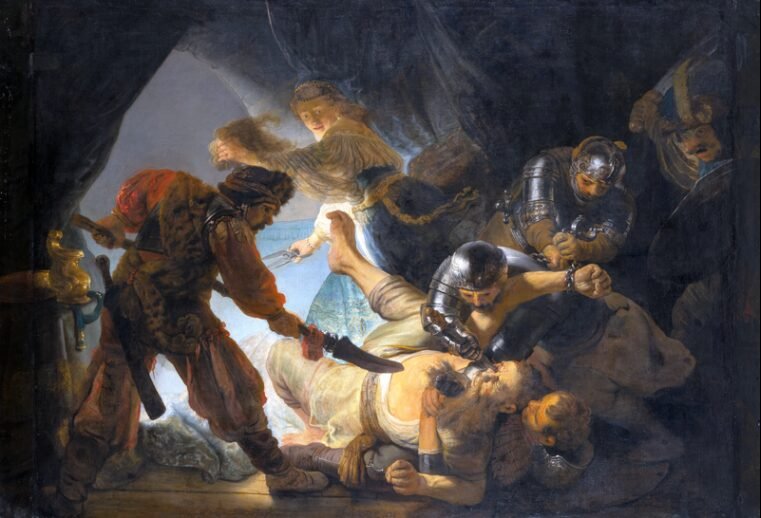
The Blinding of Samson is a 1636 painting by Rembrandt, now in the Städel (in Frankfurt, Germany)
- The Syndics of the Drapers’ Guild (1662)
This group portrait, also known as “The Sampling Officials,” depicts members of the Amsterdam Drapers’ Guild. The painting is celebrated for its naturalism and attention to detail, as well as the way Rembrandt captures the personalities and expressions of each figure. The composition draws the viewer’s eye towards the men, who appear to be caught in a moment of discussion or decision-making, making the painting feel alive and dynamic.

“The Syndics of the Drapers’ Guild” (1662)
- The Storm on the Sea of Galilee (1633)
This work is Rembrandt’s only known seascape and illustrates the biblical story of Jesus calming the storm. The painting captures the dramatic moment with swirling waves, dark clouds, and frightened disciples, creating a powerful sense of movement and tension. The use of light and shadow enhances the drama of the scene, reflecting Rembrandt’s skill in creating emotional and visual impact.

The Storm on the Sea of Galilee (1633) – painting by Dutch Golden Age artist Rembrandt
- Bathsheba at Her Bath (1654)
In this painting, Rembrandt portrays the biblical figure Bathsheba as she contemplates a letter from King David. The work is known for its sensuality, psychological depth, and the delicate rendering of textures, particularly Bathsheba’s skin. The composition conveys a sense of introspection and emotional complexity, capturing a moment of both physical beauty and moral dilemma.
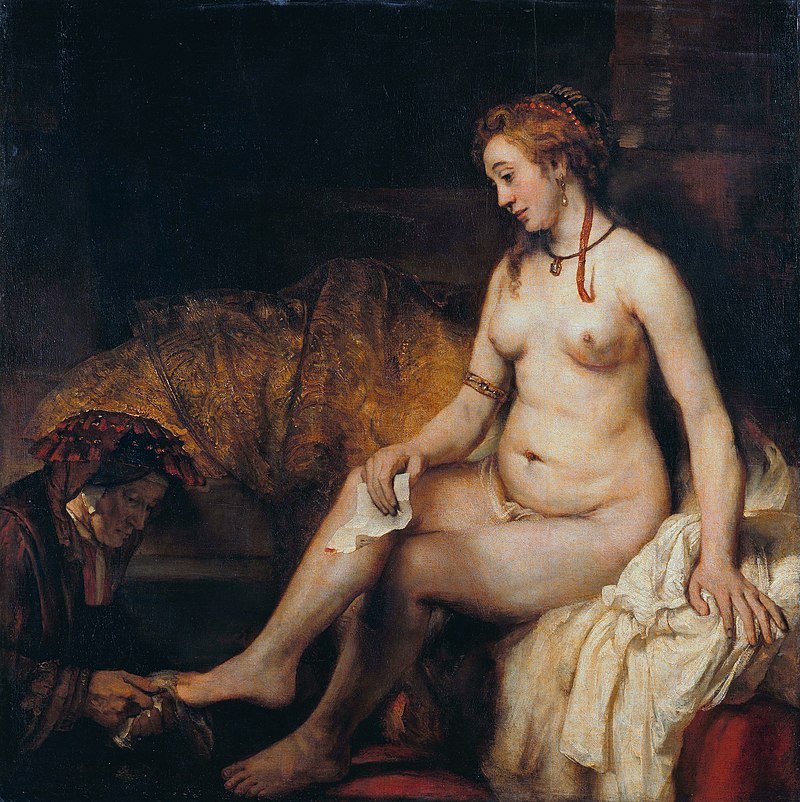
“Bathsheba at Her Bath” is a notable painting created by Rembrandt van Rijn in 1654. The painting, also known as “Bathsheba with King David’s Letter,” depicts the biblical character Bathsheba in a private moment as she receives a letter from King David, who had seen her bathing and desired her.
- Christ Preaching (1652)
One of Rembrandt’s most celebrated etchings, “Christ Preaching” (also known as “The Hundred Guilder Print”) exemplifies his skill as a printmaker. The etching depicts Jesus teaching a diverse crowd, with a remarkable attention to detail and a profound sense of empathy for the human condition. The composition and use of light and shadow create a dynamic scene, highlighting the central figure of Christ and his message of compassion.
Rembrandt’s long-lost painting discovered

In 2024, a long-lost painting by the Dutch master Rembrandt, discovered in the attic of a home in Maine, sold for an impressive $1,410,000 at auction. The painting was found by Kaja Veilleux, founder, appraiser, and auctioneer at Thomaston Place Auction Galleries, during a routine house call.
The 17th-century portrait depicts a teenage girl dressed in an elegant black gown, adorned with a white ruffled collar and bonnet. The painting is set in a hand-carved gold Dutch frame and executed on a cradled oak panel. It is believed to date from the 1630s, a period when Rembrandt had recently relocated to Amsterdam and was establishing himself as a leading artist.
A label on the back of the frame identified the work as a Rembrandt and stated that it had previously been loaned to the Philadelphia Museum of Art for an exhibition in 1970.
The discovered portrait from the Maine attic is believed to have originated during the period when Rembrandt managed the studio of Hendrick Uylenburgh, a renowned art dealer.
Did you know…?
Over his prolific career, the Dutch master Rembrandt is estimated to have produced around 280 paintings, 300 etchings, and 1,900 drawings.
Expensive Rembrandt painting auctioned
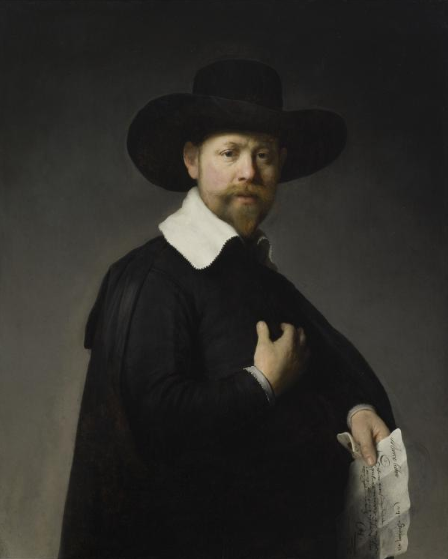
Rembrandt’s Portrait of Marten Looten,
One of his works, “Portrait of Marten Looten,” sold for $33.8 million at Sotheby’s in 2015, making it the most expensive Rembrandt ever auctioned.
Painted in 1632 when he was in his mid-20s, the painting marks a significant moment in his early career as a professional portraitist in Amsterdam.
The painting showcases Rembrandt’s innovative approach to portraiture, characterized by a dynamic interaction between the subject and the viewer. In this work, Marten Looten (1585–1649), a successful Mennonite grain merchant, is depicted as if caught in a moment of interruption, glancing up from reading a document. His lips are slightly parted, giving the impression that he is about to speak to an unseen visitor.
Rembrandt enhances the three-dimensionality of Looten’s figure through the positioning of his arms and the depiction of his clothing, which includes a beaver hat and a black cloak in the conservative style typical of Mennonites. This technique not only brings the portrait to life but also demonstrates Rembrandt’s skill in capturing both the physical presence and the inner life of his subjects.
Influence and Legacy of Rembrandt

Some of Rembrandt’s most famous works include “The Night Watch,” “The Anatomy Lesson of Dr. Nicolaes Tulp,” and “The Return of the Prodigal Son.” Image: Statue of Rembrandt in Leiden, the Netherlands
Rembrandt’s influence on art is immense and far-reaching. His innovative techniques, particularly his use of chiaroscuro and his ability to capture human emotion, have inspired countless artists over the centuries. His works have been studied, copied, and admired by artists from many different movements, including the Romantic, Realist, and Impressionist painters.
Rembrandt’s legacy extends beyond his paintings to his etchings and drawings, which are considered some of the finest examples of printmaking in history. His use of light, shadow, and texture in his etchings set new standards for the medium and influenced subsequent generations of artists.
In addition to his artistic achievements, Rembrandt is remembered for his profound humanism. His works convey a deep empathy for the human experience, depicting people from all walks of life with honesty, compassion, and psychological depth. His ability to capture the complexities of human emotion and his willingness to explore both the light and dark aspects of life make his art timeless and universally resonant.
Frequently Asked Questions
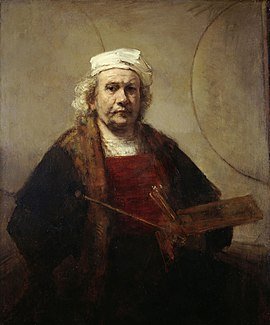
Rembrandt Harmenszoon van Rijn (1606–1669) was a Dutch painter, printmaker, and draughtsman, regarded as one of the greatest visual artists in history and a master of the Dutch Golden Age. Throughout his career, Rembrandt created over 300 paintings, 280 etchings, and numerous drawings. Image: Self-Portrait with Two Circles (c. 1665–69) at Kenwood House in London.
Where was Rembrandt born?
Rembrandt was born in Leiden, Netherlands.

Rembrandt is celebrated for his profound influence on art, particularly his deep humanism and mastery of light, shadow, and emotion. Image: “The Abduction of Europa” (1632) by Rembrandt
What artistic techniques was Rembrandt known for?
Rembrandt was known for his innovative use of light and shadow (chiaroscuro) and his ability to portray the psychological depth of his subjects.
What types of themes did Rembrandt explore in his art?
Rembrandt’s art covered a wide range of themes, including portraits, self-portraits, biblical scenes, and landscapes.
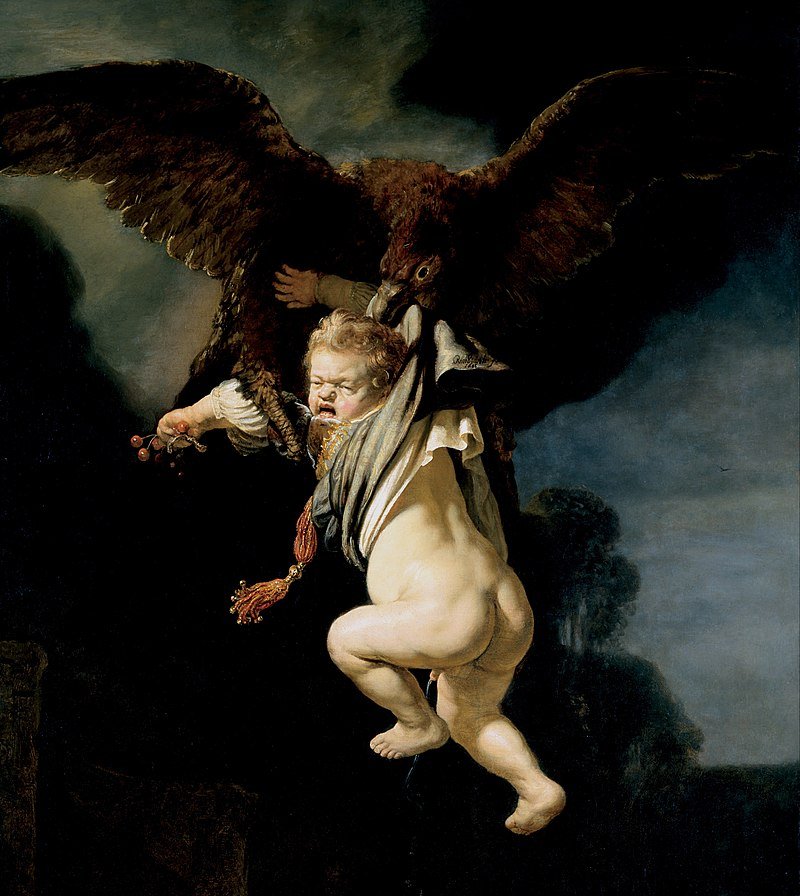
The Rape of Ganymede (1635) by Dutch painter Rembrandt
How many artworks did Rembrandt create in his career?
Rembrandt created over 300 paintings, 280 etchings, and numerous drawings during his career.
What challenges did Rembrandt face despite his artistic success?
Despite his talent and success, Rembrandt faced personal and financial difficulties and ultimately died in relative obscurity.
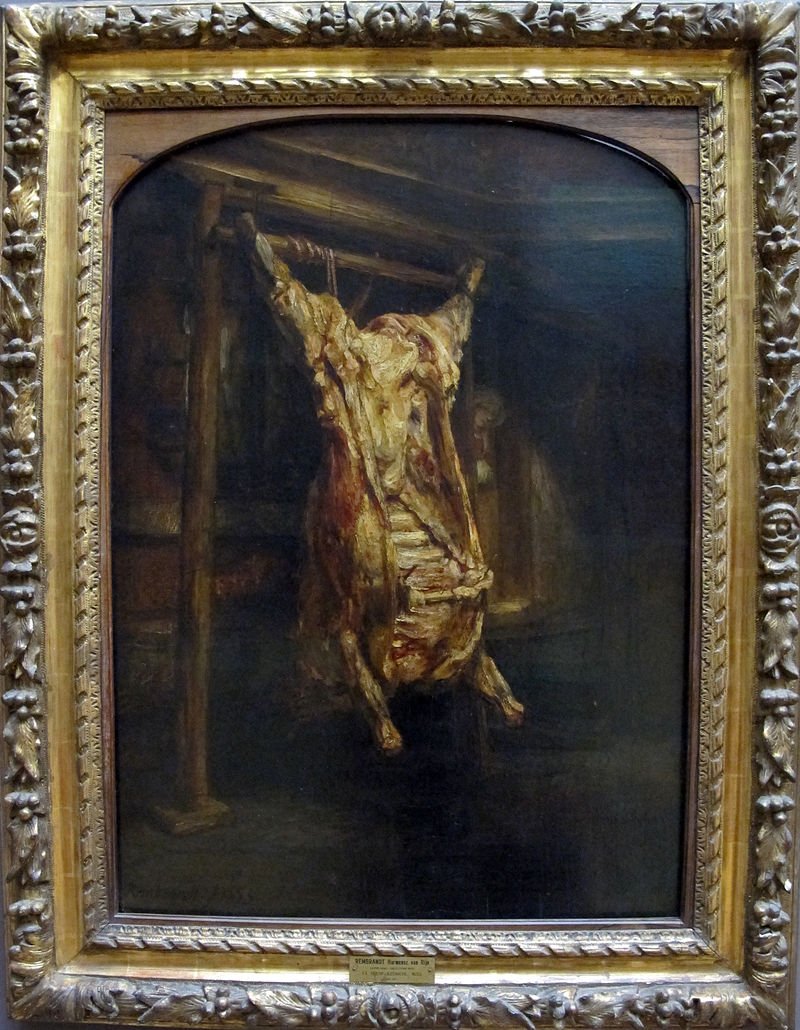
Rembrandt’s “Slaughtered Ox” (1655), now housed in Musée du Louvre in Paris, France