Rib-Hadda, also known as Rib-Addi or Rib-Addu, was the king of Byblos in the mid-fourteenth century BCE. His rule is well-documented through the Amarna letters, a collection of diplomatic correspondences primarily sent to the Egyptian Pharaoh Akhenaten. These letters provide insight into the political struggles of the Levantine city-states, the growing influence of external powers, and Rib-Hadda’s desperate pleas for military support.
Rib-Hadda’s writings, largely complaints and requests for assistance, illustrate the turbulent nature of his reign and the broader geopolitical struggles of the time.
The Identity of Rib-Hadda
Rib-Hadda’s name is Akkadian in origin, potentially invoking the Northwest Semitic god Hadad, a deity associated with storms and fertility. Despite this, his letters primarily reference Ba’alat Gubla, the “Lady of Byblos,” likely another name for Asherah. This suggests that while his name reflected a broader Mesopotamian influence, his religious and cultural identity remained rooted in the local traditions of Byblos.
Rib-Hadda’s Correspondence with Pharaoh
Rib-Hadda is one of the most prolific correspondents in the Amarna archive, with approximately sixty letters attributed to him. His messages frequently contained complaints and urgent appeals for assistance, often expressing frustration at the lack of Egyptian support. His letters reveal the challenges faced by Byblos, including territorial threats from rival city-states, mercenary uprisings, and betrayal by his own subjects.
One such letter, EA 105, details a dispute with Beirut, where the ruler had confiscated two merchant vessels belonging to Byblos. In another, EA 122, Rib-Hadda reports an attack by an Egyptian commissioner named Pihuri, who killed several of Byblos’ Shardana mercenaries and captured three of his men. These instances highlight the internal and external conflicts that plagued Rib-Hadda’s reign and the precarious position of his kingdom.
Conflict with Abdi-Ashirta and the Amurru Threat
A recurring theme in Rib-Hadda’s letters is his ongoing struggle against Abdi-Ashirta, the ruler of Amurru, a kingdom likely situated in southeastern Lebanon and southwestern Syria. Abdi-Ashirta was known for hiring mercenaries from the Habiru, Shardana, and other warlike groups to expand his influence. In EA 81, Rib-Hadda warns Akhenaten of the Amurru ruler’s growing power, accusing him of inciting rebellion among his subjects and attempting to assassinate him.
The situation deteriorated further when Rib-Hadda reported that Abdi-Ashirta had seized the city of Zemar, previously under Byblian control (EA 84). As Egyptian military presence in the region weakened, Rib-Hadda’s situation became increasingly dire. In EA 74 and EA 81, he describes his vulnerable position, likening himself to “a bird in a trap.” His desperation is further illustrated in EA 107, where he expresses frustration at Akhenaten’s lack of response, a sentiment echoed by the Pharaoh himself in EA 117: “Why do you alone keep writing to me?”
Rib-Hadda’s reign was marked by continuous conflict, political intrigue, and desperate appeals for aid.
Despite Abdi-Ashirta’s eventual death (EA 101), Rib-Hadda’s troubles did not subside. Abdi-Ashirta’s son, Aziru, continued his father’s aggressive policies, leading Rib-Hadda to send further appeals to Egypt (e.g., EA 103, EA 109). The rise of Aziru marked a continuation of Amurru’s encroachment into Byblos’ sphere of influence, exacerbating Rib-Hadda’s difficulties.
Political Upheaval and Regional Instability
Rib-Hadda’s letters not only document his personal struggles but also reflect the broader instability in the region. In EA 89, he reports a coup in Tyre, where the ruling family, including his own relatives, were murdered. The political chaos extended beyond Byblos and Tyre, with incursions by the Hittites threatening Egyptian protectorates in Syria (EA 126). These accounts provide valuable historical evidence of the shifting power dynamics in the Eastern Mediterranean during the Amarna period.
As the situation worsened, Rib-Hadda was forced to flee Byblos and seek refuge in Beirut under the protection of King Ammunira (EA 137). His exile marked the beginning of the end for his political influence, though he continued to send letters detailing the dire conditions in Phoenicia and Syria. In EA 75, he paints a bleak picture of Byblos, describing widespread famine and social unrest:
Our sons and daughters and the furnishings of the houses are gone, since they have been sold [in] the land of Yarimuta for our provisions to keep us alive. For the lack of a cultivator, my field is like a woman without a husband.
This vivid description underscores the extent of the economic and social collapse Byblos experienced under Rib-Hadda’s rule.
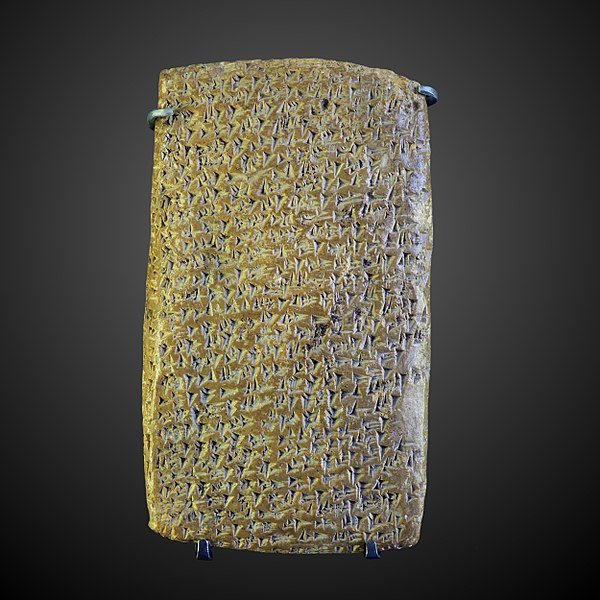
EA 362, a letter from Rib-Hadda to the Pharaoh, is among the Amarna Letters housed in the Louvre Museum.
Exile and the End of Rib-Hadda’s Rule
Ultimately, Rib-Hadda’s relentless pleas for assistance and his inability to maintain control over Byblos led to his downfall. His own brother, Ilirabih, usurped him, forcing Rib-Hadda into exile. The final mention of Rib-Hadda in the Amarna letters is found in EA 162, a letter from Akhenaten to Aziru. The interpretation of this letter is debated—some scholars believe Rib-Hadda was sent to be executed, while others suggest he was offered a position as a mayor in Sidon.
Regardless of his fate, Rib-Hadda’s downfall illustrates the fragility of loyalty and power in the Late Bronze Age Levant. His persistent appeals to Akhenaten, though largely ignored, provide a rare and invaluable glimpse into the struggles of a vassal king trying to navigate the treacherous political landscape of the time.
Despite his persistence, Rib-Hadda ultimately fell from power, either assassinated or exiled, as his kingdom succumbed to internal and external pressures.
Legacy and Historical Significance
The Amarna letters, particularly those from Rib-Hadda, are among the most significant sources of information on the diplomatic and political history of the Late Bronze Age. Through his correspondences, historians gain insight into the relationships between Egypt and its vassal states, the challenges faced by small kingdoms, and the shifting allegiances that characterized the period.
Rib-Hadda’s story also sheds light on the role of the Habiru, mercenaries, and rival city-states in shaping the political landscape of the Levant. His desperate efforts to secure Egyptian military support highlight the declining influence of Egypt in the region, a trend that would continue into the later years of the New Kingdom.
Moreover, Rib-Hadda’s depiction of famine, economic hardship, and social unrest provides crucial context for understanding the vulnerabilities of ancient city-states. His letters offer a firsthand account of the human costs of war and political instability, making him one of the most vividly remembered figures of the Amarna period.
Ancient Egyptian Kings of the New Kingdom and their Accomplishments
Frequently Asked Questions
What were Rib-Hadda’s main concerns in his letters?
He frequently pleaded for Egyptian military support against threats from neighboring rulers like Abdi-Ashirta of Amurru and attacks from the Apiru.
How did Rib-Hadda describe his desperate situation?
He compared himself to “a bird in a trap” (EA 74 & 81) and warned that he feared for his life as neighboring cities fell to enemies.
What was Akhenaten’s response to Rib-Hadda’s constant pleas?
Akhenaten grew annoyed with Rib-Hadda’s repeated letters, once asking, “Why do you alone keep writing to me?” (EA 117).
Who were Rib-Hadda’s main adversaries?
Abdi-Ashirta and later his son Aziru of Amurru, along with mercenaries and Apiru raiders, were his primary enemies.
What happened to Rib-Hadda’s rule in Byblos?
He was eventually overthrown and exiled by his younger brother Ilirabih, possibly at the behest of Aziru.
What does Rib-Hadda’s correspondence reveal about the political climate?
His letters illustrate the instability of the region, with frequent revolts, shifting alliances, and foreign invasions threatening Egyptian influence.
How did Rib-Hadda’s story likely end?
According to EA 162, he was either executed or sent to serve as a mayor in Sidon after his exile.





