What are the Amarna Letters?
The Amarna letters are a collection of clay tablets that document diplomatic correspondence between the Egyptian administration and various rulers of neighboring regions. Dating to the mid-14th century BC, these tablets offer crucial insights into the political, economic, and social interactions of the time. They were discovered in the ruins of Akhetaten (modern-day el-Amarna), a city established by Pharaoh Akhenaten.
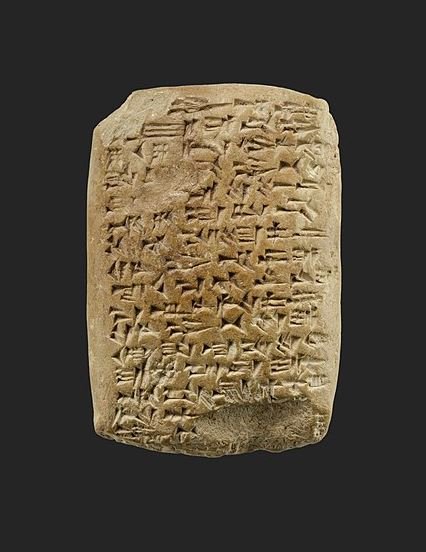
Amarna letter EA 153, a clay tablet letter from Abimilku.
The significance of the Amarna letters lies in their ability to provide historians with a glimpse into the international relations of the New Kingdom period in ancient Egypt.
Discovery and Composition
The Amarna letters were first uncovered in 1887 by local Egyptians who unearthed them from the ruins of Akhetaten. The discovery was followed by extensive archaeological excavations by scholars such as Flinders Petrie and Jørgen Alexander Knudtzon. In total, 382 clay tablets have been identified, with the majority comprising diplomatic communications and a smaller portion containing literary and instructional texts.
Unlike typical Egyptian inscriptions, which were primarily written in hieroglyphics or hieratic script, the Amarna letters were inscribed in Akkadian cuneiform, the diplomatic lingua franca of the Near East at the time. The majority of these letters exhibit influences from the Canaanite languages, demonstrating linguistic interactions between Akkadian and early Hebrew and Phoenician dialects.
Geographic Distribution of Correspondents
The letters were exchanged between Egypt and various contemporary states and city-states, including:
- Babylonia: Several letters exchanged between the Babylonian king and the Egyptian pharaoh reflect political alliances and marriage negotiations.
- Mitanni: The Mitanni kingdom, a significant power in northern Mesopotamia, maintained diplomatic correspondence concerning marriage alliances and military support.
- Hittites: The letters provide evidence of rising tensions between Egypt and the expanding Hittite Empire.
- Canaanite City-States: Many correspondences were sent by local rulers in Canaan, such as those from Jerusalem and Byblos, often requesting military aid and protection against external threats.
- Alashiya (Cyprus): The correspondence includes trade discussions involving copper shipments, which were essential for the Egyptian economy.
Diplomatic Themes in the Letters
One of the most significant themes in the Amarna letters is the practice of diplomatic marriages. Many rulers, including those of Babylonia and Mitanni, sought matrimonial alliances with Egyptian royalty. For instance, King Tushratta of Mitanni repeatedly wrote to Pharaoh Akhenaten regarding dowries and gifts.
Many letters, particularly those from Canaanite rulers, request military assistance from Egypt against invading forces such as the Hittites or the enigmatic Habiru. Rib-Hadda, the ruler of Byblos, sent more than 58 desperate appeals for Egyptian aid against local revolts and external threats.
The letters also shed light on extensive trade networks, particularly the supply of vital resources like gold, copper, and textiles. Babylonian kings, for instance, frequently requested shipments of Egyptian gold, emphasizing its abundance in Egypt and its importance for maintaining economic stability.
The Role of the Habiru
One of the most debated aspects of the Amarna letters is the frequent mention of a group known as the Habiru. Various Canaanite rulers complained about the incursions of these nomadic or semi-nomadic groups, seeking Egyptian intervention. Scholars have debated whether the Habiru were a precursor to the biblical Hebrews or simply a broader term for mercenaries, outlaws, or displaced peoples.
The Relationship Between Egypt and Its Vassals
The letters reveal Egypt’s administrative policies in Canaan and Syria, demonstrating a system of indirect control through local rulers who were expected to remain loyal to the pharaoh. These vassals were required to send tributes, recognize Egyptian authority, and maintain stability within their territories. However, many letters indicate discontent, with some rulers expressing frustration over Egypt’s lack of military intervention when their lands were threatened.
Chronology and Historical Significance
The Amarna letters cover a period of approximately 30 years, spanning the reigns of Amenhotep III, Akhenaten, and possibly early Tutankhamun. This timeframe is crucial for understanding the political landscape of the Late Bronze Age, particularly the shifting alliances and conflicts that shaped the Near East.
These correspondences provide significant chronological anchors for historians. For example, letters exchanged between Pharaoh Akhenaten and Kadashman-Enlil I, the Babylonian king, help establish the timeline of Akhenaten’s reign. Additionally, references to specific events, such as the growing power of the Hittites, align with other contemporary sources, reinforcing the historical validity of the letters.
Linguistic and Literary Insights
The linguistic composition of the Amarna letters is of immense value to scholars studying the evolution of Semitic languages. The Akkadian used in these letters is not the classical Babylonian dialect but rather a hybrid form influenced by the native tongues of the scribes who composed them. This mixture provides an early glimpse into the development of Proto-Canaanite, a precursor to Hebrew and Phoenician.
Beyond diplomatic correspondences, some of the Amarna texts include instructional writings, myths, and poetic passages. These provide valuable context on the education and literary traditions of scribes in the region.
Questions and Answers
Why are the Amarna Letters significant?
They provide key insights into international relations, trade, military conflicts, and political alliances in the Late Bronze Age, offering one of the most detailed records of diplomacy from the period.

Several Amarna letters displayed at the British Museum, London.
In what language were the Amarna Letters written?
Most were written in Akkadian cuneiform, the diplomatic lingua franca of the Near East, though they contain influences from Canaanite languages, reflecting linguistic diversity.
Which regions are mentioned in the Amarna Letters?
The letters reference Babylon, Mitanni, the Hittites, Canaanite city-states, Alashiya (Cyprus), and Egypt, highlighting diplomatic and military interactions across these areas.
What do the letters reveal about Egypt’s foreign policy?
They show Egypt’s indirect control over Canaanite city-states through vassal rulers, trade relationships, and military interventions requested by local governors.
Who were the Habiru, and why are they important?
The letters frequently mention the Habiru as a disruptive group in Canaan, leading to debates on whether they were outlaws, mercenaries, or a precursor to the biblical Hebrews.
How do the Amarna Letters contribute to historical chronology?
They provide key dates and events aligning with other sources, helping establish timelines for the reignsof Egyptian and Mesopotamian rulers.
What types of content are found in the letters?
Besides diplomatic requests, the letters contain marriage negotiations, trade agreements, military pleas, and some literary texts, reflecting diverse aspects of ancient life.





