Roads in Ancient Rome: History, Significance and Construction
Roman roads were an integral part of the Roman Empire’s infrastructure, enabling military expansion, facilitating trade, and enhancing communication across vast territories. These roads were marvels of engineering and a cornerstone of Roman society, laying the groundwork for modern transportation networks.
Origins and Development of Roman Roads
The Roman road network began in earnest in the early days of the Roman Republic (509 BC–27 BC) and expanded significantly during the Roman Empire (27 BC–476 AD).
The first major Roman road, the Via Appia (Appian Way), was initiated in 312 BC under Censor Appius Claudius Caecus. Designed to connect Rome to Capua in southern Italy, it showcased Rome’s emphasis on infrastructure as a tool for military and administrative control.
As the empire expanded, so too did its roads. By the peak of the Roman Empire, the road network spanned over 250,000 miles (400,000 kilometers), with approximately 50,000 miles (80,000 kilometers) paved. These roads stretched from the British Isles in the northwest to Mesopotamia in the east and from the Rhine River in the north to the deserts of North Africa.
The roads were constructed primarily for military purposes, allowing Roman legions to move quickly across vast distances. Over time, they became vital for trade, communication, and cultural integration, helping to unify the diverse provinces of the empire.

Image: The Appian Way.
Design and Construction
The construction of Roman roads was a meticulous process, reflecting the Romans’ advanced engineering skills. A standard Roman road typically consisted of several layers, ensuring durability and effective drainage.
Below are the primary steps and components involved in their construction:
Surveying and Planning
Roman engineers, known as agrimensores, used tools like the groma and dioptra to survey land and plan the road’s route. They prioritized direct paths, often cutting through hills and bridging valleys to create the straightest possible roads. When obstacles like mountains or rivers presented challenges, the Romans employed tunnels, bridges, or deviations.
Layers of Construction
The construction of Roman roads involved multiple layers:
- Statumen: The bottom layer, made of large stones or rubble, provided a stable foundation.
- Rudus: A middle layer of smaller stones or gravel mixed with lime.
- Nucleus: A finer layer of sand, crushed stones, or concrete, creating a solid base for the top layer.
- Pavimentum: The surface layer, often made of large, flat stones fitted together precisely. In urban areas, these stones were sometimes polished for aesthetic purposes.
Drainage Systems
Drainage was a critical aspect of Roman road construction. Roads were designed with a convex shape, sloping slightly from the center to the edges, allowing rainwater to flow into ditches or drainage channels on either side.
Durability and Maintenance
Roman roads were built to last, with some still in use today. The high-quality materials and sophisticated construction techniques minimized wear and tear. Additionally, Roman authorities regularly maintained roads, employing milestones to mark distances and stations for repair teams.
Types of Roman Roads
Roman roads served various functions, leading to the development of different types:
- Viae Publicae: Public roads financed by the state.
- Viae Privatae: Private roads maintained by individuals or estates.
- Viae Militares: Military roads designed primarily for the movement of troops.
- Viae Vicinales: Local roads connecting villages and rural areas.
Each type of road was integrated into the broader network, ensuring connectivity across urban and rural landscapes.
Strategic and Cultural Importance
The primary purpose of Roman roads was military. They enabled the rapid movement of legions, supplies, and equipment, crucial for the defense and expansion of the empire. Roads like the Via Egnatia in the Balkans and the Via Claudia Augusta in the Alps were vital military routes.
Roman roads facilitated trade across the empire by allowing merchants to transport goods more efficiently. Commodities like grain from Egypt, olive oil from Spain, and spices from the East flowed seamlessly along these routes. Market towns often sprang up along major roads, further stimulating economic activity.
The Roman postal system, known as the cursus publicus, relied heavily on roads. Messages and dispatches were carried by couriers on horseback or chariots, moving swiftly across provinces. Relay stations, or mutationes, were strategically placed along roads to provide fresh horses and rest for couriers.
Roman roads played a key role in the cultural integration of the empire. Ideas, religions, and technologies spread along these routes, contributing to the Romanization of conquered peoples. Christianity, for instance, benefited greatly from the road network, as early missionaries used it to disseminate their teachings.
Iconic Roman Roads
Some Roman roads became legendary for their scale, importance, or engineering:
- Via Appia (Appian Way): Known as the “Queen of Roads,” it was a vital route linking Rome to Brindisi in southeastern Italy.
- Via Egnatia: Spanning the Balkans, it connected the Adriatic and Aegean Seas, linking Europe to Asia.
- Via Claudia Augusta: A transalpine road facilitating movement between Italy and the Danube region.
- Watling Street: A Roman road in Britain connecting London to the northwest.
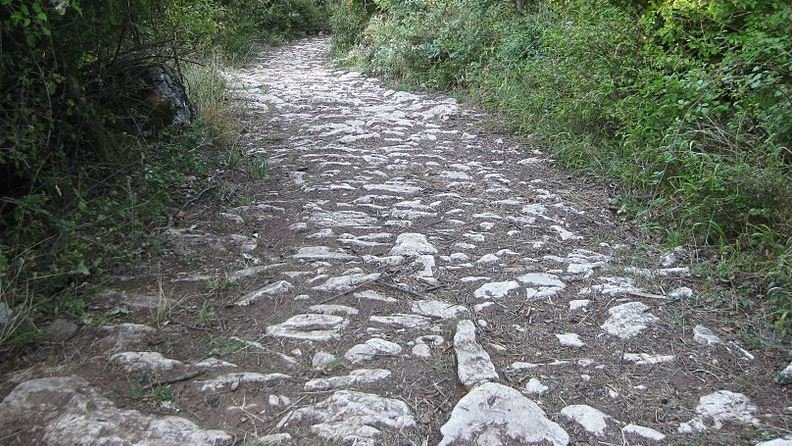
Image: ruins of Via Egnatia
Legacy and Influence
Roman road construction influenced subsequent civilizations, from the Byzantine Empire to medieval Europe. Techniques like paving and drainage were foundational for modern road-building practices.
Many modern roads follow the paths of ancient Roman roads. For example, Italy’s Strada Statale 7 closely traces the Via Appia. In Britain, major routes like the A1 and A5 align with Roman roads like Dere Street and Watling Street.
Roman roads symbolize Rome’s organizational prowess and technological ingenuity. They are often regarded as a metaphor for the empire’s ability to connect diverse peoples and regions.
Roman roads provide invaluable insights into the empire’s history. Archaeologists study these roads to uncover details about Roman engineering, settlement patterns, and daily life.

Decline and Rediscovery
With the fall of the Roman Empire in the 5th century CE, road maintenance declined. Many roads fell into disrepair, although some remained in use during the medieval period. During the Renaissance and Enlightenment, interest in Roman engineering revived, leading to the study and preservation of ancient roads.
In modern times, organizations like UNESCO and local heritage bodies have recognized Roman roads as historical landmarks, ensuring their protection and study.
Frequently asked questions about the Roman Roads

What was the primary purpose of Roman roads?
Roman roads were designed to link far-flung parts of the empire in the most direct routes possible, enabling the efficient movement of armies, people, and goods while showcasing Roman authority and unifying diverse regions.
Did the Romans invent roads?
No, the Romans did not invent roads. However, they perfected and expanded upon earlier road concepts, such as those dating back to the Bronze Age, creating a sophisticated and extensive network.
What was the first great Roman road, and why was it significant?
The first great Roman road was the Via Appia (Appian Way), constructed in 312 BC. Known as the “Queen of Roads” (Regina viarum), it was a nearly straight 196-km route linking Rome to Capua. It was later extended to Brundisium, reaching 569 km in total length.

Image: A section of the Appian Way.
Which other famous Roman roads are noteworthy?
Notable Roman roads include the Via Flaminia, connecting Rome to Fano; the Via Aemilia, linking Placentia to Aosta; and the Via Domitia, which stretched from the French Alps to the Pyrenees. The Via Egnatia was another key route, crossing the Balkans and connecting the western and eastern parts of the empire.
How did Roman engineers ensure roads followed straight routes?
Roman engineers conducted extensive surveys to chart straight routes, overcoming natural obstacles like marshes, forests, rivers, and mountains through techniques like draining, clearing, bridging, and tunneling.
What materials and layers were used in Roman road construction?
Roman roads were constructed in layers:
- Foundation: Rough gravel or crushed materials.
- Subbase (Rudus): Compact gravel or rubble.
- Base (Nucleus): Finer gravel or sand.
- Surface (Summum Dorsum): Stone blocks, volcanic tuff, basalt, or limestone slabs.
What features helped Roman roads manage water drainage?
Roads were slightly inclined from the center to the edges to allow rainwater to flow into side ditches or canals. Drains and drainage canals were also commonly incorporated.
What role did bridges, viaducts, and tunnels play in the Roman road network?
Bridges and viaducts enabled roads to cross rivers and valleys, while tunnels cut through mountains to maintain direct routes. Structures like the Milvian Bridge and Alcántara Bridge demonstrated Roman engineering prowess.
How did Roman roads impact the empire?
Roman roads enabled rapid military movement, increased trade efficiency, and fostered cultural exchange. They also served as a visible symbol of Roman authority, with roads often named after the officials who financed them.
Do Roman roads influence modern infrastructure?
Yes, many modern European routes trace their origins to Roman roads. Some, like Italy’s Tre Ponti, still carry traffic today, showcasing their enduring legacy and engineering brilliance.