Sacred Band of Thebes
The Sacred Band of Thebes, known in Greek as Ἱερός Λόχος (Hierós Lókhos), was an elite military unit of the Theban army that existed during the 4th century BC. This unique unit, composed of 150 pairs of male lovers, was both a symbol of military innovation and a reflection of the social and cultural fabric of ancient Greece. Its formation, tactics, and accomplishments not only played a pivotal role in Theban military history but also reshaped the dynamics of power within the Greek world.
Formation and Philosophical Underpinnings
The Sacred Band was founded around 378 BC by the Theban general Gorgidas. The concept behind its creation was deeply influenced by the Greek cultural ideal of the erastes-eromenos relationship—a bond between an older and younger male that emphasized mentorship, loyalty, and mutual respect.
The unit’s structure deliberately leveraged these bonds, fostering unparalleled unity and morale among its members. It was believed that soldiers would fight with exceptional courage to protect their partners and avoid dishonor in their eyes.
The Sacred Band was initially scattered across the Theban army’s front lines to inspire and bolster the morale of larger formations. However, under later commanders, most notably Pelopidas, the unit was restructured into a cohesive and concentrated force. This transformation enhanced its effectiveness on the battlefield, allowing it to become a decisive factor in several key engagements.
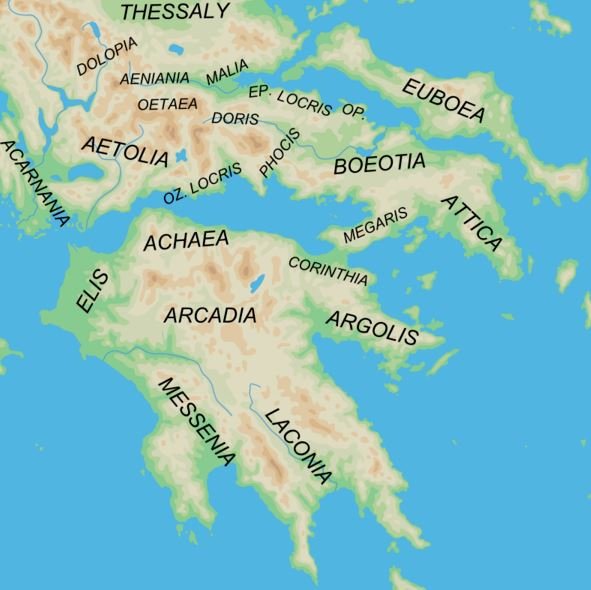
Image: A map of ancient Greece highlighting the key regions of Boeotia, dominated by Thebes, Laconia, led by Sparta, and Attica, governed by Athens.
Historical Context and Purpose
The creation of the Sacred Band coincided with a period of Theban resistance against Spartan hegemony. Following the Peloponnesian War (431–404 BC), Sparta had emerged as the dominant power in Greece. Its harsh policies and the occupation of Thebes’ Cadmea (citadel) in 382 BC deepened animosity between the two city-states. The Sacred Band was envisioned as a force capable of challenging Sparta’s military dominance, which had long been regarded as unassailable.
Thebes, under leaders like Pelopidas and Epaminondas, sought to assert its independence and re-establish its influence in Greek politics. The Sacred Band became a critical tool in this effort, embodying Thebes’ determination and military innovation.
Training and Organization
The members of the Sacred Band were selected for their physical prowess, bravery, and dedication. The pairs of lovers shared a unique camaraderie, which was further strengthened through rigorous training and discipline. Their bonds created an extraordinary sense of mutual responsibility and commitment, which translated into exceptional performance on the battlefield.
The unit was well-equipped and highly trained in the hoplite style of warfare, characterized by the use of heavy armor, shields, and spears. However, what set the Sacred Band apart was its ability to adapt and excel within innovative tactical frameworks, such as the oblique phalanx, a formation later perfected by Epaminondas.

Image: Statue of Epaminondas.
Major Accomplishments
Liberation of Thebes (379 BC)
The Sacred Band played a crucial role in the liberation of Thebes from Spartan control. In 379 BC, Theban exiles, led by Pelopidas, launched a daring coup to reclaim their city. While the Sacred Band’s role was not yet fully developed, the unit’s early members were instrumental in rallying support against the Spartans and their Theban collaborators. The successful expulsion of the Spartan garrison marked the beginning of Thebes’ resurgence as a major power.
Battle of Tegyra (375 BC)
The Sacred Band’s first major military triumph came at the Battle of Tegyra, where it faced a larger Spartan force near the city of Orchomenus. Commanded by Pelopidas, the Sacred Band defeated the Spartans in a decisive engagement. This victory was particularly significant because it demonstrated that Sparta’s legendary military invincibility could be challenged and overcome. Tegyra set the stage for Thebes’ rise and the Sacred Band’s reputation as an elite force.
Battle of Leuctra (371 BC)
The Sacred Band’s most celebrated moment came at the Battle of Leuctra, where it was central to Thebes’ groundbreaking victory over Sparta. Under Epaminondas’s leadership, Thebes employed the innovative oblique phalanx tactic, concentrating its forces on one flank to overwhelm the Spartan elite.
The Sacred Band, positioned at the forefront of the decisive attack, shattered the Spartan line, killing their king, Cleombrotus, and routing their forces. Leuctra was a watershed moment in Greek history, ending Sparta’s dominance and marking the beginning of Theban hegemony. The battle also highlighted the effectiveness of disciplined, cohesive units like the Sacred Band in breaking the rigid formations of traditional hoplite warfare.
Campaigns in the Peloponnese
Following Leuctra, the Sacred Band accompanied Epaminondas and Pelopidas on campaigns to consolidate Theban influence in the Peloponnese. The unit participated in the re-founding of Messene as an independent city-state, permanently weakening Sparta by depriving it of its Messenian helot labor force. These campaigns cemented Thebes’ position as a leading power in Greece and demonstrated the strategic and symbolic importance of the Sacred Band.
Decline and Final Stand
The Sacred Band’s remarkable legacy came to a tragic end at the Battle of Chaeronea in 338 BC. By this time, the power dynamics of Greece had shifted, with the rise of Philip II of Macedon and his son, Alexander the Great. The Macedonian forces, equipped with their formidable phalanx and advanced tactics, clashed with a coalition of Greek city-states, including Thebes.
Despite their bravery, the Sacred Band was overwhelmed by the superior organization and discipline of the Macedonian army. According to historical accounts, the Sacred Band fought to the last man, refusing to retreat or surrender. Plutarch noted that their bodies were found lying side by side, a testament to their unwavering loyalty and commitment.
Legacy and Cultural Significance
The Sacred Band of Thebes remains an enduring symbol of valor, unity, and sacrifice. Its unique composition—pairs of male lovers—challenged traditional notions of military organization and demonstrated the profound impact of personal bonds on collective performance. The Band’s victories, particularly at Tegyra and Leuctra, redefined the possibilities of Greek warfare and reshaped the balance of power in the ancient world.
While the Sacred Band’s existence was relatively short-lived, its influence extended far beyond its time. The unit’s tactical innovations and emphasis on cohesion inspired later military leaders, including Philip II of Macedon and Alexander the Great. The legacy of the Sacred Band also resonates in modern discussions of the role of relationships, trust, and diversity in effective teamwork.
Conclusion
The Sacred Band of Thebes was not just a military unit but a revolutionary concept that combined martial excellence with deep personal connections. From its origins under Gorgidas to its legendary victories at Tegyra and Leuctra, the Sacred Band exemplified the power of unity and innovation in the face of adversity.
Though it met a valiant end at Chaeronea, the Band’s legacy as an elite force that shaped the course of Greek history endures. Its story remains a testament to the transformative potential of courage, discipline, and human connection in the pursuit of greatness.
Frequently Asked Questions
Who founded the Sacred Band, and when?
The Sacred Band was founded by the Theban general Gorgidas around 378 BC.
What was the purpose of forming the Sacred Band?
The Sacred Band was created to foster unparalleled bravery and cohesion on the battlefield. The personal bonds between the soldiers encouraged them to fight fiercely to protect their partners and avoid dishonor.
What was the role of the Sacred Band in the Battle of Leuctra?
In 371 BC, the Sacred Band played a pivotal role in the Battle of Leuctra, where it was central to the Theban victory over Sparta. Under Epaminondas, the Band executed innovative tactics, such as the oblique phalanx, helping to shatter Spartan military dominance.
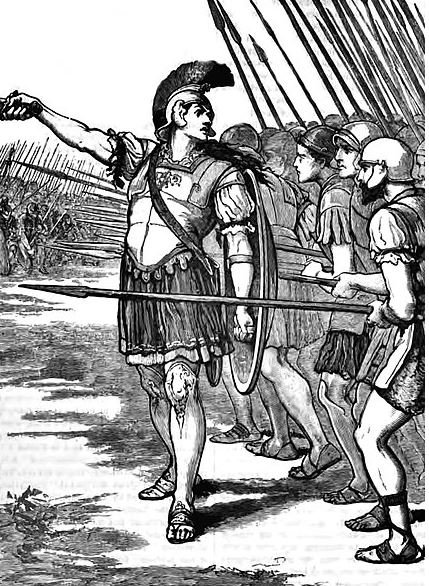
Image: Pelopidas during the Battle of Leuctra.
How did the Sacred Band’s structure evolve under different commanders?
Initially, the Sacred Band was dispersed across Theban front lines to bolster morale. Later commanders, like Pelopidas, concentrated the Band into a single, unified force, maximizing its effectiveness in battle.
What marked the end of the Sacred Band of Thebes?
The Sacred Band was annihilated in 338 BC at the Battle of Chaeronea, where they faced the forces of Philip II of Macedon and Alexander the Great. Despite their bravery, the unit was completely defeated.
How did Plutarch describe the fate of the Sacred Band at Chaeronea?
Plutarch noted that the fallen members of the Sacred Band were found lying side by side, reflecting their deep commitment to one another and their bravery in battle.
Why is the Sacred Band significant in military history?
The Sacred Band is celebrated as a symbol of courage, discipline, and camaraderie. It exemplifies how personal relationships were integrated into military tradition, enhancing unit cohesion and effectiveness.
What impact did the Sacred Band have on Spartan dominance?
The Sacred Band’s victory at Leuctra marked the beginning of the end of Spartan military dominance, paving the way for Theban ascendancy in Greek politics.
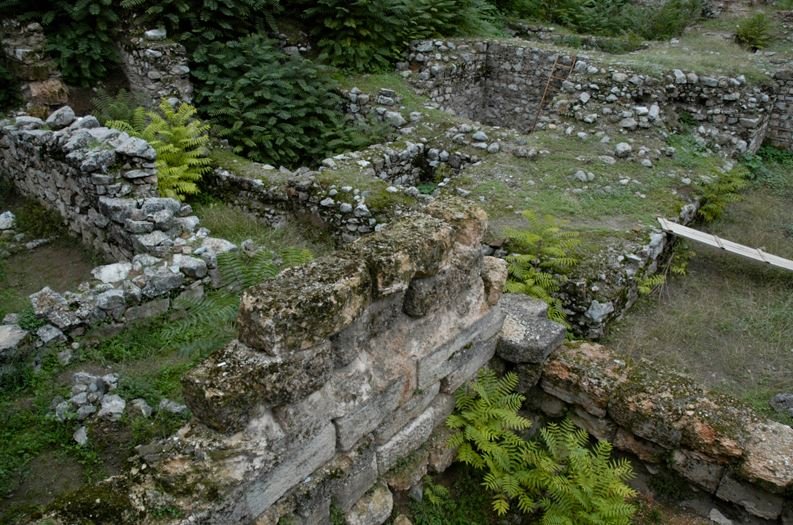
The Sacred Band of Thebes remains a symbol of valor and the influence of intimate relationships on military success. It highlights the role of personal bonds in fostering loyalty and resilience in ancient warfare. Image: Ruins of Thebes, Greece.





