Samora Machel: Life and Major Accomplishments of Mozambique’s First President
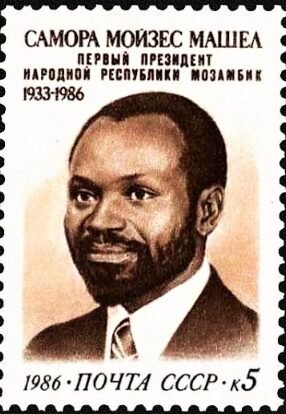
Samora Machel – The first President of independent Mozambique and a leader of the FRELIMO movement. Image: Postage stamp issued by the Soviet Union in Machel’s honor in 1986
Samora Moisés Machel (1933-1986) stands as one of the most pivotal figures in Mozambique’s history, celebrated as both a revolutionary and the first President of the independent state. His life and career are emblematic of the broader anti-colonial struggle in Africa and his leadership profoundly impacted Mozambique’s early years as an independent nation.
Early Life and Background
Born on September 29, 1933, in the village of Madragoa (now Chilembene) in Gaza Province, Mozambique, Samora Machel came from a family of farmers.
His grandfather had collaborated with Gungunhana, the last emperor of the Gaza Empire, symbolizing the deep-rooted resistance to colonial domination in Machel’s lineage.
Under Portuguese colonial rule, Machel’s father, though relatively prosperous, was subjected to systemic discrimination. The Portuguese authorities enforced exploitative policies that affected Black Mozambican farmers, such as mandating the cultivation of labor-intensive cotton and offering significantly lower prices for crops than those available to white farmers.
Despite owning 400 head of cattle and four plows—a sign of substantial local success—Machel’s father could not escape the limitations imposed by colonial power.
Machel’s education began in local Catholic mission schools, where he was taught Portuguese language and culture. These schools provided him with a basic education but did not offer pathways to advanced studies. Despite this, Machel obtained the necessary certification to train as a nurse, moving to the capital, Lourenço Marques (now Maputo), in 1954.
His experiences in the healthcare sector exposed him to the deep-seated inequalities perpetuated by the colonial system, where Black nurses earned significantly less than their white counterparts. This injustice sparked Machel’s early political awakening.
Political Awakening and Early Activism
Working at the Miguel Bombarda Hospital, Machel witnessed firsthand the racial and social inequalities that defined colonial Mozambique. He became vocal in his opposition to discriminatory policies and wage disparities. As a result, he attracted the attention of the Portuguese political police (PIDE). Recognizing the mounting danger, Machel decided to flee Mozambique in 1963, leaving behind his family and job to join the growing anti-colonial movement.
Machel made his way to Tanzania, where he joined the Mozambique Liberation Front (FRELIMO), an organization dedicated to fighting Portuguese colonial rule. Founded by Eduardo Mondlane, FRELIMO became the primary vehicle for Mozambique’s struggle for independence.
Machel quickly established himself as a capable and charismatic leader within the movement, earning a reputation for his commitment and military acumen. He received guerrilla training in Algeria and soon assumed command of FRELIMO’s military operations.
Rise to Leadership in FRELIMO
Following Eduardo Mondlane’s assassination in 1969, FRELIMO faced a crucial moment of transition. A leadership vacuum could have jeopardized the organization’s efforts, but Machel’s strategic and unifying approach helped solidify the group. In 1970, he was appointed FRELIMO’s president, with Marcelino dos Santos serving as his deputy.
Under Machel’s leadership, FRELIMO fully embraced Marxist-Leninist ideology, advocating for a socialist future for Mozambique. This ideological commitment shaped the movement’s strategies and policies. Machel believed that true liberation extended beyond political independence to include social and economic transformation. He reorganized FRELIMO’s military tactics, emphasizing mobility and adaptability to counter Portuguese forces effectively. These tactics involved shifting the focus of operations to various provinces, including Tete, where strategic strikes disrupted colonial supply lines and fostered widespread support among the local population.
The Portuguese response, led by General Kaúlza de Arriaga through “Operation Gordian Knot,” aimed to crush FRELIMO’s resistance in the north. However, Machel’s decision to redirect efforts to other regions, including Manica and Sofala provinces, diffused the Portuguese military’s concentrated power and allowed FRELIMO to maintain pressure on the colonial administration.

FRELIMO, the Mozambique Liberation Front, is a democratic socialist political party that has governed Mozambique since its independence from Portugal in 1975. Initially leading the liberation struggle, FRELIMO transitioned into a dominant political force, shaping Mozambique’s post-independence politics and development.
Mozambique’s Path to Independence
The broader context of the anti-colonial struggle in Africa, combined with Portugal’s political instability, set the stage for Mozambique’s independence. In 1974, the Carnation Revolution, a military coup in Portugal, overthrew the Estado Novo regime and signaled the end of Portuguese colonial rule. Recognizing the inevitability of change, Portuguese leaders began negotiations with FRELIMO. Machel’s stance was firm: there would be no compromise on Mozambique’s right to full independence.
As a committed socialist and adherent of Marxist-Leninist ideology, Machel played a crucial role in leading the country through its formative years.
On June 25, 1975, Mozambique achieved independence, and Machel was declared the first President of the newly formed People’s Republic of Mozambique. In his inaugural speech, Machel proclaimed the total eradication of colonial influence and committed to building a “state of People’s Democracy.” He emphasized unity and the collective responsibility of all Mozambicans to participate in nation-building.
Policies and Leadership as President
Machel’s presidency was characterized by ambitious reforms aimed at dismantling the vestiges of colonialism and promoting social equality. His government nationalized land, a significant departure from previous policies that had concentrated property ownership among Portuguese settlers. The nationalization extended to health and education sectors, which were transformed into public services accessible to all citizens. Private schools and clinics were abolished, and new national health and education systems were introduced.
Machel’s policies sought to uplift the previously marginalized Black population. Urban housing that had been owned by Portuguese landlords was redistributed, allowing Black Mozambicans to occupy properties previously out of their reach. The redistribution signaled a shift toward a more inclusive society, but these measures were not without challenges. The abrupt nature of these nationalizations led to logistical issues and resistance from those who had benefited from the old system.
Samora Machel played a crucial role in the country’s liberation from Portuguese colonial rule and in shaping its early post-independence policies.
Machel was also committed to supporting anti-colonial and anti-apartheid movements in southern Africa. He provided support to liberation movements in neighboring Zimbabwe (then Rhodesia) and South Africa, aligning with regional efforts to combat white minority rule. His stance against apartheid and his solidarity with African liberation movements earned him respect across the continent but also drew the ire of hostile regimes, particularly South Africa’s apartheid government.
Challenges and Civil War
The early years of Machel’s presidency were fraught with internal and external challenges. The Mozambique National Resistance (RENAMO), a rebel group initially backed by Rhodesia and later by apartheid South Africa, launched a violent insurgency that plunged the country into a brutal civil war. RENAMO’s campaign, marked by widespread violence and disruption, undermined Machel’s efforts to consolidate the socialist state and build national unity.
The conflict severely strained Mozambique’s economy, already weakened by the colonial legacy and natural disasters such as droughts and floods. The civil war led to significant loss of life, displacement, and destruction of infrastructure, compounding the country’s economic challenges. Despite these obstacles, Machel remained steadfast in his commitment to socialism and national self-sufficiency.
Machel’s administration faced criticism for its handling of dissent. Reeducation camps were established for individuals deemed counterproductive or opposed to socialist policies. While intended to foster social cohesion and reform, these camps were marred by reports of harsh conditions and human rights abuses, which tarnished Machel’s reputation domestically and internationally.
Death and Legacy
On October 19, 1986, Machel’s presidency was cut short when his plane crashed near the border of Mozambique and South Africa, in the Lebombo Mountains. The mysterious circumstances surrounding the crash have fueled decades of speculation, with theories ranging from pilot error to sabotage by South African forces opposed to Machel’s anti-apartheid stance. The official investigation attributed the crash to navigational errors, but many remain unconvinced, believing foul play to be a more likely explanation.
Samora Machel was known for his leadership in the struggle against Portuguese colonial rule and his efforts to establish a socialist state
Machel’s death was a significant blow to Mozambique and the wider African liberation movement. He had become a symbol of anti-colonial resistance and Pan-African solidarity. Leaders from across the continent and beyond attended his state funeral, reflecting his stature as an influential figure in the struggle for African independence.
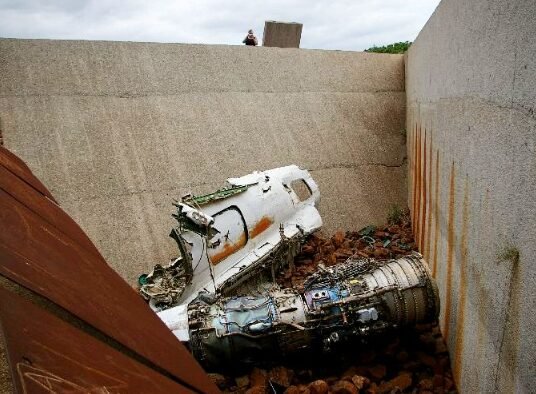
Remains of the wreck from the 1986 Mozambican Tupolev Tu-134 crash
Despite the challenges that marked his presidency, Machel is remembered for his vision of an independent and united Mozambique. His efforts to dismantle the structures of colonial exploitation and promote social equality have left a lasting imprint on the country. He inspired subsequent generations to pursue self-determination and social justice.
Machel’s legacy endures through various forms of commemoration, including monuments, streets, and institutions bearing his name. His commitment to African unity and his leadership during a transformative period in Mozambique’s history solidify his status as a revered figure in both national and continental contexts.
Did you know…?
Graça Machel, Samora Machel’s widow, continued to embody his principles by advocating for social causes and later became the First Lady of South Africa through her marriage to Nelson Mandela.
Frequently Asked Questions

Samora Moisés Machel was a Mozambican revolutionary and the first President of independent Mozambique, serving from 1975 until his death in 1986.
Where and when was Samora Machel born?
He was born on September 29, 1933, in the village of Madragoa (now Chilembene) in Gaza Province, Mozambique.
How did Machel’s early life reflect the challenges of colonial rule?
Samora Machel’s family, though relatively prosperous, faced systemic discrimination under Portuguese colonial rule. His father had to accept lower prices for crops than white farmers and was forced to grow cotton, which reduced time spent cultivating essential food crops.
What kind of education did he receive?
He attended Catholic mission schools where he learned Portuguese language and culture, but he did not complete secondary education. He later pursued nursing studies in Lourenço Marques (now Maputo) starting in 1954.
What sparked his early political activism?
While working as a nurse at the Miguel Bombarda Hospital, Machel protested wage disparities between Black and white nurses. This experience heightened his awareness of racial and social inequalities and marked the beginning of his anti-colonial activism.
Why did Samora Machel leave Mozambique in 1963?
He left Mozambique in 1963 to avoid being targeted by the Portuguese political police (PIDE) for his anti-colonial activities and to join the independence struggle led by FRELIMO in Tanzania.
What role did Machel play in FRELIMO?
Machel quickly rose through the ranks of FRELIMO, taking charge of military operations and advocating for Marxist-Leninist principles. He became the leader of FRELIMO in 1970 after the death of Eduardo Mondlane.
When did Mozambique achieve independence, and what was Machel’s role in it?
Mozambique gained independence on June 25, 1975, after a military coup in Portugal ended colonial rule. Machel declared independence and became the country’s first president.

Samora Moisés Machel was a Mozambican revolutionary and politician who became the first President of Mozambique, serving from its independence in 1975 until his death in a plane crash in 1986.
What were some key policies implemented by Machel’s government?
His government nationalized land, healthcare, and education, abolished private schools and clinics, and redistributed urban housing to Black Mozambicans. These policies aimed to eradicate colonial legacies and create a socialist state.
What challenges did Machel face during his presidency?
His government faced challenges from RENAMO, an insurgent group supported by Rhodesia and apartheid South Africa, which led to a civil war. Economic hardships and natural disasters further strained the country.
How did Machel’s administration handle opposition?
Machel’s government used authoritarian measures, including reeducation camps for political opponents and individuals considered counterproductive to socialist society. These camps were criticized for their harsh conditions and abuses.
How did Samora Machel die?
Machel died in a plane crash on October 19, 1986, near the Mozambique-South Africa border. The crash’s cause was attributed to pilot error, but many theories suggest possible foul play by South African forces.
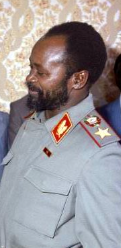
Machel is remembered as a revolutionary leader who fought against colonialism and advocated for African unity and social justice. His vision for an independent and socialist Mozambique continues to inspire future generations.





