Scottish Botanist John Hutton Balfour
Scottish botanist John Hutton Balfour’s life and career were defined by his dedication to botanical science, education, and public engagement. His role in expanding botanical education, his influential textbooks, and his leadership in the development of the Royal Botanic Garden Edinburgh underscore his lasting impact on the field.
Despite early career uncertainties and political struggles, he cemented his place as one of Scotland’s most respected botanists. His contributions to academia and plant sciences continue to be recognized, ensuring that his work remains relevant long after his time.
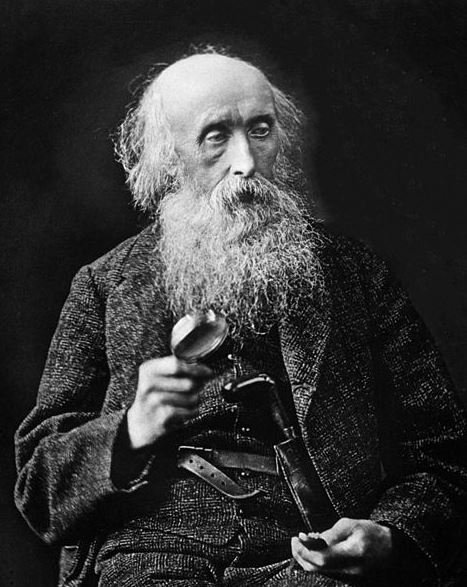
An 1878 photograph of John Hutton Balfour.
Early Life and Education
John Hutton Balfour was born on September 15, 1808, in Edinburgh, Scotland, into a family with strong medical and academic connections. His father, Andrew Balfour, was an army surgeon who later established a printing and publishing business in Edinburgh. Raised in an environment that encouraged intellectual pursuits, Balfour received his early education at the prestigious Royal High School of Edinburgh. He then pursued higher education at St Andrews University before enrolling at the University of Edinburgh, where he obtained his Master of Arts degree and subsequently earned a Doctor of Medicine (M.D.) in 1832.
During his time at the University of Edinburgh, Balfour became an active member of the Plinian Society, an organization dedicated to the study of natural history. This membership introduced him to influential figures such as William A.F. Browne, a well-known phrenologist. The debates within the society fostered his growing interest in natural history, a passion that would eventually define his career. Initially, Balfour considered ordination in the Church of Scotland but ultimately chose to pursue a medical practice in Edinburgh starting in 1834. His exposure to both medical and botanical studies helped shape his lifelong engagement with plant sciences.
Early Career and Recognition
Balfour quickly established himself in Edinburgh’s scientific community. In 1834, he was elected a member of the Harveian Society of Edinburgh, an organization dedicated to the advancement of medical knowledge. By 1852, he had risen to serve as its President. His growing influence in scientific circles was further solidified when, at the young age of 26, he was elected a Fellow of the Royal Society of Edinburgh (FRSE) in January 1835. Over the years, he played a significant role in the society, serving as General Secretary from 1860 to 1879 and later as Vice President from 1881 to 1883.
Balfour’s academic contributions expanded beyond medicine. His deepening interest in botany led him to become one of the founding members of the Botanical Society of Edinburgh in 1836. He later served as its President from 1845 to 1846. In 1838, he was instrumental in establishing the Edinburgh Botanical Club, further cementing his reputation as a key figure in the field.
Professorship and Influence in Botany
Balfour’s transition from medicine to botany was gradual yet impactful. By 1841, he began delivering lectures on botany at Edinburgh’s extramural school, gaining recognition as an engaging educator. His teaching abilities earned him an appointment as Professor of Botany at the University of Glasgow in 1842. Three years later, in 1845, he was offered a more prestigious position at the University of Edinburgh, where he became the Chair of Botany.
Alongside this academic appointment, he was also designated the 7th Regius Keeper of the Royal Botanic Garden Edinburgh and was honored with the title of Her Majesty’s Botanist. His selection for these esteemed positions was not without controversy. A fierce political battle ensued, with Balfour’s candidacy opposed by the eminent botanist Joseph Dalton Hooker, a close associate of English geologist and biologist Charles Robert Darwin (1809-1882). Despite the contention, Balfour emerged victorious, securing his place in Scotland’s botanical legacy.
Contributions to Botanical Science and Education
Balfour’s tenure at the University of Edinburgh was marked by significant contributions to botanical education. He served as Dean of the Faculty of Medicine and became widely recognized for his engaging and thorough teaching methods. His lectures often incorporated theological reflections, reflecting his enduring belief in natural theology. This approach appealed to a wide audience and solidified his reputation as a skilled communicator in scientific education.
Balfour maintained correspondence with leading scientific figures of his time, including Charles Darwin. In January 1862, he exchanged letters with Darwin on botanical topics, reminiscing about their shared experiences in the Plinian Society. Another notable correspondent was Hewett Cottrell Watson, a botanist known for his contributions to plant geography and his unconventional views on cerebral hemispheric differences.
John Hutton Balfour authored numerous textbooks, including Manual of Botany and Elements of Botany for Schools, making botanical education more accessible.
Under Balfour’s leadership, the Royal Botanic Garden Edinburgh expanded significantly. He oversaw the development of new facilities, including an improved palm-house, an arboretum, and additional teaching accommodations. These enhancements cemented Edinburgh’s status as a major center for botanical research and education.
Publications and Literary Contributions
Balfour was a prolific author, producing numerous botanical textbooks that became widely used in academic settings. His most notable works include:
- Manual of Botany (1848)
- Class Book of Botany (1852)
- Outlines of Botany (1854)
- Elements of Botany for Schools (1869)
- Botanist’s Companion (1860)
- Introduction to Palaeontological Botany (1872)
- The Plants of Scripture (1872)
He also contributed significantly to the Encyclopædia Britannica, particularly in its 8th edition, where he wrote the article on botany. His publications reflected his ability to make complex botanical concepts accessible to students and general readers alike.
John Hutton Balfour contributed to the Encyclopædia Britannica and other major scientific publications.
In recognition of his contributions to botany, California’s foxtail pine (Pinus balfouriana Balf.) was named in his honor, highlighting the international impact of his work.
Later Years and Retirement
Balfour retired from his academic and botanical positions in 1879, after nearly four decades of service. He continued to reside at Inverleith House within the Royal Botanic Gardens, Edinburgh, where he remained active in botanical discussions and scientific circles. His later years were marked by a continued interest in plant sciences and mentoring young botanists.
On February 11, 1884, John Hutton Balfour passed away at Inverleith House. He was laid to rest in Warriston Cemetery alongside his wife, Marion Spottiswood Balfour. His final resting place is situated on the north side of the main upper east-west path of the cemetery.
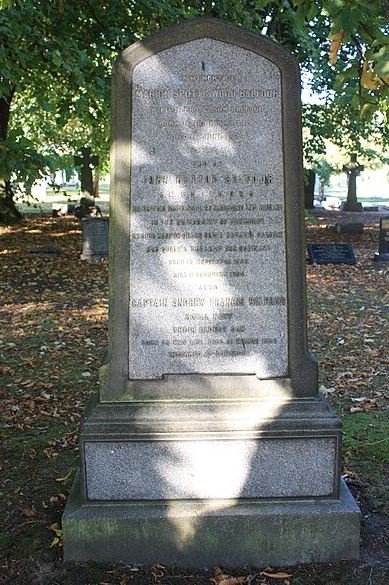
Burial site of John Hutton Balfour.
Family and Legacy
Balfour’s family played a significant role in Scottish science and medicine. He married Marion Spottiswood Bayley on August 8, 1848, and they had several children, many of whom made notable contributions to various fields. Their son, Sir Isaac Bayley Balfour, followed in his father’s footsteps, becoming a distinguished botanist and later serving as Sherardian Professor of Botany at Oxford University before taking over the Chair of Botany at Edinburgh.
Balfour’s familial influence extended further, as he was the uncle of Sir Andrew Balfour, a specialist in tropical medicine and the first Director of the London School of Hygiene & Tropical Medicine. His legacy in the field of botany persisted through generations, and he remained an enduring figure in scientific history.
Interestingly, his great-great-granddaughter is the acclaimed actress Tilda Swinton, adding a cultural dimension to his legacy.
Frequently Asked Questions
How did Balfour’s early education shape his career?
His studies at St Andrews and the University of Edinburgh, along with his involvement in the Plinian Society, nurtured his interest in natural history and botany, ultimately leading him to abandon a potential career in the Church of Scotland for medicine and botanical sciences.
Why was Balfour’s appointment at the University of Edinburgh controversial?
His selection as Chair of Botany and Regius Keeper of the Royal Botanic Garden Edinburgh was contested by Joseph Dalton Hooker, a prominent botanist and close associate of Charles Darwin, leading to a politically charged competition that Balfour eventually won.
What role did Balfour play in scientific societies?
He was an active member and leader in multiple scientific societies, including the Royal Society of Edinburgh, the Botanical Society of Edinburgh, and the Harveian Society, where he served in key leadership roles such as President and General Secretary.
What was Balfour’s relationship with Charles Darwin?
Balfour and Darwin were acquainted through the Plinian Society and corresponded on botanical matters. Despite differing views on evolution, they maintained a professional exchange on plant sciences.
How did Balfour’s work impact future generations?
His son, Sir Isaac Bayley Balfour, became a distinguished botanist and continued his father’s legacy at Oxford and Edinburgh. Additionally, his nephew, Sir Andrew Balfour, contributed to tropical medicine and public health.
Where is Balfour buried, and what is his lasting legacy?
He was buried in Warriston Cemetery, Edinburgh. His contributions to botany, education, and institutional development ensure his recognition as one of Scotland’s most influential botanists.
FACT CHECK: At worldhistoryedu.com, we strive for utmost accuracy and objectivity. But if you come across something that doesn’t look right, don’t hesitate to leave a comment below.





