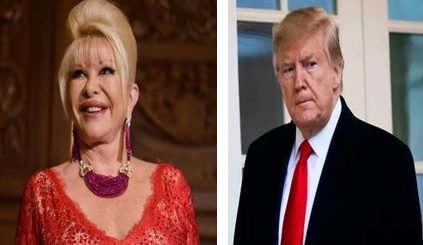
Donald Trump’s background before politics
Before becoming the 45th and later the 47th president of the United States, Donald Trump had a long career in business, real estate, and media. His journey from a New York real estate mogul to a reality television star and a global brand was marked by high-profile deals, financial struggles, and an ability to maintain public attention. His background shaped his approach to politics, emphasizing self-promotion, branding, and aggressive negotiation.

Donald Trump
Early Life and Family Background
Donald John Trump was born on June 14, 1946, in Queens, New York City. He was the fourth of five children born to Fred Trump, a real estate developer, and Mary Anne MacLeod Trump, a Scottish immigrant. His father built a fortune developing middle-class housing in New York’s outer boroughs, which would later provide Donald with a strong financial foundation for his career.
Trump was born in New York City in 1946. He graduated from the University of Pennsylvania with a degree in economics in 1968.
Growing up in wealth, Trump was exposed to the real estate business early. His father, known for constructing affordable housing in Brooklyn and Queens, had a reputation for being a tough and strategic businessman. Fred Trump’s strict work ethic and ability to navigate government contracts influenced Donald’s future business strategies. His mother, Mary Anne, was a homemaker who played a significant role in raising the children.
Despite the family’s affluence, Donald was considered a troublesome child. His behavior led his parents to send him to the New York Military Academy at age 13, where he spent five years. The academy instilled discipline, leadership, and a competitive spirit in him, qualities he would later emphasize as a businessman and politician. Trump excelled in sports, particularly baseball, and developed a commanding presence, which became one of his defining characteristics.

2025’s official portrait of Donald Trump.
Education and Early Career Aspirations
After graduating from the military academy in 1964, Trump attended Fordham University for two years before transferring to the Wharton School at the University of Pennsylvania. Wharton was one of the few schools at the time to offer a real estate studies program, making it a strategic choice for someone planning to enter the property business. He graduated in 1968 with a Bachelor of Science degree in economics.
During his college years, Trump remained connected to his father’s real estate business. He frequently visited construction sites, attended business meetings, and learned about property development and management. His father’s influence was crucial in shaping his early understanding of finance, loans, and real estate deals.
Although Trump briefly considered a career in show business, he ultimately chose to enter the family business. His decision was likely influenced by the financial opportunities real estate presented, as well as the significant head start he had due to his father’s success. His Wharton education provided a theoretical foundation, but most of his real estate knowledge came from hands-on experience with his father’s projects.
Early Years in the Real Estate Business
Trump formally joined his father’s company, Trump Management, in 1968. The business specialized in renting and developing housing for middle-class tenants, primarily in Brooklyn and Queens. He started by managing apartment buildings, handling tenant complaints, and overseeing renovations.
In 1971, his father made him president of the company, which was later rebranded as the Trump Organization. Donald aimed to expand the business beyond affordable housing into high-end luxury properties. His ambitions were significantly larger than his father’s, and he was determined to make a name for himself in Manhattan’s competitive real estate market.

A photo of young Donald Trump.
Donald Trump became president of his family’s real estate business in 1971, expanding it into luxury properties.
Trump’s first major deal in Manhattan came in 1978 when he secured financing to renovate the Commodore Hotel, a struggling property near Grand Central Terminal. With financial backing from his father and tax abatements from the city, Trump transformed the hotel into the Grand Hyatt, which opened in 1980. The success of this project helped establish his reputation as a rising star in New York’s real estate scene.
Following this, he developed Trump Tower, a 58-story skyscraper on Fifth Avenue. Completed in 1983, it became his signature property, featuring high-end apartments, retail spaces, and his corporate offices. Trump Tower cemented his status as a luxury real estate developer and introduced his brand to the broader public.
Expansion into Casinos and Hotels
In the 1980s, Trump expanded his business empire into hotels, casinos, and other high-profile developments. He acquired the Plaza Hotel in 1988, spending $400 million on renovations. That same decade, he entered the Atlantic City casino market, opening the Trump Plaza Hotel and Casino in 1984, followed by the Trump Castle and the Trump Taj Mahal. These ventures positioned him as a major player in the hospitality industry.
Trump’s aggressive expansion, however, came with financial risks. His reliance on borrowed money made his business empire vulnerable to economic downturns. By the early 1990s, several of his properties, including his casinos, faced financial trouble, leading him to declare multiple bankruptcies. Despite these setbacks, he maintained his public persona as a successful businessman, often leveraging media appearances to reinforce his image.

45th and 47th President of the United States, Donald J. Trump
Bankruptcies and Financial Struggles
Between 1991 and 2009, Trump filed for Chapter 11 bankruptcy protection for six of his businesses. His casinos in Atlantic City, the Plaza Hotel, and other properties suffered from excessive debt and declining revenues.
His ability to negotiate debt restructuring agreements with banks and investors allowed him to avoid personal bankruptcy. However, the financial difficulties cost him significant assets and forced him to scale back his ambitions temporarily. The Trump Organization shifted focus toward licensing deals and branding rather than high-risk real estate ventures.
Trump’s financial struggles, business setbacks, and comebacks contributed to his public image as a fighter who could navigate adversity.
While his financial struggles could have ended his career, Trump used them as an opportunity to reshape his public image. He emphasized his ability to rebound from adversity, a narrative that later became a cornerstone of his political campaign.
Media Career and Personal Branding
Trump’s most significant shift came in the 2000s when he embraced media and entertainment. In 2004, he became the host and executive producer of The Apprentice, a reality television show where contestants competed for a job in his organization. The show’s success made him a household name beyond business circles, reinforcing his brand as a decisive, no-nonsense leader.
His catchphrase, “You’re fired,” became widely recognized, and the show’s popularity led to spin-offs, including The Celebrity Apprentice. The series ran for over a decade and contributed to Trump’s resurgence as a public figure. His television success also led to endorsements, licensing deals, and speaking engagements that further built his personal brand.
Donald Trump is also best known for hosting the critically acclaimed reality TV series The Apprentice from 2004 to 2015.
Trump also leveraged his name for business ventures outside real estate, including merchandise, books, and educational programs. He launched Trump University, a for-profit educational program offering real estate courses, though it later faced lawsuits for fraudulent practices.
His media presence, coupled with his real estate background, positioned him as an authority on business and leadership. This helped him cultivate a base of supporters who viewed him as a successful outsider unafraid to challenge traditional elites.
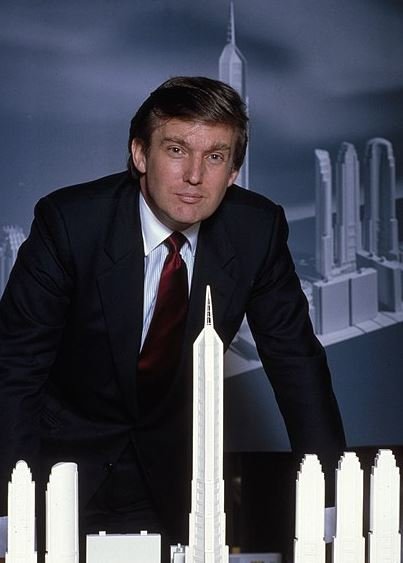
A picture of Trump, taken in 1985.
Political Involvement and Speculation
Before officially entering politics, Trump had a history of making political statements and considering presidential runs. In the 1980s, he took out full-page newspaper ads criticizing U.S. foreign policy. In 2000, he briefly ran for president under the Reform Party but withdrew.
Donald Trump’s background before politics was defined by his career in real estate, branding, and media.
He frequently commented on political issues, aligning with both parties at different times. He registered as a Democrat in the early 2000s before returning to the Republican Party in 2012.
His endorsement of the “birther” conspiracy theory against Barack Obama gained him attention from conservative circles. By the time he announced his candidacy in 2015, he had already built a political following through media appearances and public statements on trade, immigration, and national security.
READ MORE: Donald Trump: 10 Most Significant Achievements
Frequently Asked Questions

How did Trump first become president?
Trump won the 2016 presidential election as a Republican, defeating Democratic nominee Hillary Clinton. He ran as a political outsider, appealing to voters with his “Make America Great Again” slogan and populist policies.
READ MORE: Most Notable Republican Presidents in US History
What were key policies of Trump’s first presidency (2017-2021)?
- Implemented tax cuts and deregulation
- Appointed three conservative Supreme Court justices
- Enforced stricter immigration policies, including a travel ban
- Withdrew the U.S. from international agreements like the Paris Climate Accord and the Iran nuclear deal
- Signed the CARES Act stimulus package in response to COVID-19
- Was impeached twice but acquitted by the Senate both times
How did Trump respond to losing the 2020 election?
Trump lost to Joe Biden but falsely claimed the election was stolen. He attempted to overturn the results through lawsuits, pressuring officials, and encouraging supporters to challenge the outcome, culminating in the January 6, 2021, attack on the U.S. Capitol.
What legal issues did Trump face after his first presidency?
Trump was involved in multiple legal battles, including:
- A conviction in 2024 for falsifying business records related to hush money payments
- Indictments over his efforts to overturn the 2020 election results and mishandling classified documents
- Civil lawsuits, including defamation and business fraud cases
How did Trump return to the presidency in 2024?
Trump won the 2024 election against Kamala Harris, making him the second U.S. president (after Grover Cleveland) to serve non-consecutive terms. His campaign was marked by controversial rhetoric and policy proposals, including mass deportations and high tariffs.
What were Trump’s first actions in his second presidency?
- Issued a record number of executive orders
- Pardoned around 1,500 January 6 rioters
- Reinstated his mass deportation program
- Declared a national energy emergency, rolling back environmental regulations
- Cut diversity and inclusion programs in the federal government
How is Trump viewed by historians and scholars?
Trump has been ranked among the worst U.S. presidents due to his attacks on democratic institutions, handling of crises, and divisive rhetoric. However, he remains popular among his political base, with strong support from conservative and populist voters.