Sigmund Freud – Biography, Beliefs and Major Contributions
Born Sigismund Schlomo Freud, Sigmund Freud was a neurologist who practiced in the late 19th and early 20th centuries. He is largely regarded as the founder of contemporary psychology and the major architect of the psychoanalytic process, which involves a patient and a psychoanalyst in a conversation to diagnose and treat psychological illnesses.
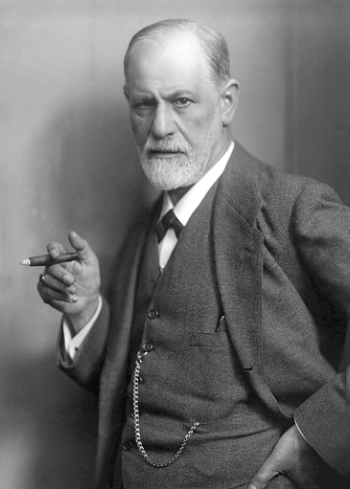
Sigmund Freud, born Sigismund Schlomo Freud, was a neurologist and the founder of psychoanalysis. He developed therapeutic techniques such as free association and the talking cure, and is known for his theories on the unconscious mind, defense mechanisms, and psychosexual development.
Early Life and Education
Sigmund Freud, born Sigismund Schlomo Freud on May 6, 1856, in Freiberg, Moravia (now Příbor, Czech Republic), was a pivotal figure in the field of psychology. Freud was born into a Galician Jewish family, with his father, Jakob Freud, a merchant, and his mother, Amalia Nathansohn Freud, who came from a wealthier family. Freud was the first of eight children, and his early years were marked by a blend of familial and cultural influences that would profoundly shape his future career.
At the age of four, Freud’s family moved to Vienna, Austria, a city that would become the center of his academic and professional life. Freud demonstrated exceptional intellectual abilities from an early age. He excelled in subjects like physics, arithmetic, history, Latin, and Greek, which facilitated his admission to the University of Vienna at seventeen. Freud initially pursued studies in medicine, a choice influenced by practical considerations and the need for financial stability.

Freud was born in Freiberg, Moravia (now Příbor, Czech Republic), in 1856. His family moved to Vienna when he was four. He was an exceptional student in subjects like physics, arithmetic, history, Latin, and Greek and was admitted to the University of Vienna at seventeen due to his high academic performance. Image: Freud’s birthplace, a rented room in a locksmith’s house, Freiberg, Austrian Empire (Příbor, Czech Republic)
Freud graduated with a medical degree in 1881. Following his graduation, he began working at the Vienna General Hospital, where he conducted research under the mentorship of prominent figures like Ernst Brücke, a physiologist. Freud’s early work focused on brain anatomy and neurophysiology, but his interests soon shifted towards the study of psychological disorders.
In 1885, Freud completed his habilitation, a qualification that allowed him to become a docent in neuropathology at the University of Vienna. He was later promoted to an affiliated professor in 1902. Freud established his private clinical practice in Vienna in 1886, where he would conduct much of his groundbreaking work in psychoanalysis.
Freud’s professional and personal life was deeply affected by the rise of Nazism in Austria. In 1938, after the annexation of Austria by Nazi Germany, Freud fled to the United Kingdom to escape persecution. His health declined in his later years, and he died on September 23, 1939, in London, after a prolonged battle with cancer of the jaw.
Beliefs
The Structure of the Psyche
Sigmund Freud’s theories fundamentally reshaped the understanding of the human mind. Central to his beliefs is the concept of the psyche’s structure, divided into three parts: the id, ego, and superego. Each component plays a crucial role in influencing behavior and psychological experiences.
- The Id: The id represents the most primitive part of the psyche, driven by the pleasure principle. It seeks immediate gratification of basic instincts and desires, such as hunger, sex, and aggression, without regard for societal rules or consequences. The id operates unconsciously and is concerned only with fulfilling its desires.
- The Ego: The ego operates on the reality principle, mediating between the demands of the id and the constraints of the external world. It is responsible for rational thought and decision-making, working to satisfy the id’s desires in a socially acceptable manner. The ego considers reality and the consequences of actions, making it a more conscious and organized part of the psyche.
- The Superego: The superego embodies internalized societal and parental standards. It functions as a moral compass, enforcing rules and ideals learned from parents and society. The superego strives for perfection and imposes guilt when its standards are not met, often creating internal conflict between the demands of the id and the moralistic expectations of the superego.
Defense Mechanisms
Freud introduced the concept of defense mechanisms, which are unconscious strategies used by the ego to manage internal conflicts and anxiety. These mechanisms protect individuals from emotional pain and maintain psychological stability. Key defense mechanisms include:
- Repression: The process of pushing distressing memories and desires out of conscious awareness. Repressed thoughts remain active in the unconscious and can influence behavior and emotions.
- Projection: Attributing one’s own undesirable traits or feelings to others. For example, an individual who is feeling hostile might accuse others of being hostile towards them.
- Displacement: Redirecting emotions from a threatening object or person to a safer one. For instance, someone who is angry at their boss might take out their frustration on a family member.
- Denial: Refusing to acknowledge the reality of a distressing situation or fact. This might involve denying a problem exists despite clear evidence.
- Rationalization: Justifying unacceptable behavior or thoughts with logical or acceptable reasons, even if they are not the true motivations behind the actions.
The Unconscious Mind
Freud’s exploration of the unconscious mind was revolutionary. He proposed that the unconscious contains thoughts, memories, and desires that are not accessible to conscious awareness but still influence behavior. According to Freud, the unconscious mind plays a significant role in shaping personality and driving actions. Freud believed that exploring the unconscious could provide insight into unresolved conflicts and psychological issues.
Repression and Psychopathology
Freud’s theory of repression was central to his understanding of psychopathology. He argued that repressed memories and desires could lead to psychological distress and symptoms if not addressed. Freud believed that exploring these repressed elements through techniques like free association and dream analysis could help resolve internal conflicts and alleviate symptoms.
Major Contributions
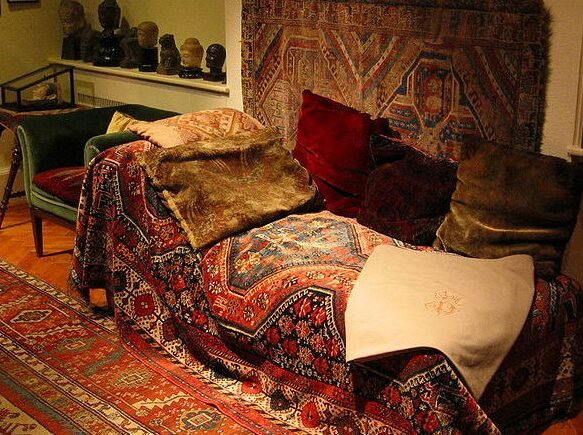
Sigmund Freud’s Couch
Development of Psychoanalysis
Sigmund Freud is best known for developing psychoanalysis, a therapeutic approach aimed at uncovering and addressing unconscious conflicts. Psychoanalysis involves several key techniques:
- Free Association: A method where patients are encouraged to speak freely about their thoughts, feelings, and memories. This technique aims to uncover hidden or repressed thoughts and feelings that may be influencing behavior.
- Dream Analysis: Freud viewed dreams as manifestations of repressed wishes and unconscious desires. By analyzing dreams, Freud believed he could gain insight into the unconscious mind and address underlying issues.
- Transference: The phenomenon where patients project feelings and attitudes from past relationships onto the therapist. Freud identified transference as a crucial aspect of the analytic process, providing insight into the patient’s unconscious dynamics.
The Oedipus Complex
One of Freud’s most controversial theories is the Oedipus complex, which he introduced in his theory of psychosexual development. The Oedipus complex posits that during the phallic stage of development, boys experience unconscious desires for their mothers and feelings of rivalry and jealousy towards their fathers. Freud believed that resolving this complex is essential for healthy psychological development and the formation of a mature, stable personality.
Psychosexual Development
Freud proposed a theory of psychosexual development, which outlines a series of stages through which individuals progress as they develop. Each stage is characterized by the focus of libidinal energy on different erogenous zones:
- Oral Stage (0-18 months): Focuses on oral activities such as sucking and biting. Freud believed that issues during this stage could lead to oral fixation in adulthood, manifesting as behaviors like smoking or overeating.
- Anal Stage (18 months-3 years): Centers on toilet training and control over bodily functions. Freud suggested that difficulties during this stage could result in personality traits such as obsessiveness or stinginess.
- Phallic Stage (3-6 years): Focuses on the genitals and the resolution of the Oedipus complex. Freud believed that successful resolution of this stage was crucial for developing a healthy sense of gender identity.
- Latency Stage (6 years-puberty): A period of relative calm where sexual impulses are repressed, and focus shifts to social and intellectual development.
- Genital Stage (puberty onwards): The final stage, where individuals develop mature sexual relationships and a balanced sense of identity.
Dream Interpretation
Freud’s book “The Interpretation of Dreams” (1899) is a seminal work in which he introduced his theory that dreams are a form of wish fulfillment. According to Freud, dreams provide insight into unconscious desires and conflicts. He used techniques such as free association to analyze dreams, seeking to uncover hidden meanings and unresolved issues.
Libido and the Death Drive
Freud introduced the concept of libido, representing sexual energy or drive invested in mental processes and relationships. He also proposed the existence of the death drive (Thanatos), an inherent compulsion towards aggression, self-destruction, and repetitive behavior. Freud believed that the interplay between these drives significantly impacts human behavior and psychological development.
Influence on Culture and Humanities
Freud’s theories extended beyond psychology into literature, art, and culture. His ideas provided new ways of understanding human behavior and artistic expression. Freud’s work influenced writers, artists, and intellectuals, contributing to broader cultural and philosophical discussions. His concepts of the unconscious, repression, and defense mechanisms have been incorporated into various disciplines, enriching the understanding of human behavior and creativity.
Criticism and Legacy
Criticism
Freud’s theories have faced significant criticism over the years. Many critics argue that Freud’s concepts are unscientific and difficult to test empirically. For example, the Oedipus complex and psychosexual stages have been criticized for lacking empirical support and being overly focused on sexual development. Additionally, Freud’s reliance on case studies and his interpretive methods have been questioned for their scientific validity.
Some critics also argue that Freud’s theories are culturally and historically specific, reflecting the societal norms and values of his time rather than universal psychological principles. Others have challenged the applicability of Freud’s ideas to contemporary issues and diverse populations.
Legacy
Despite the criticisms, Freud’s contributions have had a lasting impact on psychology and related fields. His development of psychoanalysis introduced new ways of understanding the human mind and addressing psychological issues. The concepts of the unconscious mind, defense mechanisms, and psychosexual development have influenced various therapeutic approaches and continue to be relevant in modern psychology.
Freud’s work has also had a profound impact on literature, philosophy, and cultural studies. His ideas have shaped discussions on human behavior, creativity, and the nature of the psyche. Freud’s legacy is evident in the ongoing exploration of the unconscious, the use of psychoanalytic techniques, and the broader impact on culture and the humanities.
Questions and Answers
Sigmund Freud’s development of psychoanalysis, exploration of the unconscious, and introduction of key concepts such as defense mechanisms, the Oedipus complex, and psychosexual development have left an indelible mark on the field. Freud’s work revolutionized the study of psychology, providing new insights into human behavior and the complexities of the mind.
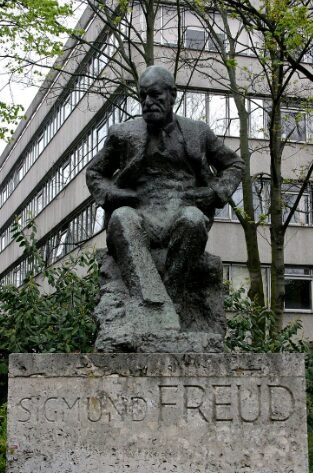
Image: The 1971 Sigmund Freud memorial in Hampstead, North London, by Oscar Nemon, is located near to where Sigmund and Anna Freud lived, now the Freud Museum.
What was Freud’s early life and education like?
Freud was born Sigismund Schlomo Freud on 6 May 1856 to Galician Jewish parents in Freiberg, Moravia (then part of the Austrian Empire). He earned his medical degree from the University of Vienna in 1881. After completing his habilitation in 1885, he was appointed a docent in neuropathology and later became an affiliated professor in 1902.
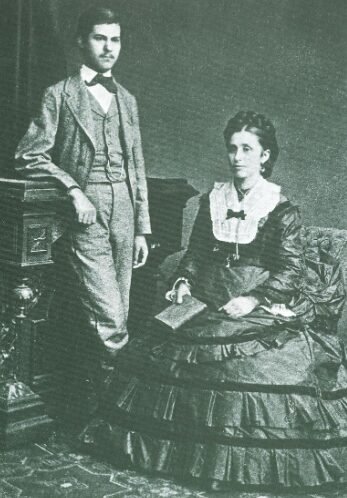
Image: Freud (aged 16) and his mother, Amalia, in 1872
When did Freud establish his clinical practice, and where did he conduct his groundbreaking work?
Freud established his clinical practice in Vienna in 1886, where he conducted much of his pioneering work in psychoanalysis.
What are some key therapeutic techniques developed by Freud in psychoanalysis?
Freud introduced innovative techniques such as free association and the concept of transference, which he identified as crucial to the analytic process. These methods were fundamental to his approach in psychoanalysis.
How did Freud redefine sexuality, and what is the Oedipus complex?
Freud redefined sexuality to include its early, infantile forms. The Oedipus complex is a central element of his theory, which posits that children experience a subconscious desire for their opposite-sex parent and rivalry with their same-sex parent.
What was Freud’s theory of the unconscious and how did he model the psyche?
Freud’s theory of the unconscious suggests that repressed wishes and memories reside outside of conscious awareness but still influence behavior. He developed a model of the psyche divided into the id (instinctual desires), ego (rational decision-making), and superego (moral standards).
What is the concept of libido and the death drive according to Freud?
Freud proposed the existence of libido, which is sexual energy invested in mental processes and relationships. He also introduced the death drive, which he associated with compulsive behavior, aggression, and neurotic guilt.
How did Freud’s later works address religion and culture?
Freud’s later works included critiques and interpretations of religion and culture, expanding his psychoanalytic theory to explore how these aspects influence human behavior and psychological development.
What were the circumstances of Freud’s later years and his death?
After the annexation of Austria by Nazi Germany in 1938, Freud fled to the United Kingdom to escape persecution. He lived his remaining years in exile and passed away on 23 September 1939. Freud’s legacy endures in modern discussions of psychology and culture.
What were Freud’s early career collaborations and influences?
Freud worked with Theodor Meynert and Hermann Nothnagel at the Vienna General Hospital. He collaborated with Josef Breuer to treat hysteria using hypnosis and was influenced by Jean-Martin Charcot in Paris, where he became interested in the condition of hysteria.

Image: At Clark University, 1909. Front row: Freud, G. Stanley Hall, Carl Jung; back row: Abraham Brill, Ernest Jones, Sándor Ferenczi
What was the “talking cure” and how did Freud develop it?
The “talking cure” was a method Freud developed to help patients access their unconscious mind by talking freely, which was initially inspired by his work with Josef Breuer on the case of Anna O. Freud believed this method was more effective than hypnosis for resolving psychological issues.
How did Freud’s theories impact other fields and thinkers?
Freud’s theories influenced various fields including philosophy, sociology, and political science. Thinkers like Jacques Lacan and Karl Marx drew from Freudian ideas. His emphasis on childhood and pleasure continues to impact modern psychology and other disciplines.
What were some of Freud’s notable publications?
Some of Freud’s notable publications include “The Interpretation of Dreams” (1900), “Three Essays on the Theory of Sexuality” (1905), and “The Ego and the Id” (1923). These works elaborated his theories on dreams, sexuality, and the structure of the psyche.

Freud underwent more than 30 surgeries for jaw cancer, which he was diagnosed with in 1923. He died on September 23, 1939, and was cremated at the Golders Green Crematorium in North London. His works were burned by the Nazis in 1933, and he fled Vienna for London in 1938 after the Nazis occupied Austria. Image: Freud’s last home, now dedicated to his life and work as the Freud Museum, 20 Maresfield Gardens, Hampstead, north London





