South Sudan: Why and when did it split from Sudan?
South Sudan, officially the Republic of South Sudan, is the newest sovereign state in the world, having gained independence on July 9, 2011. This landlocked country is situated in eastern Central Africa, bordered by six countries: Ethiopia, Sudan, the Central African Republic, the Democratic Republic of the Congo, Uganda, and Kenya.
Its landscape is diverse, featuring extensive swamp regions like the Sudd, formed by the White Nile and known locally as Bahr al Jabal or “Mountain Sea”. With a population of over 11 million people, its capital and largest city is Juba.
African countries that had the bloodiest path to independence
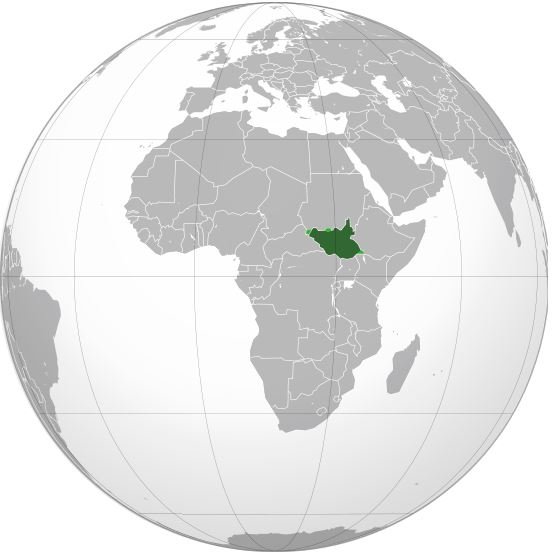
South Sudan is a landlocked country in eastern Central Africa. It gained independence from Sudan on July 9, 2011, making it the newest nation in the world as of its independence. Image: Map of South Sudan (in green).
In the article below, World History Edu presents a brief history of South Sudan, including some of the major factors that caused it to split from Sudan.
Historical Background
The territory of present-day South Sudan has a tumultuous history, influenced by colonial and post-colonial conflicts. During the 19th century, the region was conquered by Egypt under the Muhammad Ali dynasty and later came under the Anglo-Egyptian condominium, an arrangement under which Sudan was jointly administered by Egypt and the United Kingdom. This period lasted until Sudan’s independence from this dual governance in 1956.
However, independence did not bring peace to the region. The disparities in political, economic, and social development between the northern and southern parts of Sudan fueled ongoing tensions.
The First Sudanese Civil War erupted in 1955, a year before independence, and lasted until 1972. This conflict ended with the establishment of the Southern Sudan Autonomous Region, which unfortunately dissolved in 1983 following the outbreak of the SecondSudanese Civil War.
The Second Sudanese Conflict was even more devastating and lasted until 2005, ending with the signing of the Comprehensive Peace Agreement. This agreement once again granted autonomy to Southern Sudan and set the stage for the eventual independence of South Sudan.
Road to Independence
The journey to independence was marked by a January 2011 referendum, where an overwhelming 98.8% of the southern population voted in favor of secession from Sudan. This decision was primarily driven by longstanding grievances over religious and ethnic marginalization and disputes over natural resources like oil. South Sudan officially declared independence on July 9, 2011, amidst celebrations but also significant challenges.

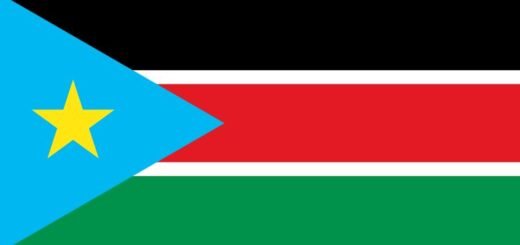
South Sudan separated from Sudan due to longstanding ethnic, religious, and economic disparities, which led to decades of conflict. Key issues included cultural and linguistic differences, religious tensions, economic inequalities, and political marginalization. Image: Flag of South Sudan.
Post-Independence Struggles
The euphoria of independence soon gave way to the harsh realities of nation-building. South Sudan has been plagued by ethnic violence and a brutal civil war that erupted in December 2013, largely due to power struggles between President Salva Kiir Mayardit and his former deputy Riek Machar, as well as other political and military leaders. This conflict was characterized by severe human rights abuses, ethnic massacres, and the killing of journalists, reflecting deep-seated ethnic divisions and political instability.
The civil war caused immense suffering among the civilian population, with thousands killed and millions displaced either internally or as refugees in neighboring countries. The humanitarian situation has been dire, with vast numbers of South Sudanese dependent on international aid for survival.
Despite the euphoria of independence, South Sudan faces formidable challenges. The country is landlocked and heavily reliant on oil, which accounted for over 95% of the government’s revenue at the time of independence as part of a revenue-sharing agreement established by the 2005 Comprehensive Peace Agreement.
South Sudan’s economy is further hampered by a severe lack of infrastructure, a legacy of prolonged conflict and neglect. The country not only needs to build governmental institutions from scratch but also to develop its basic infrastructure, including roads, electricity, and sewers.
Moreover, the country struggles with human capital, possessing one of the world’s lowest literacy rates at around 28%. There is a particularly dire shortage of educated workers to staff the new government. Efforts are being made to improve this, with initiatives like USAID providing scholarships to increase school enrollment, particularly for girls, and training programs to enhance women’s employment opportunities.
Furthermore, South Sudan must integrate hundreds of thousands of returnees who have moved back from the North since the signing of the CPA. These returnees need productive employment to prevent further economic and social strain.
It must be noted however that as part of its developmental strategy, South Sudan and its various international partners are aiming to diversify the economy beyond oil by leveraging its fertile land for agriculture, hoping to reduce its vulnerability to oil-related shocks.
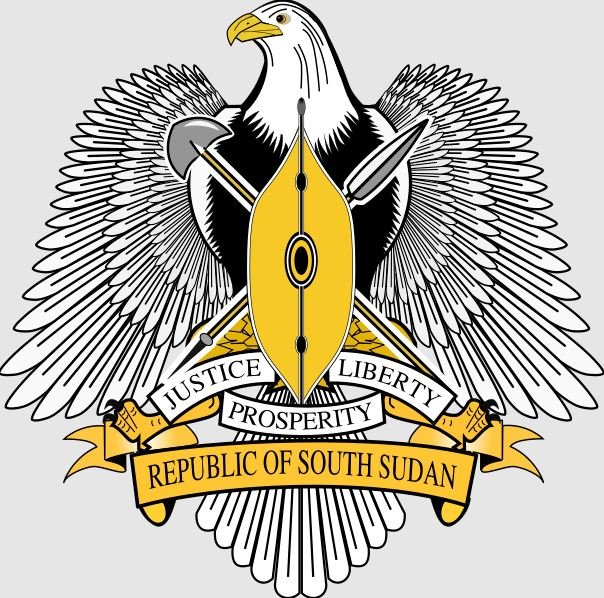
In 2005, South Sudan’s capital Juba was merely a garrison town with infrastructure dating back to the 1950s British colonial era. The country’s history and current situation reflect the complexities of nation-building in a post-colonial context, marked by colonial legacies, ethnic diversity, and political conflict. Image: Coat of Arms for South Sudan.
Recent Developments
A significant breakthrough occurred in February 2020, when Kiir and Machar agreed to form a coalition government under the terms of the Revitalized Agreement on the Resolution of Conflict in South Sudan (R-ARCSS), initially signed in 2018. This agreement has brought a fragile peace to the region and has allowed some refugees to begin returning to their homes, though the political situation remains precarious and the potential for conflict persists.
Challenges Ahead
As of 2024, South Sudan faces monumental challenges in rebuilding its economy, establishing functional governance structures, and reconciling communities torn apart by years of conflict. Issues such as corruption, lack of infrastructure, and inadequate public services further complicate recovery efforts. Moreover, the country’s economic dependence on oil revenues leaves it vulnerable to global oil price fluctuations, thereby threatening its economic stability.
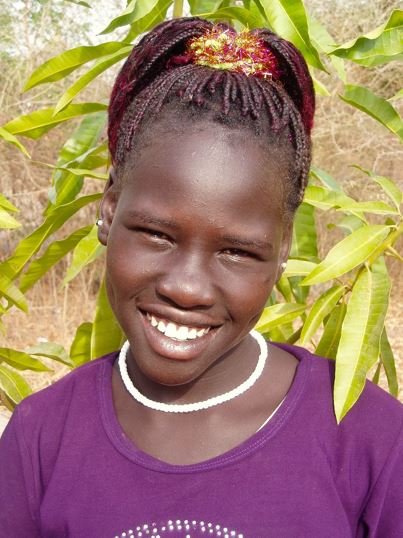
The path ahead for South Sudan is fraught with challenges, but the resilience of its people and ongoing international support provide some hope for a stable and prosperous future. Image: A native of South Sudan.
Did you know…?
South Sudan is one of the least developed and poorest countries globally. The central African country usually ranks very low on the Human Development Index, along with countries like Niger, Sierra Leone, Afghanistan, Yemen, and Burundi. The UNDP’s Human Development Index measures health, education, and income in 193 countries, offering a comparative view of global development.
Most Influential Contemporary African Artists and their Works
FAQs
These FAQs encapsulate the essential aspects of South Sudan’s current situation and its complex history, providing a basic understanding of the country’s socio-political landscape and ongoing issues.
Why did South Sudan split from Sudan?
Sudan is predominantly Arab and Muslim, especially in the north, whereas South Sudan is largely composed of non-Arab ethnic groups and practices Christianity and traditional religions. These differences created cultural and linguistic divides.
Furthermore, the imposition of Sharia law by the Sudanese government in the 1980s exacerbated tensions between the Muslim-majority north and the non-Muslim south, fueling feelings of marginalization among Southerners.
Another major reason for the split was because resources and development were heavily concentrated in northern Sudan. The south, despite being rich in oil, felt economically neglected and exploited, as the majority of oil revenue was controlled by the north.
Also, the southern regions were underrepresented and often excluded from political power structures in Khartoum, leading to grievances over lack of political influence and autonomy.
The CPA, signed in 2005, ended the second civil war and laid the groundwork for a referendum on southern independence. The agreement provided a framework that allowed the south to vote on whether to remain a part of Sudan or become an independent nation.
The culmination of these longstanding issues was the January 2011 referendum, in which an overwhelming majority of Southerners voted for independence, leading to the official secession of South Sudan from Sudan on July 9, 2011.
How did the discovery of oil in the 1970s affect Sudan?
In the late 1970s, the discovery of oil in Southern Sudan reignited regional interest and conflicts, significantly influencing the area’s political landscape.
By 1983, these tensions escalated when President Jaafar Nimeiri attempted to unify Sudan under Sharia law, a move that disproportionately affected the predominantly non-Muslim south and marginalized various ethnic groups. This policy served as a catalyst for the Second Sudanese Civil War.
In response, the Sudan People’s Liberation Movement/Army (SPLM/A), led by John Garang, emerged as a formidable force. The SPLM/A not only sought autonomy for the south but also championed a broader, inclusive identity for all marginalized communities within Sudan.
Under Garang’s leadership, the movement aimed to address grievances beyond regional autonomy, advocating for a restructured national identity that embraced Sudan’s diverse cultural and religious fabric. This period marked a critical juncture in Sudan’s history, deepening the divide between the north and the south, and setting the stage for future conflicts and the eventual secession of the south.
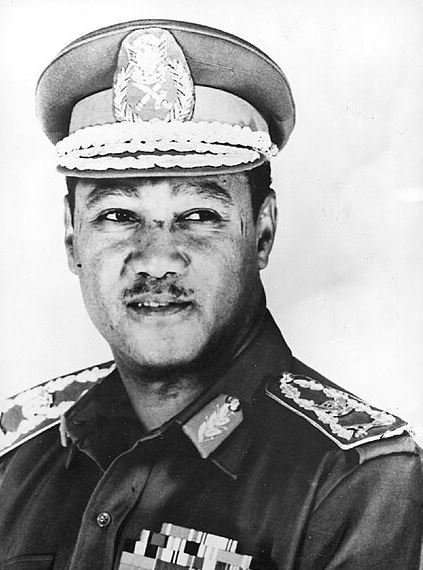
Oil discovery in South Sudan in the late 1970s sparked renewed conflict. President Nimeiri’s 1983 Sharia law imposition ignited the Second Sudanese Civil War. John Garang’s SPLM/A fought for autonomy and inclusivity for all marginalized Sudanese. Image: President Nimeiri in 1974.
What role has the SPLM/A played in South Sudan?
The Sudan People’s Liberation Movement/Army (SPLM/A) has played a pivotal role in the history of South Sudan, particularly in its struggle for independence from Sudan. Established in 1983 by John Garang, the SPLM/A was initially formed in response to the policies of the Sudanese government under President Jaafar Nimeiri, which included attempts to impose Sharia law across all of Sudan, intensifying existing regional, ethnic, and religious tensions.
The SPLM/A was founded to counteract the domination of the central Sudanese government and to address grievances of the southern regions, which were culturally, religiously, and ethnically distinct from the north. While the initial aim was greater autonomy for the south, the movement eventually advocated for full independence. John Garang, a charismatic leader with a vision for a “New Sudan,” emphasized inclusivity and equality, proposing a secular, democratic Sudan that respected all ethnicities and religions.
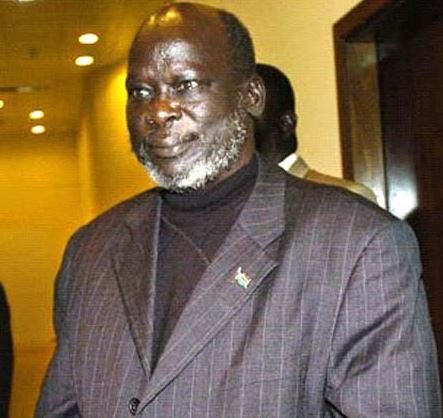
The SPLM/A was the primary insurgent group in the Second Sudanese Civil War (1983-2005), a brutal conflict that resulted in significant loss of life and large-scale displacement. The SPLM/A’s military and political efforts were crucial in maintaining the southern rebellion against the northern Sudanese government forces. Image: John Garang (1945 – 2005).
What was the Comprehensive Peace Agreement?
The SPLM/A’s struggles and negotiations eventually led to the signing of the Comprehensive Peace Agreement (CPA) in 2005 with the Sudanese government, which ended Africa’s longest-running civil war. The CPA granted Southern Sudan autonomy for six years, after which a referendum for independence was scheduled.
John Garang briefly served as the First Vice President of Sudan following the agreement but died in a helicopter crash in 2005. His death was a significant blow to the movement but did not derail the peace process.

Under the leadership of Salva Kiir Mayardit, Garang’s successor, the SPLM/A continued to lead Southern Sudan towards the referendum. In 2011, the referendum was held, and an overwhelming majority voted for independence, leading to the official formation of the Republic of South Sudan on July 9, 2011. Image: Mayardit in 2014.
After independence, the SPLM/A transformed into the ruling party of the new nation, SPLM, but internal conflicts within the party led to a new civil war in December 2013. This conflict was primarily a power struggle between President Salva Kiir and his former deputy Riek Machar, leading to new rounds of severe violence and humanitarian crises.
How did Khartoum receive South Sudan’s decision to split?
South Sudan’s historic moment in 2011 was marked by jubilation across South Sudan, where nearly 99% of participants in a referendum voted for independence earlier in January. In contrast, the mood in Khartoum was somber due to concerns over the economic implications of losing most of the country’s oil reserves, which are located in the South.
What are the main ethnic groups in South Sudan?
South Sudan is home to over 60 different ethnic groups. The largest are the Dinka, followed by the Nuer and the Shilluk, among others.
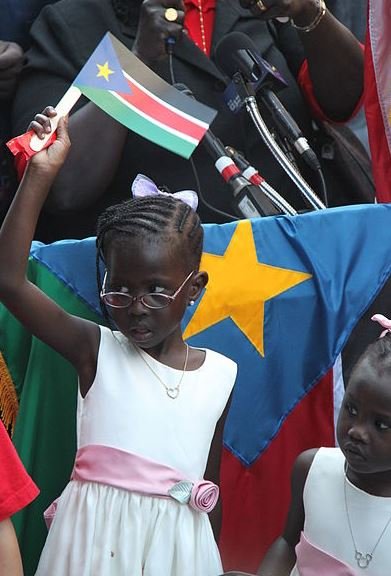
Image: A south Sudanese girl during independence day parade in 2011.
What languages are spoken in South Sudan?
English is the official language of South Sudan. However, multiple indigenous languages are spoken across the country, with Dinka, Nuer, and Bari being some of the most common.
What are the major religions in South Sudan?
Christianity is the predominant religion in South Sudan, with the majority being followers of various Christian denominations. There are also significant communities practicing traditional religions, and a small Muslim minority.
What challenges does South Sudan face today?
South Sudan faces numerous challenges including political instability, ethnic violence, economic dependency on oil revenues, corruption, lack of infrastructure, and a humanitarian crisis with millions of displaced people and refugees.
What caused the civil war in South Sudan?
The civil war in South Sudan, which started in December 2013, was primarily caused by political power struggles between President Salva Kiir and his former deputy Riek Machar, alongside deep-seated ethnic tensions.
How has the international community responded to the situation in South Sudan?
The international community has been involved in peacekeeping and humanitarian efforts, providing aid to displaced populations and facilitating peace negotiations. Several peace agreements have been brokered, including the significant Revitalized Agreement on the Resolution of Conflict in South Sudan (R-ARCSS) in 2018.
What is the economic outlook for South Sudan?
South Sudan’s economy is heavily dependent on oil production, which accounts for almost all of its exports and the majority of its government revenue. Economic stability is challenged by fluctuating oil prices, lack of diversification, ongoing conflict, and governance issues.
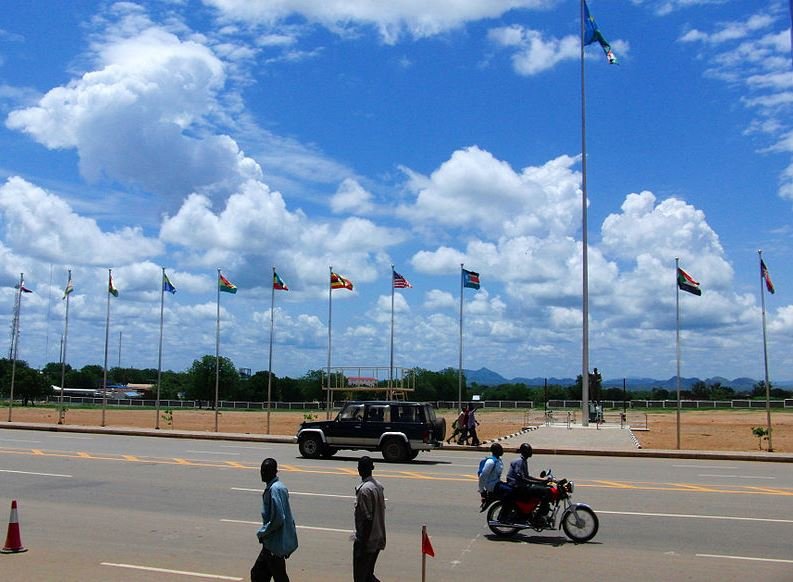
Tagged as the world’s newest country (as of 2024), South Sudan continues to strive for peace and development, aiming to overcome its turbulent past and achieve lasting stability. Image: The John Garang Mausoleum Square in Sudan’s capital city of Juba.