History of South Sudan and how it gained its independence
South Sudan, the world’s youngest nation, declared independence from Sudan on July 9, 2011. Its journey to independence is a complex narrative of colonial legacies, prolonged conflicts, and the pursuit of identity, intertwined with deep ethnic divisions and natural resource disputes.

South Sudan’s history is a testament to the resilience of its people and the complexities of nation-building in the post-colonial era. Image: A young South Sudanese girl raising the flag of her nation during a 2011 independence day parade.
Where did the name Sudan come from?
The name “Sudan” originates from the Arabic term “bilād as-sūdān,” meaning “Land of the Blacks,” used by Arab traders to describe the region south of the Sahara, from Western to eastern Central Africa. This term historically referred to the area’s indigenous black African populations and their cultures.
Colonial Era to Independence of Sudan
The region now known as South Sudan is part of the larger Sudan region that encompasses it and the Republic of Sudan. Historically, this area has been a melting pot of indigenous African groups with diverse languages and cultures. The introduction of Islam and Arabic culture began around the 14th century through Arab traders and invaders, laying early seeds for cultural and religious divisions.
The modern boundaries of Sudan were shaped during the “Scramble for Africa” in the late 19th century when European powers divided the continent without regard to indigenous cultures. In 1899, Sudan became a condominium, governed jointly by the United Kingdom and Egypt. The British-Egyptian rule, which lasted until 1956, largely developed the northern region while neglecting the southern part, thus sowing seeds of disparity and discontent.
The Road to Independence
Sudan gained independence in 1956, but the joy was short-lived due to immediate tensions between the northern leaders, who were predominantly Muslim and Arab, and the southern population, which was largely Christian and animist. This led to the First Sudanese Civil War (1955-1972), even before independence was fully realized. The Addis Ababa Agreement in 1972 ended the conflict temporarily by granting the south autonomy, but peace was not to last.

The discovery of oil in the south in the late 1970s renewed interest in the region and reignited conflicts. By 1983, President Jaafar Nimeiri’s attempt to impose Sharia law across all of Sudan triggered the Second Sudanese Civil War. The Sudan People’s Liberation Movement/Army (SPLM/A), led by John Garang, became the voice and army of the south, fighting not just for autonomy but for a more inclusive identity for all marginalized peoples of Sudan.
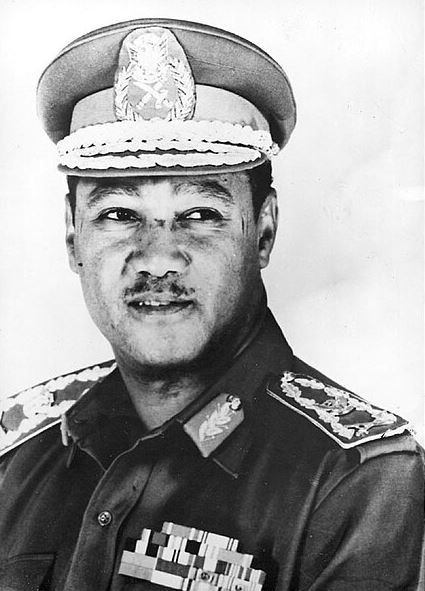
Image: Jaafar Nimeiri (1930 – 2009)
Comprehensive Peace Agreement
After more than two decades of warfare and the loss of an estimated two million lives due to fighting and related causes, the Comprehensive Peace Agreement (CPA) was signed in 2005 between the Sudanese government and the SPLM/A. This peace deal ended Africa’s longest-running civil war and set a timetable for a referendum on South Sudanese independence.
Independence and Challenges
The referendum took place in January 2011, with an overwhelming 98.83% of South Sudanese voting for independence. On July 9, 2011, South Sudan officially became a sovereign state. The joy of independence, however, was soon overshadowed by significant challenges. The nascent country had to build its governance structures from scratch amidst high expectations for development and peace.
However, the lack of a unified vision for the country and pervasive ethnic tensions led to new conflicts. In December 2013, a political power struggle between President Salva Kiir and his former deputy Riek Machar erupted into a brutal civil war, characterized by fierce fighting and gross human rights violations. The conflict created a massive humanitarian crisis, with thousands killed and millions displaced.
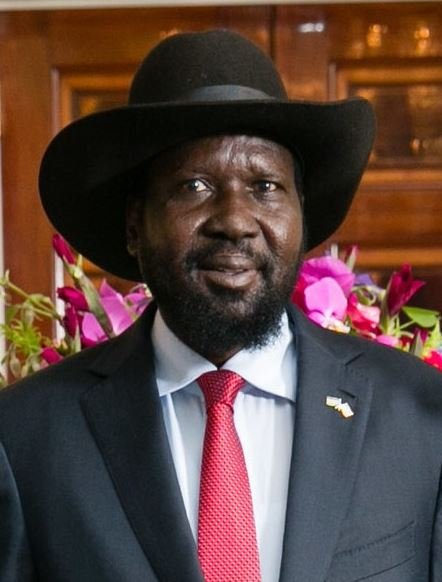
Two prolonged civil wars (1955-1972 and 1983-2005) between the northern government and southern rebels highlighted and intensified these divisions. The wars were devastating and resulted in significant loss of life and human suffering. Image: A 2014 photo of Salva Kiir.
Peace Efforts and Current Status
Numerous attempts at peace followed, including a peace agreement signed in August 2015, which collapsed in July 2016 following renewed fighting in the capital, Juba. Finally, the Revitalized Agreement on the Resolution of the Conflict in South Sudan (R-ARCSS) was signed in September 2018. While fragile, this agreement remains in place, and a unity government was formed in February 2020.
Despite the peace deal, South Sudan continues to face enormous challenges, including economic instability, inter-communal violence, and humanitarian needs. The government struggles with governance issues, corruption, and delivering basic services to its population.
The road ahead remains fraught with challenges, but also with opportunities for the young nation to forge a path towards sustainable peace and development.
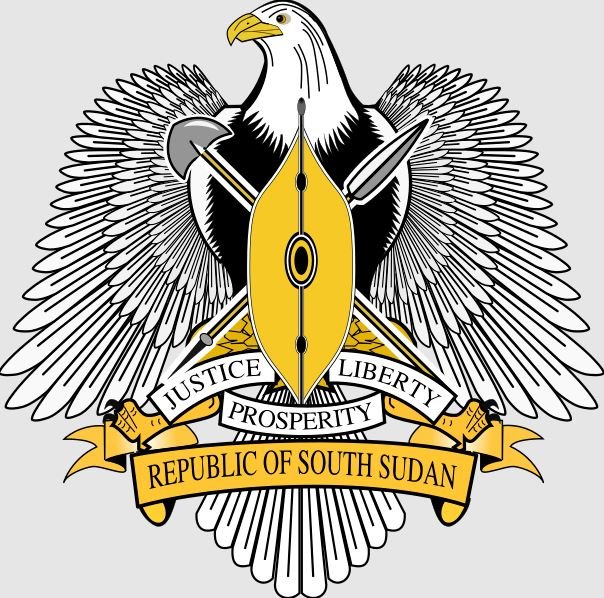
The international community’s role remains crucial in supporting South Sudan as it navigates these challenges, aiming for a future where the diversity of its people is a source of strength rather than division. Image: South Sudan’s coat of arms.
FAQs
Here are some questions and answers based on the comprehensive overview of South Sudan’s history and current situation:
What is South Sudan and when did it gain independence?
South Sudan, officially known as the Republic of South Sudan, is the newest sovereign state in the world, having gained independence from Sudan on July 9, 2011. It is a landlocked country located in eastern Central Africa.
What is the population of South Sudan?
Recent figures indicate that South Sudan has an estimated population of over 10.5 million, though this figure may be imprecise due to decades without a census.
Which countries border South Sudan?
South Sudan is bordered by six countries: Ethiopia, Sudan, the Central African Republic, the Democratic Republic of the Congo, Uganda, and Kenya.
What significant geographical feature is associated with South Sudan?
South Sudan includes the vast swamp region known as the Sudd, formed by the White Nile and locally known as Bahr al Jabal, meaning “Mountain Sea”.
How many major civil wars has Sudan experienced?
Sudan has been deeply impacted by two prolonged civil wars since gaining independence: the First Sudanese Civil War (1955-1972) against the Anyanya rebels, whose name means “snake venom” in Madi, and the Second Sudanese Civil War (1983-2005) involving the Sudan People’s Liberation Army/Movement (SPLA/M).
These conflicts resulted in substantial neglect, underdevelopment, and severe humanitarian crises, with over 2 million fatalities and millions displaced.
What was the outcome of the Comprehensive Peace Agreement signed in 2005?
The Comprehensive Peace Agreement ended the Second Sudanese Civil War, granted autonomy to Southern Sudan, and set the stage for South Sudan’s eventual independence.
How did South Sudan become an independent state?
South Sudan became an independent state following a January 2011 referendum in which 98.8% of the southern population voted in favor of secession from Sudan.
What major challenges did South Sudan face after gaining independence?
After gaining independence, South Sudan faced severe ethnic violence and a brutal civil war that began in December 2013, largely due to power struggles between political leaders and ethnic divisions.
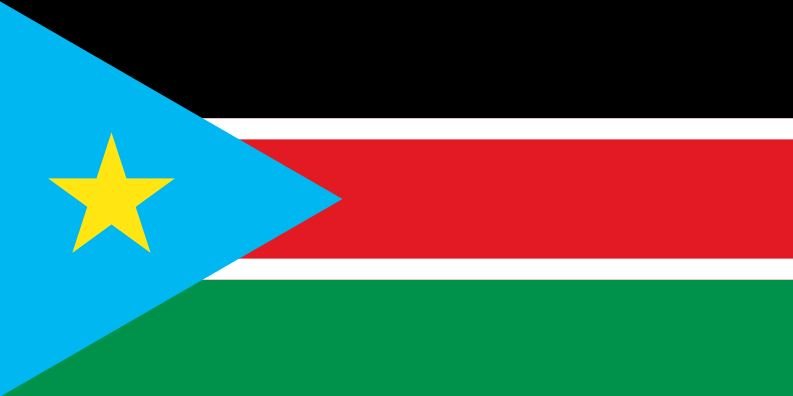
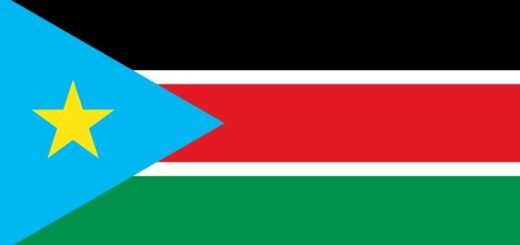
On July 9, South Sudan celebrated its secession from Sudan, becoming the world’s newest nation after decades of conflict that claimed over 2 million lives. Image: The flag of the people of South Sudan.
What was the Revitalized Agreement on the Resolution of Conflict in South Sudan (R-ARCSS)?
The R-ARCSS, signed initially in 2018 and leading to a coalition government in February 2020, was an agreement aimed at resolving ongoing conflict and establishing peace and governance in South Sudan.
What are the main challenges South Sudan faces as of 2024?
As of 2024, South Sudan faces challenges in rebuilding its economy, establishing functional governance, reconciling communities, combating corruption, and managing its dependency on oil revenues.

Despite its challenges, the resilience of South Sudan’s people and ongoing international support provide hope for a stable and prosperous future, as the country strives to overcome its turbulent past and achieve lasting stability. Image: South Sudan’s map.