Sed Festival in Ancient Egypt
The Sed festival (ḥb-sd), or Feast of the Tail, was an ancient Egyptian ceremony celebrating a pharaoh’s continued rule, typically after 30 years and then every 3–4 years. Origin Story...

The Sed festival (ḥb-sd), or Feast of the Tail, was an ancient Egyptian ceremony celebrating a pharaoh’s continued rule, typically after 30 years and then every 3–4 years. Origin Story...

Queen Tiye stands out as one of ancient Egypt’s most influential and revered royal figures. Her life, marked by strategic alliances, political acumen, and a legacy that transcended her time,...

Ancient Egypt, one of the most influential civilizations in history, boasts a rich tapestry of events that have shaped its development over millennia. From its inception around 3100 BC to...

The New Kingdom of Egypt lasted from the Eighteenth to the Twentieth Dynasty – that is, from the 16th century BC to the 11th century BC. This period was seen...

It is often the case that when ancient Egyptian pharaoh Akhenaten’s name is mentioned, the word that quickly pops up in one’s mind is the ancient Egyptian god Aten. Such...
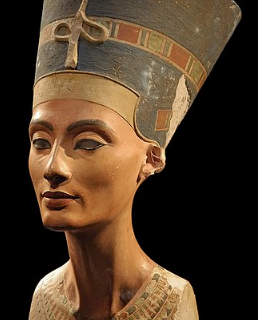
Nefertiti, (died c. 1330 BC), Egyptian queen consort of the 18th dynasty (r. 1353–1336 BC), generally regarded as one of the most recognizable and beautiful figures of ancient Egypt. Born...

Amenhotep III, also known as Amenhotep the Magnificent, was the ninth pharaoh of the 18th Dynasty of ancient Egypt. His reign is believed to have lasted from around 1386 to...

The divine triad of Thebes (modern Luxor) – Amun-Re, Mut, and Khonsu – was considered a nuclear family of gods. Amun was the father, Mut was his wife, and Khonsu...

Ancient Egyptian pharaoh Akhenaten (c. 1379-1336 BCE), also known as Amenhotep IV, is most famous for being perhaps the first monotheist Egyptian ruler, or for that matter the first monotheist...





