Tetradrachm: Origin Story, Weight Standards, and Significance
The tetradrachm, a large silver coin from Ancient Greece, emerged around the late 6th century BCE. Its name derives from its value, equating to four drachmae. Initially minted in Athens, it replaced the earlier didrachm and became the dominant currency in the region. The coin’s prominence grew after the Battle of Salamis in 480 BCE, a pivotal moment that established Athens as a leading power. Evidence of its early use comes from archaeological finds, including a significant hoard discovered on the Acropolis in 1886. This coin’s origins tied closely to Athens’ ambition, artistry, and economic prowess.
Transition from Didrachm to Tetradrachm
Athens transitioned from the smaller didrachm to the tetradrachm between 525 and 510 BCE to reflect its rising economic power. This change coincided with the city’s control over silver mines at Laurium, which provided the bullion for minting vast quantities of coins. By shifting to a larger denomination, Athens positioned itself as a leader in trade and military financing, cementing its influence across the Greek world.
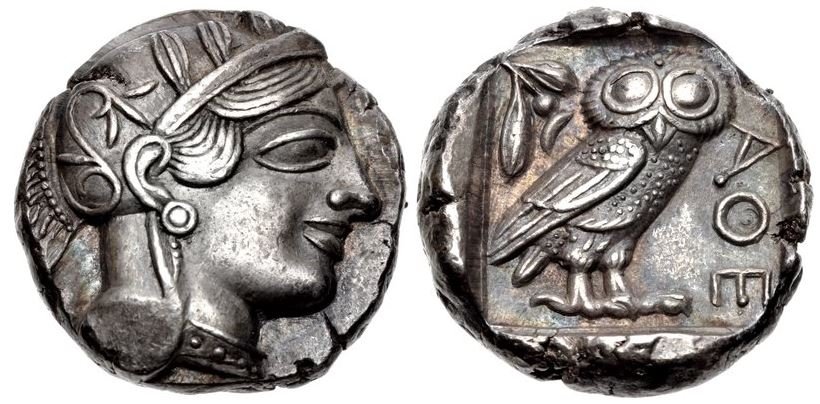
Image: Tetradrachm of Athens.
Weight Standards of the Tetradrachm
The most widely adopted weight standard for the tetradrachm was the Attic standard, developed in Athens. Each tetradrachm under this system weighed approximately 17.2 grams, with one drachma weighing around 4.3 grams. The Attic standard became the benchmark for many other Greek city-states, underscoring Athens’ economic dominance.
Originating in Athens, the tetradrachm became a cornerstone of ancient trade, a tool for political propaganda, and a source of inspiration for regional adaptations.
Other regions adapted the tetradrachm to their own weight and purity standards. For instance, Aegina used the Aeginetic standard, with a lighter weight of about 12.3 grams per stater. However, the Attic standard’s consistency and reliability made it the preferred choice for trade. With the conquests of Alexander the Great, the Attic standard spread further, unifying coinage across his vast empire.
The Design and Artistic Significance
Athenian tetradrachms were renowned for their distinctive and enduring design. The obverse featured the head of Athena, symbolizing wisdom and protection, while the reverse depicted the owl of Athena, accompanied by an olive sprig and a crescent moon. This imagery reflected Athens’ identity and prosperity. Known as “glaux” (little owl) in Greek, these coins were recognized and respected throughout the ancient world.
Other city-states and rulers used the tetradrachm to showcase local symbols and rulers’ portraits. For example, coins from Bactria under the Kushan Empire featured regional motifs, while tetradrachms from Magna Graecia displayed designs inspired by local mythology and culture. These artistic variations highlight the cultural diversity within the ancient Greek world.

Image: Tetradrachm of Alexander the Great.
Economic and Political Significance
The tetradrachm became the standard currency for trade in the Mediterranean, facilitating economic activity across regions. Its consistent weight and high silver content made it a reliable medium of exchange. Merchants and city-states valued the tetradrachm for its trustworthiness and ease of use in transactions.
Tetradrachms also served as a medium for political messaging. Rulers and city-states often used the coin’s design to assert their power and influence. Alexander the Great, for instance, issued tetradrachms bearing his image, emphasizing his authority over his empire. Similarly, Cleopatra Thea and other leaders used the coin to solidify their rule.
In Athens, the tetradrachm played a critical role in funding major projects and military campaigns. Revenue from the Laurium silver mines financed the construction of the Parthenon and the reconstruction of the Acropolis. It also supported Athens during the Peloponnesian War, showcasing the coin’s importance in sustaining the city’s ambitions.
Spread and Adoption of the Tetradrachm
The tetradrachm spread widely across the ancient world, thanks in large part to Alexander the Great. As his armies advanced, they brought Greek coinage, including the tetradrachm, to newly conquered territories. This led to the adoption of the coin in Asia Minor, the Near East, and parts of Central Asia.
While the Athenian tetradrachm set the standard, other regions minted their own versions. For instance, Bactrian tetradrachms reflected local cultural influences, while coins from Magna Graecia incorporated imagery unique to southern Italy. These adaptations illustrate the tetradrachm’s flexibility as a currency.

Image: Tetradrachm of Olympia.
Decline and Legacy
The tetradrachm remained a dominant currency until the Crisis of the Third Century CE, when economic instability and changes in trade patterns diminished its use. In some regions, such as India and Central Asia, debased forms of the tetradrachm persisted into the early Middle Ages, highlighting its enduring influence.
Today, the tetradrachm is highly valued by collectors and historians. Its artistic quality and historical significance make it a prized artifact. Well-preserved examples, particularly those from Athens or issued by notable rulers like Alexander the Great, command high prices in the numismatic market.
READ MORE: What were the famous battles Alexander the Great fought in?
Frequently Asked Questions
What weight standard was most commonly used for tetradrachms?
The Attic standard, originating from Athens, was the most common, with a weight of about 17.2 grams.
How were tetradrachms used beyond currency?
They were often used for political propaganda, featuring designs that conveyed cultural, political, or religious messages.
Why did tetradrachms remain popular after Greek political independence was lost?
Their widespread use as a trade currency ensured their continued circulation throughout the Mediterranean until the Crisis of the Third Century.
What distinguished the Athenian tetradrachm from others?
It featured the head of Athena on the obverse and the owl of Athena on the reverse, symbols of wisdom and prosperity.
How did Athens fund its production of tetradrachms?
Athens relied on its rich silver mines at Laurium to produce vast quantities of tetradrachms.
What role did Alexander the Great play in the spread of tetradrachms?
His conquests helped spread the use of tetradrachms to newly Greek-influenced territories in Asia.
What regions adopted the use of tetradrachms?
Tetradrachms were adopted by city-states across Greece, Asia Minor, Magna Graecia, and Greek colonies throughout the Mediterranean.
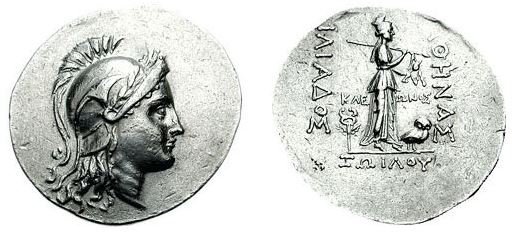
Image: Troy Tetradrachm.
Why are tetradrachms significant to modern collectors?
Their high artistic quality and historical importance make them highly sought after, with well-preserved examples commanding high prices.