The Ancient City of Sardis: History and Major Facts
Sardis, historically known as Sardes, was a significant ancient city primarily recognized as the capital of the Lydian Empire. Its prominence persisted through successive eras, becoming the administrative center of the Persian satrapy of Lydia and later a hub of Hellenistic and Byzantine culture. Today, Sardis is an active archaeological site in Turkey’s Manisa Province, near the town of Sart.
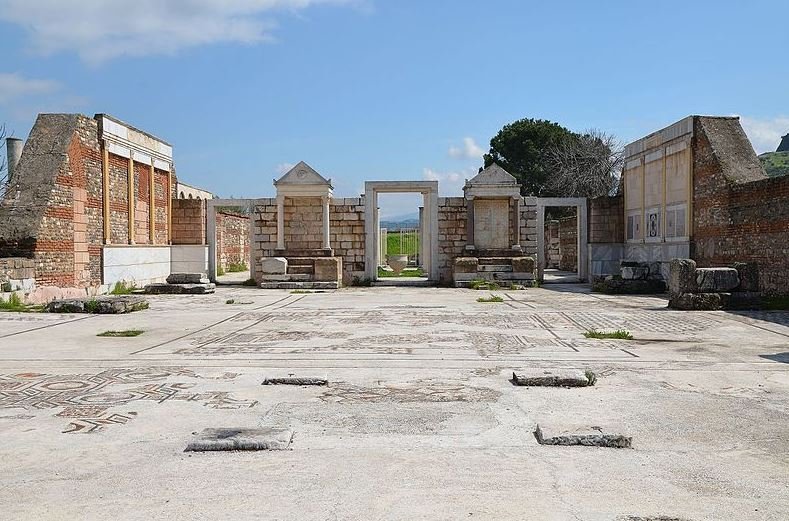
The main hall of Sardis Synagogue
Neolithic and Early Bronze Age
Evidence suggests that Sardis may have been inhabited as early as the Neolithic period. While ceramic fragments hint at early human activity, their context remains unclear. More definitive traces of the Early Bronze Age were uncovered in cemeteries near Lake Marmara, approximately seven miles from Sardis.
Late Bronze Age and Seha River Land
During the Late Bronze Age, Sardis fell within the Seha River Land, a region linked to the Hittite Empire. Hittite texts identify Seha as part of the larger Arzawa kingdom before becoming a Hittite vassal. Sardis, however, is absent from these records, leaving its specific role during this era uncertain.
Rise of Lydia and Sardis as its Capital
Sardis emerged as the capital of the Lydian Empire in the 7th century BCE, reaching its zenith under King Croesus. Encompassing 108 hectares, the city featured massive 20-meter-thick walls and terraced acropolis structures made of white ashlar masonry. Croesus’ reign marked the apex of Lydian wealth and cultural exchange.
Urban and Cultural Life
The city’s architecture and layout reveal a blend of Anatolian and Aegean influences. Residences, constructed from mudbrick and stone, displayed courtyards and basic living facilities. Religious structures included modest altars and sanctuaries dedicated to Cybele and Artemis. The city’s artisans excelled in glyptic art, producing intricate seals and jewelry, while its pottery uniquely merged Aegean styles with local traditions.
Conquest by Cyrus the Great
In 547 BCE, Sardis fell to Cyrus the Great after a brief siege. Herodotus’ semi-legendary accounts, combined with archaeological evidence, depict widespread destruction. Fire consumed the city’s fortifications and homes, leaving behind vivid remnants of the attack, including skeletal remains, arrowheads, and household items repurposed as weapons.
Rulers of the Achaemenid Empire: From Cyrus the Great to Artaxerxes V
Persian Period
Following its destruction, Sardis was rebuilt as the Persian satrapal capital of Lydia, known as Sparda. It became a key node on the Royal Road, linking Persia to the Aegean. Cultural continuity with the Lydian era is evident, though some Persian influences, such as the introduction of Aramaic script and hybrid jewelry styles, are notable.
Sardis retained its reputation for craftsmanship, particularly in textiles and metallurgy. Burials from this period reveal the city’s affluence, with tumuli containing intricate grave goods. Persian leaders like Tissaphernes also established paradises, luxurious gardens and hunting parks, around Sardis.
In 499 BCE, Sardis became a focal point during the Ionian Revolt against Persian rule. The city was briefly captured and burned by Ionian forces. This act of defiance provoked the subsequent Persian retaliation against Greek city-states.
Hellenistic Sardis
In 334 BCE, Alexander the Great captured Sardis without resistance, restoring Lydian traditions. Over the following centuries, the city transitioned between the control of Hellenistic rulers, including the Seleucids and the Attalids. Despite frequent sieges, its acropolis remained a nearly impregnable fortress.
The Hellenistic period saw Sardis adopt a distinctly Greek identity. Public buildings such as theaters, gymnasiums, and a massive Temple of Artemis exemplified Greek architectural styles. The city also became home to a significant Jewish community, which contributed to its multicultural character.
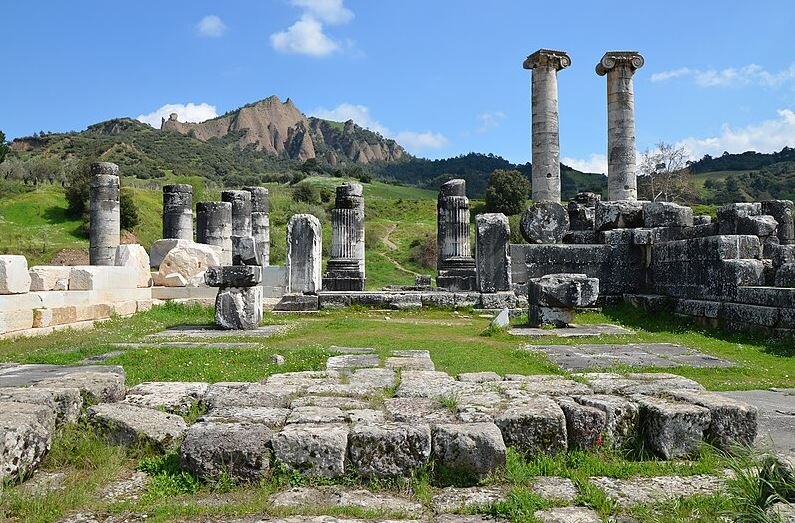
Ruins of the Temple of Artemis in Sardis.
Roman and Byzantine Sardis
In 129 BCE, Sardis became part of the Roman province of Asia. The city thrived under Roman administration, benefiting from neocorate honors and financial aid, particularly after a devastating earthquake in 17 CE. Key infrastructure projects included bath-gymnasium complexes and an extensive synagogue, reflecting the city’s diverse population.
Sardis held religious significance in early Christianity, being one of the seven churches of Asia mentioned in the Book of Revelation. However, the city was criticized for its spiritual complacency.
During the Byzantine period, Sardis faced a gradual decline. The 7th-century Byzantine–Sasanian War inflicted severe damage, which was never fully repaired. Although it remained a regional administrative center, its prominence waned as trade routes shifted.
Later History and Final Decline
Sardis fell to the Seljuk Turks in 1078 and was later recaptured by the Byzantine Empire. By the 14th century, the city was under Turco-Mongol control and suffered further devastation. By the 18th century, only small villages occupied the site.
Geography and Urban Layout
Sardis was strategically located in the Hermus River Valley, south of the Hermus River and near Mount Tmolus. Its acropolis offered natural fortification, while the lower city stretched toward the Pactolus stream, renowned for its gold deposits.
Archaeological Discoveries
19th-century explorers uncovered Roman-era ruins and notable artifacts, such as the colossal marble head of Faustina the Elder. Systematic excavations began in the early 20th century under Princeton University, revealing the Temple of Artemis and over a thousand tombs.
Excavations resumed in 1958 under Harvard University and Cornell University, uncovering significant Lydian and Roman structures, including a gold refinery, synagogue, and gymnasium. Recent work has focused on understanding the city’s urban evolution and its role in ancient trade networks.
Frequently Asked Questions

Map of Lydian Empire showing Sardis and other regions.





