The Batavian Revolt: History, Major Causes, & Consequences
The Batavian Revolt was a significant rebellion that took place in the Roman Empire during the second half of the 1st century AD, specifically in the year 69-70 AD. It was a part of the larger context of civil unrest within the empire and occurred in the province of Germania Inferior, modern-day Netherlands. This rebellion, led by the Batavi tribe, posed a serious challenge to Roman authority in the region.
In the article below World History Edu takes an in-depth look at the key events, causes, consequences, and the legacy of the revolt in more detail.
Background
The Batavi were a Germanic tribe living in the lower Rhine region, specifically in the area of what is now the Netherlands. Although they were part of the Roman Empire, the Batavi were considered a client tribe and had a somewhat privileged relationship with Rome. They provided troops for the Roman army, particularly skilled cavalrymen and auxiliary soldiers, and in return, they were allowed to maintain a degree of autonomy. The Batavi served Rome loyally for decades before the rebellion, with their troops playing a role in Roman military campaigns.
The relationship between the Batavi and the Roman Empire began to sour in the mid-1st century AD. Several factors contributed to this growing discontent:
Roman Exploitation: Over time, the Romans became increasingly exploitative of the Batavi, particularly in terms of military recruitment. The Batavi were required to supply a large number of troops to the Roman legions, which placed a significant burden on the tribe’s population.
Harsh Treatment by Roman Officials: Roman officials stationed in the province began to treat the Batavi harshly, demanding higher taxes and taking liberties with the local population. This created widespread resentment.
Roman Civil War (Year of the Four Emperors): In 69 AD, the Roman Empire was embroiled in a civil war following the death of Emperor Nero. Four different individuals (Galba, Otho, Vitellius, and Vespasian) vied for control of the empire, leading to political instability and a weakening of Roman authority in the provinces. The Batavi took advantage of this chaos to assert their independence.
Leadership of Julius Civilis
The Batavian Revolt was led by Julius Civilis, a Batavian noble who had served in the Roman army and was familiar with Roman military tactics. Civilis had been imprisoned by the Romans on charges of treason but was later released. He harbored a deep grudge against Rome and used the political chaos of the Year of the Four Emperors to ignite a rebellion.
Civilis was a charismatic leader, and he successfully rallied not only the Batavi but also other Germanic tribes and even some Roman soldiers who were dissatisfied with the civil war. His goal was to establish an independent Batavian state free from Roman control.
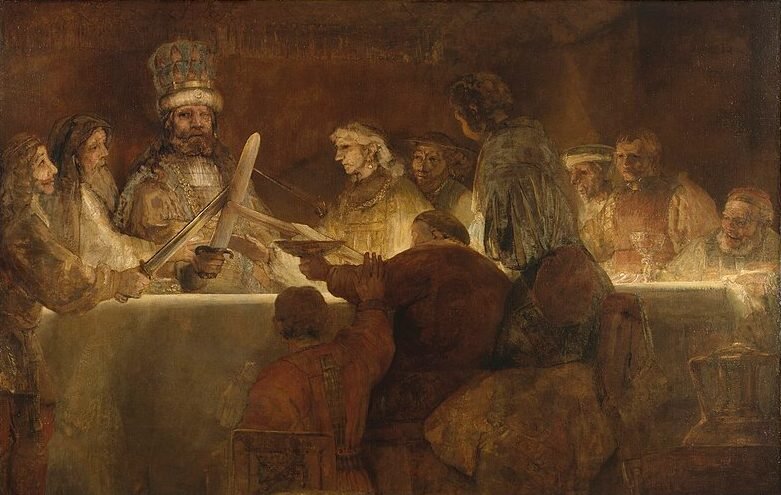
Image: A painting titled “The Conspiracy of Claudius Civilis” by Dutch artist Rembrandt.
Outbreak of the Revolt
The revolt began in the summer of 69 AD when Civilis, using a combination of diplomatic efforts and military action, convinced the Batavi to rise up against the Romans. The initial phase of the revolt saw the Batavians achieve several victories. Civilis adopted guerrilla tactics, using his knowledge of Roman strategies to outmaneuver the Roman forces stationed in Germania Inferior.
One of the key moments in the early stages of the revolt was the Batavian siege of the Roman camp at Vetera (modern Xanten, Germany). The Batavian forces surrounded the Roman garrison and laid siege to the fort. After months of resistance, the Roman soldiers were forced to surrender, and many were killed. This victory gave the Batavians control over a significant portion of the province.
Roman Response
The Roman response to the Batavian Revolt was initially hampered by the ongoing civil war. Vitellius, who was one of the claimants to the throne during the Year of the Four Emperors, was initially supportive of Civilis, as he saw the Batavian leader as a potential ally in his bid for power. However, once Vitellius was defeated and Vespasian became emperor, the new Roman leadership took a much harsher stance toward the rebellion.
Vespasian dispatched a large Roman army under the command of Quintus Petillius Cerialis to crush the Batavian Revolt. Cerialis was an experienced military commander who had served in Britain and was well-equipped to deal with the rebellion. He led several Roman legions into Germania Inferior and began systematically retaking territory from the Batavians.
Despite their initial successes, the Batavians were no match for the full might of the Roman legions. Civilis tried to rally other Germanic tribes to his cause, but the Romans were able to isolate the Batavian forces and prevent them from receiving significant reinforcements.
Conclusion of the Revolt
By the spring of 70 AD, the tide had turned decisively in favor of the Romans. Cerialis’ legions defeated the Batavian forces in several battles, and Civilis was eventually forced to retreat to his homeland. The decisive battle of the revolt took place near the Batavian capital, where the Romans decisively defeated Civilis’ army.
Following this defeat, Civilis negotiated a surrender with the Romans. Although the exact terms of the surrender are not well-documented, it is believed that Civilis was allowed to live and that the Batavians were granted relatively lenient terms. The Batavians were reintegrated into the Roman Empire, and their special status as a client tribe was restored.
Consequences and Legacy
The Batavian Revolt had several important consequences:
Roman Military Reforms: The revolt exposed weaknesses in the Roman military system, particularly in the reliance on auxiliary troops from subject tribes. In the years following the revolt, the Roman military underwent reforms to reduce its dependence on such forces and to strengthen the loyalty of provincial troops.
Reassertion of Roman Authority: The successful suppression of the Batavian Revolt allowed Rome to reassert its authority in Germania Inferior and along the Rhine frontier. The Roman Empire maintained control over the region for several more centuries.
Batavian Integration: Despite the revolt, the Batavians were reintegrated into the Roman Empire and continued to serve in the Roman army as auxiliaries. Their reputation as skilled soldiers endured, and they remained an important part of the Roman military machine.
Historical Memory: The Batavian Revolt became a symbol of resistance to Roman rule, particularly in the Low Countries. In later centuries, during the rise of nationalism in the Netherlands, the revolt was celebrated as an early example of Dutch resistance to foreign oppression. The story of Julius Civilis was romanticized as that of a heroic freedom fighter.
Conclusion
The Batavian Revolt was a brief but intense uprising that reflected the broader tensions between Rome and its subject peoples. While the revolt ultimately failed, it highlighted the challenges Rome faced in maintaining control over its vast empire and the ways in which local populations could exploit moments of imperial weakness. The Batavians, under the leadership of Julius Civilis, came close to achieving independence, but the military might of Rome proved too powerful to overcome.
Despite the failure of the revolt, the Batavian people continued to play a role in the Roman Empire, and their rebellion remains a significant event in the history of the Roman occupation of Germania Inferior. The revolt’s legacy endured in the cultural memory of the region, influencing later generations and contributing to the development of national identity in the Low Countries.
READ MORE: Roman Emperors who changed the course of history
Questions and Answers about the Batavian Revolt

What was the Batavian Revolt?
The Batavian Revolt was a rebellion by the Batavian tribe against the Roman Empire, occurring between 69 and 70 CE. It was led by Julius Civilis, a Batavian noble who had served in the Roman military. Despite initial successes, the revolt was ultimately crushed by Roman forces under General Quintus Petillius Cerialis.
Who led the Batavian Revolt, and what was his background?
The revolt was led by Julius Civilis, a Batavian noble who held Roman citizenship. He had served in the Roman army and was familiar with Roman military tactics. Civilis had a deep resentment toward Rome, particularly after his brother, Claudius Paulus, was executed by the Romans. He used the political instability of the time to rally the Batavians and other tribes against Roman rule.
What was the political context in the Roman Empire during the Batavian Revolt?
The revolt took place during the Year of the Four Emperors (69 CE), a period of political chaos when four different men—Galba, Otho, Vitellius, and Vespasian—claimed the Roman throne in quick succession. This internal instability weakened Roman authority in the provinces, giving Civilis and the Batavians an opportunity to rebel.
Why were the Batavians dissatisfied with Roman rule?
The Batavians, who had traditionally provided auxiliary troops to the Roman army, were dissatisfied with the lack of recognition and the mistrust they experienced under Emperor Galba. Additionally, the execution of Julius Civilis’s brother by the Romans and the subsequent dismissal of Batavian soldiers by Galba further fueled resentment.
What were some key events in the Batavian Revolt?
The revolt began in August 69 CE, when Civilis incited the Cananefates, a neighboring tribe, to join the rebellion. The Batavians then captured several Roman forts along the Rhine and besieged the Roman stronghold at Vetera (modern Xanten), achieving a series of military successes.
How did the Roman Empire respond to the Batavian Revolt?
Initially, Emperor Vitellius supported Civilis, but after Vitellius was defeated by Vespasian, the new emperor dispatched General Quintus Petillius Cerialis to suppress the revolt. Cerialis, after facing some initial setbacks, managed to regroup and lead a successful counter-offensive, ultimately regaining control of the region and forcing Civilis to surrender.
What was the outcome of the Batavian Revolt?
The revolt ended with the defeat of the Batavians and the restoration of Roman control over the region. Julius Civilis was forced to surrender, and although the Batavians were granted relatively lenient terms, they continued to serve as auxiliary troops in the Roman army.
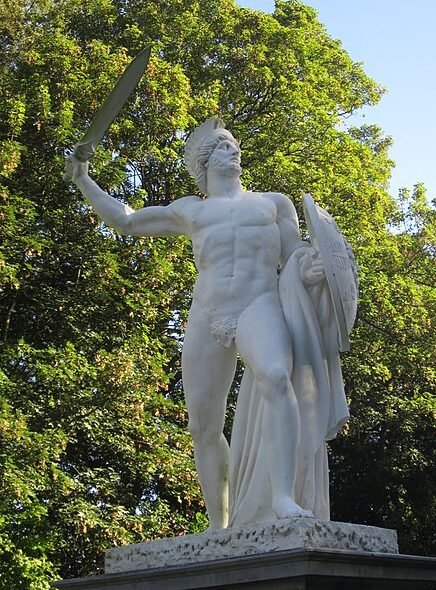
Image: Statue of Julius Civilis.
What was the significance of the Batavian Revolt in Roman history?
The Batavian Revolt highlighted the challenges the Roman Empire faced in maintaining control over its provinces, particularly during times of internal instability. It also became a symbol of resistance to Roman rule and was later romanticized in Dutch history as part of the development of a national identity.
How did Julius Civilis exploit the instability in the Roman Empire to lead the revolt?
Julius Civilis capitalized on the political chaos of the Year of the Four Emperors, using the division within the Roman army and the empire’s focus on internal power struggles to rally the Batavians and other tribes. His knowledge of Roman military tactics helped him achieve initial victories.
What legacy did the Batavian Revolt leave?
The Batavian Revolt became an important symbol of resistance against foreign domination, particularly in later centuries when the story of Julius Civilis was romanticized in the Netherlands. It also underscored the vulnerability of the Roman Empire during periods of political unrest.





