The Battle of Vienna in 1683: History & Major Facts
The Battle of Vienna, which took place at Kahlenberg Mountain near Vienna on 12 September 1683, stands as a pivotal moment in European history, marking the end of significant Ottoman expansion into Europe. The battle followed a two-month siege of Vienna by the Ottoman Empire and was fought between the combined forces of the Holy Roman Empire and the Polish–Lithuanian Commonwealth, under the command of King John III Sobieski, against the Ottomans and their vassal and tributary states.

In the nutshell, the Battle of Vienna in 1683 marked the beginning of the decline of the Ottoman Empire. Image: A map of the Ottoman Empire in the year 1863.
Context and Prelude to the Battle
Vienna, the capital of the Habsburg Monarchy, was under siege from 14 July 1683 by a vast Ottoman force commanded by Grand Vizier Merzifonlu Kara Mustafa Pasha. The Ottoman army, with strength estimates ranging from 100,000 to 300,000 men, aimed to capture Vienna and thus open the path to further expansion into Central Europe. The city’s defense was led by Ernst Rüdiger Graf von Starhemberg, who, despite being heavily outnumbered, managed to hold out against the siege for two months.
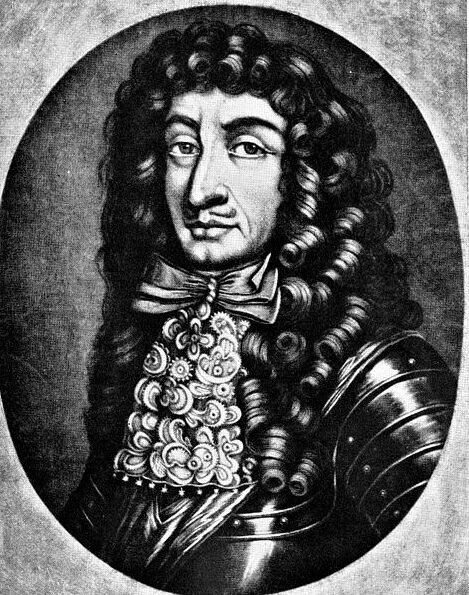
Image: Ernst Rüdiger Graf von Starhemberg
The Relief Force
The Holy Roman Empire and the Polish–Lithuanian Commonwealth, for the first time, cooperated militarily against the Ottomans. The relief force was led by John III Sobieski, King of Poland, who brought together a coalition army composed of various European states. Notably, the Polish contingent represented the Crown of the Kingdom of Poland, as the Lithuanian forces were delayed and arrived after the siege had been lifted.
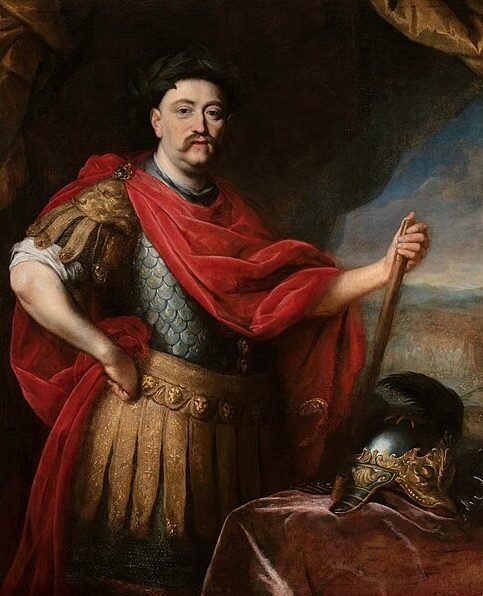
The relief force led by John III Sobieski comprised around 70,000 men from Polish, Austrian, and German troops. The Polish contingent included the elite Winged Hussars, known for their formidable cavalry charges. Sobieski’s leadership and the surprise attack strategy played a crucial role in lifting the siege of Vienna. Image: Portrait of John III Sobieski.
The Battle
On 12 September 1683, the decisive battle took place. The arrival of the relief army at Kahlenberg Mountain marked the beginning of a coordinated assault to break the siege. The Holy League’s forces included elite units like the Polish Winged Hussars, known for their formidable cavalry charges. The battle saw the largest known cavalry charge in history, with Sobieski’s forces playing a critical role in breaking through the Ottoman lines.
The Holy League’s strategy involved a multi-pronged attack: infantry and artillery from the Holy Roman Empire engaged the Ottomans on the ground, while Sobieski’s cavalry prepared for the decisive charge. This strategy culminated in a massive cavalry assault that overwhelmed the Ottoman forces, leading to their retreat. The battle ended in a decisive victory for the Holy League, with the Ottoman army suffering heavy casualties and fleeing the battlefield.
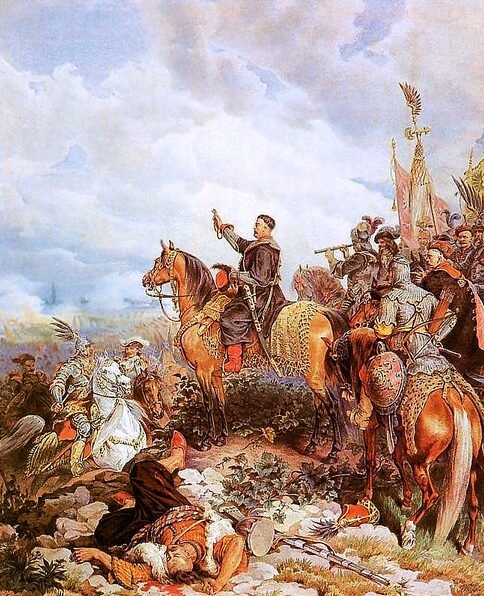
On September 12, 1683, a decisive action was taken by John III Sobieski. He launched a surprise attack on the Ottoman forces from the hills surrounding Vienna. Image: King Sobieski blessing the attack on Turks in Vienna. A painting by Polish artist Juliusz Kossak.
Aftermath and Significance
The defeat of the Ottomans at Vienna was a turning point in the Ottoman-Habsburg wars, which spanned over 300 years. The immediate aftermath saw the Ottomans retreating and losing their grip on Hungary and Transylvania over the next 16 years. The Battle of Vienna effectively halted Ottoman expansion into Central Europe and began a period of territorial contraction for the Ottoman Empire.
The victory had several significant outcomes:
- Military and Political Impact: The battle reinforced the military reputation of the Habsburgs and solidified alliances among European powers against the Ottoman threat. It also boosted the prestige of John III Sobieski, who was hailed as the savior of Vienna and Christendom.
- Territorial Changes: The subsequent Treaty of Karlowitz in 1699 resulted in the Ottomans ceding most of Ottoman Hungary to Leopold I, Holy Roman Emperor. This treaty marked a significant territorial and strategic loss for the Ottoman Empire in Europe.
- Cultural and Symbolic Legacy: The battle has been romanticized and mythologized in European history as a defining moment of Christian unity against the Islamic Ottoman threat. It symbolized the resilience and eventual resurgence of European powers.

The Battle of Vienna was decisive. The Holy League’s cavalry, including the famous Polish Winged Hussars, played a crucial role in breaking the Ottoman lines. The Ottomans, caught off guard and unable to regroup, suffered a crushing defeat. Grand Vizier Kara Mustafa Pasha fled but was later executed for his failure. Image: A painting depicting the Battle of Vienna.
Conclusion
The Battle of Vienna was a crucial event that stopped the Ottoman advance into Central Europe. The combined forces of the Holy Roman Empire and the Polish–Lithuanian Commonwealth, led by King John III Sobieski, delivered a decisive blow to the Ottoman army, marking a significant turning point in European history. This victory not only ended the immediate threat to Vienna but also initiated a period of decline for the Ottoman Empire’s influence in Europe, reshaping the continent’s political landscape for years to come.
Questions and Answers about the Battle of Vienna in 1683
Who orchestrated the Siege of Vienna in 1683?
In 1681 and 1682, conflicts between Imre Thököly’s forces and the Holy Roman Empire in northern Hungary escalated. Habsburg incursions into central Hungary gave Grand Vizier Merzifonlu Kara Mustafa Pasha the justification to persuade Sultan Mehmed IV and his council to move the Ottoman army.
Authorized to operate as far as Győr and Komárom Castles in northwestern Hungary, the Ottoman army mobilized on January 21, 1682, and war was declared on August 6, 1682. This set the stage for the Siege of Vienna in 1683.
Grand Vizier Kara Mustafa Pasha orchestrated the siege of Vienna. He led the Ottoman army, estimated to be between 100,000 and 290,000 strong, in an attempt to capture the city and expand Ottoman influence deeper into Europe.
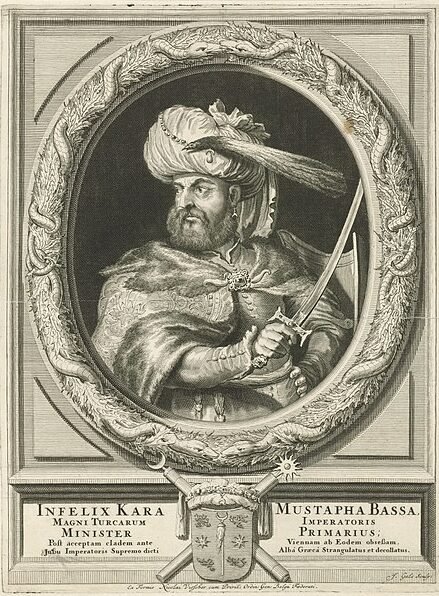
The Siege of Vienna in 1683 was orchestrated by Grand Vizier Merzifonlu Kara Mustafa Pasha, who led a formidable Ottoman army to capture Vienna. Image: Imaginative portrait of Mustafa Pasha.
Why was Vienna a strategic target for the Ottomans?
Vienna was the capital of the Habsburg Monarchy and a strategic gateway to the rest of Europe, making it a significant target for the Ottoman Empire’s expansion into Central Europe.
When did the siege begin, and what tactics did the Ottomans use?
The siege began in July 1683. The Ottomans surrounded the city, cut off supplies, and launched repeated assaults on Vienna’s defenses.
Who led the defenders of Vienna during the siege?
The defenders of Vienna were led by Ernst Rüdiger von Starhemberg, who held out bravely despite being vastly outnumbered and facing severe hardships.
What marked the turning point of the siege?
The turning point of the siege came with the arrival of a relief force organized by the Holy League, a coalition of European powers formed in response to the Ottoman threat.
Who spearheaded the Holy League’s relief force?
The Holy League’s relief force was spearheaded by the Polish King John III Sobieski, who led a combined army of Polish, Austrian, and German troops.
What was the decisive moment of the Battle of Vienna?
The decisive moment came in the afternoon of September 12, 1683, when John III Sobieski led the largest known cavalry charge in history. Approximately 20,000 cavalrymen, including the Winged Hussars, charged down Kahlenberg Mountain, overwhelming the Ottoman forces and causing them to retreat in disarray.

The failure of the Siege of Vienna in 1683 galvanized European powers, leading to a more concerted effort to push back against Ottoman control, culminating in the Treaty of Karlowitz in 1699, which resulted in substantial territorial losses for the Ottomans in Europe. Image: A painting by Flemish artist Frans Geffels, depicting Ottoman soldiers surrounding Vienna.
What role did the Holy League’s cavalry play in the battle?
The Holy League’s cavalry, including the famous Polish Winged Hussars, played a crucial role in breaking the Ottoman lines during the battle.
What happened to the Ottoman forces and their leader after the battle?
The Ottoman forces were caught off guard and unable to regroup, suffering a crushing defeat. Grand Vizier Kara Mustafa Pasha fled but was later executed for his failure.
Why was the victory at Vienna significant for Europe?
The victory at Vienna was significant because it marked the end of Ottoman attempts to expand further into Central Europe and signaled the beginning of a gradual decline in Ottoman power and influence in the region.
What were the immediate and long-term impacts of the victory at Vienna for Europe?
The Battle of Vienna was celebrated across Europe as a triumph of Christian unity over the Ottoman threat. It enhanced the reputation of King John III Sobieski and Poland. The battle reinforced the importance of military alliances and cooperation among European states, setting a precedent for future coalitions against common threats.
The immediate impact was the end of the Ottoman advance into Central Europe. In the long term, the victory galvanized a more unified and coordinated European effort to push back against Ottoman control, leading to the Great Turkish War (1683-1699) and significant territorial losses for the Ottomans under the Treaty of Karlowitz in 1699.
How did the Treaty of Karlowitz affect the Ottoman Empire?
The Ottoman’s failure at the Battle of Vienna galvanized European powers, leading to a more concerted effort to push back against Ottoman control, culminating in the Treaty of Karlowitz in 1699. The treaty resulted in substantial territorial losses for the Ottomans in Europe, marking a significant retreat of Ottoman influence in the region. The Ottomans ceded much of Hungary, Transylvania, Croatia, and Slovenia to the Habsburgs, marking a major territorial and strategic setback for the Ottomans.
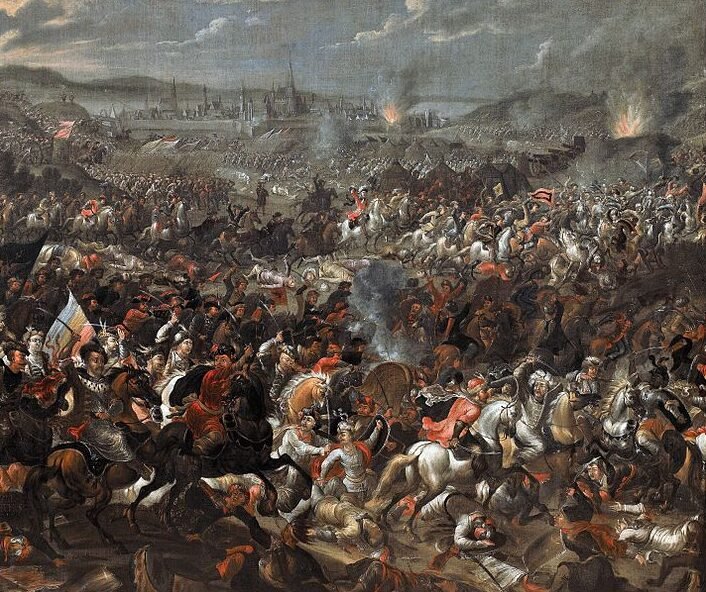
The Battle of Vienna ended the Ottoman Empire’s territorial ambitions in Central Europe and initiated a period of European ascendancy. It set the stage for the decline of Ottoman influence and the rise of European powers, shaping the geopolitical landscape for centuries to come. Image: A painting of the Battle of Vienna by Flemish artist Gonzales Franciscus Casteels.
Brief History of Istanbul and its Most Famous Historical Sites





Can’t find the religion of the Poles, Lithuanians, or Germans who saved Vienna??
The painting clearly highlights the double-headed eagle flag on the battlefield of Vienna (1683). While modern summary articles group everything under the ‘Ottoman Empire’, history records thousands of Albanian soldiers and commanders fighting there. The details in period art don’t lie!