The Beja People: History and Major Facts
The Beja people, a Cushitic-speaking ethnic group, are indigenous to Northeast Africa, particularly inhabiting the Eastern Desert region. Their presence in this area is evidenced by archaeological findings dating back to at least 4000 BC, indicating a long-standing connection with the land. The Beja are historically recognized as the Blemmyes in ancient records, a name that highlights their enduring legacy in the region. Their origins are deeply rooted in the Cushitic branch of the Afroasiatic language family, which underscores their ancient ties to other Cushitic-speaking communities across the Horn of Africa.
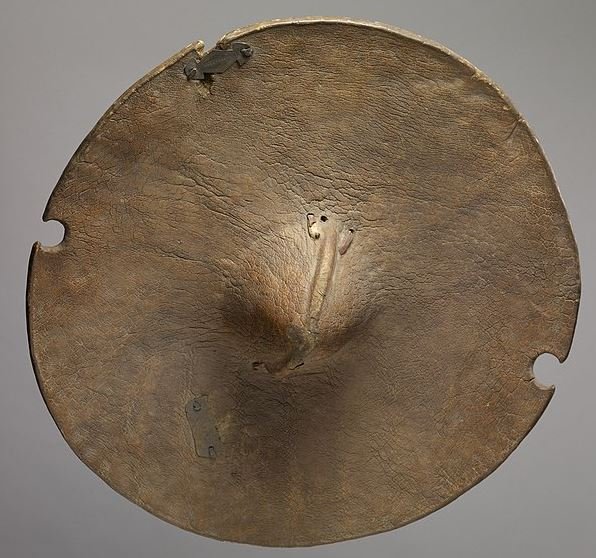
The Beja are a Cushitic ethnic group living in the Eastern Desert, covering southeastern Egypt, eastern Sudan, and northwestern Eritrea. Image: A shield of the Beja people, made from animal hide.
Early Historical Interactions
In the third century, the Kingdom of Aksum, a powerful empire in what is now Eritrea and northern Ethiopia, expanded its influence into Beja territories. This expansion resulted in the Beja becoming vassals under Aksumite control, integrating them into a broader political and economic network. The interaction with Aksum introduced the Beja to new cultural and administrative practices, shaping their societal structures and fostering connections with neighboring civilizations.
Formation of Beja Kingdoms
By the ninth century, the Beja had developed a structured and organized society, as documented by the historian Al-Yaqubi. He identified five distinct Beja kingdoms, each with its own governance and societal organization. These kingdoms included Bazin, Belgin, Jarin, Nagash, Qita’a, and Tankish, which existed between Aswan and Massawa. The existence of these polities reflects the Beja’s ability to establish and maintain independent political entities, demonstrating their resilience and adaptability in a region marked by shifting power dynamics.
Religious Transformations
In the tenth century, the Beja were noted by the geographer Abu Nasr Mutahhar al-Maqdisi to practice Christianity. This observation highlights the religious diversity of the region before the widespread adoption of Islam. Christianity’s influence among the Beja indicates early interactions with Christian civilizations, likely facilitated by their association with the Kingdom of Aksum. However, this religious landscape underwent significant changes over the centuries, particularly with the advent of Islam.
Arabization and Islamization
Originally, the Beja spoke Bidhaawyeet or Tubdhaawi, their indigenous Cushitic language. However, the linguistic and cultural landscape of the Beja began to shift with the migration of various Arab tribes, including Juhaynah, Mudar, and Rabi’a, into Beja regions. These migrations initiated a process of Arabization and Islamization, as the Beja adopted Arabic language, clothing styles, and kinship structures through intermarriage and cultural assimilation. By the 15th century, Islam had become the predominant religion among the Beja, fundamentally altering their cultural and religious identity.

The Balaw Subgroup
Among the Beja, the Balaw subgroup residing on the southern Red Sea coast exemplifies the complex interplay of cultural influences. It is believed that the Balaw emerged from intermarriages between Arabs and Beja, although this theory remains a subject of debate among historians. The Balaw’s distinct cultural traits reflect the blending of Arab and Beja traditions, illustrating the nuanced outcomes of historical migrations and interactions.
The Rise of the Hadendoa Clan
By the eighteenth century, the Hadendoa clan had emerged as a dominant force within the Beja society, particularly in eastern Sudan. The Hadendoa’s influence extended beyond their immediate community, playing a significant role in regional politics and conflicts. Their prominence set the stage for their pivotal involvement in subsequent historical events, including the Mahdist War.
The Mahdist War and Beja Allegiances
During the Mahdist War in the late 19th century, the Beja were divided in their allegiances. The Hadendoa clan allied with the Mahdist forces, who were fighting against Ottoman-Egyptian rule, while other Beja groups such as the Bisharin and Amarar supported the British. Additionally, the Beni Amer, a subset of the Beja residing largely in Eritrea, sided with Ethiopian leader Ras Alula in battles like Kufit. This division underscores the Beja’s complex political landscape and their strategic alliances during periods of conflict.
Political Organization and the Beja Congress
The Beja have a long history of political organization and resistance. In 1952, they established the Beja Congress with the goal of pursuing regional autonomy from the Sudanese government based in Khartoum. Dissatisfied with the government’s lack of progress, the Beja Congress joined the National Democratic Alliance in the 1990s. This alliance enabled the Congress to exert control over parts of eastern Sudan, including areas around Garoura and Hamshkoraib. The Beja Congress engaged in various forms of resistance, including sabotage of the oil pipeline to Port Sudan in 1999 and 2000.
Modern Political Struggles and Peace Agreements
The Beja Congress continued its struggle for autonomy by opposing the 2003 peace deal between the Sudanese government and the Sudan People’s Liberation Army. In 2004, the Congress aligned with the Sudan Liberation Movement/Army from Darfur, seeking broader support for their cause. Although a peace agreement was signed in 2006, disagreements over its implementation led the Beja Congress to withdraw in 2011. Subsequently, they rejoined the Sudan Liberation Movement/Army, highlighting ongoing challenges in achieving lasting peace and autonomy.
Geographical Distribution and Cultural Significance
Today, the Beja inhabit a vast area between the Nile River and the Red Sea, encompassing Sudanese states such as Red Sea, River Nile, Al Qadarif, and Kassala, as well as regions in Eritrea and southeastern Egypt. Smaller Beja communities are also found further north in Egypt’s Eastern Desert, including displaced groups in the Kharga Oasis due to the construction of the Aswan High Dam. Jebel Uweinat holds significant cultural importance for the Qamhat Beja, serving as a revered landmark and a symbol of their enduring connection to the land.
Linguistic Heritage and Preservation
While many Beja now speak Arabic, especially in regions influenced by neighboring Arab populations, the Beja language remains a vital aspect of their cultural identity. Known as Bidhaawyeet or Tubdhaawi, the language is esteemed for its cultural significance, including poetry and land claims. Efforts to preserve the Beja language are reinforced by its role in maintaining ethical values and community cohesion. Despite the dominance of Arabic as a modern lingua franca, Beja continues to be a prestigious language that aligns with the community’s cultural heritage.
Social Structure and Clan Organization
Beja society is traditionally organized into several clans, each maintaining distinct identities while some have intermingled with Bedouin populations in eastern areas. Prominent clans include the Bisharin, Hedareb, Hadendowa, Amarar, Beni-Amer, Hallenga, Habab, Belin, and Hamran. These clans function as fundamental units of social organization, preserving cultural traditions and facilitating collective action. Historically, the Beja’s ability to organize into independent kingdoms and clans has been crucial to their resilience and adaptability in the face of external pressures and internal dynamics.
Historical Polities and Independent Kingdoms
During the ninth century, Beja society was divided into independent kingdoms, each with its own governance and territorial control. Al-Yaqubi identified six such polities between Aswan and Massawa, including the Kingdoms of Bazin, Belgin, Jarin, Nagash, Qita’a, and Tankish. These kingdoms exemplify the Beja’s capacity for political organization and autonomy, enabling them to navigate the complexities of regional power struggles and maintain their cultural identity over centuries.
Cultural Resilience and Heritage Preservation
Throughout their history, the Beja have demonstrated remarkable resilience in preserving their cultural identity despite various external influences. Their ability to adapt linguistically and religiously while maintaining core cultural practices is a testament to their enduring heritage. The preservation of the Beja language, social structures, and historical narratives ensures that their unique cultural legacy continues to thrive amidst modern challenges.
Conclusion
The Beja people possess a rich and multifaceted history that spans millennia. From their ancient origins in the Eastern Desert to their interactions with powerful empires like Aksum, and their enduring struggle for autonomy, the Beja have navigated a complex historical landscape with resilience and adaptability. Their linguistic heritage, clan-based social structure, and political organization reflect a deeply rooted cultural identity that has withstood the test of time.
Frequently Asked Questions
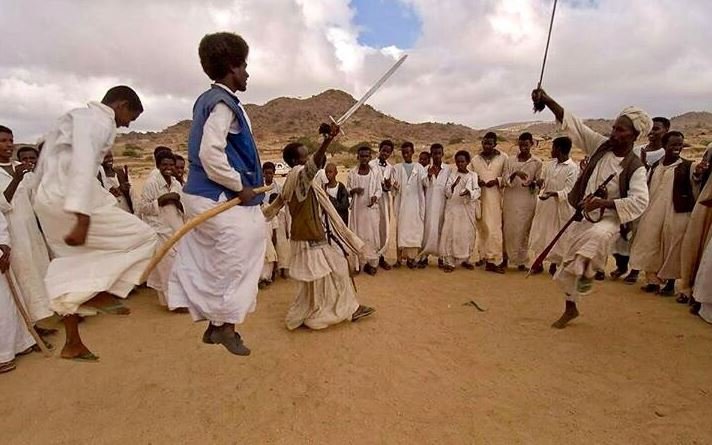
Image: A group of Beja men dancing.
Who are the Beja and where are they indigenous to?
The Beja are a Cushitic-speaking ethnic group indigenous to Northeast Africa. They traditionally inhabit the Eastern Desert region, spanning northeastern Egypt, eastern Sudan, and parts of Eritrea.
What historical name were the Beja known by in ancient records?
In ancient records, the Beja were historically known as the Blemmyes.
How did the Kingdom of Aksum interact with the Beja in the third century?
In the third century, the Kingdom of Aksum expanded into Beja territories, establishing the Beja as vassals under Aksumite control.
What did the geographer Abu Nasr Mutahhar al-Maqdisi note about the Beja in the tenth century?
In the tenth century, geographer Abu Nasr Mutahhar al-Maqdisi noted that the Beja practiced Christianity, highlighting the region’s religious diversity before the widespread adoption of Islam.
How did Arab migration influence the Beja’s language and culture?
Arab migration introduced tribes such as Juhaynah, Mudar, and Rabi’a to Beja regions, leading to Arabization and Islamization through intermarriage and cultural assimilation. This resulted in the Beja adopting the Arabic language, clothing styles, and kinship structures, and by the 15th century, Islam became their predominant religion.
What is the Balaw subgroup, and what is debated about their origin?
The Balaw subgroup on the southern Red Sea coast is believed to result from intermarriages between Arabs and Beja, although this theory is debated among historians.
What role did the Beja clans play during the Mahdist War?
During the Mahdist War in the 1880s-1890s, the Beja were divided in their allegiances. The Hadendoa clan allied with the Mahdist forces, while other groups like the Bisharin and Amarar supported the British. Additionally, the Beni Amer subset in Eritrea sided with Ethiopian leader Ras Alula in battles such as Kufit.
What is the Beja Congress and what have been its key political activities?
The Beja Congress was formed in 1952 to seek regional autonomy from the Sudanese government. Dissatisfied with progress, it joined the National Democratic Alliance in the 1990s, controlled parts of eastern Sudan, engaged in sabotage against the oil pipeline to Port Sudan in 1999-2000, opposed the 2003 peace deal, aligned with the Sudan Liberation Movement/Army in 2004, signed a peace agreement in 2006, but withdrew in 2011 due to disputes over implementation and rejoined the Sudan Liberation Movement/Army.
What is the geographical distribution of the Beja today?
The Beja reside between the Nile River and the Red Sea, including Sudanese states such as Red Sea, River Nile, Al Qadarif, and Kassala, as well as regions in Eritrea and southeastern Egypt. Smaller communities are found further north in Egypt’s Eastern Desert, including displaced groups in the Kharga Oasis, and Jebel Uweinat is culturally significant for the Qamhat Beja.
What is the current status of the Beja language and its cultural significance?
While many Beja now speak Arabic due to regional influences, the Beja language remains vital and esteemed for its cultural significance, including poetry and land claims. It is preserved as a prestigious language that aligns with the community’s ethical values, despite Arabic being the dominant modern lingua franca.





