The Islamic New Year
The Islamic New Year, also known as the Hijri New Year, marks the beginning of a new lunar Islamic calendar year. It commemorates the migration (Hijrah) of Prophet Muhammad and his followers from Mecca to Medina in 622 CE, an event of monumental importance in Islamic history. The first day of the Islamic year falls on the first day of Muharram, the first month of the Islamic calendar.
The Hijri New Year is a time for reflection, spiritual renewal, and prayer, with its date determined by lunar cycles. It is distinct from the Gregorian calendar and carries deep historical and religious significance for Muslims worldwide.
Historical Significance of the Hijrah
The Islamic calendar, also called the Hijri calendar, begins with the year of the Hijrah—Prophet Muhammad’s migration to Medina. This event not only marked the establishment of the first Muslim community but also symbolized the transition from persecution to religious freedom and social unity.
The Islamic calendar, also called the Hijri calendar, begins with the year of the Hijrah.
The Hijrah was pivotal in Islamic history as it allowed Islam to flourish, laying the foundations for the Islamic state. The migration represents a broader theme of resilience, sacrifice, and trust in God, values that continue to resonate with Muslims today.

The gates of the Prophet’s Mosque in Medina bear the inscription, ‘Muhammad, the Messenger of God.’
Structure and Function of the Islamic Calendar
Lunar Basis
The Islamic calendar is purely lunar, consisting of 12 months of either 29 or 30 days each, totaling approximately 354 or 355 days per year. This makes the Islamic year around 11 days shorter than the Gregorian solar year. As a result, the Islamic New Year shifts earlier each year relative to the Gregorian calendar.
Key Religious Duties and Events
The Islamic calendar governs all major religious observances, including:
- Ramadan: The month of fasting.
- Hajj: The annual pilgrimage to Mecca.
- Eid Festivals: Eid al-Fitr and Eid al-Adha.
Additionally, significant historical and spiritual events, such as Laylat al-Qadr and the Day of Arafah, are determined by this calendar.
Determination of the Islamic New Year
Moon Sighting vs. Astronomical Calculations
There are two primary methods for determining the start of the Islamic New Year:
- Moon Sighting: In many countries, the new year begins based on local sightings of the crescent moon at sunset. This method can result in variations of one or two days between regions.
- Astronomical Calculations: Some Islamic institutions and nations, such as Saudi Arabia, rely on astronomical data to predict the new moon’s appearance. For example, the Umm al-Qura calendar in Saudi Arabia has undergone several reforms and is widely used for determining key dates.
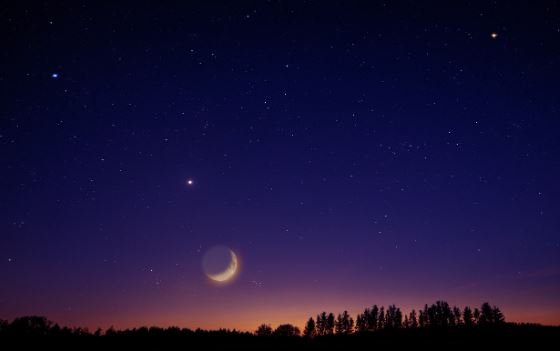
A crescent moon glowing at sunset sky.
Global Variations
The use of differing methods means that the Islamic New Year can vary slightly across countries. Local customs, atmospheric conditions, and time zones also contribute to these differences.
Cultural and Spiritual Practices
Observance of 1 Muharram
For many Muslims, the first day of Muharram is a time of reflection and gratitude. While it is not marked by grand celebrations like Eid, it holds quiet significance.
- Prayers and Supplications: Muslims offer special prayers seeking blessings for the new year.
- Reflection: The day is spent contemplating the lessons of the Hijrah, such as perseverance, unity, and faith.
- Community Engagement: Some communities host gatherings to discuss the historical and spiritual importance of the Hijrah.
Alternative Date for Shia Muslims
Twelver Shia Muslims observe the Islamic New Year on the first day of Rabi al-Awwal, as they believe the Hijrah took place during this month. This difference has led to variations in the historical dating of events such as the Battle of Karbala, which is commemorated during Muharram.
Connection to Muharram and Ashura
Muharram, the first month of the Islamic calendar, is sacred in Islam. It is particularly significant for Shia Muslims, who observe the month with mourning rituals to honor the martyrdom of Imam Hussain, the grandson of Prophet Muhammad, at the Battle of Karbala.
The Islamic calendar’s shorter year causes its dates to move earlier on the Gregorian calendar each year.
The 10th day of Muharram, known as Ashura, is a solemn occasion. While Shia Muslims focus on the events of Karbala, Sunni Muslims observe the day by fasting, commemorating the deliverance of Prophet Musa (Moses) and the Israelites from Pharaoh.
Challenges and Contemporary Relevance
The Islamic calendar remains essential for determining religious obligations and observances. However, its reliance on lunar cycles can create challenges in coordinating international dates for holidays and events.
From its roots in the Hijrah to its continued significance in guiding religious observances, the Hijri New Year embodies the spirit of reflection, faith, and unity.
The Islamic New Year continues to serve as a time for introspection and spiritual growth. Muslims reflect on the Hijrah’s lessons, emphasizing themes such as resilience, community, and trust in God. It offers an opportunity to renew faith and set intentions for the year ahead.
Why are images of Prophet Muhammad often avoided in Islamic art? – History and Major Facts
Questions and Answers
What is the origin of the Hijri calendar?
The calendar begins from the Hijrah, the migration of Prophet Muhammad and his followers from Mecca to Medina in 622 CE.
How is the Islamic New Year observed?
It is a reflective occasion rather than a celebratory one, with many Muslims dedicating the day to prayers and reflection.
How are Islamic dates determined?
Islamic dates are calculated based on lunar cycles, either through local moon sightings or astronomical calculations, depending on the country.
Why do Islamic calendar dates differ globally?
Differences arise from varying methods of moon sighting or tabular calculations, leading to discrepancies in observing the same date across regions.
How is a day defined in the Islamic calendar?
A day begins at sunset, meaning the new Islamic year starts from sunset on the last day of the previous year.
Do Shia Muslims observe a different New Year?
Twelver Shia Muslims consider Rabi’ al-Awwal, not Muharram, as the start of the New Year because the Hijrah took place in this month.
Why does the Islamic New Year date change yearly in the Gregorian calendar?
The Islamic year is shorter by 11-12 days than the solar Gregorian year, causing the Islamic New Year to shift annually in the Gregorian calendar.





