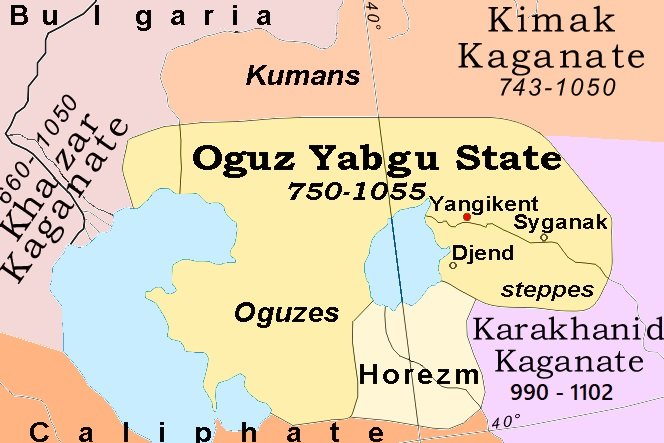
The Oghuz Yabgu State existed in Turkestan from 750 to 1055.
The Oghuz Turks were a western Turkic people who spoke the Oghuz branch of the Turkic language family. They formed the Oghuz Yabgu State in the 8th century and later played a significant role in Islamic and Middle Eastern history.
Origins and Early History
The Oghuz Turks were a western branch of the Turkic people who spoke the Oghuz language, a subgroup of the Turkic language family. Their name, “Oghuz,” originally meant “tribe” and was commonly used to describe various Turkic confederations.
Historically, they emerged in Central Asia, particularly in the Jeti-su region, but conflicts with the Karluks and Uyghurs led them to migrate westward in the 8th century. By the 9th century, the Oghuz had settled in the Aral steppe, from where they launched further expansions into modern-day Kazakhstan and beyond.
The Oghuz formed a tribal confederation known as the Oghuz Yabgu State, which lasted from 750 to 1055 AD. This political entity was centered in the Syr Darya region and played a crucial role in shaping the history of the Turkic world. It was through this confederation that the Oghuz established themselves as key players in the political and military landscape of the region.
Westward Migration and Expansion
Due to constant warfare with rival Turkic groups, the Oghuz continued their westward migration throughout the 9th and 10th centuries. In this period, they displaced the Pechenegs from the Ural and Emba River regions, forcing them further into Eastern Europe. The Oghuz gradually settled in the steppe areas north of the Caspian Sea and the Aral Sea, while some groups moved further west into the Balkans and the Byzantine frontier.
One of the most significant aspects of Oghuz expansion was their eventual conversion to Islam. By the 10th century, many Oghuz tribes had adopted Islam, which influenced their cultural and political structures. This transformation set the stage for their rise as powerful state-builders in the Islamic world.
The Rise of the Seljuks
One of the most influential Oghuz clans, the Seljuks, emerged in the 11th century. Led by Seljuk Bey, the clan converted to Islam and entered Persian territories, eventually founding the Great Seljuk Empire. This empire became one of the most powerful Islamic states of the medieval period, stretching from Central Asia to the Middle East. The Seljuks played a crucial role in defending the Islamic world against Byzantine and Crusader incursions while also laying the groundwork for later Turkish empires.
Meanwhile, another group of Oghuz known as the Uzes migrated into Eastern Europe and the Balkans. Some of them were assimilated into Slavic populations, while others served as mercenaries in the Byzantine army. These migrations demonstrated the far-reaching influence of the Oghuz across different regions.
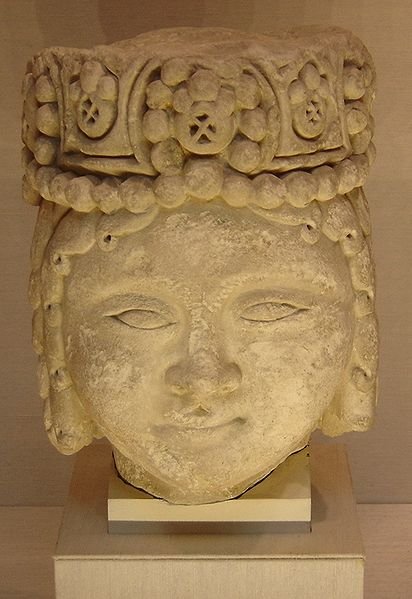
A 12th–13th century head of a male Seljuk royal figure from Iran.
The Ottoman Empire and Oghuz Legacy
Following the decline of the Seljuks, various Oghuz-descended dynasties emerged. Among them, the Ottoman Turks, led by Osman I, eventually established the most enduring and powerful empire in Turkish history: the Ottoman Empire. The Ottomans traced their lineage to the Oghuz Turks, particularly to the Kayi tribe. This connection provided them with legitimacy among Turkish and Islamic rulers.
Beyond the Ottomans, other Oghuz-descended dynasties included the Khwarazmian Empire, the Qara Qoyunlu, the Aq Qoyunlu, and later the Afsharids and Qajars in Iran. These states played significant roles in shaping the geopolitics of the Middle East and Central Asia.
Oghuz Language and Culture
The Oghuz spoke a branch of the Turkic language family that later evolved into modern languages such as Turkish, Azerbaijani, and Turkmen. Their linguistic heritage remains vital to understanding the cultural ties between Turkey, Azerbaijan, and Turkmenistan today.
In terms of literature, the Oghuz are best known for the “Book of Dede Korkut,” an epic collection of stories that highlight their traditions, values, and warrior ethos. This literary work remains an essential part of Turkic heritage, offering insights into the customs, beliefs, and struggles of the Oghuz people.

Political and Military Organization
The Oghuz were traditionally organized into a tribal confederation, with each tribe having its own leadership but owing allegiance to a supreme ruler known as the Yabgu. This system allowed for both unity and autonomy, enabling them to adapt to various challenges.
Militarily, the Oghuz were formidable warriors, excelling in horseback archery and steppe warfare. Their martial skills made them highly sought-after as mercenaries, and they served in various Islamic armies from the Middle East to North Africa and even Spain.
The military prowess, political institutions, and cultural contributions of the Orghuz Turks continue to influence modern Turkic states.
Social Structure and Way of Life
Oghuz society was predominantly nomadic, with a strong emphasis on kinship and tribal loyalty. They lived in yurts, herded livestock, and engaged in seasonal migrations. Women played active roles in society, often participating in horseback riding, archery, and trade. Marriage alliances were crucial in maintaining social cohesion, and hospitality was a deeply ingrained cultural value.
Their diet consisted of dairy products, meat, and bread, reflecting their pastoral lifestyle. Fermented horse milk, known as kımız, was a popular drink, while dishes such as yahni (stew) and kebabs were staple foods.
Religious Transformation and Beliefs
Before converting to Islam, the Oghuz practiced Tengriism, a shamanistic belief system centered around the sky god Tengri. They worshiped natural elements and performed elaborate rituals to honor their ancestors. However, their gradual conversion to Islam in the 10th and 11th centuries brought significant cultural shifts. Islamic traditions merged with their Turkic customs, giving rise to unique hybrid practices that persisted in later Turkish empires.
Oghuz Tribes and Clans
The Oghuz were divided into numerous tribes, each with its own identity and leadership. Mahmud al-Kashgari, a 11th-century scholar, documented 22 main Oghuz tribes in his “Diwan Lughat al-Turk.” Some of the most prominent tribes included:
- Kayi – The tribe from which the Ottomans emerged.
- Afshar – The founders of the Afsharid dynasty in Iran.
- Bayandur – The ruling tribe of the Aq Qoyunlu.
- Salur – The Salghurids of Persia were of this lineage.
- Yiva, Karkın, and Begdili – Other major Oghuz clans that contributed to the formation of various Turkic states.
Legacy and Modern Descendants
Today, the Oghuz Turks’ descendants form the core populations of Turkey, Azerbaijan, and Turkmenistan. Their cultural and linguistic heritage is evident in the Turkic-speaking world, influencing art, politics, and traditions.
Additionally, the influence of Oghuz military and administrative systems can be seen in modern Turkish institutions. The Ottoman Empire’s bureaucratic and military structures had deep roots in Oghuz traditions, which have persisted in contemporary Turkey’s governance.
The Oghuz Turks’ migration patterns also shaped the ethnic landscape of Central Asia and the Middle East. Their integration with Persian, Arab, and Slavic cultures led to unique cultural syncretism, enriching the broader history of these regions.

Timeline of the Oghuz Turks
- 8th century – The Oghuz form the Oghuz Yabgu State in Central Asia, centered around the Jeti-su region.
- 9th century – The Oghuz push the Pechenegs westward from the Emba and Ural River regions.
- 10th century – They inhabit areas near the Sari-su, Turgai, and Emba rivers, north of Lake Balkhash.
- 11th century – The Seljuk Oghuz establish the Great Seljuk Empire in Persia; another branch (Uzes/Torks) migrates to the Russian steppes and later to the Balkans.
- Late 11th century – Some Oghuz groups serve as mercenaries for the Byzantine Empire.
- 13th century – The Oghuz-led Ottoman dynasty begins its rise in Anatolia after the decline of the Seljuks.
- 14th century – The Book of Dede Korkut, an epic about Oghuz culture, is compiled.
- 16th–19th centuries – Oghuz-descended dynasties, including the Ottomans, Afsharids, and Qajars, rule vast territories.
- Today – The Oghuz legacy persists through modern Turkish, Azerbaijani, and Turkmen populations.
Frequently Asked Questions
Where did the Oghuz Turks originate?
They originated in Central Asia, particularly the Jeti-su region, and later migrated westward due to conflicts with the Karluks and Uyghurs.
What was the role of the Oghuz in the Islamic world?
They embraced Islam and became influential empire-builders, founding the Great Seljuk Empire and serving in Islamic armies across the Middle East, North Africa, and even Spain.
How did the Oghuz Turks contribute to the formation of the Ottoman Empire?
The Ottoman dynasty, founded by Osman I, traced its lineage to Oghuz Khagan. The Ottomans emerged from an Oghuz tribal confederation and established one of the most powerful empires in history.
Why did the name “Oghuz” fall out of use?
By the 13th century, the term “Oghuz” was replaced by “Turkmen” or “Turcoman,” especially among Muslim Oghuz groups, while Byzantine sources referred to them as “Uzes.”
What was the social structure of Oghuz society?
Oghuz society was tribal and organized around kinship, alliances, and military hierarchy. Their nomadic lifestyle fostered strong military traditions and a patrilineal social order.
Which major dynasties descended from the Oghuz Turks?
Several dynasties, including the Seljuks, Ottomans, Khwarazmians, Qara Qoyunlu, Aq Qoyunlu, Afsharids, and Qajars, originated from Oghuz tribes.
What is the significance of the Book of Dede Korkut?
The Book of Dede Korkut is a major literary work of Oghuz heritage, reflecting their language, traditions, and heroic legends, and remains a cultural touchstone for Oghuz-descended peoples today.





