The Rough Riders: Theodore Roosevelt’s Volunteer Cavalry
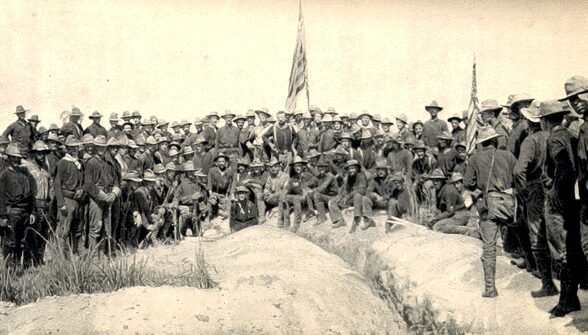
The Rough Riders, officially known as the 1st United States Volunteer Cavalry, played a crucial role in the Spanish-American War and left an indelible mark on American history and culture. Image: Colonel Roosevelt and his Rough Riders at the top of the hill which they captured, Battle of San Juan Hill.
The Rough Riders were a volunteer cavalry regiment that played a notable role during the Spanish-American War in 1898. Officially known as the 1st United States Volunteer Cavalry, the Rough Riders were unique in several ways, including their diverse composition and the involvement of Theodore Roosevelt, who later became the 26th President of the United States. The regiment’s activities, particularly during the Battle of San Juan Hill, have been immortalized in American history and culture.
In the article below, American historians at World History Edu explore the origins, composition, significant events, and legacy of the Rough Riders, highlighting their impact on both the war and the individuals involved.
Origins and Formation
In the late 19th century, the United States was drawn into the Spanish-American War following the explosion of the USS Maine in Havana Harbor, which was widely blamed on Spain. President William McKinley called for volunteers to bolster the U.S. military, which had shrunk significantly since the Civil War. Among those answering the call was Theodore Roosevelt, then serving as Assistant Secretary of the Navy. Roosevelt was a strong advocate for Cuban independence and saw the war as an opportunity to support this cause while also testing his theories about the moral and physical benefits of military service.
The Rough Riders were one of three volunteer regiments authorized by Congress. Unlike the regular army, these volunteer units were composed of a mix of civilians and former soldiers. The 1st United States Volunteer Cavalry was initially intended to be recruited from the southwestern United States, including territories like New Mexico, Arizona, and Oklahoma, which were known for their rugged and skilled horsemen.
Roosevelt, who resigned his naval post to join the regiment, brought a diverse array of recruits, including Ivy League athletes, cowboys, miners, hunters, and Native Americans. The regiment’s first commander was Colonel Leonard Wood, a medical doctor and military officer who was soon promoted, leaving Roosevelt to take command.
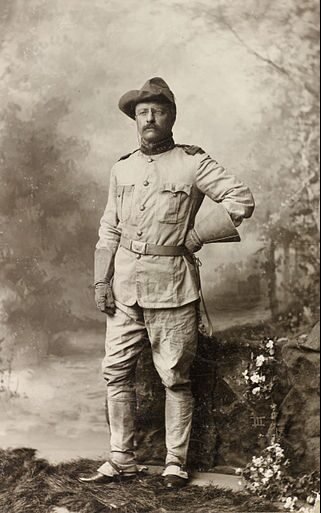
Image: Colonel Theodore Roosevelt in his Rough Riders uniform on October 26, 1898, by American photographer George G. Rockwood.
Composition and Training
The Rough Riders were an eclectic group. The original intention was to recruit men with experience in frontier life and skills in riding and shooting, essential attributes for a cavalry unit. However, the unit quickly attracted a broader demographic. Roosevelt’s involvement, as a well-known public figure, drew significant attention and interest. The recruits included men from all walks of life, creating a unique melting pot within the regiment. Ivy League athletes joined alongside cowboys and Native Americans, each bringing their own set of skills and experiences.
Training took place in San Antonio, Texas, where the volunteers were equipped and drilled. The regiment faced a steep learning curve, as many recruits had no prior military experience. However, the diverse skills of the men complemented each other, and under the leadership of Wood and Roosevelt, they quickly adapted to military life. The training emphasized basic military discipline, horsemanship, and marksmanship. The regiment became known for its high morale and esprit de corps, fostered by the charismatic and energetic leadership of Roosevelt, who was eager to prove himself in battle.
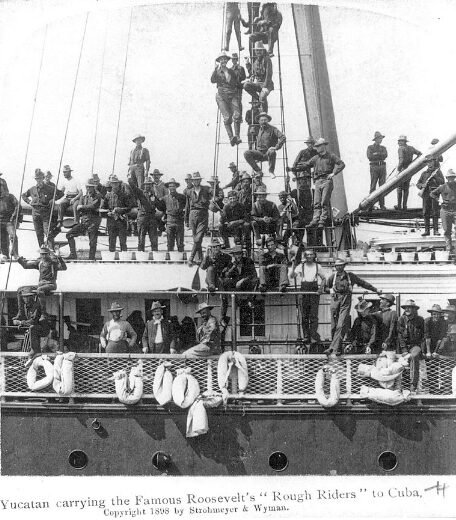
Image: Rough Riders heading to Cuba aboard the steamship Yucatan.
The Six Flags that have flown over Texas: History and Major Facts
Deployment and the Battle of San Juan Hill
The Rough Riders were part of the U.S. expeditionary force sent to Cuba to fight against Spanish forces. However, due to logistical challenges, the regiment was forced to leave most of its horses behind in Florida. This situation led to their initial nickname, “Wood’s Weary Walkers,” as they fought on foot rather than as a mounted unit. Despite this setback, the Rough Riders proved their mettle in several skirmishes, including the famous Battle of San Juan Hill.
The Battle of San Juan Hill, fought on July 1, 1898, was a crucial engagement in the Cuban campaign. The Rough Riders, alongside other units, were tasked with capturing the heights overlooking the city of Santiago. The battle was marked by confusion and disorganization, with American forces advancing under heavy fire from entrenched Spanish positions. Roosevelt played a significant role, famously leading a charge up Kettle Hill, a smaller adjacent hill to San Juan Hill. His actions, often portrayed as emblematic of his bravery and leadership, contributed to the success of the American forces in taking the high ground.
The battle was a turning point in the war. The American victory at San Juan Hill, along with the naval blockade and other military actions, led to the Spanish surrender and the end of the war. The Rough Riders, though suffering casualties, emerged as heroes, largely due to Roosevelt’s publicity efforts and his subsequent political career.
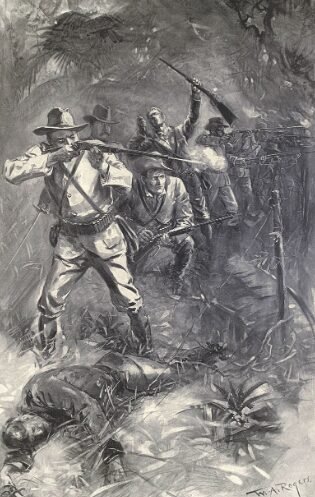
Image: “The Battle of Las Guasimas, June 24 – The heroic stand of the ‘Rough Riders'” in Harper’s Pictorial History of the War with Spain.
Aftermath and Legacy
Following the war, the Rough Riders were mustered out of service in September 1898. Despite their brief period of active duty, the regiment left a lasting legacy. Roosevelt, in particular, used his wartime experience to bolster his political career. He wrote extensively about the Rough Riders, emphasizing their courage and camaraderie, and often highlighted his own leadership role. This narrative helped shape his public image as a rugged and heroic figure, contributing to his election as Governor of New York and later as Vice President and President of the United States.
The Rough Riders’ legacy also influenced American military history and culture. The regiment became a symbol of American bravery and volunteerism, embodying the spirit of adventure and rugged individualism. Their story was romanticized in books, articles, and films, further entrenching their place in American lore. The diverse composition of the regiment also reflected the changing demographics of the United States at the time, showcasing a more inclusive vision of American identity.
Moreover, the Rough Riders highlighted the evolving nature of warfare and the U.S. military. The regiment’s experience underscored the importance of logistical planning, as their initial designation as a cavalry unit became moot without their horses. The challenges they faced also illustrated the need for better organization and communication within the military, lessons that would be taken to heart in subsequent conflicts.
Roosevelt’s Influence and Personal Transformation
Theodore Roosevelt’s involvement with the Rough Riders was transformative, both for himself and the regiment. His decision to join the war effort was driven by a combination of personal ambition, patriotic fervor, and a belief in the benefits of military service. For Roosevelt, the experience was a proving ground for his ideals and leadership abilities. His leadership style, characterized by a hands-on approach and a willingness to share the hardships of his men, earned him the respect and loyalty of the Rough Riders.
Roosevelt’s writings about the Rough Riders, including his book “The Rough Riders,” played a significant role in crafting the public narrative of the regiment. He portrayed the volunteers as a microcosm of American society, united by a common purpose and characterized by bravery and resilience. This portrayal helped establish the Rough Riders as an iconic unit in American history and burnished Roosevelt’s reputation as a war hero.
The experience also influenced Roosevelt’s political philosophy. His time with the Rough Riders reinforced his belief in the virtues of courage, discipline, and national service. These themes would later be reflected in his political agenda, including his advocacy for a stronger military and his promotion of the “strenuous life,” a philosophy that emphasized physical fitness, hard work, and active engagement in public affairs.
Cultural and Historical Impact
The Rough Riders have maintained a prominent place in American cultural and historical memory. Their story has been retold in numerous books, films, and documentaries, often focusing on the dramatic events of the Battle of San Juan Hill and the larger-than-life persona of Theodore Roosevelt. This enduring fascination can be attributed to several factors, including the dramatic nature of their military engagements, the diverse and colorful makeup of the regiment, and the charismatic leadership of Roosevelt.
In addition to their historical significance, the Rough Riders have served as a symbol of American values such as bravery, volunteerism, and the spirit of adventure. The regiment’s diverse composition, including individuals from various regions and social backgrounds, also highlights the inclusive nature of American society. The Rough Riders’ story reflects a moment in American history when the nation was emerging as a global power and grappling with its identity and values.
The regiment’s legacy is also evident in the way it has been commemorated and celebrated. Monuments, memorials, and historical markers have been erected in various locations, honoring the Rough Riders’ contributions to the Spanish-American War. These commemorations serve as a reminder of the sacrifices made by the volunteers and the significance of their actions in shaping American history.
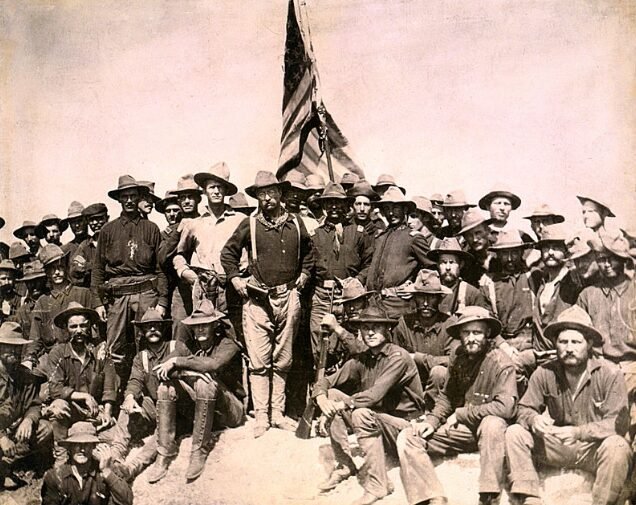
Under the leadership of Theodore Roosevelt, the regiment demonstrated bravery and resilience in the face of adversity, particularly during the Battle of San Juan Hill. Their diverse composition and unique experiences reflected the broader social and cultural dynamics of the United States at the time. Image: Roosevelt and the Rough Riders at the Battle of San Juan Hill in Santiago de Cuba in July 1898
Questions and Answers
The legacy of the Rough Riders extends beyond their military achievements. They became a symbol of American values and the spirit of volunteerism, and their story has been immortalized in various forms of media. Theodore Roosevelt’s involvement with the regiment significantly shaped his political career and public image, influencing his future policies and leadership style.
What was the 1st United States Volunteer Cavalry famously known as?
The 1st United States Volunteer Cavalry was famously known as the Rough Riders.
In what year was the Rough Riders regiment raised?
The Rough Riders regiment was raised in 1898.
For what conflict was the Rough Riders regiment formed?
The Rough Riders regiment was formed for the Spanish-American War.
Why did the United States enter the Spanish-American War?
The United States entered the Spanish-American War in response to Spanish colonial policies in Cuba, which was experiencing a rebellion.
What nickname did the regiment initially earn, and why?
The regiment initially earned the nickname “Wood’s Weary Walkers” because, despite being a cavalry unit, they fought as infantry in Cuba since their horses were not transported with them.
Who was the first commander of the Rough Riders, and who succeeded him?
The first commander of the Rough Riders was Colonel Leonard Wood, who was succeeded by Theodore Roosevelt after Wood was promoted.
What position did Theodore Roosevelt hold before becoming the second in command of the Rough Riders?
Before becoming the second in command of the Rough Riders, Theodore Roosevelt served as the Assistant Secretary of the Navy.
How did the Rough Riders get their name?
The Rough Riders got their name from Buffalo Bill’s traveling Western show, “Buffalo Bill’s Wild West and Congress of Rough Riders of the World.”
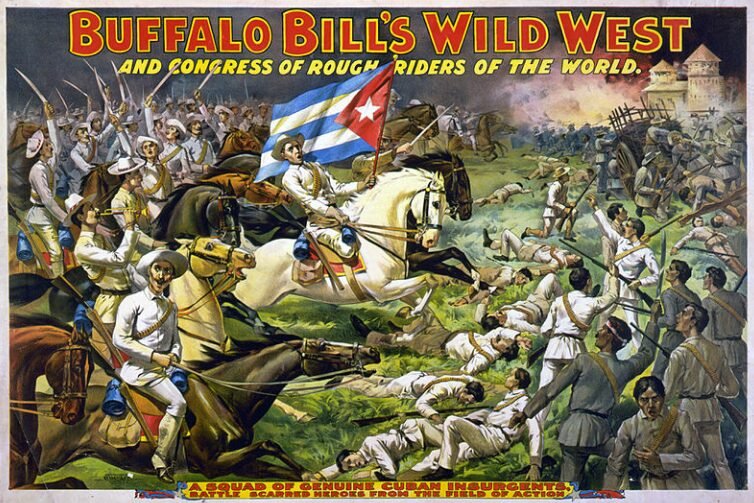
Buffalo Bill’s Wild West and Congress of Rough Riders of the World, c. 1898
What was the original plan for the composition of the Rough Riders regiment?
The original plan for the Rough Riders regiment was to consist of frontiersmen from the Indian Territory, the New Mexico Territory, the Arizona Territory, and the Oklahoma Territory.
U.S. States that derive their names from Native American languages
What kind of individuals did the regiment attract after Roosevelt joined?
After Roosevelt joined, the regiment attracted a diverse group, including Ivy League athletes, glee club singers, Texas Rangers, and Native Americans.
What was a notable battle in which the Rough Riders participated, and what is often overlooked about it?
A notable battle in which the Rough Riders participated was the Battle of San Juan Hill. It is often overlooked that the Rough Riders significantly outnumbered the Spanish soldiers they faced.
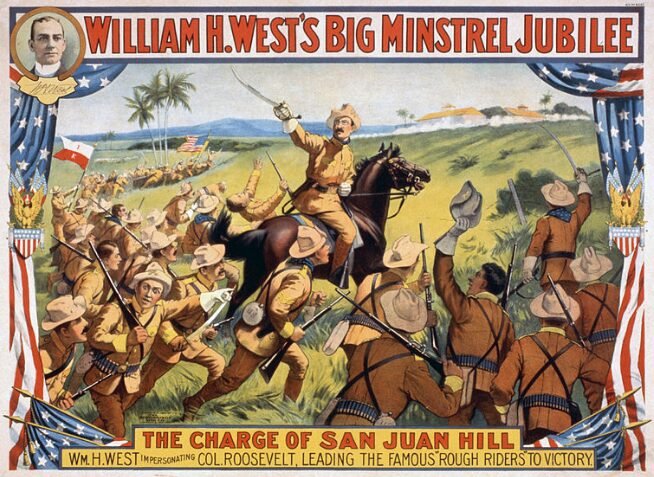
William H. West’s Big Minstrel Jubilee: The Charge of San Juan Hill
What happened shortly after the Battle of San Juan Hill?
Shortly after the Battle of San Juan Hill, the Spanish fleet left Cuba, and an armistice was signed within a few weeks, effectively ending the fighting.
How did the Rough Riders become legendary despite their brief service?
The Rough Riders became legendary thanks to Theodore Roosevelt’s writings about the regiment and silent film reenactments made in later years.
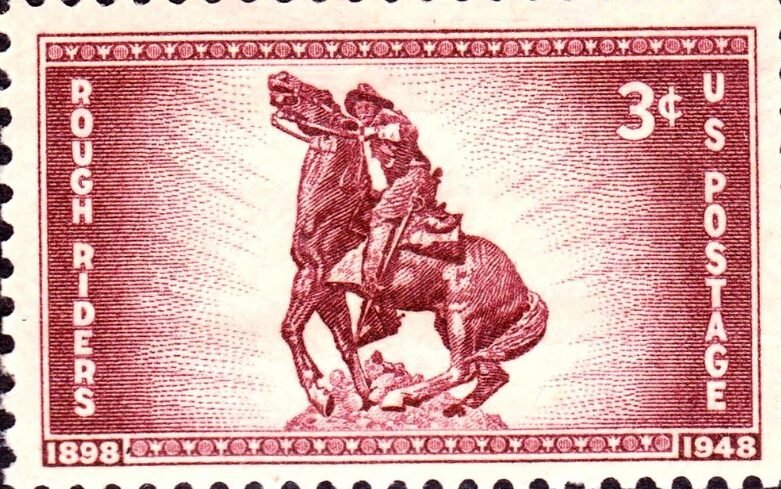
Image: US Postage Stamp, 1948 issue, commemorating 50th anniversary of Theodore Roosevelt’s Rough Riders.





