The Starry Night by Vincent van Gogh
Vincent van Gogh’s The Starry Night, painted in June 1889, is one of the most recognized and celebrated artworks in history. Created during Van Gogh’s stay at the Saint-Paul-de-Mausole asylum in Saint-Rémy-de-Provence, the painting represents a blend of observation, imagination, and raw emotional expression. This post-impressionist masterpiece captures a swirling, dynamic night sky above a tranquil village, evoking a deep sense of mystery and introspection.
“The Starry Night” remains a focal point of art studies, psychological analysis, and artistic inspiration.
Van Gogh’s Asylum Stay and Its Influence
After suffering a severe mental breakdown in December 1888, during which he famously mutilated his left ear, Van Gogh voluntarily admitted himself to the Saint-Paul-de-Mausole asylum on May 8, 1889. The asylum, housed in a former monastery, provided him with a calm yet restrictive environment where he continued his prolific painting career. With access to a second-story bedroom and a ground-floor studio, he created numerous works, including The Starry Night.
During his stay, Van Gogh found solace in painting the surrounding landscapes. He frequently wrote to his brother Theo about his observations of the countryside, the cypress trees, and the ever-changing sky. Although confined, he drew inspiration from the world beyond his barred window, resulting in a series of paintings that capture the essence of nature in various lights and moods.
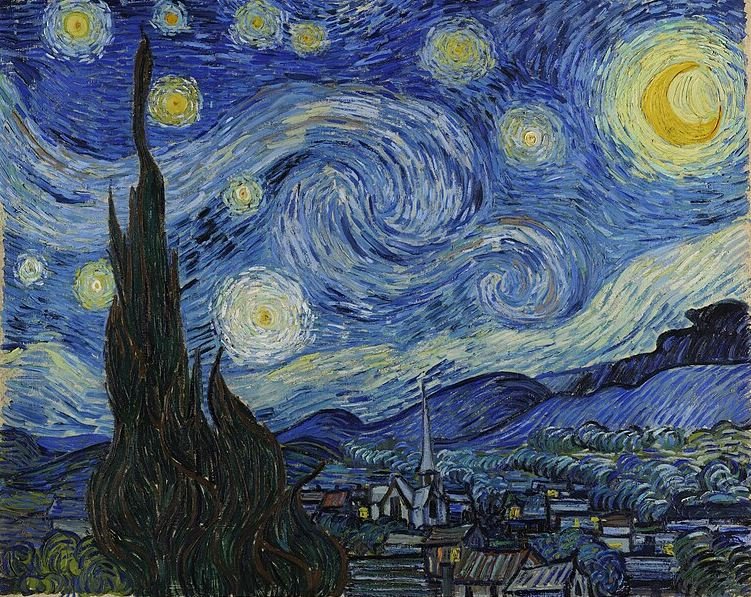
A view of “The Starry Night” painting.
The Composition and Symbolism of The Starry Night
The Starry Night presents an emotionally charged vision of the night sky, filled with swirling patterns, exaggerated celestial bodies, and an undulating horizon. The painting features several key elements that contribute to its powerful impact:
The Sky
The dominant feature of the painting is the night sky, characterized by swirling, turbulent forms. The swirling motion conveys a sense of movement and energy, perhaps reflecting Van Gogh’s internal emotional turmoil. The moon and stars are depicted as radiant orbs, their exaggerated brightness suggesting an almost supernatural presence. The largest and brightest of these celestial bodies is Venus, the “morning star,” which Van Gogh mentioned in his letters.
The Cypress Trees
Cypress trees, traditionally associated with death and mourning in European cultures, extend from the foreground into the sky, linking the earthly and celestial realms. The cypress in The Starry Night stands prominently, its flame-like shape reaching toward the heavens, possibly symbolizing Van Gogh’s longing for peace and transcendence.
The Village
Unlike the rest of the painting, which is based on Van Gogh’s direct observation, the village appears to be a product of his imagination. The church steeple, reminiscent of those found in his Dutch homeland, creates a sense of nostalgia. The small, orderly houses provide a stark contrast to the chaotic sky, representing stability and peace amid the artist’s inner turmoil.
The Hills and Landscape
The rolling hills in the background reflect the actual landscape visible from Van Gogh’s asylum window. Their undulating forms harmonize with the swirling patterns of the sky, suggesting a connection between the earth and the cosmos. This unity between the heavens and the land further enhances the painting’s dreamlike quality.
Interpretations and Artistic Intentions
Despite producing many letters about his works, Van Gogh wrote relatively little about The Starry Night. He initially referred to it as a “night study” and later, in correspondence with his brother Theo, seemed to downplay its significance, even considering it a failure. However, art historians and scholars have explored various interpretations of the painting, analyzing its artistic techniques, symbolic meanings, and possible influences.
Religious and Spiritual Interpretations
Some scholars suggest that The Starry Night reflects Van Gogh’s evolving views on spirituality. Although disillusioned by organized religion, he continued to explore metaphysical concepts. The vast, glowing sky has been interpreted as a vision of the afterlife or cosmic infinity, aligning with his musings on death as a transition to another existence.

Self-Portrait of Vincent van Gogh, September 1887. Its located at the Art Institute of Chicago.
Scientific and Astronomical Perspectives
Modern astronomical studies indicate that Van Gogh’s depiction of the night sky is not entirely fictional. The position of Venus and the phase of the moon correspond to the actual celestial arrangements visible in Provence in June 1889. Some researchers even compare the swirling patterns to representations of turbulence seen in natural phenomena and astrophysical simulations, suggesting an intuitive grasp of complex motion.
Expressionism and Emotional State
Many art historians view The Starry Night as a deeply emotional and psychological painting. Created during a period of mental instability, it may reflect Van Gogh’s internal struggles, heightened emotions, and quest for meaning. The intense colors, thick impasto brushstrokes, and dramatic movement contribute to an overwhelming sense of passion and intensity.
Artistic Techniques and Materials
Van Gogh employed distinctive techniques that set The Starry Night apart:
- Brushwork and Texture: The painting is marked by thick, expressive brushstrokes, a hallmark of Van Gogh’s style. The swirling patterns in the sky create a sense of dynamic energy, while the short, deliberate strokes in the landscape convey structure and solidity.
- Color Palette: The painting uses a limited but striking palette dominated by deep blues, vibrant yellows, and rich greens. The contrast between the dark night sky and the glowing celestial bodies enhances the painting’s dreamlike quality.
- Use of Light and Shadow: The luminosity of the stars and moon creates a sense of radiance, achieved through the layering of colors and varied brushwork.
A pigment analysis conducted by scientists at the Museum of Modern Art confirmed Van Gogh’s use of ultramarine and cobalt blue for the sky, with indian yellow and zinc yellow for the stars. These choices contribute to the painting’s vibrancy and depth.
Whether viewed through the lens of astronomy, spirituality, or psychology, “The Starry Night” by van Gogh remains a masterpiece that continues to captivate and inspire.
Legacy and Influence
Since its acquisition by the Museum of Modern Art in New York in 1941, The Starry Night has become one of the most celebrated paintings in the world. It has inspired countless artists, poets, musicians, and filmmakers, becoming a cultural icon beyond the realm of fine art.
Van Gogh’s expressive brushwork and bold color choices paved the way for future artistic movements such as Expressionism and Fauvism. His ability to convey raw emotion through paint influenced artists like Edvard Munch and Jackson Pollock.
The painting has been reproduced, reinterpreted, and referenced in various media, from album covers to animated films. Its universal appeal lies in its ability to evoke wonder, contemplation, and emotion.
Most important artists of the 20th century and their masterpieces
Frequently Asked Questions
What is The Starry Night?
It is an oil-on-canvas painting by Vincent van Gogh, created in June 1889, depicting a swirling night sky over an imaginary village based on the view from his asylum room in Saint-Rémy-de-Provence.
Where is The Starry Night housed?
Since 1941, it has been part of the Museum of Modern Art’s permanent collection in New York City.
What inspired Van Gogh to paint The Starry Night?
The painting was inspired by his view from the Saint-Paul-de-Mausole asylum, his fascination with the night sky, and his emotions during his time there.
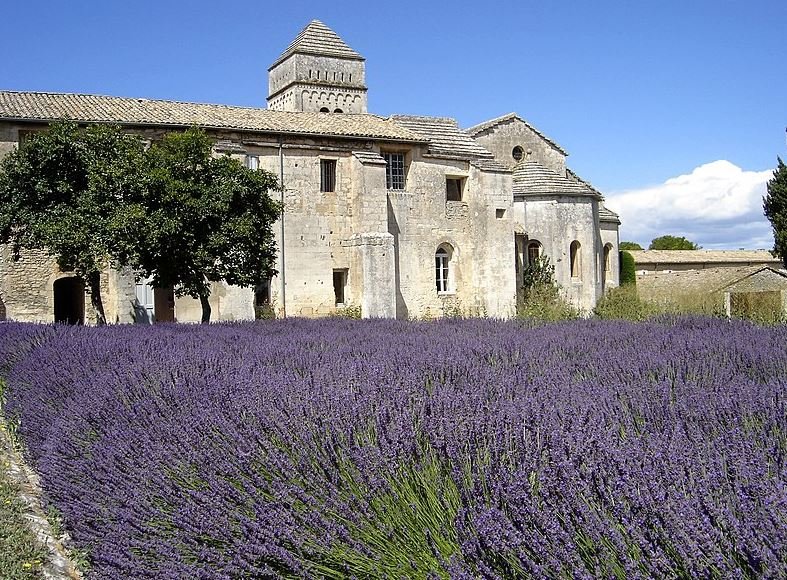
A view of the Saint-Paul-de-Mausole asylum during the late 2000s.
READ ALSO: Most Famous Museums in New York City
Did Van Gogh consider The Starry Night a masterpiece?
No, Van Gogh referred to it as a “failure” in a letter to Émile Bernard and did not initially include it among his best works.
What is the significance of the swirling patterns in the sky?
They have been interpreted as expressions of Van Gogh’s emotions, astronomical elements (such as Venus), or even inspired by scientific depictions of nebulae.
Why does the painting include a village that was not visible from his room?
The village was likely a combination of real and imagined elements, with some influence from Van Gogh’s Dutch hometown.
What colors and techniques did Van Gogh use in The Starry Night?
He used bold, expressive brushstrokes and a palette including ultramarine, cobalt blue, and indian yellow to create movement and contrast in the night sky.
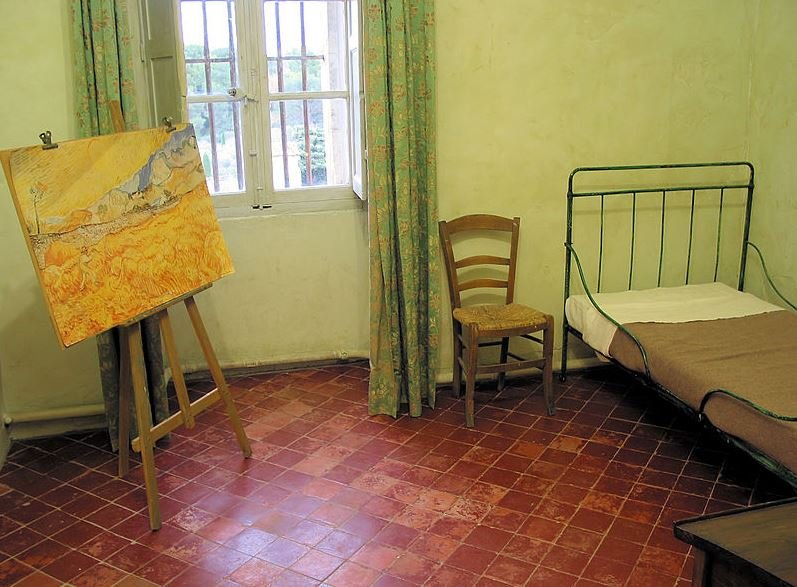
A view of Van Gogh’s room at the Saint-Paul-de-Mausole asylum.
What do the cypress trees symbolize?
Cypress trees, often associated with death, have been interpreted as a link between earth and the heavens, reflecting Van Gogh’s spiritual and existential musings.
FACT CHECK: At World History Edu, we strive for utmost accuracy and objectivity. But if you come across something that doesn’t look right, don’t hesitate to leave a comment below.





