The successful landing of Apollo 11 on the Moon in 1969
The Apollo 11 mission, conducted by NASA from July 16 to July 24, 1969, represents one of humanity’s greatest achievements: the first successful landing of humans on the Moon and their safe return to Earth. This landmark event not only marked a turning point in the Space Race between the United States and the Soviet Union but also symbolized humanity’s capability to transcend Earth’s boundaries and explore new frontiers.
Background and Motivation
The roots of Apollo 11 trace back to the intense geopolitical competition of the Cold War era, particularly the Space Race. After the Soviet Union launched Sputnik 1 in 1957 and sent Yuri Gagarin into orbit in 1961, the United States sought to regain the upper hand in space exploration. In response, President John F. Kennedy delivered a speech in 1961, committing the nation to the ambitious goal of “landing a man on the Moon and returning him safely to the Earth” before the end of the decade.
NASA’s Apollo program was designed to achieve this monumental goal. Preceding Apollo 11, missions such as Apollo 7 (the first crewed Apollo flight) and Apollo 8 (the first crewed orbit around the Moon) laid the groundwork by testing spacecraft systems and navigation techniques. Apollo 10 acted as a dress rehearsal, coming within 8.4 nautical miles of the Moon’s surface, but it was Apollo 11 that finally realized the dream of a lunar landing.
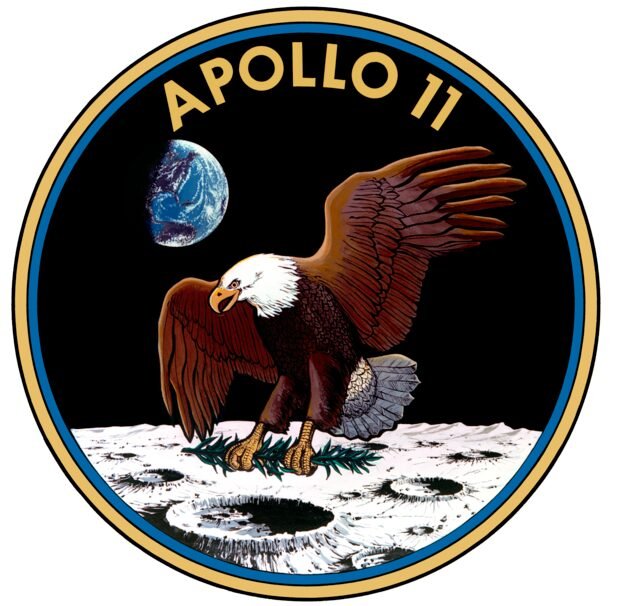
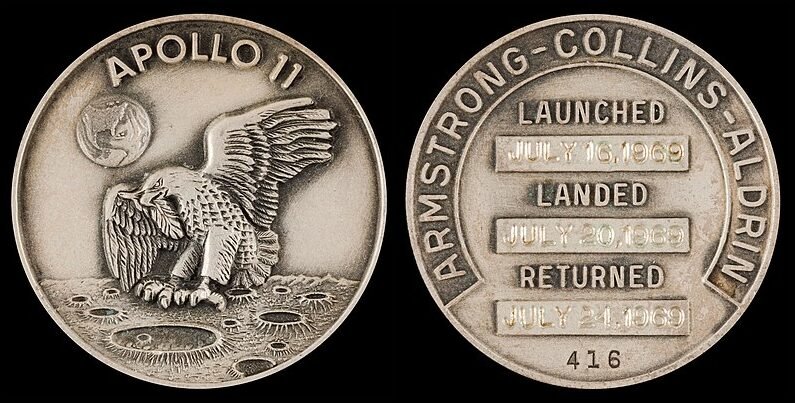
Apollo 11 remains one of humanity’s greatest achievements. The courage and ingenuity of the astronauts and the teams supporting them not only expanded our understanding of the Moon but also symbolized the boundless potential of human endeavor. Image: Apollo 11 insignia.
The Crew of Apollo 11
The success of Apollo 11 was driven by a highly skilled and courageous team of astronauts:
- Neil Armstrong (Commander): A veteran test pilot and the mission leader, Armstrong became the first human to step onto the Moon.
- Buzz Aldrin (Lunar Module Pilot): An accomplished astronaut and second man on the Moon, Aldrin played a vital role in piloting the Lunar Module and conducting surface activities.
- Michael Collins (Command Module Pilot): Collins stayed in lunar orbit aboard the Command Module Columbia, ensuring the mission’s safe return to Earth.
Each astronaut’s role was meticulously planned to maximize efficiency and minimize risks during the mission’s critical phases.
Launch and Journey to the Moon
Apollo 11 was launched on July 16, 1969, at 13:32 UTC from Kennedy Space Center in Florida, atop the Saturn V rocket—the most powerful rocket ever built at the time. The Saturn V had three stages, each designed to sequentially propel the spacecraft into orbit and then toward the Moon.
- First Stage: Propelled the spacecraft out of Earth’s atmosphere.
- Second Stage: Continued accelerating the spacecraft into a stable Earth orbit.
- Third Stage: Provided the final push to send the spacecraft on a trajectory to the Moon.
Once the spacecraft reached lunar trajectory, the Command Module Columbia, Service Module, and Lunar Module Eagle separated from the Saturn V’s third stage. Over the next three days, the crew traveled approximately 240,000 miles to the Moon, conducting system checks and adjusting their course as needed.
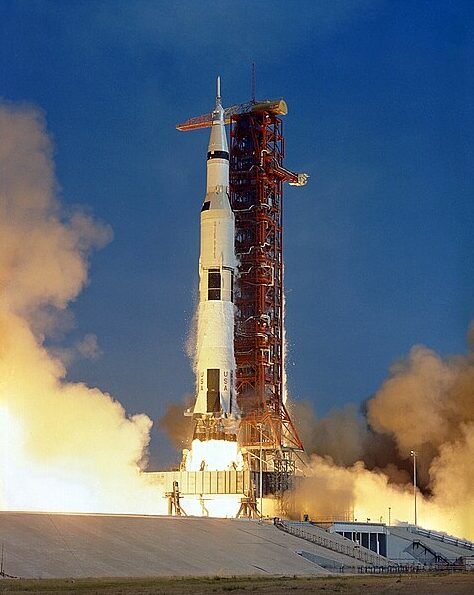
Image: A picture of Saturn V launching from Kennedy Space Center’s Launch Complex 39A at 9:32 a.m. EDT on July 16, 1969, carrying astronauts Neil Armstrong, Michael Collins, and Edwin ‘Buzz’ Aldrin.
Lunar Landing
On July 19, 1969, Apollo 11 entered lunar orbit. The next day, Armstrong and Aldrin transferred into the Lunar Module Eagle and began their descent to the Moon’s surface. The targeted landing site was the Sea of Tranquility, chosen for its relatively flat terrain and safety.
As Eagle descended, Armstrong noticed that the computer’s landing site was strewn with boulders and craters. Displaying remarkable skill and composure, he manually piloted the module to a safer area, touching down at 20:17 UTC on July 20, 1969. Upon landing, Armstrong radioed the famous words: “Houston, Tranquility Base here. The Eagle has landed.”
First Moonwalk
Approximately six and a half hours after landing, Neil Armstrong descended the Lunar Module’s ladder and stepped onto the Moon’s surface at 02:56 UTC on July 21, 1969. His first words, “That’s one small step for [a] man, one giant leap for mankind,” echoed around the world, inspiring billions.
Buzz Aldrin joined Armstrong 19 minutes later, and the two spent about two and a quarter hours on the lunar surface. During their historic moonwalk, they:
- Conducted Experiments: Set up scientific equipment, including a seismometer to detect moonquakes and a retroreflector for precise measurements of the Earth-Moon distance.
- Collected Lunar Samples: Gathered 47.5 pounds (21.5 kilograms) of rocks, soil, and other materials.
- Photographed and Documented the Site: Captured images and observations to study the lunar environment and provide insights for future missions.
The astronauts moved cautiously in the Moon’s low gravity, which is only one-sixth of Earth’s, learning to navigate the unfamiliar terrain. The Lunar Module’s location was named Tranquility Base, commemorating the serene plain where they had landed.
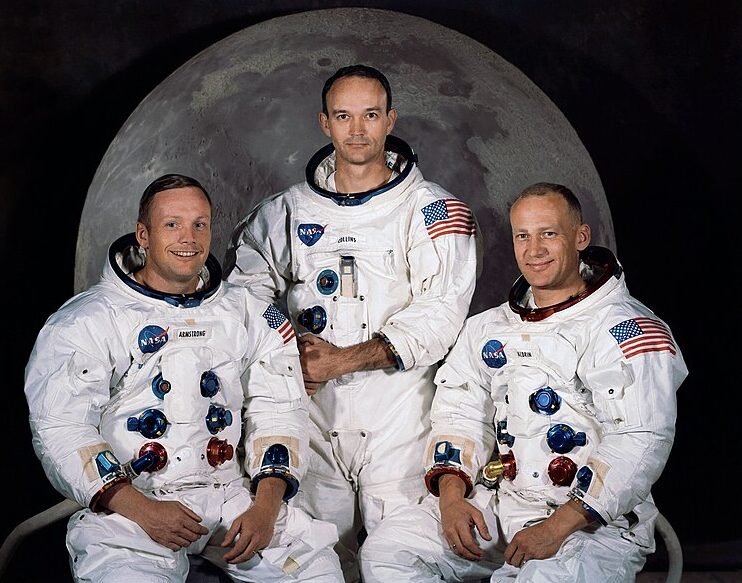
Image: Crew of Apollo 11, Neil Armstrong (left), Michael Collins (center), Buzz Aldrin (right).
Rejoining the Command Module
After spending 21 hours and 36 minutes on the Moon’s surface, Armstrong and Aldrin lifted off in Eagle’s ascent stage to rejoin Collins in lunar orbit aboard the Command Module Columbia. The reunion and docking procedures were completed smoothly. The crew then prepared for their return to Earth.
Before beginning their journey home, the crew jettisoned the ascent stage of the Lunar Module. Apollo 11 completed 30 lunar orbits before executing a trans-Earth injection burn that set them on a trajectory back to Earth.
Return to Earth
The spacecraft reentered Earth’s atmosphere on July 24, 1969, and splashed down in the Pacific Ocean at 16:50 UTC, approximately 812 nautical miles southwest of Hawaii. The crew was recovered by the USS Hornet and immediately placed into quarantine as a precaution against potential lunar pathogens.
Scientific and Technological Achievements
Apollo 11 achieved groundbreaking advancements in science and technology:
- Lunar Samples: The 47.5 pounds of material collected provided crucial insights into the Moon’s composition, history, and geology.
- Technology Development: The mission pushed the boundaries of engineering, from the Saturn V rocket to the Lunar Module.
- Global Collaboration: Apollo 11 inspired international cooperation in space exploration, setting the stage for future missions.
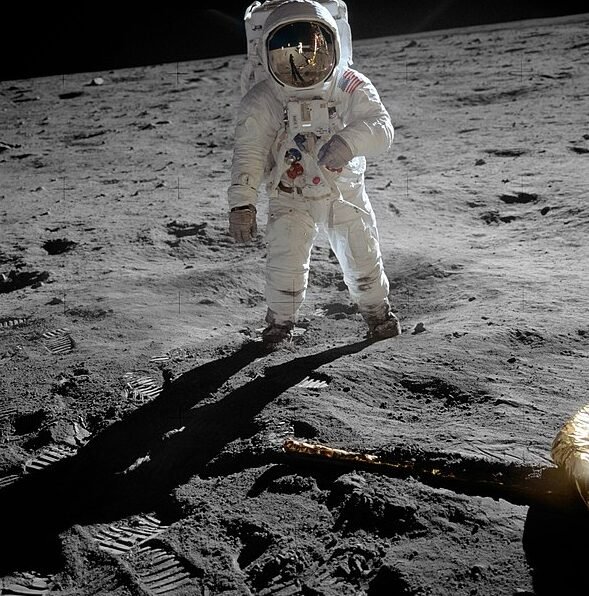
Buzz Aldrin on the Moon, captured in a photograph by Neil Armstrong.
Historical and Cultural Impact
Apollo 11 was more than a technological triumph; it was a cultural and political milestone:
- Victory in the Space Race: The mission solidified the United States’ position as a leader in space exploration, effectively ending the Space Race.
- Symbol of Human Achievement: Armstrong’s first step became an enduring symbol of human ingenuity and perseverance.
- Inspiration for Generations: Apollo 11 inspired scientists, engineers, and dreamers worldwide, demonstrating that humanity could achieve the seemingly impossible.
Legacy
Apollo 11 left an indelible mark on history. It ushered in an era of lunar exploration, with subsequent missions expanding scientific knowledge of the Moon.
The mission paved the way for international partnerships in space exploration, including the International Space Station.
Its technological innovations continue to influence modern spaceflight and inspire renewed efforts to return to the Moon and explore Mars.
Conclusion
The successful landing of Apollo 11 on the Moon in 1969 was a defining moment in human history. It demonstrated humanity’s ability to overcome immense challenges through innovation, courage, and teamwork. The mission’s legacy endures as a testament to what can be achieved when nations and individuals work toward a common goal, pushing the boundaries of what is possible.
Frequently Asked Questions about the Apollo 11 Moon Landing






Is there a publication showing all relevant photos and comments of the entire expedition