The Tet Offensive during the Vietnam War
The Tet Offensive was a major surprise attack launched on January 30, 1968, by the Viet Cong (VC) and North Vietnamese Army (PAVN) against South Vietnamese and U.S. forces across more than 100 cities during the Vietnam War.

Flag of the Viet Cong.
Summary
The Tet Offensive was a significant escalation of the Vietnam War and one of the largest military campaigns of the conflict. Launched by the Viet Cong (VC) and the North Vietnamese People’s Army of Vietnam (PAVN) on January 30, 1968, it aimed to destabilize the South Vietnamese Army of the Republic of Vietnam (ARVN), the United States Armed Forces, and their allies. This surprise attack targeted military and civilian command centers across South Vietnam, strategically chosen during the Lunar New Year festival, Tết Nguyên Đán, when many ARVN personnel were on leave. The offensive sought to incite political instability and mass defections but ultimately led to devastating consequences for North Vietnam and changed the trajectory of the war.
Why did many American colleges fiercely oppose the Vietnam War?
Background
South Vietnam’s Political Climate
South Vietnam had been marked by political instability since the 1963 coup that ousted President Ngô Đình Diệm. Despite elections in 1967, the government led by President Nguyễn Văn Thiệu and Prime Minister Nguyễn Cao Kỳ was still consolidating power. North Vietnam perceived the political climate as volatile and aimed to exploit it with a general uprising.
United States’ War Strategy
By late 1967, U.S. officials were reassessing their strategy of attrition, which aimed to weaken enemy forces through superior firepower. General William Westmoreland, commander of U.S. forces in Vietnam, believed that if North Vietnamese losses exceeded their recruitment rates, the war could be won.
The Tet Offensive went a long way in reshaping the course of the Vietnam War and global perceptions of U.S. military intervention.
However, intelligence disputes between the Military Assistance Command, Vietnam (MACV) and the Central Intelligence Agency (CIA) revealed that enemy forces were larger than previously estimated. Despite growing American skepticism about the war, the Johnson administration launched a “success offensive” to maintain public support, insisting that victory was imminent.
North Vietnam’s Strategic Planning
Planning for the Tet Offensive began in early 1967 under the leadership of Communist Party First Secretary Lê Duẩn. The strategy aimed to provoke a popular uprising in South Vietnam, weaken U.S. resolve, and push for a negotiated settlement. Despite internal disagreements, the Politburo ultimately supported an all-out assault on urban centers and U.S. bases.
The Offensive Begins
Premature Attacks and Full-Scale Assault
The first wave of attacks occurred on January 30 in parts of South Vietnam, alerting allied forces to the impending offensive. On January 31, over 80,000 PAVN/VC troops launched simultaneous attacks on more than 100 cities and towns, including 36 provincial capitals, five of six autonomous cities, and 72 district towns. Major battles erupted in Saigon, Huế, and at the Khe Sanh combat base.
Battle of Saigon
Saigon, the capital of South Vietnam, was a primary target. While attacks on key locations, including the U.S. Embassy, failed to achieve their objectives, intense fighting ensued across the city. The VC suffered heavy losses, and their hopes of inciting a general uprising were dashed. The iconic execution of VC officer Nguyễn Văn Lém by South Vietnamese General Nguyễn Ngọc Loan further underscored the brutality of the conflict.
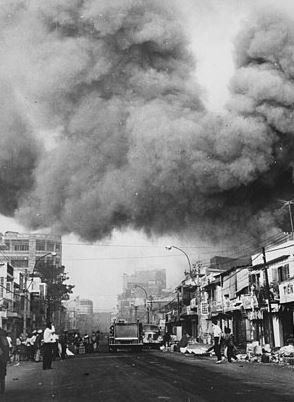
Viet Cong attacks during the Tet holiday celebrations in Saigon, 1968.
The Battle of Huế
The month-long Battle of Huế was one of the bloodiest engagements of the Tet Offensive. PAVN forces captured most of the city, executing thousands of suspected South Vietnamese sympathizers in what became known as the Massacre at Huế. Intense urban combat between U.S., ARVN, and North Vietnamese forces devastated the historic city, which was not fully recaptured until late February.
Khe Sanh and Diversionary Tactics
While the Tet Offensive raged, the PAVN also launched an assault on the U.S. Marine Corps base at Khe Sanh. Though the siege lasted for months, it was largely a diversion to draw U.S. attention away from urban centers. The base was eventually abandoned in July 1968.
Consequences and Impact
Despite heavy casualties, the Tet Offensive was a strategic failure for North Vietnam. U.S. and ARVN forces repelled the attacks, inflicting significant losses on the VC, whose infrastructure in the South was decimated. Hanoi had miscalculated the level of support for a general uprising, and their expectation of mass ARVN defections did not materialize.
Although the offensive was a military failure for North Vietnam, it had a profound psychological impact. The American public, previously assured of progress in the war, was shocked by the scale and intensity of the attacks. The “credibility gap” between government statements and battlefield realities widened, leading to declining support for the war.
While North Vietnam suffered a military defeat, the Tet Offensive achieved its broader goal of undermining American confidence in the war effort.
Following the offensive, General Westmoreland requested an additional 206,000 troops, but this request faced strong opposition. The “Wise Men,” a group of senior U.S. policymakers, advised President Lyndon B. Johnson to seek de-escalation. On March 31, 1968, Johnson announced a partial bombing halt of North Vietnam and his decision not to seek re-election. This marked a turning point in U.S. involvement in Vietnam.
North Vietnam suffered severe losses but adapted by shifting more responsibility to PAVN forces, as VC ranks had been decimated. The offensive solidified Hanoi’s commitment to a prolonged war, relying on attrition to outlast American resolve.
Subsequent Phases and Continued Fighting
Phase II and Mini-Tet
In May 1968, North Vietnam launched a second wave of attacks known as “Mini-Tet,” targeting Saigon and other urban centers. Though these attacks were less successful, they prolonged instability and reinforced the perception of an unwinnable war.
Phase III and Final Engagements
The third phase, launched in August, saw continued fighting, particularly in I Corps and around the DMZ. However, PAVN forces suffered significant losses, and their capacity for large-scale urban assaults diminished.
Frequently Asked Questions

U.S. army in battle during the Vietnam War.
Why was the Tet Offensive launched?
The North Vietnamese sought to trigger a popular uprising in South Vietnam, believing that a widespread attack on urban centers would lead to the collapse of the South Vietnamese government.
What was the outcome of the Tet Offensive?
Militarily, it was a failure for North Vietnam, as the anticipated popular uprising did not occur, and the attacks were repelled. However, it severely weakened U.S. public support for the war and led to shifts in U.S. strategy.
How did the Tet Offensive impact U.S. public opinion?
The offensive shocked Americans, who had been led to believe that the war was going well. Graphic media coverage and high U.S. casualties increased anti-war sentiment and public distrust in the government.

A map showing towns and cities that experienced major battles during the 1968 Tet Offensive.
What happened in the Battle of Huế?
The battle lasted nearly a month and involved intense urban combat. North Vietnamese forces occupied the city, executed thousands of civilians, and were eventually defeated by U.S. and ARVN forces after heavy fighting.
Did the Tet Offensive lead to a change in U.S. policy?
Yes, the offensive led President Lyndon B. Johnson to halt escalation, seek negotiations, and withdraw from re-election. It marked the beginning of U.S. disengagement from Vietnam.
What was the significance of the attack on the U.S. Embassy in Saigon?
The embassy attack was symbolically powerful, demonstrating that even the most secure U.S. installations were vulnerable. Though the attackers were defeated, the event damaged U.S. confidence in the war effort.
What were the long-term effects of the Tet Offensive?
While the North Vietnamese suffered heavy losses, the offensive undermined U.S. commitment, leading to troop withdrawals, Vietnamization of the war, and ultimately the fall of South Vietnam in 1975.





