The Thomas Jefferson Building
The Thomas Jefferson Building is the oldest and one of the most iconic structures within the Library of Congress in Washington, D.C. It is renowned not only for its architectural grandeur but also for its pivotal role in housing one of the world’s largest and most important libraries. As the first of the Library of Congress buildings, the Thomas Jefferson Building stands as a testament to the United States’ dedication to the preservation of knowledge, history, and culture.

Origins and Purpose of the Library of Congress
The Library of Congress was founded in 1800 by an act of Congress, signed into law by President John Adams. Initially, it was intended to serve as a reference library for the U.S. Congress, providing lawmakers with access to resources on matters of governance, law, and international affairs.
The library originally housed its collection in the U.S. Capitol, but the War of 1812 brought disaster to the fledgling library. During the British invasion of Washington, D.C., in 1814, much of the original collection was destroyed when the Capitol was burned.
In the aftermath, Thomas Jefferson, the third president of the United States, offered his personal library to help rebuild the Library of Congress. Jefferson’s collection of nearly 6,500 books was purchased by Congress in 1815 for $23,950. His donation was diverse and expansive, covering topics beyond politics and law, including philosophy, science, and literature.
Jefferson’s vision of a broad-based library was foundational to the Library of Congress’ growth into a comprehensive national library. As a result, Jefferson’s contribution became one of the core collections upon which the modern Library of Congress was built.
Need for a New Building
As the nation grew, so did the demands on the Library of Congress. By the late 19th century, the library’s collection had far outgrown its space in the U.S. Capitol, and there was an urgent need for a larger, more dedicated building. After years of debate and planning, Congress authorized the construction of a new library building in 1886.
The new building would not only house the expanding collection but also serve as a symbol of the importance of knowledge and learning in the United States. It was envisioned as a grand structure, befitting the role of the Library of Congress as the national library.
Construction and Architecture of the Thomas Jefferson Building
Construction of what is now known as the Thomas Jefferson Building began in 1890, and it was completed in 1897. Originally named the Library of Congress Building, it was the first structure in Washington, D.C., designed specifically to house the library’s growing collection.
The Beaux-Arts architectural style was chosen for the building, which was popular at the time and known for its grandeur, symmetry, and elaborate decorative elements. This style, influenced by classical architecture, was meant to convey a sense of importance and national pride. The building’s design emphasized monumentalism, with a classicizing façade that reflected both the academic aspirations of the institution and the historical continuity of learning.
The primary architect was Paul J. Pelz, who initially worked on the project in partnership with John L. Smithmeyer. However, disagreements led to Smithmeyer’s dismissal, and Pelz continued the work. In the final years of construction, Edward Pearce Casey took over to oversee the completion of the interior design and decorative elements.
The building features a blend of artistic and architectural excellence, with extensive use of sculptures, murals, and mosaics throughout its interior. The Great Hall, the centerpiece of the building, is a stunning space that exemplifies the elaborate and ornamental nature of the Beaux-Arts style. It is adorned with paintings, sculptures, and intricate details that celebrate knowledge, literature, and the arts.

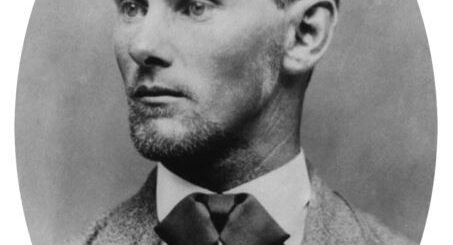
The primary architect was Paul J. Pelz, who began the project with John L. Smithmeyer. Edward Pearce Casey took over during the later stages of construction. Image: Paul J. Pelz (1841 – 1918).
Interior Decorations and Artistic Features
The interior of the Thomas Jefferson Building is a visual celebration of the arts, knowledge, and human achievement. The walls, ceilings, and staircases are covered in murals, mosaics, and sculptures created by some of the most renowned artists of the time. The building’s art and architecture are intended to inspire awe and reflect the value that the United States places on knowledge, creativity, and culture.
One of the most impressive features of the building is the Great Hall, which soars nearly 75 feet high and is topped by a magnificent stained-glass ceiling. The hall is flanked by grand staircases and features elaborately painted murals by artists such as Edward Simmons, who depicted the theme of human intellect and progress.
The Dome of the Great Hall features an iconic mural by artist Walter Shirlaw, portraying an allegorical figure of Minerva, the Roman goddess of wisdom and war, overseeing the pursuit of knowledge. The use of classical allegory and symbolism in these murals underscores the building’s purpose as a temple of knowledge and a space for learning.
One of the key artistic elements of the building is the Bronze Doors by Olin Levi Warner, which serve as the entrance to the Great Hall. These doors are intricately designed and include bas-relief depictions of allegorical figures representing various fields of knowledge, such as Philosophy, Law, and Science.
Throughout the building, numerous sculptures, including busts of notable figures from history and literature, reflect the global and historical nature of the library’s mission. These decorative elements honor figures like Homer, Shakespeare, and Dante, symbolizing the library’s connection to the world’s intellectual heritage.
Role as the Main Library of Congress
The Thomas Jefferson Building officially opened to the public in 1897 and immediately became the primary facility for the Library of Congress. It was one of the largest and most sophisticated library buildings in the world at the time, designed to hold millions of books and manuscripts.
The building was equipped with modern innovations for its time, including electric lighting and a mechanical book conveyor system to facilitate the transportation of books throughout the vast structure. These technological advancements allowed the library to efficiently manage its expanding collection and serve the needs of the U.S. Congress and the general public.
For decades, the Thomas Jefferson Building remained the main repository of the Library of Congress collection. As the collection grew, however, additional buildings were constructed to house the library’s materials. These included the John Adams Building, completed in the 1930s, and the James Madison Memorial Building, completed in the 1970s. These newer buildings allowed the library to expand its capacity and continue to serve as one of the largest libraries in the world.
Naming and Honors
In 1980, the Library of Congress Building was officially renamed the Thomas Jefferson Building in honor of the Founding Father and third U.S. president. Jefferson’s personal library, donated to the Library of Congress in 1815, had been instrumental in re-establishing the library’s collection after it was destroyed in the War of 1812. The renaming was a fitting tribute to Jefferson’s legacy as a scholar, philosopher, and advocate for knowledge.
In 1965, the Thomas Jefferson Building was designated a National Historic Landmark, recognizing its architectural significance and its role in American cultural history. It remains one of the most important and visited buildings in Washington, D.C.
Legacy and Significance
The Thomas Jefferson Building is more than just a repository for books; it is a symbol of the role that knowledge, learning, and culture play in the development of the United States. As part of the Library of Congress, it serves as a resource for Congress, the government, and the American public, providing access to an unparalleled collection of materials.
The building’s architectural grandeur and its ornate artistic elements reflect the aspirations of the United States as a nation of learning and progress. The choice to design the building in the Beaux-Arts style, with its emphasis on classical ideals, underscores the library’s connection to the traditions of Western scholarship and intellectual achievement.
Today, the Library of Congress, with the Thomas Jefferson Building as its centerpiece, holds over 170 million items, including books, manuscripts, maps, photographs, and recordings, making it the largest library in the world. It serves not only as a research facility for scholars but also as a cultural institution, preserving and sharing the world’s knowledge with future generations.
The Jefferson Building houses some of the most valuable collections in the library, including Thomas Jefferson’s personal library, which was restored and placed on permanent display. It also contains the Main Reading Room, a circular room with high domed ceilings, where researchers can access the library’s vast resources.
In addition to its role as a functioning library, the building is also a popular tourist destination, drawing visitors from around the world who come to admire its architectural beauty and explore the treasures of the Library of Congress.
Important Facts
- On November 1, 1897, the new Library of Congress building opened to the public, marking a significant moment for the institution. Previously housed in the Congressional Reading Room in the U.S. Capitol, the library expanded with the addition of two more buildings on Capitol Hill in the 20th century.
- Librarian of Congress Ainsworth Spofford first proposed the construction of a separate building in 1871, as the library had outgrown its space. Spofford envisioned a domed reading room at the center, surrounded by departments, according to Library historian John Y. Cole. After debates and design competitions, Congress approved a plan in 1886. Designed in the Italian Renaissance style by architects John L. Smithmeyer and Paul J. Pelz, it became the largest and costliest library in the world.
- In 1888, Brigadier General Thomas Casey and Bernard Green of the U.S. Army Corps of Engineers took over the project, focusing on an interior showcasing American artists’ talents. In 1980, it was renamed the Thomas Jefferson Building to honor Jefferson, who had donated his personal collection of 6,487 books in 1815, expanding the Library’s scope.
Questions and Answers

From its origins in the late 19th century as a solution to the overcrowding of the U.S. Capitol to its current status as a National Historic Landmark, the Thomas Jefferson Building embodies the Library of Congress’s mission to serve as a global center for learning. Image: A 2007 picture of the Thomas Jefferson Building.
What is the Thomas Jefferson Building also known as?
It is also known as the Main Library of the Library of Congress.
When was the Thomas Jefferson Building constructed?
The building was constructed between 1890 and 1897.
What was the original name of the Thomas Jefferson Building?
It was originally called the Library of Congress Building.
When and why was the building renamed the Thomas Jefferson Building?
It was renamed in 1980 in honor of Thomas Jefferson, whose personal book collection, donated in 1815, helped form the library’s core collection.
Where is the Thomas Jefferson Building located?
It is located on First Street, S.E. between Independence Avenue and East Capitol Street in Washington, D.C., near the U.S. Capitol.
Which other Library of Congress buildings are located near the Thomas Jefferson Building?
The John Adams Building (constructed in the 1930s) and the James Madison Memorial Building (completed in the 1970s) are located nearby.
What architectural style is the Thomas Jefferson Building designed in?
The building is designed in the Beaux-Arts style.