The Tomb of Zechariah
The Tomb of Zechariah is an ancient monolithic structure located in Jerusalem’s Kidron Valley. It is traditionally associated with Zechariah ben Jehoiada, a priest mentioned in Jewish scriptures. The tomb is situated a few meters from the Tomb of Absalom and adjacent to the Tomb of Benei Hezir, forming part of a cluster of significant burial sites. While its traditional identification is rooted in Jewish beliefs, modern scholarship suggests a different origin based on architectural and stylistic analysis.
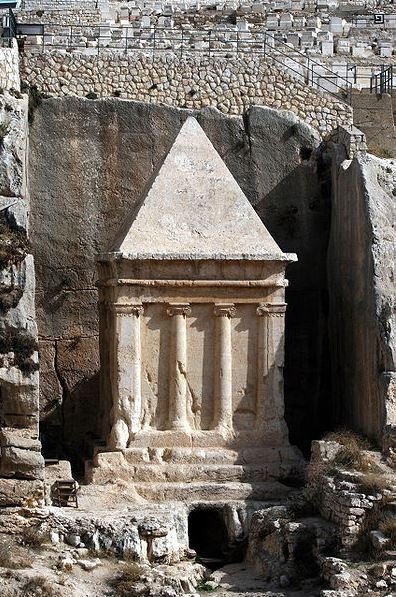
A close view of the Tomb of Zechariah.
Architectural Description
The Tomb of Zechariah is a monolith, meaning it was completely carved from a single piece of solid rock. This distinguishes it from other nearby burial sites, which were typically rock-cut chambers. The structure sits on a crepidoma, a base made up of three steps. Above the base is a stylobate, a continuous foundation supporting the tomb’s decorative elements.
The most prominent feature of the tomb’s façade is a set of Ionic columns. These consist of two fully carved columns flanked by two half-columns, positioned between two pilasters at the corners. The capitals of these columns adhere to the Ionic order and are adorned with egg-and-dart motifs, a decorative pattern common in Hellenistic and classical architecture.
Above the columns, the tomb is crowned by an Egyptian-style cornice, which provides a visual transition to the pyramidal top of the monument. This combination of Hellenistic and Egyptian elements suggests a blend of cultural influences, likely reflecting the architectural trends of the period in which it was constructed.
Interestingly, while the western façade is finely decorated, the other sides of the tomb remain rough and unfinished. This contrast suggests that work on the structure may have been abandoned before completion. The lack of finishing touches on most sides raises questions about whether the monument was intended for a public-facing role rather than serving as a fully functional tomb.

A view of the tomb from a different angle.
READ MORE: Greatest Masterpieces of Hellenistic Art
Traditional Identification
The Tomb of Zechariah has been traditionally linked to Zechariah ben Jehoiada, a biblical priest mentioned in the Book of Chronicles. According to Jewish tradition, this Zechariah was stoned to death by order of the king for his prophetic warnings against the people’s disobedience:
And the Spirit of God came upon Zechariah the son of Jehoiada the priest, which stood above the people, and said unto them, Thus saith God, Why transgress ye the commandments of the Lord, that ye cannot prosper? because ye have forsaken the Lord, he hath also forsaken you. And they conspired against him, and stoned him with stones at the commandment of the king in the court of the house of the Lord. (2 Chronicles 24:20-21)
The first recorded identification of the tomb with Zechariah ben Jehoiada dates to around 1220 CE, when the Jewish traveler Menahem haHebroni described it as such. Over time, this tradition became widely accepted, and the tomb remains a site of religious significance for many visitors.
Scientific Identification and Dating
Archaeologists and architectural historians question the traditional identification of the tomb with Zechariah ben Jehoiada. They argue that the architectural style and construction techniques indicate a first-century CE origin, which would place it centuries after Zechariah’s time. The tomb’s Ionic columns and Hellenistic influences align with the architectural features of other burial monuments from the late Second Temple period.
Scholars have also noted the similarity between the Tomb of Zechariah and the Tomb of Benei Hezir, a rock-cut burial chamber directly adjacent to it. The Tomb of Benei Hezir is dated to the Hasmonean period (2nd century BCE – 1st century CE) and belongs to a known priestly family. The resemblance between the two structures suggests that they were built around the same time.
A prominent theory proposes that the Tomb of Zechariah was not an actual tomb but a nefesh, a Jewish funerary monument similar to a Greek stele or commemorative marker. This interpretation is supported by an inscription on the Tomb of Benei Hezir, which refers to an adjacent grand structure. Some scholars believe this reference describes the Tomb of Zechariah, indicating that the latter served as a memorial rather than an actual burial site.
Cultural and Historical Significance
Regardless of its precise origin, the Tomb of Zechariah remains an important monument for both Jewish tradition and historical study. It reflects the architectural influences of the Hellenistic and Roman periods, showcasing how Jewish funerary practices incorporated broader artistic trends. The structure also highlights the reverence given to religious figures and serves as a reminder of the historical and spiritual significance of the Kidron Valley, which houses multiple ancient tombs associated with biblical figures.
The tomb has been depicted in numerous historical works, including David Roberts’ 19th-century collection, The Holy Land, Syria, Idumea, Arabia, Egypt, and Nubia. Richard Pococke, an 18th-century explorer, also illustrated the tomb in his sketches of Jerusalem’s landmarks. Additionally, Felix Bonfils, a 19th-century photographer, captured images of the site, further documenting its presence in historical studies.
Frequently Asked Questions
Where is the Tomb of Zechariah located?
It is a few meters from the Tomb of Absalom and adjacent to the Tomb of Benei Hezir in the Kidron Valley.
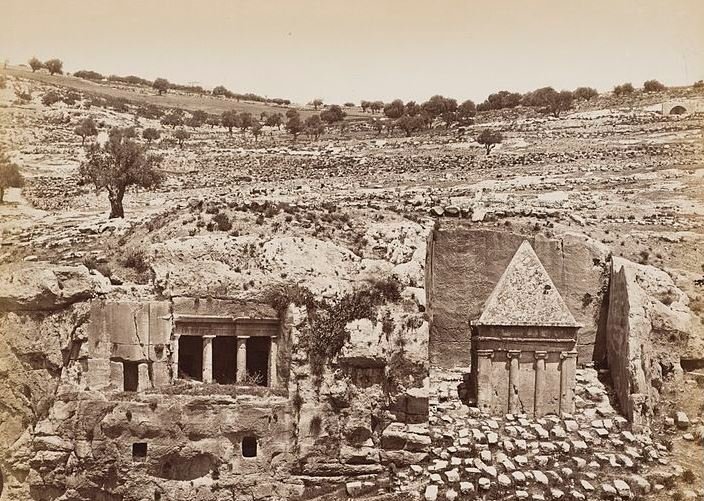
An 1870 photo of the tomb (right), with the Tomb of Benei Hezir right next to it.
What is unique about its architecture?
It is a monolithic structure carved entirely from solid rock, featuring Ionic columns, an Egyptian-style cornice, and a pyramid on top.
What is the historical significance of Zechariah ben Jehoiada?
According to Jewish tradition, he was a priest who was stoned to death as recorded in the Book of Chronicles.
How is the tomb related to the Tomb of Benei Hezir?
Some scholars suggest it was a nefesh (funerary monument) for the Tomb of Benei Hezir, which has an adjacent rock-cut passage.
When was the Tomb of Zechariah built?
Based on its Hellenistic architectural details, scholars date it to the first century CE.
Why is only the western side of the monument finely carved?
The western façade is highly decorated, while other sides are rough and unfinished, suggesting the work was left incomplete.
Who first identified it as Zechariah’s tomb?
The earliest known identification dates back to circa 1220 AD writings of Menahem haHebroni.
FACT CHECK: At World History Edu, we strive for utmost accuracy and objectivity. But if you come across something that doesn’t look right, don’t hesitate to leave a comment below.





