The Trelew Massacre
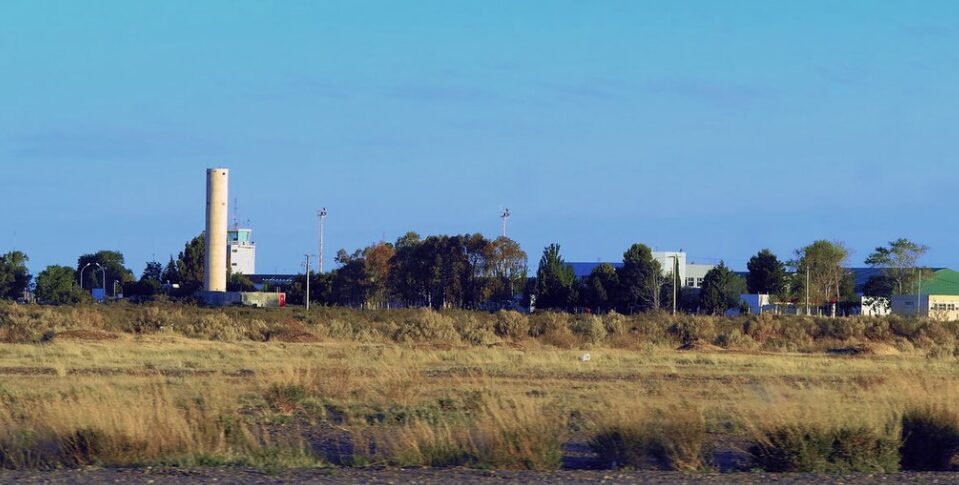
The Trelew Massacre occurred on August 22, 1972, at the Almirante Marcos A. Zar Naval Air Base near Trelew, Chubut, in Patagonia, Argentina.
The Trelew Massacre is a significant event in Argentine history, marked by the cold-blooded execution of 16 political prisoners by military forces on August 22, 1972, at the Almirante Zar Naval Air Base in Trelew, Chubut Province.
This atrocity, which came to be known as the “Masacre de Trelew,” occurred during Argentina’s violent era of political repression and is regarded as a precursor to the “Dirty War” (1976-1983), a period of state terrorism under military rule.
Historians affirm that the massacre highlighted the extreme measures the state was willing to employ to crush dissent and served as a catalyst for the broader human rights movement in Argentina.
Historical Background
The Political Context of the 1960s and 1970s
The 1960s and 1970s in Argentina were marked by political instability, social upheaval, and intense ideological conflict. Following the military coup in 1966 that ousted President Arturo Illia, Argentina entered a period of authoritarian rule under General Juan Carlos Onganía, who sought to impose a corporatist state, reduce labor rights, and suppress leftist movements. This era saw increasing resistance from various political and social groups, including student activists, labor unions, and left-wing guerrilla movements such as the Montoneros, the People’s Revolutionary Army (ERP), and the Peronist Armed Forces (FAP).
The Montoneros, in particular, sought the return of exiled leader Juan Domingo Perón and aimed to establish a socialist state aligned with Peronist ideology. Meanwhile, the ERP, a Marxist-Leninist guerrilla group, pursued the overthrow of the government to establish a communist state. Both groups engaged in a variety of armed activities, including kidnappings, assassinations, and bank robberies, leading to a cycle of escalating violence between the state and insurgents.
By the early 1970s, the political climate in Argentina had become increasingly polarized, with the government resorting to harsh measures, including torture, imprisonment, and assassination, to quell dissent. The social unrest culminated in the “Cordobazo” of 1969, a massive worker and student protest that was violently repressed but demonstrated the growing strength of opposition forces. Amid this backdrop of rising tensions, the Trelew Massacre unfolded, revealing the lengths to which the Argentine state would go to maintain control.
The Events Leading to the Trelew Massacre
The Escape Attempt
On August 15, 1972, a daring escape plan was hatched by 25 political prisoners held in the Rawson Prison, located in the Patagonian province of Chubut. These prisoners, belonging to different revolutionary organizations (ERP, Montoneros, and FAP), had been detained due to their involvement in guerrilla activities against the government. The plan was meticulously organized: the prisoners aimed to seize control of the prison, take hostages, and escape to Chile, where they believed they could find refuge under the government of socialist President Salvador Allende.
The escape was partially successful. Six of the prisoners managed to take over the prison and escape in a truck to the nearby Trelew airport, where they hijacked a plane and flew to Chile. The group included key leaders of the guerrilla movements, such as Mario Roberto Santucho (ERP) and Fernando Vaca Narvaja (Montoneros). Upon arrival in Chile, they were granted asylum by Allende’s government and eventually traveled to Cuba.
However, the remaining 19 prisoners were less fortunate. Due to transportation issues and miscommunication, they arrived at the Trelew airport too late and were unable to board the plane. With no means of escape, they surrendered to the Argentine Navy, which assured them of safe conduct and humane treatment. The prisoners were taken to the Almirante Zar Naval Base in Trelew, where they were to be detained until transferred to another location.
The Massacre
Despite the assurances of safety, the situation quickly took a dark turn. In the early hours of August 22, 1972, just a few days after their capture, 16 of the 19 detainees were shot in their cells by Argentine naval personnel. According to the official military report, the killings occurred in response to an attempted escape by the prisoners. However, survivors and later investigations debunked this narrative, revealing that the prisoners had been unarmed, in their cells, and had not attempted any escape. The execution-style killings demonstrated that the massacre was premeditated and intended to send a message of terror to the Argentine left.
Of the 19 prisoners, 16 were killed, and three survived with serious injuries. The survivors — María Antonia Berger, Alberto Miguel Camps, and Ricardo René Haidar — managed to provide first-hand accounts of the events, which contradicted the military’s version. They described how they were lined up and shot at close range, and only survived by feigning death or being left for dead by their captors.
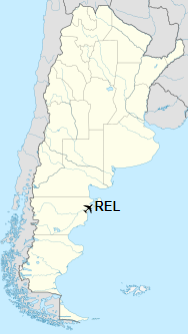
Location of Almirante Marcos A. Zar Airport in Argentina
Aftermath and Reaction
The Trelew Massacre was immediately condemned by human rights organizations, political groups, and international observers. Protests erupted in major Argentine cities, particularly Buenos Aires, Rosario, and Córdoba, where thousands of people took to the streets to denounce the government’s actions. The event also galvanized the left-wing guerrilla movements, who saw the massacre as evidence of the state’s commitment to violent repression and as justification for their own armed struggle.
In an attempt to quell the backlash, the Argentine government initiated a superficial investigation, which unsurprisingly found no wrongdoing by the military personnel involved. The massacre was initially portrayed by the government as a necessary response to the “subversive threat” posed by the detainees. However, the survivors’ testimonies and the subsequent investigations by independent journalists and human rights organizations exposed the state’s narrative as false, and the event became a powerful symbol of state terrorism in Argentina.
Major Facts About the Trelew Massacre
The Role of the Argentine Military
The Argentine Navy, specifically personnel stationed at the Almirante Zar Naval Base, carried out the executions. The commanding officer, Captain Luis Emilio Sosa, along with Lieutenant Roberto Bravo, were directly implicated in the shootings. Despite overwhelming evidence of their involvement, both officers initially escaped punishment. Captain Sosa and other involved officers were protected by amnesty laws until they were repealed in the early 2000s. Bravo moved to the United States, where efforts to extradite him continue to this day.
The Judicial and Human Rights Battle
For decades, the families of the victims and human rights organizations fought for justice for those murdered in the Trelew Massacre. In 1973, following the return of democratic rule, a brief investigation was opened, but it was cut short by the military coup of 1976, which ushered in Argentina’s most repressive period, the Dirty War.
After the end of the military dictatorship in 1983, efforts to reopen the case were repeatedly thwarted by the “Full Stop Law” and the “Law of Due Obedience,” which granted amnesty to those involved in crimes during the dictatorship. However, these laws were annulled in the early 2000s, allowing for the reopening of many human rights cases, including the Trelew Massacre.
In 2006, the case was officially reopened, and in 2012, a federal court in Argentina convicted two former Navy officers, Emilio Eduardo Del Real and Luis Emilio Sosa, for their involvement in the massacre, sentencing them to life imprisonment. Another officer, Carlos Amadeo Marandino, received a lesser sentence due to his cooperation with the investigation.
Roberto Bravo, however, remained in the United States, where he had fled shortly after the massacre. Despite Argentina’s requests for extradition, the U.S. has yet to grant it, largely due to legal technicalities and claims that the statute of limitations has expired. Nevertheless, the pursuit of justice continues, with human rights organizations and the victims’ families advocating for Bravo’s extradition and trial.
Legacy of the Trelew Massacre
The Trelew Massacre has become a potent symbol of state repression and the struggle for human rights in Argentina. It is often seen as a harbinger of the Dirty War, during which the military regime would systematically kidnap, torture, and murder tens of thousands of perceived opponents. The massacre also underscored the extent of the state’s use of violence to maintain control and stifle opposition, signaling a shift toward even more brutal methods of repression.
The event galvanized the human rights movement in Argentina. Groups such as the Madres de Plaza de Mayo, formed in the aftermath of the Dirty War to demand justice for the disappeared, have consistently cited the Trelew Massacre as an example of state terrorism. The massacre has been commemorated in numerous books, films, and documentaries, helping to keep the memory of the victims alive and ensuring that the crimes committed are not forgotten.
Impact on Guerrilla Movements
The massacre also had a profound impact on the guerrilla movements in Argentina. For many militants, the event underscored the impossibility of a peaceful resolution with the existing government and justified their continued armed struggle. The Montoneros and ERP intensified their activities in the wake of the massacre, escalating their attacks on military and government targets. The period following the Trelew Massacre saw an increase in both guerrilla activity and state repression, ultimately leading to the military coup of 1976 and the onset of the Dirty War.
The Trelew Massacre in Memory and Culture
The massacre remains a deeply resonant event in Argentine collective memory. Each year, commemorations are held to honor the victims, particularly in Trelew, where the massacre took place. The victims’ families, human rights groups, and political activists continue to demand full accountability and justice for those responsible.
In 2010, the documentary film Trelew by Mariana Arruti was released, drawing on survivor testimonies, archival footage, and historical analysis to tell the story of the massacre.
Did you know…?
On September 3, 1971, the funerals were held for the victims of the Trelew Massacre, an event where 16 political prisoners were executed by the military dictatorship at the Almirante Zar Air Base. This massacre occurred in the context of political repression during Argentina’s military regime, and the funerals turned into significant political demonstrations against the government.
Questions and Answers
Here are some questions and answers based on the provided information about the Trelew Massacre:





