Themistocles: Life and Military Career of the Athenian Politician and General
Themistocles was one of ancient Greece’s most prominent politicians and military leaders. He was instrumental in securing Athens’ survival and shaping the course of Greek history during the Persian Wars.
Born around 524 BC, he rose to prominence as a populist leader, gaining the support of the lower classes of Athenian society and often positioning himself against the traditional aristocracy. His advocacy for a strong navy laid the foundation for Athens’ maritime empire and proved decisive in defending Greece from Persian invasions.
Despite his military success, his political career faced turbulence, ultimately leading to his exile. Nevertheless, Themistocles’ contributions to Athens, particularly in naval warfare, were unparalleled and left an indelible mark on Greek history.
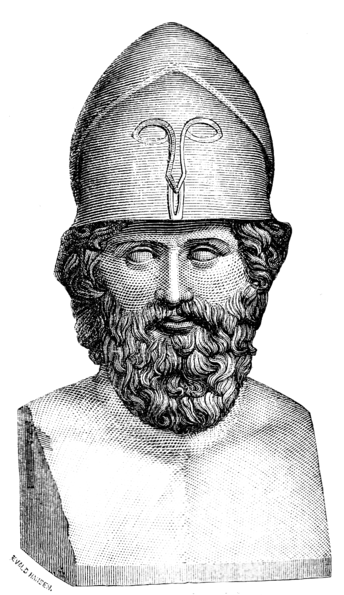
Themistocles was an Athenian politician and general who played a pivotal role in defending Greece during the Persian Wars. Image: The bust of Themistocles.
A brief history of Ancient Athens and how it became the birthplace of Western Civilization
Early Life and Political Rise
Themistocles was born in Athens around 524 BC, to Neocles, a man of modest means, and a non-Athenian mother, which placed Themistocles outside of the traditional Athenian elite. This background significantly shaped his political outlook, as he emerged as a champion of the common people, advocating policies that would benefit the lower classes of Athens. In the newly established Athenian democracy, he found fertile ground for his ideas, becoming part of a new generation of non-aristocratic politicians who used popular support to rise to power.
Themistocles’ political career gained momentum when he was elected archon in 493 BC, one of the highest-ranking political offices in Athens. During this time, he began pushing for the expansion of Athenian naval power, foreseeing that Athens’ future depended on its ability to control the seas. His foresight and strategic vision would become central to his career, as he believed that a powerful navy would protect Athens not only from external threats but also from domination by aristocratic landowners who traditionally held sway over the city-state.
The Battle of Marathon and the Lead-Up to the Second Persian Invasion
Themistocles first gained military experience during the Battle of Marathon in 490 BC, where Athens and its allies repelled the first Persian invasion of Greece. While the exact role Themistocles played in the battle remains unclear, it is likely that he was one of the ten Athenian strategoi (generals). The battle was a significant victory for Athens, but Themistocles understood that the Persians, under King Darius I, would return for a second attempt to conquer Greece. He also realized that Athens could not rely solely on its hoplite (infantry) forces to defend the city and its territory.
In the years following Marathon, Themistocles became the most influential politician in Athens, as he continued to advocate for the expansion of the Athenian navy. In 483 BC, he seized upon a windfall when a rich silver vein was discovered in the mines at Laurium. Instead of distributing the wealth among the citizens, as some proposed, Themistocles convinced the Athenians to invest the money in building a fleet of about 200 triremes, the fast and maneuverable warships that would soon prove critical in defending Greece. This decision was a defining moment in Athens’ rise to naval dominance, and it reflected Themistocles’ strategic understanding of Athens’ geopolitical situation.

Image: An illustration depicting the Battle of Marathon.
The Second Persian Invasion: Battles of Artemisium and Salamis
Themistocles’ foresight was validated in 480 BC, when King Xerxes I of Persia launched the second and far larger invasion of Greece, aiming to subjugate the entire region. While the Greeks were vastly outnumbered, they were able to organize a coalition of city-states, including Sparta and Athens, to resist the Persian advance. Themistocles played a key role in the planning and execution of the Greek defense strategy, particularly in naval matters.
As the commander of the allied Greek navy, Themistocles first engaged the Persian fleet at the Battle of Artemisium, a series of naval engagements fought simultaneously with the famous Battle of Thermopylae on land. Although the outcome of Artemisium was inconclusive, the Greeks were able to hold off the much larger Persian navy long enough to prepare for the next decisive encounter.
Themistocles’ strategic genius was fully displayed at the Battle of Salamis, one of the most critical battles in the Persian Wars. After retreating from Artemisium, the Greek fleet regrouped in the narrow Straits of Salamis, near Athens. Realizing that the confined waters would negate the numerical advantage of the Persian fleet, Themistocles devised a plan to lure the Persian navy into the straits. He used deception to convince Xerxes that the Greeks were planning to flee, prompting the Persians to rush into the straits, where their large ships became disorganized.
Once the Persians were trapped in the narrow waters, the Greek triremes, with their superior maneuverability, launched a devastating attack. The Persian fleet was decisively defeated, marking a turning point in the war. The victory at Salamis crippled the Persian navy, preventing Xerxes from supplying his massive army, and forced him to retreat back to Asia Minor. Themistocles’ leadership at Salamis not only saved Athens but also safeguarded Greek independence from Persian domination.
Rulers of the Achaemenid Empire: From Cyrus the Great to Artaxerxes V
Post-War Political Career and Ostracism
Following the Greek victory over the Persians, Themistocles enjoyed immense popularity in Athens. He continued to champion naval power and oversaw the fortification of the Piraeus, Athens’ harbor, which would serve as the base of the burgeoning Athenian navy. His vision of Athens as a naval superpower was becoming a reality, and the city’s newfound strength laid the groundwork for its eventual dominance during the Golden Age of Athens.
However, Themistocles’ aggressive policies and growing influence began to create enemies both within Athens and outside of it. His decision to re-fortify Athens after the war angered Sparta, which viewed Athens’ growing power as a threat to its own dominance in Greece. Moreover, Themistocles’ assertive and sometimes arrogant manner alienated many of his fellow politicians, who began to view him as a potential tyrant.
By 472 or 471 BC, Themistocles’ political rivals had gained enough support to orchestrate his ostracism, a practice in Athenian democracy where a politician could be exiled for ten years if deemed too powerful or dangerous. Themistocles was forced to leave Athens and settled in Argos, a city hostile to Sparta. However, his enemies continued to pursue him, accusing him of treasonous collusion with the Persians.
Exile and Service to the Persian Empire
Facing political persecution, Themistocles fled Greece entirely and sought refuge in Persia, a surprising twist given his role in defeating the Persians. He was welcomed by the Persian king, Artaxerxes I, the son of Xerxes I, and was granted governorship over the city of Magnesia in Asia Minor. Themistocles spent the remainder of his life in exile, serving the Persian Empire.
Despite his fall from grace in Athens, Themistocles lived out his final years in relative comfort and was granted a degree of autonomy in governing Magnesia. His death around 459 BC is believed to have been from natural causes, though some later sources suggested he may have taken his own life.
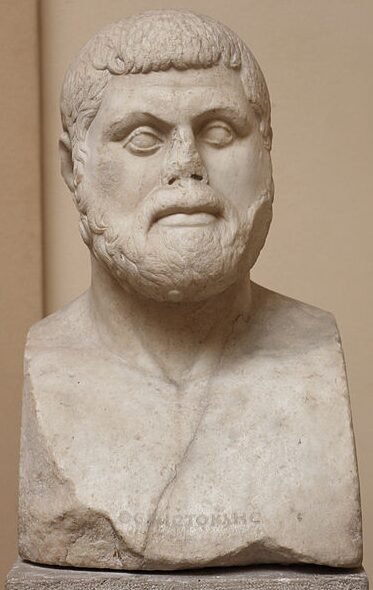
Image: Roman bust of Themistocles.
Legacy and Historical Impact
Themistocles’ reputation was posthumously rehabilitated, and his contributions to Athens and Greece were recognized as instrumental in securing Greek independence from Persia. Both ancient historians, including Thucydides and Plutarch, and modern scholars regard Themistocles as one of the greatest military strategists of antiquity. His naval policies and leadership in the Persian Wars were pivotal in transforming Athens into a maritime power, and his strategic thinking at the Battle of Salamis is considered one of the finest examples of military genius.
Thucydides, in his History of the Peloponnesian War, praised Themistocles for his unparalleled foresight and brilliance, noting that he exhibited “the most indubitable signs of genius.” Plutarch, in his Lives, also lauded Themistocles for his resourcefulness and political acumen, describing him as the man “most instrumental in achieving the salvation of Greece” from the Persian threat.
Themistocles’ vision of Athens as a naval superpower had long-lasting effects, as the city rose to prominence during the 5th century BC. The Athenian navy became the cornerstone of the Delian League, which eventually morphed into the Athenian Empire, leading to the city’s Golden Age under the leadership of Pericles. The wealth and power generated by Athens’ naval dominance supported the flourishing of arts, culture, and democracy, making Themistocles’ contributions to Athens’ rise not only military but also cultural.
Athenian general and politician Themistocles’s foresight in naval strategy, his leadership in the Persian Wars, and his contributions to Athenian democracy and empire-building cement his legacy as a visionary leader.
Frequently Asked Questions
When did Themistocles’ political career begin, and what was his focus?
Themistocles’ political career took off in 493 BC when he was elected archon. He advocated for strengthening Athens’ naval power, a key theme throughout his life.
What was Themistocles’ role in the Battle of Marathon?
Themistocles fought in the Battle of Marathon in 490 BC during the first Persian invasion. He likely served as one of the ten Athenian generals in the battle.
How did Themistocles contribute to the second Persian invasion?
During the second Persian invasion, Themistocles persuaded Athens to build 200 triremes, which proved crucial in the conflict. He led the Greek allied navy at the battles of Artemisium and Salamis, using clever tactics to lure the Persian fleet into the narrow Straits of Salamis, leading to a decisive Greek victory.
Why was Themistocles ostracized, and what happened afterward?
Themistocles was ostracized around 471 BC due to his decision to re-fortify Athens, which angered Sparta, and rising resentment from his political rivals. He fled to Argos and later sought refuge in Persia, where he was appointed governor of Magnesia by King Artaxerxes I.
How is Themistocles remembered, and what was his legacy?
Themistocles is remembered as a hero of Greece and a brilliant naval strategist. His policies laid the foundation for Athens’ maritime supremacy during its Golden Age, and historians such as Plutarch and Thucydides praised his extraordinary genius and lasting impact on Greek history.





