Timeline of the Minoan Civilization
An Easy and Engaging History for Students
The Minoan Civilization was one of the first great civilizations in Europe. It began more than 4,000 years ago and was based on the island of Crete, which is part of modern-day Greece. The Minoans lived in large cities, built beautiful palaces, made fine art, and traded with other lands across the sea. They were skilled sailors, builders, and artists.
The Minoan Civilization is named after King Minos, a famous figure from Greek mythology. Historians do not know if King Minos was a real person, but the name “Minoan” is used to describe this advanced culture.
Even though the Minoans lived a long time ago, they left behind buildings, paintings, and objects that help us understand their world. Let’s explore their story through time.

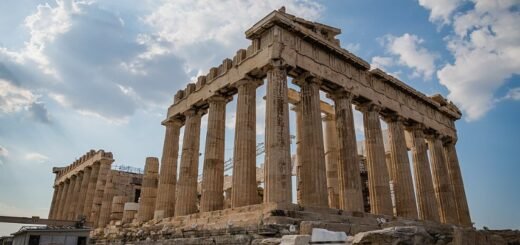
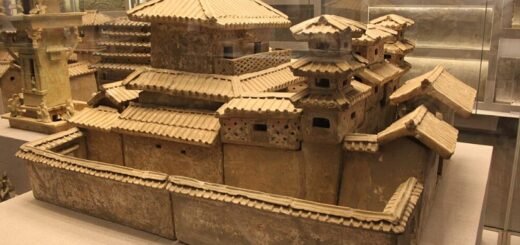
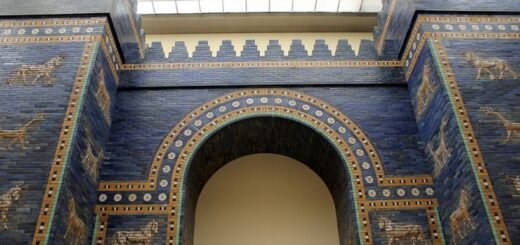
The ancient ruins of Crete reveal a society shaped by art, trade, and harmony with the sea.
c. 3000–2700 BCE – Early Minoan Period Begins
Around 3000 BCE, people living on Crete began to build small villages. They started using bronze tools, which were stronger than stone tools. This is why this period is part of the Bronze Age.
The Minoans began farming, raising animals, and trading with nearby lands. They grew crops like wheat, barley, and olives. They also made pottery and used simple designs to decorate their pots.
Even in this early time, the Minoans were building strong homes and learning how to organize their society. Small settlements slowly grew into larger communities.
c. 2700–1900 BCE – Growth of Towns and Trade
During this time, Minoan towns became bigger and better organized. People lived in groups near the sea and along rivers. The Minoans used boats to trade with Egypt, Cyprus, and mainland Greece. They traded things like olive oil, wine, pottery, and metal tools.
This period is important because the Minoans began building palaces, although not as large as later ones. These early palaces were used for storing food, running the economy, and maybe for worship too.
Minoan artists also started making more complex pottery. Some pots had spiral designs, sea creatures, and flowers. Their art shows a love for nature and beauty.
c. 1900–1700 BCE – First Palaces and Organization
Around 1900 BCE, the Minoans built large palace complexes at places like Knossos, Phaistos, and Malia. These palaces were not just homes for kings. They were also centers for government, religion, and storage.
The palace at Knossos was the biggest and most important. It had many rooms, stairs, halls, and even bathrooms with plumbing. The walls were painted with bright frescoes—colorful wall paintings. These frescoes showed scenes of nature, dancing, and sports, like bull-leaping, a kind of performance where people jumped over bulls.
The Minoans also created a writing system called Linear A. We still cannot read it today, but we know it was used to keep records, especially for trade.
Life in Crete seemed peaceful. The Minoans did not build big walls around their cities, which may mean they were not afraid of war. Their navy may have protected them.
c. 1700 BCE – Earthquakes and Rebuilding
Around 1700 BCE, a huge earthquake or other disaster destroyed many of the Minoan palaces. But the Minoans were strong. They quickly rebuilt their cities—bigger and better than before.
This new period is called the Neopalatial Period (meaning “new palace” period). The new palaces had more rooms, better art, and even running water. Knossos became a symbol of Minoan wealth and power.
Trade also increased during this time. Minoan goods were found all over the Mediterranean. They continued to export olive oil, pottery, and jewelry. In return, they got gold, copper, and fine fabrics.
Minoan art became even more beautiful. Artists painted fish, dolphins, birds, and flowers. They also painted people dancing, gathering food, or performing religious ceremonies.
c. 1600–1500 BCE – Peak of Minoan Power
This was the golden age of the Minoans. Their cities were full of life, and the palaces were rich in art, culture, and trade. Crete became one of the most advanced places in the ancient world.
Minoan ships sailed to Egypt, the Middle East, mainland Greece, and even to Italy. The Minoans were known as peaceful traders, not fighters.
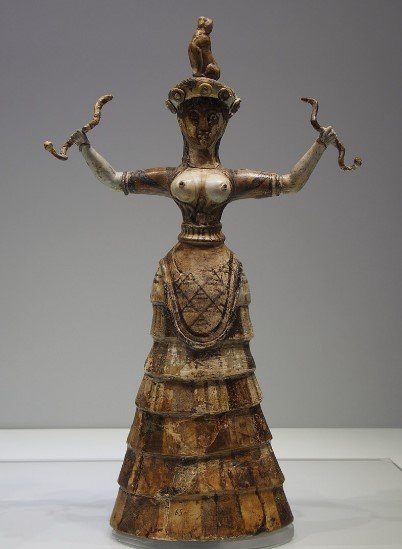
This statue of the Snake Goddess symbolizes the Minoans’ rich religion, balance, and female-centered worship.
Religion was important to the Minoans. They worshipped many gods and goddesses, and many were related to nature. The most famous symbol of Minoan religion was the bull. The bull often appeared in their art and was connected to myths and rituals.
One special event in Minoan culture was the bull-leaping ceremony, where young men and women jumped over bulls as part of a show or religious ritual. This is shown in many of their frescoes.
c. 1500 BCE – The Thera Eruption
Around 1500 BCE, a huge volcanic eruption happened on the island of Thera (modern-day Santorini), north of Crete. The eruption was one of the largest in history. It destroyed the island and may have caused tsunamis and earthquakes that also hurt Crete.
Some historians believe this disaster weakened the Minoans a lot. It may have destroyed their ships and ports. Their trade networks were damaged, and the economy suffered.
While Crete was not destroyed completely, it never returned to its earlier power. Some think this event helped create the myth of Atlantis, a lost island that sank into the sea.
c. 1450 BCE – The Mycenaeans Take Over
Around 1450 BCE, a new group of people from mainland Greece called the Mycenaeans came to Crete. We don’t know exactly what happened, but most of the Minoan palaces—except for Knossos—were destroyed.
It is possible the Mycenaeans attacked, or maybe they came after another natural disaster. In any case, they took over the island and began to rule.
The Mycenaeans used a new form of writing called Linear B. This writing was based on the Minoan system, but it used the Greek language. That’s why we can read Linear B, but not Linear A.
Even under Mycenaean rule, Minoan culture continued. Art and religion stayed similar. But the Minoans were no longer in charge.
c. 1375 BCE – Fall of Knossos
The palace at Knossos survived longer than the others, but it was finally destroyed around 1375 BCE. After that, the Minoan civilization was mostly gone.
People still lived on Crete, but the palaces were never rebuilt. The Minoans lost their power, and Crete became a smaller part of Mycenaean Greece.
Some of their art, language, and culture were remembered, but much was lost for a long time.
Rediscovery in Modern Times
For thousands of years, people forgot about the Minoans. But in the early 1900s, a British archaeologist named Sir Arthur Evans began to dig at Knossos. He found ruins of the great palace and many beautiful objects.
Evans gave the name “Minoan” to the civilization and helped bring its story back to life.
Today, visitors can walk through the ruins of Knossos and see the colorful frescoes and rooms where the Minoans once lived.
What Made the Minoans Special?
The Minoans were special because they were one of the first advanced societies in Europe. They lived in peace, loved beauty, and connected many parts of the ancient world through trade.

Among the waves of Crete, the Minoans danced with bulls and built palaces where the sea met the soul.
Here are some of their greatest achievements:
1. Palaces with Plumbing
They built palaces with toilets and running water—something very rare in ancient times.
2. Beautiful Art
Their frescoes, pottery, and jewelry show love for nature, movement, and life.
3. Writing Systems
They used two scripts, Linear A and Cretan hieroglyphs, to keep records and communicate.
4. Strong Trade
They connected many parts of the Mediterranean through ships and trade.
5. Influence on Later Cultures
The Mycenaeans, Greeks, and even Romans learned from Minoan art, religion, and architecture.
The Minoans remind us that even very early people could be creative, peaceful, and advanced.
FAQ – Minoan Civilization
Who were the Minoans?
The Minoans were people who lived on the island of Crete more than 4,000 years ago. They built cities, traded with other lands, and made beautiful art.
Where did the name “Minoan” come from?
The name comes from King Minos, a legendary king from Greek myths. We don’t know if he was real, but the name is used to describe the people of ancient Crete.
What was the capital city of the Minoans?
The most important city was Knossos. It had a large palace with many rooms, halls, and artwork.
What did the Minoans believe in?
The Minoans worshipped many gods and goddesses, often related to nature. They also worshipped bulls, which were symbols of strength and religion.
What is bull-leaping?
Bull-leaping was a special Minoan activity where people jumped over bulls. It may have been a sport, a show, or a religious event.
What is Linear A?
Linear A was a Minoan writing system. We have not yet been able to read it. It is different from the later Greek writing.
How did the Minoan Civilization end?
The Minoans were weakened by a volcanic eruption around 1500 BCE and later taken over by the Mycenaeans around 1450 BCE.
Did the Minoans fight in wars?
The Minoans are not known for war. They did not build city walls, which may mean they were peaceful or relied on their navy for defense.
What did the Minoans trade?
They traded olive oil, wine, pottery, and tools for things like gold, silver, and fine cloth.
Why are the Minoans important today?
They were one of the first advanced civilizations in Europe. Their art, architecture, and trade influenced many later cultures, including the Greeks.