Origin and Background
Tithonus was a member of Troy’s royal family, the son of King Laomedon and the Naiad Strymo. His divine lineage and mortal status made him an appealing figure in mythology, embodying the connection between gods and humans. His name, derived from Titonë (“partner of the Queen of Day”), signifies his association with Eos, whose radiant beauty and celestial role as the bringer of dawn captivated him.
Eos, known for her romantic entanglements with mortals, chose Tithonus as her lover. Their story underscores the recurring mythological motif of mortal and immortal unions, often fraught with challenges arising from their differing natures.
Eos and Tithonus: Love and Immortality
Eos, enamored with Tithonus, brought him to live with her. In a pivotal moment, she asked Zeus to grant him immortality, ensuring they could remain together eternally. However, she failed to request eternal youth, a critical oversight that shaped the tragedy of their relationship. As Tithonus lived on without aging cessation, he became increasingly frail and decrepit.
The consequences of this oversight are detailed in Homeric and later sources. In Homer’s works, Eos is described rising from the bed she shares with Tithonus to light the world. Later myths, such as those recorded in the Homeric Hymn to Aphrodite, expand on his decline. Tithonus becomes physically weak, unable to move or lift his limbs, and his constant babbling is emphasized as a sign of his irreversible decay.
9 Most Famous Sons of Zeus: From Ares to Perseus
Transformation and Symbolism
Some versions of the myth introduce a transformation that preserves Tithonus’s immortality while addressing his physical degradation.
According to these accounts, Eos, unable to bear his suffering, transformed him into a cicada (tettix), an insect associated with longevity and morning song. The cicada’s shedding of its skin symbolized renewal and served as a poignant commentary on aging and eternal life.
The myth also provided a cultural explanation for the cicadas’ high-pitched song at dawn, linking their sound to Tithonus’s endless yearning.

Image: On an Attic oinochoe by the Achilles Painter (c. 470–460 BC, Louvre), Eos is depicted chasing the hesitant Tithonus, who carries a lyre.
Role in Cultural and Mythological Context
Tithonus’s story carries significant cultural weight, particularly in its exploration of the implications of immortality. His myth serves as a cautionary tale about the unintended consequences of divine gifts, emphasizing the importance of balance and foresight. While immortality might seem desirable, Tithonus’s fate reveals the suffering that can accompany it without the preservation of youth or vitality.
Tithonus was the son of King Laomedon and the Naiad Strymo. Fifth-century Athenian vase-painters depicted him as a rhapsode, often shown holding a lyre, symbolizing his musical and poetic role.
His transformation into a cicada also aligns with broader Greek beliefs about renewal and metamorphosis. The cicada, often seen as an emblem of music and harmony, symbolized a bittersweet immortality tied to nature’s cycles, contrasting with Tithonus’s unchanging decline.
Eos’s Enduring Love
Despite Tithonus’s deterioration, Eos’s devotion to him is a recurring theme in the myth. In some versions, she continues to embrace and care for him, lamenting the gods’ cruelty and her inability to reverse his fate. This aspect of the story adds emotional depth and portrays Eos as a compassionate figure, highlighting the strength of her love despite the challenges they face.
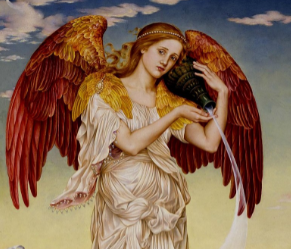
Image: An illustration depicting Eos in Greek mythology
Legacy and Influence
The story of Tithonus inspired reflections on human mortality, aging, and the fleeting nature of beauty. His narrative became a metaphor for the inevitability of aging and the challenges of reconciling human desires with divine intervention.
Tithonus and Eos’s tale also influenced Greek art and literature. In vase paintings, Tithonus is often depicted as a rhapsode holding a lyre, reflecting his role as a mortal connected to music and storytelling. Etruscan art continued to feature Tithonus and Eos, emphasizing themes of love and transformation.
In Greek literature, his myth was central to understanding the complexities of relationships between mortals and gods. Sappho’s “Old Age Poem,” often referred to as the “Tithonus Poem,” uses his story to reflect on the inevitability of aging. Similarly, his fate influenced works exploring themes of renewal and immortality, as the cicada’s connection to Tithonus became a recurring motif.

Modern Interpretations
Tithonus’s story continued to resonate beyond antiquity, inspiring works in various literary traditions. Alfred Tennyson’s poem Tithonus reimagines the myth as a dramatic monologue, portraying Tithonus’s perspective on his prolonged existence and separation from the mortal world. In this version, the focus shifts to his lamentation over his eternal life, which isolates him from both humans and the immortal but eternally youthful Eos.
Other modern writers, such as Johann Gottfried Herder, have revisited Tithonus’s narrative, exploring its philosophical and existential themes. These reinterpretations emphasize the universal questions posed by his story: the value of mortality, the desire for immortality, and the consequences of transcending natural limits.
Conclusion
The myth of Tithonus encapsulates the complex interplay of love, immortality, and aging in Greek mythology. His tragic fate highlights the limitations of divine intervention and serves as a poignant exploration of the human condition. As a symbol of eternal life without eternal youth, Tithonus’s story endures as a timeless reflection on the nature of existence and the balance between desire and consequence.





