United Kingdom of Portugal, Brazil and the Algarves
The United Kingdom of Portugal, Brazil, and the Algarves was a unique and transformative political entity in the history of the Portuguese-speaking world. Created in 1815, it elevated the Portuguese colony of Brazil to the status of a kingdom and united it with Portugal and the Algarves, forming a pluricontinental monarchy under one crown.
This union marked a significant shift in the political, economic, and cultural relationship between Portugal and its most important colony, Brazil. Although short-lived, its establishment and dissolution played a pivotal role in shaping the histories of both nations and highlighted the challenges of maintaining a transcontinental empire during a period of geopolitical upheaval.

The United Kingdom of Portugal, Brazil, and the Algarves was an ambitious attempt to redefine the relationship between Portugal and Brazil, elevating Brazil’s status within the empire and symbolizing a pluricontinental monarchy. Image: Coat of arms for the United Kingdom of Portugal, Brazil and the Algarves.
Historical Context: Napoleonic Invasions and the Relocation of the Portuguese Court
The roots of the United Kingdom of Portugal, Brazil, and the Algarves lie in the Napoleonic Wars. In 1807, as French troops prepared to invade Portugal under the orders of Napoleon Bonaparte, the Portuguese royal family, led by Prince Regent Dom João VI, fled to Brazil. With British naval assistance, the court relocated to Rio de Janeiro, transforming the city into the de facto capital of the Portuguese Empire.
The relocation of the court was unprecedented in European history. For over a decade, Rio de Janeiro served as the administrative and political center of the empire, and Brazil’s importance within the Portuguese realm increased significantly.
The presence of the monarchy in Brazil brought numerous reforms, including the opening of Brazilian ports to international trade, the establishment of administrative institutions, and the promotion of cultural and economic development. These changes elevated Brazil’s status and fostered a sense of national identity among its elites.
Formation of the United Kingdom (1815)
As the Napoleonic Wars came to an end, Dom João VI sought to formalize Brazil’s new status and solidify Portugal’s claims to its transcontinental empire. On December 16, 1815, he issued a royal decree elevating Brazil from a colony to the status of a kingdom. This act established the United Kingdom of Portugal, Brazil, and the Algarves, uniting the three realms under a single monarchy.
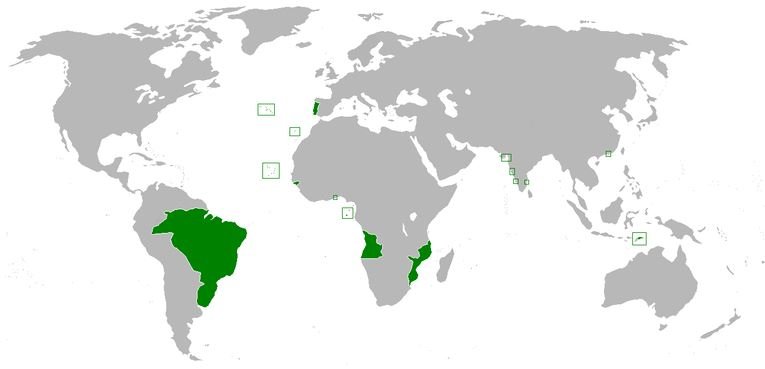
Image: Map showing the United Kingdom of Portugal, Brazil and the Algarves as well as its colonies.
Motivations for Creating the United Kingdom
The Congress of Vienna (1815–1816), which restructured Europe after the Napoleonic Wars, was an opportunity for Portugal to assert its sovereignty over Brazil and prevent other powers from challenging its authority in South America. Elevating Brazil to a kingdom demonstrated that it was an integral part of the Portuguese monarchy rather than a colony ripe for conquest or interference.
The creation of the United Kingdom symbolized a unified monarchy spanning continents. It reinforced Portugal’s image as a global power and elevated its status among European nations.
By granting Brazil equal status within the monarchy, Dom João VI sought to quell dissatisfaction among Brazilian elites who had grown accustomed to autonomy and economic privileges during the monarchy’s presence in Rio.
Structure and Role Within the Portuguese Empire
The United Kingdom was a transcontinental political union encompassing the Kingdom of Portugal, the Kingdom of Brazil, and the Kingdom of the Algarves. While Brazil’s elevation to kingdom status was a significant change, the rest of the Portuguese Empire—including territories in Africa (such as Angola and Mozambique) and Asia (such as Goa, Macau, and Timor)—remained under Portuguese colonial rule.
Brazil’s New Status
For Brazil, the transition from colony to kingdom represented a monumental shift. It officially placed Brazil on equal footing with Portugal and symbolized its importance within the empire. However, this equality was largely symbolic. Portugal continued to exercise significant influence over Brazilian affairs, and the political structure of the United Kingdom remained centered on the monarchy in Rio or Lisbon, depending on where the court was located.
Economic and Administrative Integration
While the United Kingdom unified the three kingdoms politically, economic and administrative integration was limited. Brazil retained much of its autonomy in practice, but tensions persisted over trade policies, governance, and the balance of power between Portugal and its largest colony.
Challenges and Dissolution
The United Kingdom of Portugal, Brazil, and the Algarves faced significant challenges from its inception, ultimately leading to its dissolution in 1825.
The Liberal Revolution of 1820
In 1820, a liberal revolution erupted in Portugal, driven by demands for constitutional reform and opposition to the monarchy’s prolonged absence. Portuguese liberals, who resented Brazil’s elevated status and the economic impact of the royal court’s relocation to Rio, called for Dom João VI’s return to Lisbon and the restoration of centralized governance.
Under pressure from the revolutionaries, Dom João VI returned to Portugal in 1821, leaving his son, Dom Pedro, as regent in Brazil. However, his departure exacerbated tensions between Portugal and Brazil. The Portuguese Cortes (parliament) sought to curtail Brazil’s autonomy and reinstate colonial-era policies, which provoked resistance from Brazilian elites.

Image: Portrait of João VI
Brazilian Resistance to Recolonization
The Portuguese Cortes’ attempts to reassert control over Brazil sparked widespread outrage. Brazilian elites, who had grown accustomed to local autonomy and economic independence, opposed efforts to:
- Reinstate trade restrictions that limited Brazil’s economic freedom.
- Marginalize Brazilian representatives in the Cortes.
- Centralize political authority in Lisbon, undermining Brazil’s status as a coequal kingdom.
These grievances fueled a growing independence movement, uniting Brazilian elites against Portuguese interference.
Independence of Brazil (1822)
On September 7, 1822, Dom Pedro, acting in defiance of the Portuguese Cortes, declared Brazil’s independence. He was subsequently crowned Emperor Pedro I of Brazil, marking the end of the United Kingdom in practice.
Formal Dissolution (1825)
Although Brazil’s independence was declared in 1822, Portugal did not formally recognize it until the Treaty of Rio de Janeiro in 1825. This treaty officially dissolved the United Kingdom and recognized the Empire of Brazil as a sovereign state. In return, Brazil agreed to compensate Portugal financially and guarantee the rights of Portuguese citizens in Brazil.

Significance and Legacy
Despite its brief existence, the United Kingdom of Portugal, Brazil, and the Algarves had far-reaching consequences for both Portugal and Brazil, as well as for the broader Portuguese-speaking world.
For Brazil
- Elevation to Kingdom Status: The creation of the United Kingdom marked Brazil’s transition from a colony to a coequal kingdom, fostering a sense of national identity and laying the groundwork for its independence.
- Path to Independence: The dissolution of the United Kingdom and the subsequent conflicts with Portugal catalyzed Brazil’s independence movement, leading to the establishment of the Brazilian Empire.
- Formation of a National Identity: The period of the United Kingdom helped unite Brazilian elites and lay the foundations for a cohesive national identity.
For Portugal
- Loss of Its Largest Colony: The dissolution of the United Kingdom and Brazil’s independence represented a significant blow to Portugal’s global power and economic base.
- Focus on Remaining Colonies: With the loss of Brazil, Portugal redirected its imperial ambitions toward its remaining territories in Africa and Asia, such as Angola, Mozambique, and Goa.
For the Broader Portuguese Empire
- Precursor to Decolonization: The creation and dissolution of the United Kingdom highlighted the difficulties of maintaining a transcontinental empire in an era of growing nationalism and liberalism. It foreshadowed the challenges Portugal would face in retaining its colonies in the 20th century.
- Symbol of Transcontinental Monarchy: The United Kingdom symbolized an ambitious vision of a pluricontinental monarchy that spanned Europe, South America, and Africa. Although short-lived, it reflected the geopolitical aspirations of the Portuguese monarchy.
Conclusion
The United Kingdom of Portugal, Brazil, and the Algarves was a bold and innovative experiment in transcontinental monarchy. It marked a critical moment in the history of the Portuguese-speaking world, redefining the relationship between Portugal and Brazil and reshaping their political trajectories. While its existence was brief, its impact was profound, paving the way for Brazil’s independence and symbolizing the challenges of maintaining a global empire in the 19th century.
Frequently Asked Questions
Why was the United Kingdom of Portugal, Brazil, and the Algarves established?
It was established to elevate Brazil from a colony to a kingdom, strengthen Portugal’s claim to its empire during the Congress of Vienna, and appease Brazilian elites by granting symbolic equality within the monarchy.
What event led to the Portuguese royal court relocating to Brazil?
The Napoleonic invasions of Portugal in 1807 forced Prince Regent Dom João VI to flee to Brazil with British assistance.
When was the United Kingdom of Portugal, Brazil, and the Algarves officially formed?
It was officially formed in 1815 as the Napoleonic Wars concluded.
What role did the United Kingdom play in the Portuguese Empire?
It served as the transatlantic hub of the Portuguese Empire, overseeing colonial possessions in Africa (e.g., Angola and Mozambique) and Asia (e.g., Goa and Macau).
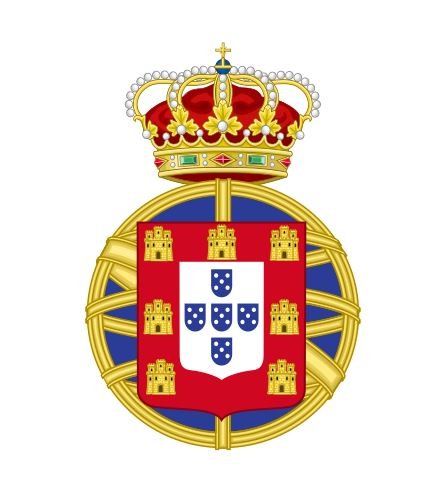
Image: Flag used by the United Kingdom of Portugal, Brazil and the Algarves between 1816 and 1825.
What significance did the United Kingdom hold for Brazil?
Brazil’s elevation to kingdom status signified its transition from a colony to an equal member of the monarchy, fostering a sense of national identity and inclusion.
What was the Liberal Revolution of 1820, and how did it affect the United Kingdom?
The revolution in Portugal sought constitutional reforms and demanded the monarchy’s return to Lisbon, creating tensions with Brazil and weakening the United Kingdom’s structure.
Why did Brazilian elites resist Portugal’s attempts to reassert control?
They opposed economic restrictions, political marginalization in the Cortes, and the centralization of power in Lisbon, which threatened their autonomy.
When and how did Brazil declare independence?
On September 7, 1822, under the leadership of Dom Pedro I, Brazil declared independence, ending the United Kingdom in practice.
When was the United Kingdom formally dissolved?
It was formally dissolved in 1825 when Portugal recognized Brazil’s independence through the Treaty of Rio de Janeiro.
What were the consequences of the United Kingdom’s dissolution for Portugal?
Portugal lost its largest colony, which significantly weakened its global power and economic base, prompting a focus on its remaining colonies in Africa and Asia.
What legacy did the United Kingdom of Portugal, Brazil, and the Algarves leave?
It marked a transition in empire-colony dynamics, contributed to Brazil’s independence, and highlighted the challenges of maintaining a transcontinental monarchy during an era of growing nationalism and liberalism.





