Vatican Museums: History, Collection, and Major Facts
The Vatican Museums, located in Vatican City, represent one of the most renowned cultural landmarks in the world. They house an extensive collection amassed over centuries by the Catholic Church and the papacy, including significant Roman sculptures and masterpieces from the Renaissance period. With approximately 69,000 works in its collection— about 19,500 of which are on display—the museums offer an unparalleled insight into Western art and culture.
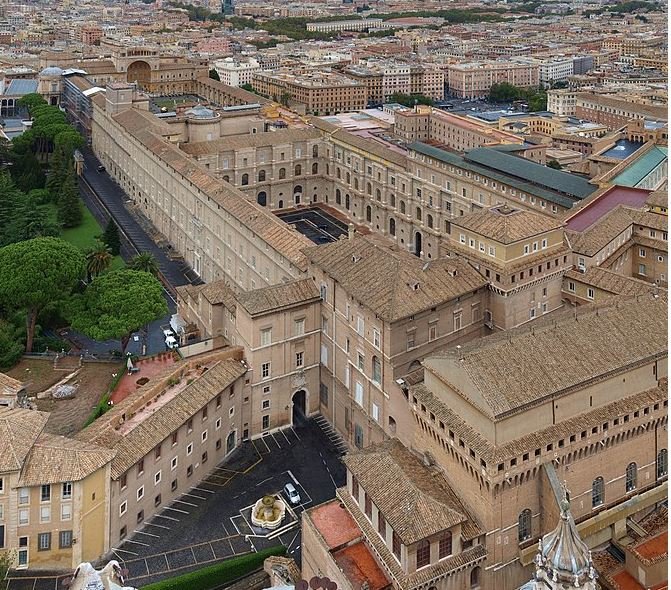
Aerial view of the Vatican Museums.
Founding and Origins
The Vatican Museums trace their origin to the early 16th century, when Pope Julius II founded them. Their establishment began with the acquisition of Laocoön and His Sons, a marble sculpture discovered in 1506. This piece, recommended for purchase by Michelangelo and Giuliano da Sangallo, became the first in a series of monumental acquisitions that formed the foundation of the museums’ vast collection. Over time, additional papal initiatives and donations contributed to the expansion of the museums.
The Museums’ Structure and Visitor Experience
The Vatican Museums consist of 24 galleries, culminating in the iconic Sistine Chapel. Each gallery highlights a different aspect of the Vatican’s artistic and historical treasures, ranging from ancient artifacts to modern religious art. In 2023, the museums attracted 6.8 million visitors, ranking them among the most-visited art museums globally. This extraordinary attendance underscores their cultural and historical significance.
Sistine Chapel
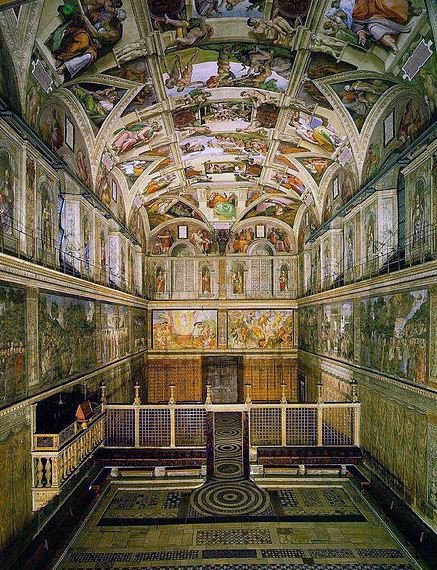
A view of the East side of Sistine Chapel.
The Sistine Chapel, one of the museums’ highlights, is famous for Michelangelo’s ceiling frescoes and his Last Judgment on the altar wall. These works are cornerstones of Renaissance art and continue to captivate millions of visitors annually. The chapel is the final stop on the visitor route, making it a climactic conclusion to the museum experience.
Top 10 Renaissance Artists and their Most Famous Masterpieces
Historical Milestones
The Vatican Museums expanded significantly under various pontificates. For instance, Benedict XIV established the Museum Christianum to preserve Christian artifacts, while Pius IX founded the Lateran Museum in 1854. In 2006, the museums celebrated their 500th anniversary by opening the Vatican Hill necropolis to the public, further enriching the visitor experience.
The museums’ leadership has played a critical role in their development. Since 2017, Barbara Jatta has served as the director, becoming the first woman to hold this position. Her tenure follows that of Antonio Paolucci, who oversaw significant restorations and modernization efforts during his time as director.
Key Sections and Highlights

Pinacoteca Vaticana
The Pinacoteca Vaticana, or Vatican Art Gallery, was established in 1932 to house the museums’ extensive collection of paintings. Some of the most celebrated works include:
- Leonardo da Vinci: Saint Jerome in the Wilderness
- Raphael: The Transfiguration, Madonna of Foligno
- Caravaggio: The Entombment of Christ
- Giotto: Stefaneschi Triptych
This gallery reflects the evolution of European painting, with masterpieces spanning the Gothic to Baroque periods.
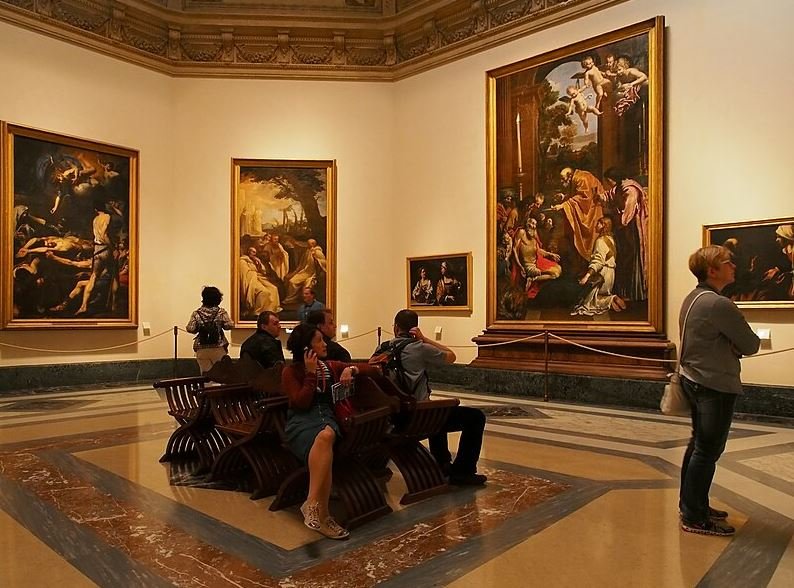
A view of the Pinacoteca Vaticana, with several tourists in it.
Collection of Modern Religious Art
In 1973, the museums introduced the Collection of Modern Religious Art, showcasing works by prominent artists like Vincent van Gogh, Paul Gauguin, Marc Chagall, and Pablo Picasso. These pieces bridge the gap between historical and contemporary art, offering visitors a more comprehensive understanding of religious expression.
Sculpture Museums
The Vatican Museums are renowned for their impressive collection of sculptures. Among these are:
Museo Pio-Clementino
This museum, established in 1771 by Clement XIV and completed by Pius VI, houses an array of Greek and Roman sculptures. Key highlights include:
- Laocoön and His Sons: A masterpiece of Hellenistic art.
- Apollo Belvedere: Revered for its idealized depiction of the human form.
- Sala Rotonda: A Pantheon-inspired room with ancient mosaics and statues.
Museo Chiaramonti
Founded by Pius VII, the Museo Chiaramonti features over 1,000 sculptures, including the famous Augustus of Prima Porta. Its New Wing, designed in the Neoclassical style, provides a grand setting for these works.

Augustus of Prima Porta at the Museo Chiaramonti.
Museo Gregoriano Etrusco
This museum focuses on Etruscan artifacts, such as vases, sarcophagi, and bronze objects, offering a glimpse into the culture that preceded Rome’s dominance.
Museo Gregoriano Egiziano
Artifacts from Ancient Egypt, including mummies, papyruses, and sarcophagi, are displayed in this museum. The collection also includes Roman reproductions of Egyptian art, illustrating the cultural exchange between these ancient civilizations.
Iconic Galleries and Features
Artworks in the Vatican Museums include renowned Roman sculptures and masterpieces of Renaissance art, such as works by Michelangelo and Raphael.
Raphael Rooms
The Raphael Rooms, decorated by Raphael and his workshop, are another major attraction. The School of Athens, a fresco celebrating philosophy, remains one of Raphael’s most celebrated works.
Gallery of Maps
This long corridor features topographical maps of Italy, commissioned by Pope Gregory XIII in the 16th century. The frescoes, painted by Ignazio Danti, are not only artistically stunning but also historically significant as a large-scale geographical study.
Bramante Staircase
The Bramante Staircase, designed in 1932, is a double-helix structure that exemplifies architectural ingenuity. Its elegant design allows for efficient visitor flow and offers a striking visual experience.
Historical Artifacts and Treasures
The Vatican Museums house numerous historical artifacts, including:
- Early Christian sarcophagi, such as the Sarcophagus of Junius Bassus.
- Roman inscriptions and tombstones.
- The red marble papal throne, formerly located in the Basilica of Saint John Lateran.
These objects provide valuable insights into the religious and cultural history of the Western world.
Visitor Experience and Accessibility
Admission and Popularity
The Vatican Museums are open to the public six days a week, with free admission offered on the last Sunday of each month. While this attracts large crowds, tickets are also available online to streamline the visitor experience.
Challenges and Incidents
In recent years, the museums have faced challenges, including acts of vandalism. For instance, climate activists caused damage to the Laocoön statue in 2022, leading to costly restoration efforts. Such incidents highlight the need for enhanced security measures to protect these invaluable treasures.
Educational and Cultural Impact
The Vatican Museums play a crucial role in education and cultural preservation. Their restoration departments ensure the longevity of artifacts, while scholarly research contributes to the global understanding of art history. Additionally, the museums host exhibitions and programs to engage a broader audience.
Timeline
- 1506: The Vatican Museums trace their origin to the discovery of Laocoön and His Sons near Santa Maria Maggiore, purchased and displayed by Pope Julius II.
- 16th Century: Pope Julius II formally founded the Vatican Museums.
- 1771: Clement XIV established the Museo Pio-Clementino, later expanded by Pius VI, showcasing Greek and Roman sculptures.
- 1837: Gregory XVI founded the Museo Gregoriano Etrusco and Museo Gregoriano Egiziano, focusing on Etruscan and Egyptian artifacts.
- 1854: Pius IX created the Lateran Museum to house parts of the Vatican collections.
- 1932: The Pinacoteca Vaticana, a dedicated art gallery, opened under Pius XI with works from Giotto, Raphael, Leonardo da Vinci, and others.
- 1973: Paul VI established the Collection of Modern Religious Art and the Vatican Historical Museum.
- 2006: The Museums celebrated their 500th anniversary by opening a Vatican Hill necropolis excavation to the public.
- 2017: Barbara Jatta became the first woman to direct the Vatican Museums.
- 2023: The Museums ranked as the world’s second-most-visited art museum, with close to 7 million visitors.
Frequently Asked Questions

Hall of Animals at the Pio-Clementino Museum
Who founded the Vatican Museums, and when?
Pope Julius II founded the museums in the early 16th century, beginning with the acquisition of “Laocoön and His Sons” in 1506.
What are the most famous attractions in the Vatican Museums?
The Sistine Chapel, featuring Michelangelo’s ceiling and altar wall, and Raphael’s Stanze are highlights. Other famous works include “The Creation of Adam,” the “Belvedere Torso,” and the “Apollo Belvedere.”
How many works are in the Vatican Museums, and how many are displayed?
The museums house around 69,000 works, with about 19,500 on display.
What is the significance of the Museo Pio-Clementino?
Founded in 1771, it houses Greek and Roman sculptures, including the “Laocoön,” “Apollo Belvedere,” and the gilded bronze Hercules in the Sala Rotonda.
Who is the current director of the Vatican Museums?
Barbara Jatta has been the director since January 1, 2017, succeeding Antonio Paolucci.
What is the Pinacoteca Vaticana, and what does it include?
The Pinacoteca Vaticana is the art gallery of the Vatican Museums, inaugurated in 1932, containing works by Leonardo da Vinci, Raphael, Caravaggio, and Titian, among others.
How many people visit the Vatican Museums annually, and when is admission free?
In 2023, close to 7 million people visited the museums, making them the second most visited art museum globally. Admission is free on the last Sunday of each month.





