Venice: History and Major Facts
Venice, a city of unparalleled beauty and historical significance, has fascinated historians, artists, and travelers for centuries. Known for its winding canals, impressive architecture, and rich cultural heritage, Venice holds a unique place in history as a powerful maritime republic, a cultural hub of the Renaissance, and a key player in European politics and trade.
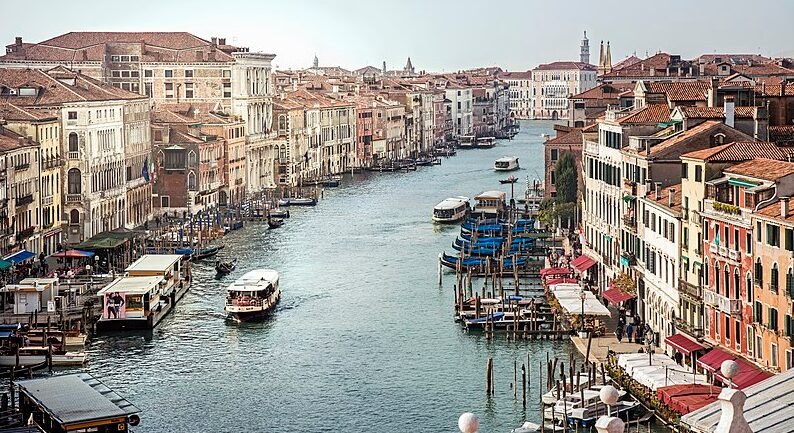
Situated in the shallow Venetian Lagoon, the city of Venice lies between the Po and Piave rivers. Image: The Grand Canal in Venice.
To fully understand Venice’s importance, World History Edu delves into its complex and fascinating history, exploring the events and forces that shaped its rise to power, its centuries of prosperity, and its eventual decline.
The Mysterious Founding of Venice
The precise origins of Venice are shrouded in mystery due to a lack of surviving records from the time of its founding. However, tradition and available evidence suggest that Venice was founded by refugees fleeing from nearby Roman cities such as Padua, Aquileia, Treviso, Altinum, and Concordia. These cities were repeatedly attacked by Germanic tribes and Huns in the declining years of the Roman Empire. In response to these invasions, people sought refuge in the safety of the marshy islands of the Venetian Lagoon, which were difficult to access by land.
Historical records support this theory, including references to the “apostolic families,” the twelve founding families of Venice who played a key role in establishing the city’s governance and elected its first doge (leader). Many of these families traced their lineage back to Roman nobility, further supporting the notion that Venice was founded by Roman refugees. Additionally, late Roman sources refer to fishermen living in the lagoon, known as “incolae lacunae” (lagoon dwellers), which indicates that there were inhabitants on the islands before the mass migration of refugees.
The traditional founding date of Venice is linked to the dedication of its first church, San Giacomo, on the islet of Rialto. According to legend, the church was consecrated on March 25, 421, during the Feast of the Annunciation, marking the official founding of Venice. Whether or not this exact date is historically accurate, it symbolizes the beginning of the city’s transformation from a collection of isolated islands into a cohesive community.
Early Invasions and the Byzantine Connection
Venice’s early history is closely tied to a series of invasions that affected the entire northern Italian region. Between AD 166 and 168, the Roman town of Oderzo was destroyed by the Quadi and Marcomanni, Germanic tribes that attacked the Roman Empire. Later, in the 5th century, the region was further destabilized by the Visigoths and the Huns, led by Attila. These invasions weakened Roman control over northern Italy and led to the eventual collapse of the Western Roman Empire.
The final blow to Roman authority in the region came in 568, when the Lombards, another Germanic tribe, invaded northern Italy. Their conquest left the remnants of the Eastern Roman (Byzantine) Empire with only a small strip of land along the Adriatic coast, including the Venetian Lagoon. This Byzantine territory, which included Venice, became part of the Exarchate of Ravenna, an administrative region governed by an Exarch (viceroy) appointed by the Byzantine Emperor in Constantinople.
Although Venice remained part of the Byzantine Empire, its isolation from mainland Italy and the chaotic political situation gave it increasing autonomy. The earliest governing body in Venice, known as the tribuni maiores, was established around 568 and provided the islands with a central form of government. Venice’s relationship with the Byzantine Empire would continue to influence its development for centuries, although the city gradually became more independent as Byzantine power waned.
Western Historians’ Somewhat Biased Labeling of the Eastern Roman Empire
The Rise of the Venetian Republic and the First Doge
Venice’s political evolution took a major step forward in 697 when Paolo Lucio Anafesto was elected as the city’s first doge. According to historical records, the doge (a Venetian dialectal version of the Latin word “dux,” meaning leader) was an independent leader chosen by the Venetian people to govern the city. However, some historians believe that Anafesto may have actually been a Byzantine Exarch, and that his successor, Marcello Tegalliano, was a military general serving under him.
Regardless of the exact nature of Anafesto’s leadership, the election of the first doge marked the beginning of Venice’s independent political identity. In 726, Venice faced its first major political crisis when a rebellion erupted in the Byzantine Exarchate over the iconoclastic policies of Emperor Leo III. The Venetians, who opposed Leo’s decree against religious icons, elected Ursus as their doge. Ursus led the Venetian forces in support of Leo’s military expedition to recover the city of Ravenna, and as a reward, he was granted titles and privileges by the Byzantine emperor. This event strengthened Venice’s relationship with the Byzantine Empire, even as the city began to assert its own independence.
By 751, the political landscape of northern Italy had shifted once again when the Lombard King Aistulf conquered most of the Exarchate of Ravenna. With Ravenna under Lombard control, Venice was left as an increasingly autonomous Byzantine outpost. The seat of Venetian governance, which had previously been located at Malamocco, was later moved to the more defensible islet of Rialto. During the reign of Doge Agnello Particiaco (811–827), Venice began to develop its infrastructure, including the construction of key buildings such as St. Mark’s Basilica, the ducal palace, and the city’s defensive walls.
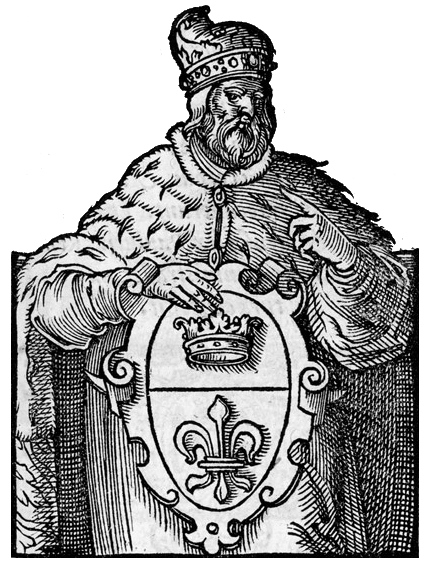
Image: Paolo Lucio Anafesto
Venice’s Struggle for Independence
During the early Middle Ages, Venice faced external threats from powerful European rulers who sought to bring the city under their control. One of the most significant of these threats came from Charlemagne, the Frankish king who was crowned Holy Roman Emperor in 800. Charlemagne sought to subdue Venice and ordered the Pope to expel the Venetians from their territories along the Adriatic coast.
Charlemagne’s son, Pepin, King of Italy, launched a military campaign against Venice in 810. Pepin’s forces laid siege to the city for six months, but the Venetians were able to resist, aided by the swampy conditions of the lagoon, which spread disease among the invaders. After Pepin’s death, Charlemagne and the Byzantine Emperor Nicephorus reached an agreement in 814, recognizing Venice as part of the Byzantine Empire and granting the city trading rights along the Adriatic coast. This agreement allowed Venice to maintain its independence while benefiting from its strategic location as a hub for trade between the East and West.
Venice’s Growing Prestige and the Relics of St. Mark
In 828, Venice’s status as a major city was further enhanced with the acquisition of relics said to be those of St. Mark the Evangelist. According to Venetian tradition, two merchants smuggled the relics from Alexandria and brought them to Venice, where they were enshrined in the newly constructed St. Mark’s Basilica. The relics became a source of great civic pride, and the winged lion, the symbol of St. Mark, became the emblem of the city.
Over time, Venice’s political and religious autonomy grew as Byzantine power in the region declined. The city continued to develop its naval and commercial capabilities, and by the 9th century, Venice had transformed into a powerful maritime empire. This transformation, known as the Venetian Thalassocracy, marked the beginning of Venice’s rise as a dominant force in Mediterranean trade.
The Venetian Thalassocracy and Expansion of the Maritime Empire
From the 9th to the 12th centuries, Venice developed into one of the most powerful maritime republics in Europe, known as a “thalassocracy” (sea empire). Along with other Italian maritime republics such as Genoa, Pisa, and Amalfi, Venice played a key role in controlling trade routes across the Mediterranean. Venice’s strategic location at the head of the Adriatic Sea allowed it to dominate commerce between Western Europe and the Byzantine Empire, as well as trade with Asia.
Venice’s naval power was instrumental in securing its commercial interests. The city’s fleet not only protected its merchants from pirates but also facilitated the expansion of Venetian influence across the eastern Adriatic and into the Mediterranean. By the 12th century, Venice had established control over several key ports and islands, including Crete, Cyprus, and parts of the Dalmatian coast. The doge of Venice held titles such as Duke of Dalmatia and Duke of Istria, reflecting the city’s growing regional power.
In addition to its naval and commercial dominance, Venice acquired a number of mainland territories known as the Terraferma. These possessions, which extended from the Adriatic coast to the foothills of the Alps, provided Venice with essential resources, including wheat from the fertile plains of Lombardy. Venice’s mainland expansion was driven partly by the need to protect its trade routes from hostile neighbors and partly by the desire to ensure a steady supply of food for the city’s growing population.
Venice and the Fourth Crusade
Venice’s involvement in the Crusades, particularly the Fourth Crusade (1202–1204), marked a turning point in its history. Initially, the Crusaders intended to capture Jerusalem from Muslim control, but financial difficulties led them to seek assistance from Venice. The Venetian doge, Enrico Dandolo, offered to transport the Crusaders to the Holy Land in exchange for payment. When the Crusaders were unable to pay the agreed-upon amount, Dandolo convinced them to divert their campaign to Constantinople, the capital of the Byzantine Empire.
In 1204, the Crusaders, with Venetian support, captured and sacked Constantinople. This event, which came to be known as the Fourth Crusade, resulted in the establishment of the Latin Empire in Constantinople and the partitioning of Byzantine territory among the Crusaders and Venetians. Venice acquired significant wealth and territorial holdings as a result of the conquest, including valuable relics and treasures from the city. The most famous of these was the set of bronze horses from the Hippodrome of Constantinople, which were placed above the entrance to St. Mark’s Basilica in Venice.
The Fourth Crusade solidified Venice’s position as a dominant power in the Eastern Mediterranean and allowed the city to carve out a sphere of influence that extended from the Aegean Sea to the Adriatic. Venice’s control of key trade routes and its access to Byzantine markets made it one of the wealthiest cities in Europe.

The Capture of Constantinople by Roman Catholics during the Fourth Crusade
Venice as a Cultural and Economic Power
By the 13th century, Venice had become the most prosperous city in Europe, boasting a population of around 100,000 people. The city’s wealth was built on its control of Mediterranean trade, particularly in luxury goods such as spices, silk, and precious metals. Venice’s extensive trade networks connected Europe with the Middle East and Asia, making the city a crucial hub for the exchange of goods and ideas.
Venice’s prosperity attracted artists, architects, and scholars, and the city became a leading center of art and culture during the Renaissance. The ruling elite of Venice, composed of wealthy merchant families, vied with each other to build grand palaces along the city’s canals and to sponsor the work of renowned artists such as Titian, Tintoretto, and Veronese. Venice’s unique political system, which balanced the power of the doge with the influence of the Great Council and the Senate, allowed for a stable and prosperous government that fostered creativity and innovation.
The city’s political structure was similar in some ways to that of ancient Rome. The doge, who was elected for life, served as the chief executive, while the Great Council, composed of noble families, appointed public officials and elected a Senate to manage the city’s affairs. A smaller Council of Ten controlled much of the city’s administration, ensuring that power remained in the hands of Venice’s elite.
Decline and the Loss of Independence
Venice’s dominance as a center of international trade began to wane in the 15th century. The city faced growing competition from other European powers, particularly Portugal, which established a sea route to India in 1498. The opening of this route bypassed Venice’s traditional monopoly on trade between Europe and Asia, dealing a significant blow to the city’s economy.
Venice also suffered from the effects of the Black Death, which struck the city in 1348 and again in the late 16th century. These outbreaks of plague killed tens of thousands of people and weakened Venice’s population and workforce.
Despite these challenges, Venice remained a major cultural and economic center well into the 18th century. However, the city’s independence came to an end in 1797 when Napoleon Bonaparte conquered Venice during the War of the First Coalition. Napoleon abolished the Venetian Republic, and the city was incorporated into the Austrian Empire. Venice briefly regained independence during a revolt in 1848, but this was crushed, and the city became part of the Kingdom of Italy in 1866.
Who were the greatest generals of the Revolutionary and Napoleonic Wars?
Did you know…?
- Venice’s sovereignty ended in 1797 with Napoleon’s conquest, and it became part of Italy in 1866.
- Known by names such as “La Serenissima” and “Queen of the Adriatic,” Venice’s historic center is a UNESCO World Heritage Site, famous for its architecture, art, and contributions to Renaissance culture.
- Despite its beauty, Venice faces environmental threats, overcrowding, and tourism pressures. It remains one of the world’s most popular and romantic tourist destinations.
- In 2022, Venice had around 260,000 residents, with about 51,000 living in the historical center. Along with Padua and Treviso, it forms part of the metropolitan area of 2.6 million people.
Venice’s Lasting Legacy
Throughout its history, Venice left a profound impact on the architecture, culture, and commerce of Europe. The city’s grand buildings, including St. Mark’s Basilica, the Doge’s Palace, and the Rialto Bridge, remain iconic symbols of Venice’s former glory. Venice’s influence on art and architecture during the Renaissance can still be seen in its churches, palaces, and public spaces.
Questions and Answers on the Founding and History of Venice
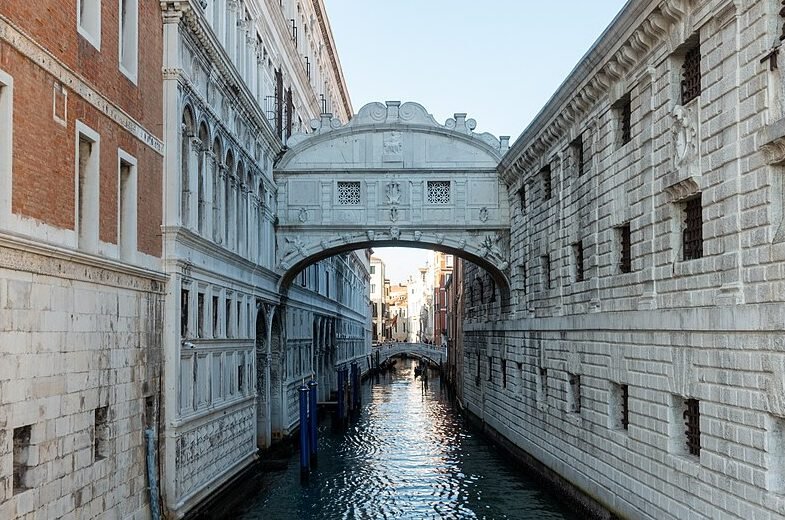
Founded by the ancient Veneti people, Venice was the capital of the Republic of Venice for nearly a millennium, from 810 to 1797. Image: Bridge of Sighs in Venice.
What evidence supports the theory of Venice’s founding by refugees?
Tradition and surviving evidence suggest that Venice was founded by refugees fleeing from nearby Roman cities such as Padua, Aquileia, Treviso, Altinum, and Concordia. These refugees were escaping waves of invasions by Germanic tribes and the Huns. Records of the “apostolic families,” the twelve founding families of Venice, who elected the first doge, also support this theory, as many trace their lineage to Roman roots.
What historical event is linked to the traditional founding date of Venice?
The traditional founding of Venice is linked to the dedication of the first church, San Giacomo, on the islet of Rialto, which is said to have taken place on March 25, 421, coinciding with the Feast of the Annunciation.
How did invasions affect Venice’s early history?
Venice’s early history was shaped by a series of invasions, starting with the destruction of the Roman town of Oderzo by the Quadi and Marcomanni around AD 166–168. Later, in the 5th century, the region faced invasions by the Visigoths and Huns, followed by the Lombards in 568, which left the Roman Empire with a small strip of land, including Venice.
What was the Exarchate of Ravenna, and how did it impact Venice?
The Exarchate of Ravenna was a Byzantine administrative region, governed by an Exarch appointed by the Emperor in Constantinople. Venice, as part of this territory, became increasingly autonomous due to its isolation from mainland Italy. The earliest governing body in Venice, the tribuni maiores, was established around 568 during this period.
Who was the first doge of Venice according to historical records?
The first doge of Venice, according to historical records, was Paolo Lucio Anafesto, elected in 697. However, some historians believe he might have been the Byzantine Exarch Paul, with his successor, Marcello Tegalliano, possibly serving as his military general.
How did Venice respond to the rebellion in the exarchate in 726?
In 726, during the rebellion in the exarchate over the iconoclastic policies of Emperor Leo III, the Venetians elected Ursus as their doge. Ursus supported Leo’s efforts to recover Ravenna and was rewarded with titles and privileges, helping to solidify Venice’s relationship with the Byzantine Empire.
What was the significance of the Lombard King Aistulf’s conquest in 751?
In 751, Lombard King Aistulf conquered most of the Exarchate of Ravenna, leaving Venice as an increasingly autonomous Byzantine outpost. This shift in power allowed Venice to develop further independence from the Byzantine Empire.
How did Pepin, King of Italy, attempt to subjugate Venice, and what was the outcome?
In 810, Pepin, King of Italy and son of Charlemagne, laid siege to Venice in an attempt to bring the city under his control. The Venetians successfully resisted for six months, aided by the swampy conditions that spread disease among Pepin’s troops. After his withdrawal and subsequent death, Venice’s independence was confirmed by an agreement between Charlemagne and the Byzantine Emperor Nicephorus.
What increased Venice’s prestige in 828?
Venice’s prestige increased in 828 when relics of St. Mark the Evangelist were smuggled from Alexandria and brought to the city. These relics were enshrined in the newly built St. Mark’s Basilica, and the winged lion, St. Mark’s symbol, became Venice’s emblem.
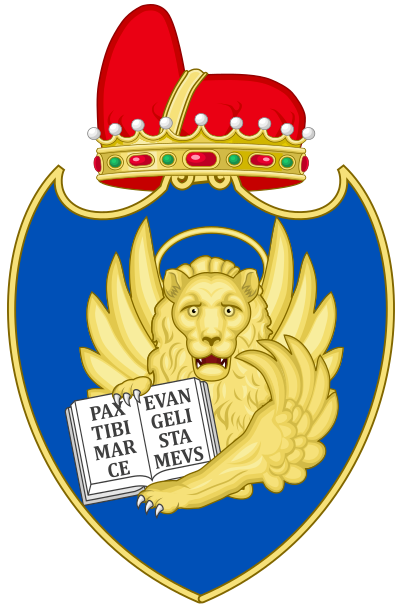
Image: Venice’s Coat of Arms
How did Venice transform into a maritime empire between the 9th and 12th centuries?
Between the 9th and 12th centuries, Venice developed into a powerful maritime empire, or “thalassocracy.” Its strategic position at the head of the Adriatic allowed it to dominate trade routes, and its navy protected its commercial interests, making Venice a key player in Mediterranean trade, particularly with the Byzantine Empire and Asia.
What territories did Venice control by the 12th century, and why?
By the 12th century, Venice had expanded its influence along the eastern Adriatic coast, controlling key ports and territories to protect its trade routes. Venice’s leadership held titles such as Duke of Dalmatia and Duke of Istria, reflecting its growing regional power. The city also controlled important islands like Crete and Cyprus in the Mediterranean.
How did Venice’s relationship with the Byzantine Empire change over time?
Initially, Venice maintained close trading privileges with the Byzantine Empire. However, as Byzantine power waned, Venice grew more autonomous. Its involvement in the Fourth Crusade (1202–1204), which led to the capture and sacking of Constantinople, marked a turning point, with Venice acquiring significant Byzantine wealth and territories.
What role did Venice play in the Fourth Crusade, and what were the consequences?
During the Fourth Crusade, Venice played a key role in diverting the crusaders to Constantinople, where they captured and sacked the city in 1204. As a result, Venice acquired a considerable amount of Byzantine wealth, including the bronze horses from the Hippodrome, and established itself as a dominant power in the Eastern Mediterranean.
How did Venice establish itself as a dominant Mediterranean power after the Fourth Crusade?
After the fall of Constantinople, Venice expanded its influence in the Eastern Mediterranean, controlling several territories and trade routes. The city played a significant role in the politics and commerce of the region, further establishing its power and wealth.
Why was Venice considered the most prosperous city in Europe by the late 13th century?
By the late 13th century, Venice’s powerful navy, extensive trade networks, and control over Mediterranean commerce made it the most prosperous city in Europe. The city’s wealth attracted artists, architects, and craftsmen, and its ruling elite competed to build grand palaces and support the greatest artists of the time.
How was Venice governed during its peak of power?
Venice was governed by a complex political system centered around the Great Council, composed of noble families. The council appointed public officials and elected a Senate, while the smaller Council of Ten controlled much of the city’s administration. The doge, Venice’s chief executive, was elected for life, though some were forced to resign in cases of political failure.
How did Venice’s government resemble that of ancient Rome?
Venice’s government was similar to the republican system of ancient Rome, with a balance of power between the doge, the nobility, and the general citizenry. The city separated politics from the military and relied on mercenaries for its military campaigns, maintaining a degree of religious tolerance and avoiding religious fanaticism during the Counter-Reformation.
What factors led to Venice’s decline in the 15th century?
Venice’s decline in the 15th century was due to several factors, including the fall of Constantinople in 1453, the opening of new trade routes to Asia by Portuguese explorers, and the devastation caused by the Black Death, which struck Venice in 1348 and again in the late 16th century.
How did Venice lose its independence?
Venice lost its independence in 1797 when Napoleon Bonaparte conquered the city during the War of the First Coalition. Napoleon abolished the Venetian Republic, and Venice became part of the Austrian Empire. It briefly regained independence in 1848 during a revolt, but this was crushed, and Venice was incorporated into the Kingdom of Italy in 1866.





