The Reelection of Abraham Lincoln in 1864
The reelection of Abraham Lincoln in 1864 stands as one of the most critical moments in American history. It took place during a turbulent time in the country’s existence, as the Civil War raged on, and its outcome would shape the course of the war and the nation’s future.
The 1864 election was a significant political contest because it raised vital questions about the war’s direction, the fate of slavery, and the reconstruction of the Union.
American historians at WHE delve into the history, key figures, events, and factors surrounding Lincoln’s reelection.
Background: The Civil War Context
The 1864 election occurred amidst the American Civil War (1861–1865), a conflict that divided the nation between the Union (North) and the Confederacy (South). The war had begun as a result of deep-seated differences over slavery, states’ rights, and sectionalism. By 1864, the war had already claimed hundreds of thousands of lives, and both sides were weary of the conflict.
Abraham Lincoln, as president during the war, was seen by many as the symbol of the Union’s perseverance. However, he was also heavily criticized, particularly by factions in his own Republican Party and by the Democrats, for his handling of the war. The prospect of his reelection would determine whether the war would be fought to its conclusion, leading to the restoration of the Union with slavery abolished, or whether a negotiated settlement with the Confederacy could be achieved.
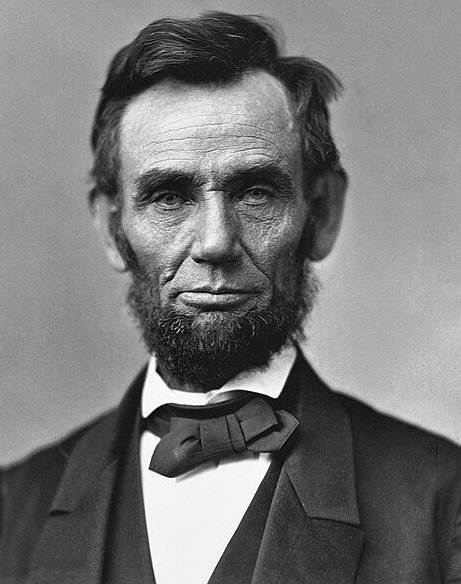
Image: A photograph of Lincoln in 1863.
Lincoln’s First Term and Challenges
Lincoln’s first term, which began in 1861, was dominated by the Civil War. His leadership was marked by several crucial decisions that shaped the course of the conflict and his presidency:
- The Emancipation Proclamation: In 1863, Lincoln issued the Emancipation Proclamation, declaring all slaves in Confederate-held territories to be free. While it did not immediately end slavery, it shifted the war’s focus from merely preserving the Union to ending slavery as well. This move alienated some Northern Democrats and conservatives, but it galvanized abolitionists and many in the Republican Party.
- Military Struggles: The Union army suffered numerous defeats in the early years of the war, and public morale was low. Lincoln faced criticism from both political opponents and military leaders. Some Republicans, known as Radical Republicans, believed Lincoln was too lenient on the Confederacy and wanted harsher measures, while Democrats accused him of overstepping his constitutional authority, particularly with his wartime suspension of habeas corpus.
- Political Opposition: Within his party, Lincoln faced significant opposition. Secretary of the Treasury Salmon P. Chase, along with Radical Republicans, challenged Lincoln’s leadership and sought a new candidate for the 1864 election. However, Lincoln’s reputation for political pragmatism and his ability to navigate competing factions within his own party helped him secure the nomination.
Formation of the National Union Party
For the 1864 election, Lincoln did not run under the banner of the Republican Party. Instead, he ran as the candidate of the newly-formed National Union Party, a coalition of Republicans and War Democrats (those Democrats who supported the war effort).
- War Democrats: These Democrats believed in continuing the fight to preserve the Union but did not necessarily agree with Lincoln’s policies, particularly his stance on emancipation. Lincoln’s selection of Andrew Johnson, a War Democrat from Tennessee, as his vice-presidential candidate reflected his desire to appeal to a broader coalition of voters.
- Radical Republicans: Lincoln also had to balance the demands of Radical Republicans, who sought harsher policies toward the South and quicker emancipation of all enslaved people. While he maintained their support, many radicals remained critical of his moderate approach.

Image: An early 1870s image of Andrew Johnson.
Democratic Opposition and George McClellan
The Democratic Party in 1864 was deeply divided between the War Democrats, who supported continuing the war, and the Copperheads, a faction that sought an immediate peace settlement with the Confederacy, even if it meant allowing the South to remain independent and slavery to persist.
- George B. McClellan: The Democratic Party nominated former Union General George B. McClellan as their candidate. McClellan, a War Democrat, was popular with many soldiers and had previously served as the commander of the Army of the Potomac. However, his military career had been marred by his cautious approach and his frequent clashes with Lincoln over strategy.
- Democratic Platform: The Democratic platform, drafted by the more conservative elements of the party, called for an immediate cessation of hostilities and a negotiated peace with the Confederacy. This was a major point of contention, as McClellan himself rejected the platform’s call for peace, instead stating that he wanted to restore the Union by military means.
The contradiction between McClellan’s stance and the party’s platform confused many voters and weakened the Democratic campaign. Nonetheless, the prospect of peace appealed to many war-weary Northerners, making the election highly competitive.
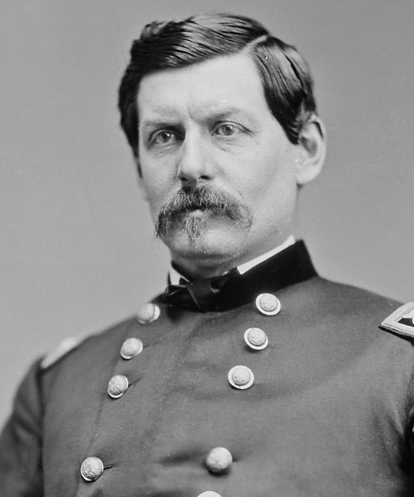
George B. McClellan
The Election Campaign

Lincoln and Johnson campaign poster during the 1864 Presidential Election
The 1864 campaign was dominated by issues of war, peace, and slavery. Public opinion fluctuated throughout the summer and fall, as both sides faced significant military and political developments.
- Military Victories: By the summer of 1864, the war had reached a critical stage. The Union Army, under General Ulysses S. Grant, was engaged in a brutal campaign in Virginia, with heavy casualties on both sides. At this point, many in the North were pessimistic about the war’s outcome, and Lincoln himself feared he might lose the election.
However, the tide turned in late summer with several key Union victories, most notably General William Tecumseh Sherman’s capture of Atlanta in September. These victories reinvigorated the Northern public’s confidence in the war effort and bolstered Lincoln’s chances for reelection.
- Lincoln’s Pragmatic Campaign: Lincoln, ever the political pragmatist, ran a cautious campaign. He remained focused on the importance of preserving the Union and emphasized that the war would be fought to its conclusion. Lincoln made few public appearances, preferring to let his policies and recent military successes speak for themselves.
- McClellan’s Campaign: McClellan, meanwhile, faced the challenge of running on a divided platform. While he publicly rejected the peace platform, many Democratic voters still believed his election would result in a negotiated settlement with the Confederacy. McClellan campaigned on the promise of a swift and honorable end to the war, but he failed to present a clear alternative to Lincoln’s leadership.
The Election Results

The election took place on November 8, 1864. At the time, the Civil War was still ongoing, and many states in the Confederacy were unable to participate. As a result, votes were cast only in the loyal Northern states, along with a few states that had been recaptured by the Union Army.
- Electoral College Victory: Lincoln won the election by a wide margin in the Electoral College, securing 212 electoral votes to McClellan’s 21. Lincoln carried all but three states—New Jersey, Delaware, and Kentucky—and won approximately 55% of the popular vote.
- Soldier Vote: One of the key factors in Lincoln’s victory was the support he received from Union soldiers. While McClellan had hoped to gain their votes due to his former position as general, a majority of soldiers believed in continuing the fight under Lincoln’s leadership.
- Impact of Military Success: The recent Union victories, especially Sherman’s capture of Atlanta, played a significant role in turning the tide in Lincoln’s favor. The Northern public’s perception of the war had shifted, and many now believed that final victory was within reach.

Significance of Lincoln’s Reelection
Lincoln’s reelection in 1864 was a pivotal moment in American history. His victory ensured that the war would continue until the Confederacy was defeated and that slavery would be abolished across the entire United States. Several major outcomes arose from Lincoln’s reelection:
- End of the Civil War: Lincoln’s second term saw the successful conclusion of the Civil War. Just five months after the election, in April 1865, General Robert E. Lee surrendered to Grant at Appomattox Court House, effectively ending the conflict. Lincoln’s firm stance on preserving the Union had prevailed.
- Abolition of Slavery: Lincoln’s reelection also solidified the future of the Thirteenth Amendment, which would abolish slavery throughout the United States. While the Emancipation Proclamation had freed slaves in Confederate-held territory, the amendment would guarantee the permanent end of slavery nationwide. The amendment passed Congress in early 1865 and was ratified by the states later that year.
- Reconstruction: Lincoln’s second term would also see the beginning of Reconstruction, the process of reintegrating the Southern states into the Union and addressing the status of newly freed African Americans. Although Lincoln had outlined a moderate approach to Reconstruction, his assassination in April 1865 prevented him from fully implementing his vision.
Lincoln’s Assassination and Andrew Johnson’s Presidency
Tragically, Lincoln did not live to see the long-term results of his reelection. On April 14, 1865, just days after Lee’s surrender, Lincoln was assassinated by Confederate sympathizer John Wilkes Booth while attending a play at Ford’s Theatre in Washington, D.C. Lincoln died the next day, plunging the nation into mourning.
Lincoln’s assassination thrust his vice president, Andrew Johnson, into the presidency. Johnson, a War Democrat from Tennessee, was committed to quickly reintegrating the Southern states into the Union, but his approach to Reconstruction clashed with that of the Radical Republicans in Congress. Johnson opposed granting equal rights to former slaves and vetoed legislation designed to protect their civil liberties.
Johnson’s lenient policies toward the South and his opposition to Radical Reconstruction eventually led to his impeachment by the House of Representatives in 1868. Johnson narrowly avoided removal from office, as the Senate acquitted him by just one vote.
Legacy of the 1864 Election
The 1864 election remains one of the most consequential in American history. Lincoln’s victory ensured the survival of the Union, the abolition of slavery, and the eventual path toward Reconstruction. Several key legacies stem from this historic election:
- The Power of Democracy During War: The 1864 election demonstrated the strength of American democracy, even in times of national crisis. Despite the ongoing Civil War, the country held a presidential election, allowing citizens to choose their leader and decide the future of the nation.
- Lincoln’s Leadership: Lincoln’s leadership during the Civil War and his reelection in 1864 cemented his legacy as one of America’s greatest presidents. His ability to balance competing factions, his commitment to preserving the Union, and his moral stance on slavery have made him an enduring symbol of national unity and perseverance.
- The End of Slavery: The reelection of Lincoln also ensured the permanent abolition of slavery. With the passage of the Thirteenth Amendment in 1865, slavery was officially outlawed throughout the United States, fulfilling the promise of freedom for millions of African Americans.
- Challenges of Reconstruction: While Lincoln’s victory guaranteed the Union’s preservation, it also marked the beginning of the difficult process of Reconstruction. The post-war years would be fraught with political and social challenges, as the nation grappled with how to rebuild the South, integrate former slaves into society, and reconcile a divided country.
Questions and Answers about the 1864 US Presidential Election

Despite the challenges of war, political division, and his eventual assassination, Lincoln’s reelection remains a testament to the resilience of American democracy and the enduring fight for freedom and equality. Image: A statue of Abraham Lincoln.
When did the 20th quadrennial presidential election take place in the United States?
The election took place on November 8, 1864.
Who won the 1864 United States presidential election, and what party did he represent?
Abraham Lincoln won the election, representing the National Union Party, a coalition of Republicans and pro-war Democrats.
How many electoral votes did Abraham Lincoln receive in the 1864 presidential election?
Lincoln received 212 electoral votes.

Who was Abraham Lincoln’s opponent in the 1864 presidential election, and what was his political affiliation?
Lincoln’s opponent was George B. McClellan, who was the Democratic nominee.

McClellan and Pendleton campaign poster during the 1864 Presidential Election
Why did the National Union Party choose Andrew Johnson as Lincoln’s running mate in 1864?
Andrew Johnson, a War Democrat from Tennessee, was chosen to broaden the party’s appeal.
What was the stance of the Radical Democracy Party in the 1864 election, and who were their candidates?
The Radical Democracy Party, which nominated John C. Frémont and his running mate John Cochrane, criticized Lincoln for his moderate stance on racial equality.

Frémont and Cochrane campaign poster during the 1864 Presidential Election
What significant event bolstered Abraham Lincoln’s electoral success in 1864?
General William Tecumseh Sherman’s capture of Atlanta was a significant Union military victory that bolstered Lincoln’s standing.
What was the internal division within the Democratic Party during the 1864 election?
The Democratic Party was divided between the Copperheads, who favored immediate peace with the Confederacy, and the War Democrats, who supported continuing the war.
How did Abraham Lincoln’s assassination affect his second term?
Lincoln’s second term was cut short by his assassination less than two months after taking office. His vice president Andrew Johnson was sworn in on April 15, 1865.
Johnson’s rapid reintroduction of Southern states into the Union without adequate safeguards for newly emancipated African Americans led to severe conflict with the Republican-dominated Congress, culminating in his impeachment.