Viet Cong: Origins, Military Tactics and Strategies
The Viet Cong (VC) was a communist-driven armed movement and a united front organization active in South Vietnam during the Vietnam War. The organization was formally led by the National Liberation Front of South Vietnam (NLF) and conducted military operations under the Liberation Army of South Vietnam (LASV). Engaging in a prolonged conflict under the direction of North Vietnam, the Viet Cong fought against the South Vietnamese and U.S. governments. Characterized by both guerrilla warfare and conventional military tactics, the VC played a crucial role in the Vietnam War, which ultimately led to the reunification of Vietnam under communist rule.

The Viet Cong used a flag that featured a yellow star on a red and blue background, symbolizing the communist movement in South Vietnam during the Vietnam War.
Origins and Formation
The Geneva Accord and the Division of Vietnam
The roots of the Viet Cong can be traced to the First Indochina War, which ended with the Geneva Accord in 1954. This agreement divided Vietnam into two separate entities: the communist-led North Vietnam and the U.S.-backed South Vietnam. Although elections for reunification were scheduled for 1956, South Vietnam, under President Ngô Đình Diệm, refused to hold them, fearing a communist victory.
Formation of the National Liberation Front (NLF)
In response, North Vietnam established the NLF on December 20, 1960, in Tây Ninh Province. The organization aimed to unify Vietnam under communist rule and overthrow the South Vietnamese government. Many of its core members were former Viet Minh fighters who had relocated to North Vietnam after the Geneva Accord but later returned to the South via the Ho Chi Minh Trail to spearhead the insurgency.
Naming and Terminology
The term “Viet Cong” is a contraction of “Việt Nam cộng sản,” meaning “Vietnamese communist.” It first appeared in South Vietnamese newspapers in 1956 and was later adopted by American military personnel, who referred to the VC as “Victor Charlie” using the NATO phonetic alphabet. While the official name of the organization was the National Liberation Front, communist fighters commonly referred to it simply as “the Front.”
Structure and Organization
The Viet Cong comprised both guerrilla fighters and regular army units. It relied on a vast network of cadres to mobilize rural communities, recruit fighters, and provide logistical support. The command structure was integrated with North Vietnamese military leadership, and by 1969, the NLF had formed the Provisional Revolutionary Government (PRG) to act as an alternative government in contested areas.

Military Tactics and Strategies
The Viet Cong employed classic guerrilla warfare strategies, including ambushes, sabotage, and hit-and-run attacks. They leveraged extensive tunnel networks to evade U.S. and South Vietnamese forces, which provided them with strategic advantages in the dense jungles of Vietnam.
The Viet Cong (VC) fought against the South Vietnamese and U.S. governments during the Vietnam War under the direction of North Vietnam.
Though initially focused on guerrilla tactics, the Viet Cong later adopted conventional military strategies, particularly during major offensives. The Tet Offensive in 1968 saw the VC launch coordinated attacks on over 100 South Vietnamese cities, including Saigon. While the offensive was militarily costly for the VC, it marked a turning point in the war by undermining U.S. public support for continued involvement.

A map showing towns and cities that experienced major battles during the 1968 Tet Offensive.
Role of the Ho Chi Minh Trail
The Ho Chi Minh Trail was a crucial supply route that connected North Vietnam to VC strongholds in the South. Running through Laos and Cambodia, the trail facilitated the movement of troops, weapons, and supplies. North Vietnamese engineers continuously expanded and improved the trail, making it a key factor in sustaining the VC’s operations.
Key Battles and Campaigns
The Tet Offensive (1968)
One of the most significant events of the Vietnam War, the Tet Offensive, was a large-scale assault launched by the Viet Cong and North Vietnamese forces during the Lunar New Year (Tết) celebrations. Though the offensive initially shocked the South Vietnamese and American forces, it ultimately led to heavy losses for the VC and a shift in strategy, with the North taking a more dominant role in later military campaigns.
The Easter Offensive (1972)
Unlike previous VC-led operations, the Easter Offensive was dominated by North Vietnamese regular forces. The VC played a secondary role, as by this point, many of its original members had been either killed or integrated into the North Vietnamese military.
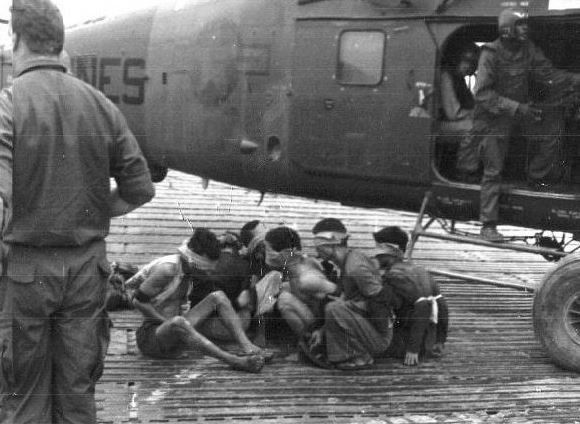
Some members of the Viet Cong army being captured by the US army.
Psychological and Propaganda Tactics
The Viet Cong utilized propaganda to gain support among South Vietnamese civilians. They portrayed themselves as nationalists fighting against foreign occupation and an oppressive South Vietnamese regime. The use of political indoctrination sessions in captured villages helped strengthen their ideological influence.
The tactics of the Viet Cong, both guerrilla and conventional, reshaped modern asymmetric warfare.
Additionally, terror tactics were employed to intimidate opponents. Assassinations of South Vietnamese officials and attacks on civilian infrastructure were part of a broader strategy to destabilize the South Vietnamese government.
The Decline of the Viet Cong
The U.S. implemented several programs aimed at countering the Viet Cong’s influence. The Phoenix Program, for instance, targeted VC leadership through intelligence-driven operations. Strategic hamlet programs sought to isolate rural populations from VC influence, though these efforts had mixed results.
After the end of the war, the Viet Cong was absorbed into the unified Vietnamese state.
By the early 1970s, as the U.S. withdrew troops under President Richard Nixon’s Vietnamization policy, the Viet Cong’s role diminished. The North Vietnamese Army (NVA) increasingly took over military operations, relegating the VC to a supporting role.
Why did many American colleges fiercely oppose the Vietnam War?
The Fall of Saigon and the End of the Viet Cong
On April 30, 1975, Saigon fell to North Vietnamese forces, marking the end of the Vietnam War. The PRG assumed control, and in 1976, North and South Vietnam were formally unified under the Socialist Republic of Vietnam. The Viet Cong, having fulfilled its purpose, was absorbed into the Vietnamese government and military.
Legacy and Historical Interpretations
The legacy of the Viet Cong is complex. In Vietnam, they are often portrayed as national heroes who fought for independence. In contrast, many South Vietnamese and Western perspectives view them as a tool of North Vietnam’s communist expansion. The debate over their autonomy versus their subordination to Hanoi continues among historians.
Frequently Asked Questions
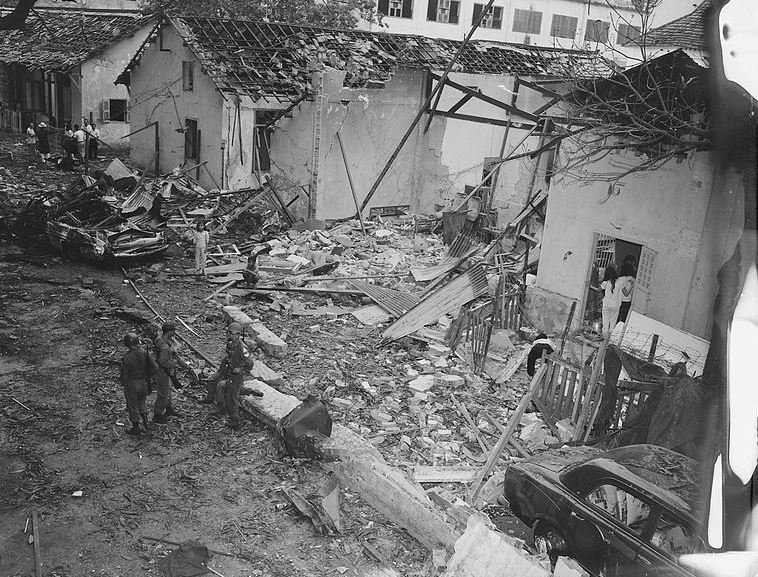
A photo showing the aftermath of a Viet Cong bombing of Brinks Hotel.
What were the main military operations of the Viet Cong?
The Viet Cong conducted guerrilla warfare and large-scale military operations, with their most famous action being the Tet Offensive in 1968. This massive attack targeted over 100 South Vietnamese cities, including an assault on the U.S. embassy in Saigon.
What was the relationship between the Viet Cong and North Vietnam?
Despite claims of being an indigenous insurgency, the Viet Cong was under North Vietnamese political and military leadership. Hanoi provided training, supplies, and strategic direction, aiming to unify Vietnam under communism.
How did the Viet Cong originate?
The NLF was established by North Vietnam in 1960 to incite insurgency in the South. Many early members were former Viet Minh fighters who had relocated to North Vietnam after the Geneva Accord (1954) and later returned to the South via the Ho Chi Minh Trail.
What was the significance of the Tet Offensive?
The Tet Offensive was a major turning point in the war. Although it resulted in heavy losses for the Viet Cong, it shocked the American public and eroded support for U.S. involvement in Vietnam.
What tactics did the Viet Cong use?
The Viet Cong employed guerrilla warfare, terrorism, political indoctrination, and assassination campaigns. They used tunnels, ambushes, and night attacks, relying on local support for supplies and intelligence.
How did the U.S. and South Vietnam counter the Viet Cong?
The U.S. and South Vietnamese forces used large-scale search-and-destroy missions, airstrikes, and programs like the Phoenix Program to eliminate Viet Cong leadership. The Strategic Hamlet Program aimed to cut off their support from rural populations.
What happened to the Viet Cong after the war?
After the fall of Saigon in 1975, the Viet Cong was absorbed into the North Vietnamese military and government. In 1977, it was officially merged with the Vietnamese Fatherland Front as Vietnam was unified under communist rule.
What does “Viet Cong” mean?
“Viet Cong” is a contraction of “Việt Nam cộng sản” (Vietnamese communist). The term was used by U.S. forces, often abbreviated as “VC” or “Charlie” in military slang.
What role did the Viet Cong play in the final victory?
By the early 1970s, the Viet Cong played a diminished role as North Vietnamese regular forces took the lead. The 1975 offensive that led to the fall of Saigon was primarily carried out by the North Vietnamese Army (PAVN).





