Villa of Livia
The Villa of Livia, also known as Ad Gallinas Albas, is an ancient Roman villa located at Prima Porta, approximately 12 kilometers north of Rome along the Via Flaminia. This estate played a central role in the lives of Livia Drusilla, the wife of Emperor Augustus, and her family. Its strategic location, architectural grandeur, and association with the early Roman Empire make it a significant site for understanding Roman art, politics, and society.
READ MORE: How Emperor Augustus Ushered in Rome’s Most Successful Era – Pax Romana
Origins and Ownership
The villa is believed to have been either part of Livia’s dowry upon her marriage to Octavian (later Emperor Augustus) in 39 BC or a gift from Octavian upon their engagement. Ancient sources, including Suetonius, note that Livia frequently returned to this villa after her marriage, using it as a countryside retreat complementing her primary residence on Rome’s Palatine Hill.
The villa’s Latin name, Ad Gallinas Albas (“At the White Chickens”), is rooted in a legend about a white hen dropped by an eagle into Livia’s lap, an omen interpreted as a divine blessing. This story symbolizes the villa’s auspicious origins and its link to Roman tradition and myth.

The Villa of Livia, located at Prima Porta near Rome, was an opulent Roman villa, possibly part of Livia Drusilla’s dowry or a gift from Octavian (later Augustus) upon their engagement in 39 BC. Image: The piscina of Villa of Livia.
Strategic Location
The villa was perched on a height overlooking the Tiber Valley, providing commanding views of the approach to Rome. Its position held strategic importance, being near the confluence of major roads, including the Via Flaminia, and the northern entrance to the city. The name Prima Porta (“First Door”) derives from an aqueduct arch over the Via Flaminia that marked the area as a threshold to Rome. The site’s cliffs of iron-rich red tuff further emphasized its prominence.
Architectural Evolution
The villa underwent four major construction phases, from the Republican period to the time of Constantine the Great. Initially modest, it evolved into a grand estate with terraced gardens, frescoed rooms, and functional spaces for its elite occupants. The layout balanced luxury and practicality, reflecting the Roman emphasis on integrating nature with domestic life.
Key features included underground dining rooms, vaulted spaces, and elaborate frescoes that blended human craftsmanship with natural beauty. These elements were designed to enhance the villa’s function as a retreat, a space for political gatherings, and a symbol of status.

Livia Drusilla (30 January 59 BC – AD 29) was the Roman empress from 27 BC to AD 14 as the wife of Augustus, Rome’s first emperor. Image: Bust, Musée Saint-Raymond
Rediscovery and Excavation
The villa was rediscovered in 1596, but it was not identified as Livia’s residence until the 19th century. Early archaeological explorations yielded artifacts such as a marble krater and the celebrated Augustus of Prima Porta statue, discovered on April 20, 1863. This iconic statue, now housed in the Vatican Museums, commemorates Augustus’ diplomatic success in reclaiming Roman standards from the Parthians in 20 BC. It serves as a testament to the villa’s connection to imperial propaganda and the Augustan era.
Further excavations in the 19th and 20th centuries revealed more about the villa’s structure, artifacts, and frescoes. Modern archaeological efforts resumed in 1970 and intensified in 1995 under the Soprintendenza Archeologica di Roma and the Swedish Institute in Rome. These investigations enhanced understanding of the villa’s historical and artistic significance.

A statue of Caesar Augustus in the villa – Augustus of Prima Porta
Garden Frescoes and Artistic Achievements
One of the villa’s most remarkable features is its subterranean dining room adorned with illusionistic frescoes depicting an idealized garden. These frescoes, now preserved in the Palazzo Massimo Museum in Rome, portray an outdoor landscape with extraordinary accuracy, where plants and trees from different seasons flower simultaneously. The frescoes’ spatial play, detailed botanical depictions, and integration of human elements like manicured lawns and caged birds symbolize the Roman ideal of blending natural abundance with human order.
The frescoes reflect Roman dining as a social and political ritual, where the setting enhanced the dining experience. The underground room’s dimensions (40 feet by 20 feet) and lack of structural divisions create an immersive environment, transporting viewers to an imagined outdoor space. This design underscores the villa’s function as a retreat for relaxation and entertainment.
Cultural and Political Significance
The Villa of Livia was more than a luxurious residence; it was a symbol of power, tradition, and cultural refinement. Its association with Augustus and Livia placed it at the center of Rome’s transition from Republic to Empire. The artifacts discovered at the villa, including the Augustus of Prima Porta, highlight its role in promoting imperial propaganda and reinforcing Augustus’ image as a divine and eternal leader.
The villa also embodies the Roman elite’s lifestyle, where art, architecture, and nature were harmoniously integrated to reflect wealth, sophistication, and political influence. The blending of public and private spaces within the villa’s design illustrates the dual role of Roman estates as personal retreats and venues for political activity.

A trusted confidant, Livia influenced politics and family matters. She was deified in AD 42 by her grandson Emperor Claudius. Image: A 1st-century cult statue of Livia depicted as Ops, holding a sheaf of wheat and cornucopia.
Broader Historical Context
The villa’s architectural and artistic achievements reflect broader trends in Roman society, particularly during the Augustan age. Augustus’ reign marked a cultural renaissance where art and architecture were used to promote stability, prosperity, and the emperor’s divine authority. The villa’s design, artifacts, and frescoes align with this ideological framework, showcasing the aesthetic and political values of the time.
The connection between the villa and Roman religious practices, as evidenced by the legend of the white chickens and the villa’s association with auspicious omens, highlights the interplay between myth and daily life in ancient Rome. These elements reinforce the villa’s status as a site of both personal significance and public symbolism.
Modern Legacy and Preservation
Today, the Villa of Livia remains a vital archaeological site and a window into ancient Roman life. The artifacts and frescoes uncovered at the villa provide invaluable insights into Roman art, architecture, and cultural practices. The preservation and display of these elements in museums, such as the Vatican Museums and the Palazzo Massimo, ensure their accessibility to scholars and the public.
The villa’s excavation history also reflects the evolution of archaeological practices, from early explorations to modern scientific methods. Continued research at the site underscores its enduring importance as a source of historical knowledge and inspiration.
Complete List of Roman Emperors and their length of reign: From Augustus to Romulus Augustulus
Conclusion
The Villa of Livia stands as a testament to the grandeur and sophistication of Roman elite residences. Its strategic location, architectural innovations, and artistic achievements make it a landmark of ancient Rome. As a residence linked to Livia and Augustus, the villa holds a central place in the narrative of Rome’s transformation into an empire, offering a glimpse into the lives, aspirations, and ideologies of its most influential figures.
Frequently Asked Questions

The Villa of Livia, also known as Ad Gallinas Albas, is an ancient Roman villa situated at Prima Porta, about 12 kilometers north of Rome along the Via Flaminia. Image: A view of a room in the villa.
Who was Livia Drusilla, and what was her connection to the villa?
Livia Drusilla, the wife of Emperor Augustus, either received the villa as part of her dowry upon marriage in 39 BC or as a gift from Augustus during their engagement. She used it as a countryside retreat.

Tiberius’s mother, Livia Drusilla, was forced by Augustus to divorce her husband and then marry the future emperor in 38 BC. Image: Emperor Tiberius (right) and his mother Livia Drusilla , AD 14–19, from Paestum, National Archaeological Museum of Spain, Madrid
Why was the villa’s location strategically important?
The villa’s position offered commanding views of the Tiber Valley and proximity to the Tiber River, nearby roads, and Rome’s northern entrance. The name Prima Porta (“First Door”) refers to its location marking the threshold to Rome.
What does the name Ad Gallinas Albas refer to?
The Latin name Ad Gallinas Albas refers to a breed of white chickens associated with auspicious omens, as recorded by the historian Suetonius.
What are some key artifacts discovered at the villa?
Significant artifacts include a marble krater found in 1863–1864 and the famous Augustus of Prima Porta statue, discovered on April 20, 1863, which commemorates Augustus’ diplomatic victory over the Parthians.
What are the notable features of the villa’s underground frescoes?
The underground dining room features illusionistic frescoes portraying an idealized garden with highly accurate depictions of plants and trees, creating the illusion of being outdoors while indoors.

What role did dining play in the villa’s design?
Dining in Roman culture was a significant social and political ritual, reflected in the villa’s underground dining room, designed to immerse diners in a visually stunning garden atmosphere.
Who conducted modern excavations of the villa, and when?
Modern excavations began in 1970 and resumed in 1995 under the Soprintendenza Archeologica di Roma and the Swedish Institute in Rome.
Why is the Villa of Livia historically significant?
The villa represents Roman elite lifestyle, integrating art, politics, and daily life. Artifacts like the Augustus of Prima Porta and its frescoes highlight Roman aesthetics, propaganda, and Livia’s role in the empire’s history.
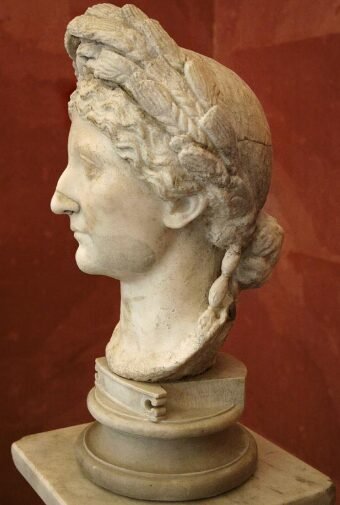
Born to Senator Marcus Livius Drusus Claudianus and Alfidia, Livia Drusilla first married Tiberius Claudius Nero, with whom she had two sons, Tiberius and Drusus. In 38 BC, she divorced Nero and married Octavian, later Augustus. Image: Bust of Livia, Hermitage Museum, Saint Petersburg, Russia





