Livia Drusilla: Emperor Augustus’s Wife
Livia Drusilla (59 BC–AD 29) was Roman empress from 27 BC to AD 14 as Augustus’s wife. Known as Julia Augusta after AD 14, she was the daughter of Marcus Livius Drusus Claudianus.
Initially married to Tiberius Claudius Nero, with whom she had sons Tiberius and Drusus, she wed Octavian (later Augustus) in 38 BC. Livia wielded significant influence, supported Augustus, and continued her political role during Tiberius’s reign. Deified in AD 42, she remains a pivotal figure in Roman history.
Birth and Family
Livia Drusilla, born on January 30, 59 BC, was the daughter of Marcus Livius Drusus Claudianus and Alfidia. Her family was of noble origin, aligned with the patrician class. Livia’s early life unfolded during the tumultuous final years of the Roman Republic.
Around 43 BC, she married her cousin Tiberius Claudius Nero, aligning her with the faction opposing Octavian (later Augustus). Her early years of marriage were marked by political instability, including her family’s temporary exile in Greece after the defeat of their allies during the civil wars. During this time, Livia gave birth to her first son, Tiberius, in 42 BC.

Image: Bust of Livia Drusilla.
Marriage to Augustus
In 39 BC, after returning to Rome during a period of political reconciliation, Livia met Octavian. Despite being married and pregnant with her second child, Drusus the Elder, she divorced Tiberius Claudius Nero to marry Octavian. Their marriage was expedited to secure their political partnership, occurring just days after the birth of Drusus. This union symbolized a shift in Livia’s fortunes, aligning her with Rome’s rising power. Although their marriage produced no additional children, it lasted 51 years, and Livia became an essential figure in Augustus’ life and governance.
Livia’s role as Augustus’ wife extended beyond the domestic sphere. She was a trusted confidant and advisor, influencing his policies and maintaining the image of a traditional Roman matron. Livia managed extensive estates, including copper mines in Gaul and papyrus marshes in Egypt, and held unprecedented financial independence for a Roman woman. Augustus honored her with public statues and entrusted her with political responsibilities, reflecting her unique position in Roman society.
Children
Livia’s marriage to Tiberius Claudius Nero produced two sons: Tiberius and Drusus. Both became prominent figures in Roman history.
- Tiberius: Born in 42 BC, he rose to become a celebrated military leader and eventually succeeded Augustus as emperor. Despite his strained relationship with his mother, Tiberius was deeply influenced by Livia’s political guidance throughout his life.
- Drusus the Elder: Born in 38 BC, he was a successful general who married Antonia Minor, Augustus’ niece. Drusus fathered several significant descendants, including Germanicus, Claudius, and Livilla. His untimely death in 9 BC from a riding accident curtailed his promising career.
Through her sons, Livia was the grandmother of emperors Claudius and Caligula, and the great-grandmother of Nero, solidifying her place in the Julio-Claudian dynasty.

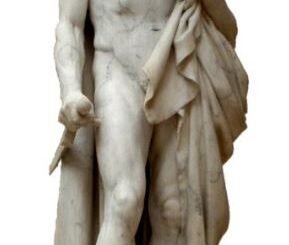
A statue of Livia and her son Tiberius (right)
Role as Empress
Livia exemplified Roman ideals of modesty, industry, and fidelity, serving as a role model for women of the empire. Her influence was not limited to her immediate family; she played a crucial role in Roman politics by advocating for allies and shaping the imperial court. Her management of estates and patronage ensured the financial stability and political success of her family.
Despite her public image of virtue, Livia was the subject of controversy and rumors. Ancient sources, including Tacitus and Cassius Dio, accused her of orchestrating the deaths of Augustus’ potential heirs, such as Marcellus, Gaius, and Lucius Caesar, to ensure Tiberius’ succession. While these claims lack definitive evidence, they highlight Livia’s reputation as a shrewd and ambitious figure.
Death of Augustus and Livia’s Role as Matriarch
Augustus died in AD 14, leaving Livia a central figure in the imperial court. He adopted her into the Julian family and granted her the honorific title Julia Augusta. These actions solidified her position as the matriarch of the Julio-Claudian dynasty. In his will, Augustus left a third of his wealth to Livia, demonstrating his trust in her stewardship.
Livia’s relationship with her son Tiberius, who succeeded Augustus, became increasingly strained. Tiberius resisted her influence and sought to distance himself from her control. This tension culminated in Tiberius avoiding her funeral and blocking her deification, actions that highlighted the complex dynamic between mother and son.

Image: Bronze statue head of Augustus.
Death and Legacy
Livia died in AD 29 at the age of 86. Despite Tiberius’ opposition, her grandson Claudius later deified her in AD 42, granting her the title Diva Augusta. Statues, coins, and public honors commemorated her role as the ideal Roman matron and the mother of emperors.
Livia’s legacy is multifaceted. She was a key figure in Rome’s transition from Republic to Empire, exemplifying the interplay of personal ambition and statecraft. As the wife of Augustus, she helped shape the image of the imperial family, blending domestic virtues with political acumen. Her influence extended beyond her lifetime, impacting the Julio-Claudian dynasty and Roman governance.
Cultural Impact
Livia’s life has inspired numerous portrayals in literature and popular culture. Ancient historians offered conflicting depictions, with Tacitus and Dio emphasizing her manipulative nature and Suetonius highlighting her wisdom and loyalty. Modern works, such as Robert Graves’ I, Claudius, fictionalize her as a calculating power broker, reflecting her enduring fascination as a historical figure.
Her residence at the Villa of Livia, adorned with frescoes depicting an idealized garden, and the discovery of the Augustus of Prima Porta statue there underscore her prominence in Roman art and architecture. These artifacts symbolize her role in Roman history and the cultural legacy of the Augustan age.
Livia Drusilla remains a pivotal figure in Roman history, embodying the complexities of imperial power, family dynamics, and legacy. Her life offers insights into the role of women in the Roman Empire and the intricate relationships that shaped the Julio-Claudian dynasty.
Frequently Asked Questions

What was Livia’s early life and family background?
Livia was born to Marcus Livius Drusus Claudianus and Alfidia. She married her cousin Tiberius Claudius Nero during the late Republic, aligning her family with political opposition to Octavian.
How did Livia’s marriage to Augustus come about?
In 39 BC, Livia divorced Tiberius Claudius Nero and married Octavian (later Augustus), despite being pregnant with her second son, Drusus the Elder. This union solidified her political influence.
What role did Livia play as empress?
Livia managed vast estates, influenced Augustus’ policies, and exemplified Roman matronly virtues such as modesty, fidelity, and industriousness. She also became a trusted political advisor.
What contributions did Livia’s sons, Tiberius and Drusus, make to Roman politics?
Drusus was a celebrated general and father to prominent descendants, including Claudius and Caligula. Tiberius became Augustus’ successor and later emperor.
Were there controversies surrounding Livia’s ambitions?
Livia was rumored to have orchestrated the deaths of rivals, including Augustus’ heirs, though modern scholars often dismiss these as political fabrications.
How did Livia’s role change after Augustus’ death?
Following Augustus’ death in AD 14, Livia was adopted into the Julian family, given the title Julia Augusta, and became a key figure in maintaining imperial continuity.
What was Livia’s relationship with her son Tiberius like during his reign?
Though influential early on, their relationship soured as Tiberius resented her political prominence. He blocked her deification and avoided her funeral.
What was Livia’s legacy in terms of cultural and political impact?
Livia influenced perceptions of imperial women as virtuous and politically astute. Her descendants included emperors like Tiberius, Claudius, Caligula, and Nero.
How did ancient sources portray Livia?
Ancient historians like Tacitus and Cassius Dio depicted her as manipulative, while Suetonius highlighted her wisdom and devotion. Modern literature often fictionalizes her as a cunning power broker.
What is the significance of the Augustus of Prima Porta statue and Livia’s villa?
The statue, discovered at Livia’s villa, symbolizes her association with Augustus and Roman art. The villa’s frescoes reflect her status and cultural patronage.
When was Livia deified, and what does this reflect about her legacy?
Livia was deified in AD 42 by her grandson Claudius, cementing her role as a revered figure in Roman history and a bridge between the Republic and the Empire.