What is the Roman Theatre of Orange, and where is it located?
The Roman Theatre of Orange, located in the town of Orange (ancient Arausio) in southern France, is one of the best-preserved ancient Roman theatres in the world. Constructed during the reign of Emperor Augustus in the 1st century AD, the theatre stands as a testament to the grandeur of Roman architecture, culture, and urban life.
Historical Background
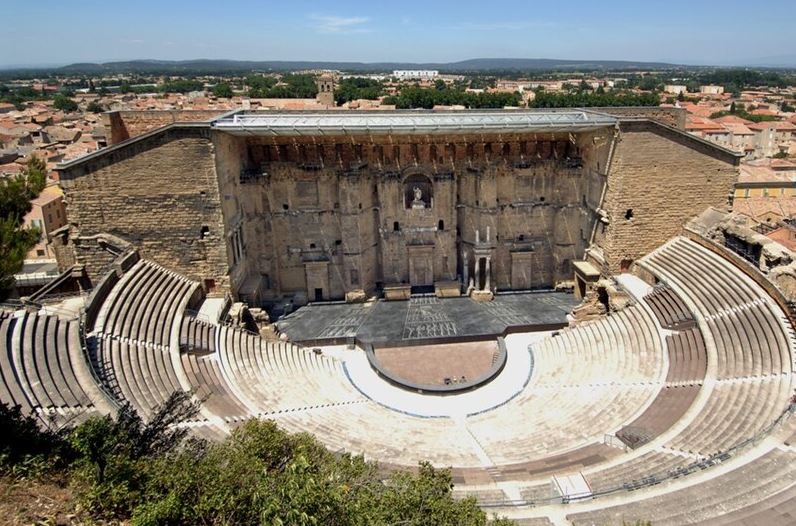
The Orange Theatre uniquely preserves its Scaenae frons, despite losing its ornate decoration.
The Roman Theatre of Orange was built as part of Rome’s efforts to integrate its provincial territories into the empire through cultural and infrastructural developments. Orange, originally a Gallic settlement, became a Roman colony in 35 BC, following Julius Caesar’s conquest of Gaul. The town was renamed Colonia Julia Firma Secundanorum Arausio, and its transformation into a Romanized urban center included the construction of public buildings, roads, and monuments.
The theatre served as a central hub for entertainment and propaganda. Performances showcased Roman culture, mythology, and values while reinforcing the emperor’s authority. It was part of a broader trend across the Roman Empire, where theatres acted as vehicles for social cohesion and a reflection of Roman ideals.
Everything you need to know about the Gauls and their long struggle against the Romans
Architectural Design
The theatre’s architectural features reflect the sophistication of Roman engineering and design. Its layout, dimensions, and materials exemplify the principles of Roman theatre construction, which drew inspiration from Greek theatres but adapted to suit Roman tastes and needs.
Structure and Dimensions
The theatre measures approximately 103 meters (338 feet) in width and could accommodate up over 8,500 spectators. Its seating arrangement, known as the cavea, is semi-circular and divided into three horizontal tiers, reflecting the social hierarchy of the audience. The lower tiers were reserved for elite citizens, while the upper tiers catered to the general populace.
Stage Building (Scaenae Frons)
The stage building, or scaenae frons, is the theatre’s most remarkable feature, standing over 37 meters (121 feet) tall. It is adorned with Corinthian columns, niches, and decorative sculptures, including statues of Roman gods and emperors. A prominent statue of Emperor Augustus, symbolizing his divine status and leadership, originally occupied the central niche.
Orchestra and Proscaenium
The orchestra, a semi-circular area in front of the stage, served as a space for musicians and performers. The proscaenium, or front stage, was framed by a richly decorated balustrade and provided a platform for actors.
Materials and Construction
The theatre was built using locally quarried limestone, showcasing Roman mastery in the use of durable materials. The precision of the masonry and the theatre’s capacity to withstand centuries of weathering testify to the expertise of Roman engineers.
Cultural Significance of the Roman Theatre of Orange
The Roman Theatre of Orange played a vital role in the social and cultural life of the city. It hosted a wide range of performances, including plays, pantomimes, poetry recitals, and musical concerts. These events were not merely entertainment but also tools for socialization and the dissemination of Roman ideology.
The theatre was a venue for classical Roman drama, featuring works by playwrights such as Plautus, Terence, and Seneca. These plays often conveyed moral lessons, glorified Roman achievements, and celebrated mythological themes.
The Roman Theatre of Orange is more than an ancient ruin; it is a living monument to the ingenuity, culture, and resilience of Roman civilization.
Beyond performances, the theatre served as a gathering place for civic events, religious ceremonies, and imperial celebrations. It was a space where citizens could collectively experience Roman identity and values.
The theatre’s performances were a means of educating the populace about Roman history, culture, and governance. The visual and auditory impact of these spectacles reinforced loyalty to the empire.
Decline and Transformation
With the decline of the Western Roman Empire in the 4th and 5th centuries AD, the Roman Theatre of Orange fell into disuse. The rise of Christianity and the associated decline of pagan traditions led to the abandonment of theatres, which were often viewed as symbols of Roman decadence.
During the medieval period, the theatre was repurposed for various uses. Its spacious interiors provided shelter for settlers, and its stonework was quarried for construction materials. Despite these changes, the theatre retained much of its structural integrity, a rarity among ancient Roman theatres.
Rediscovery and Preservation
The theatre’s significance was rediscovered during the Renaissance when interest in classical antiquity surged across Europe. Systematic excavations and restoration efforts began in the 19th century, spearheaded by figures such as Prosper Mérimée, a French historian and inspector of historical monuments.
Restoration work focused on stabilizing the structure, reconstructing damaged sections, and preserving decorative elements. The scaenae frons received special attention due to its architectural and artistic importance.
UNESCO World Heritage Site
In 1981, the Roman Theatre of Orange was designated a UNESCO World Heritage Site, recognizing its outstanding cultural and historical value. This status has ensured ongoing preservation efforts and increased global awareness of the site.
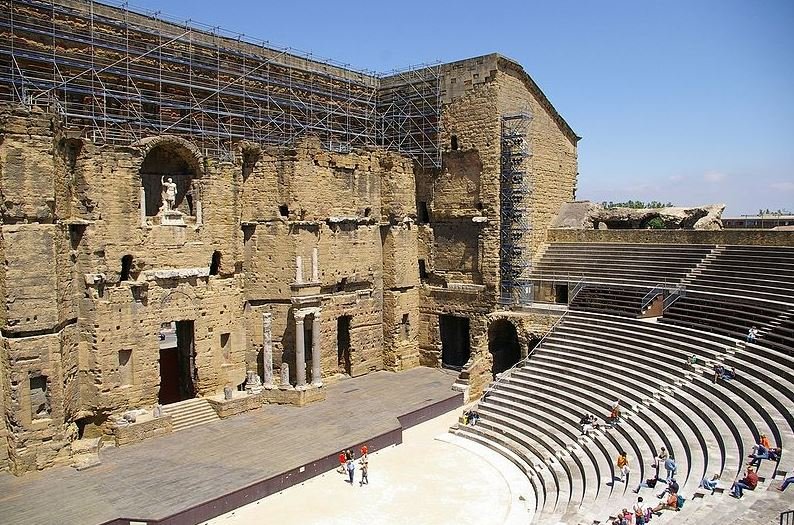
Renovation works at the theatre in 2005.
Les Chorégies d’Orange and its modern-day Relevance
Since 1869, the theatre has hosted Les Chorégies d’Orange, an annual opera festival that combines classical music with the dramatic ambiance of the ancient setting. This event is one of the oldest and most prestigious opera festivals in Europe.
The theatre serves as an educational resource, offering guided tours, exhibitions, and workshops that explore Roman history, architecture, and performing arts.
Today, the Roman Theatre of Orange is a vibrant cultural landmark and a symbol of the enduring legacy of Roman civilization.
As one of the most visited attractions in southern France, the theatre contributes significantly to the local economy. Its preservation and promotion have transformed it into a centerpiece of cultural tourism.
Architectural Comparisons and Legacy
The Roman Theatre of Orange is often compared to other ancient theatres, such as the Theatre of Pompey in Rome and the Theatre of Aspendos in Turkey. While each theatre reflects regional variations and local materials, the Theatre of Orange stands out for its exceptional preservation and monumental stage building.
Its influence can be seen in later architectural traditions, from Renaissance theatres to modern performance venues, which continue to draw inspiration from the principles of Roman theatre design.
Questions and Answers
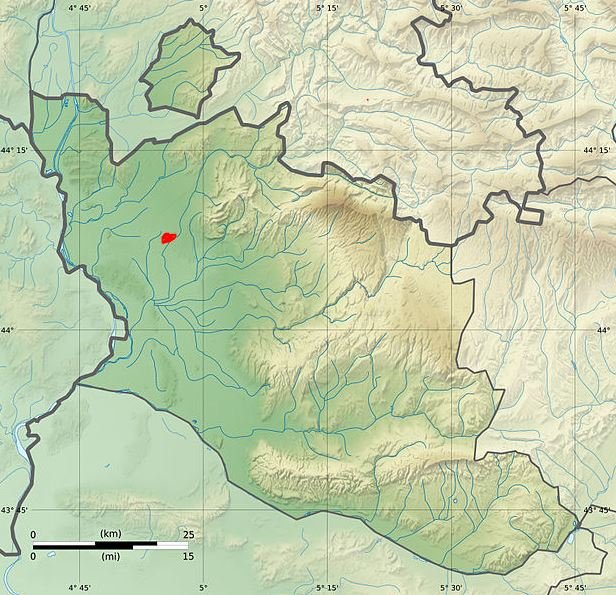
The exact location (in red) of the Roman Theatre of Orange on a map of Vaucluse in France.
When was the Roman Theatre of Orange built, and how many spectators could it accommodate?
It was built in the 1st century CE and could accommodate over 8,500 spectators.
What architectural feature distinguishes the Roman Theatre of Orange?
Its monumental stage wall, featuring an ornate façade with columns, niches, and doorways, is its most striking feature.
What recognition did the Roman Theatre of Orange receive in 1981?
It was designated a UNESCO World Heritage Site.
The Roman Theatre of Orange is one of the best-preserved Roman theatres in existence. It is located in the ancient city of Arausio, now modern-day Orange, in southern France.
What was Arausio, and how did it come under Roman influence?
Arausio was a Celtic settlement named after a local spring deity. It came under Roman influence in the 2nd century BCE during campaigns to assist Massalia (modern Marseille) against regional tribes.
What contributed to the prosperity of Arausio as a Roman colony?
Its strategic location on trade routes and fertile lands contributed to its prosperity.
What were some of the notable Roman structures in Arausio?
The city featured temples, a forum, baths, a triumphal arch, and the Roman theatre.
What materials were used to construct the theatre, and how was it designed?
The theatre was built using local yellow and white limestone. Its semi-circular seating area (cavea) was carved into the side of St. Eutrope Hill and had three tiers of seats with separate entrances for efficient crowd management.
Who were the VIPs in the theatre, and how were their seats marked?
Municipal councillors (decurions) were VIPs, and some seats in the first three rows still bear inscriptions marking their use.
What are the dimensions and features of the stage wall (scaenae frons)?
The stage wall measures 103 meters in length, 13 meters in depth, and 37 meters in height. It featured decorative elements such as marble and granite columns, pilasters, mosaics, and a central niche with a 3.5-meter statue of Emperor Augustus.
How was the stage (pulpitum) designed, and what was its purpose?
The stage, over 60 meters long, was made of wood and enclosed by the stage wall and adjoining dressing rooms. It provided a platform for performances and was separated from the orchestra by a low wall.
What role did the exterior of the stage wall serve?
The exterior had 17 arched doorways for access to the stage, staircases, and independent rooms. It also featured pilasters, waterspouts, and monumental arched entrances.
What performances and celebrations were hosted at the theatre in antiquity?
The theatre hosted pantomimes, mime shows, and festivals celebrating the imperial cult.
How did the theatre’s role change over time?
It fell into disuse, its stones were repurposed, and it was later converted into a fortress and a residential area.
What restoration efforts were undertaken in the 19th century?
Architect Auguste Caristie led restoration efforts, preserving the theatre and restoring its grandeur.