What triggered the War of the Spanish Succession?
The War of the Spanish Succession (1701–1714) was one of the most significant conflicts of the early 18th century, involving many of Europe’s great powers. The war arose from a struggle over who should succeed to the Spanish throne following the death of Charles II, the last Habsburg king of Spain, who died without an heir. This led to a complex web of alliances, battles, and political maneuvering, as the major European powers vied to control Spain and its vast colonial empire.
The conflict had far-reaching consequences, reshaping the political landscape of Europe and setting the stage for the balance of power that would dominate the continent for much of the 18th century. It also had significant impacts on the colonial territories in the Americas and other parts of the world.
Spanish Inquisition: Meaning, Torture Methods, Deaths, & Shocking Facts
In this exploration below, World History Edu will look at the war’s causes, major events, key players, and long-term effects.
Background and Causes
The root cause of the War of the Spanish Succession lay in the question of who would succeed Charles II of Spain. Charles, a member of the powerful Habsburg dynasty, had suffered from lifelong health problems, which left him incapable of producing an heir. His death without an heir in 1700 triggered a major European crisis, as several European dynasties had claims to the Spanish throne. The most significant contenders were the French Bourbon dynasty, represented by Philip of Anjou, the grandson of King Louis XIV of France, and the Austrian Habsburgs, represented by Archduke Charles, son of the Holy Roman Emperor Leopold I.
Spain was a vast empire at this time, encompassing not only its European territories but also its colonies in the Americas, Asia, and Africa. Control of Spain would give its new ruler an enormous amount of power and influence, so the question of who would inherit the throne was of great importance to the balance of power in Europe.
Two main factions emerged in the struggle for the Spanish throne:
- The Bourbon Claim: Louis XIV of France supported the claim of his grandson, Philip of Anjou, to the Spanish throne. If Philip succeeded, it would mean a close alliance between France and Spain, creating a powerful Franco-Spanish bloc in Europe. This prospect alarmed many of France’s rivals, particularly England, the Dutch Republic, and Austria.
- The Habsburg Claim: The Austrian Habsburgs, who had been closely linked to the Spanish Habsburgs, put forward their own candidate, Archduke Charles. The Habsburgs wanted to maintain control of Spain to prevent it from falling into the hands of the Bourbons and to keep France from becoming too powerful.
The possibility of a French-dominated Spain posed a threat to the balance of power in Europe, especially to England and the Dutch Republic, who were wary of France’s growing influence under Louis XIV. Meanwhile, the Holy Roman Empire (Austria) sought to maintain its Habsburg dynasty’s traditional influence over Spain. Thus, the stage was set for a major European conflict, with the Spanish succession question at its center.
The Start of the War (1701–1702)
Charles II of Spain had named Philip of Anjou as his successor in his will, and upon Charles’ death in 1700, Philip was proclaimed King of Spain as Philip V. This decision immediately sparked opposition from England, the Dutch Republic, and Austria, who feared the creation of a powerful Bourbon alliance between France and Spain. In 1701, these powers formed the Grand Alliance to oppose France and Spain. The Grand Alliance was primarily composed of England (later Great Britain, after the union with Scotland in 1707), the Dutch Republic, the Holy Roman Empire (Austria), and several German and Italian states.
In response, France and Spain formed their own alliance, and war broke out in 1701. The conflict quickly spread across Europe, with fighting taking place in several key theaters: the Spanish Netherlands (modern Belgium), Italy, Spain, and the German states.
Major Theaters of War
The War of the Spanish Succession was fought across multiple fronts, each involving its own battles and campaigns. The four major theaters of the war were:
- The Spanish Netherlands and the Rhineland: Much of the early fighting took place in the Spanish Netherlands (modern Belgium), where the Grand Alliance sought to prevent French expansion into this strategically important region. The Rhineland, on the border between France and the Holy Roman Empire, was another key front in the war.
- Italy: Italy was a battleground for the French and the Austrians, both of whom had interests in the region. The Duchy of Milan, in particular, was a prize sought by both sides.
- Spain: The Iberian Peninsula became a major theater of the war, as the Allies sought to challenge Philip V’s control of Spain itself. They launched several invasions of Spain, aiming to install Archduke Charles as the Spanish king.
- The Colonial Theater: The war also extended to the colonies, particularly in North America, where it became known as Queen Anne’s War. Fighting took place between French, British, and Spanish colonists, along with their Indigenous allies, in regions such as New England, Acadia, the Carolinas, and the Caribbean.
Key Players
Several important military and political leaders emerged during the War of the Spanish Succession. Among the most notable were:
- Louis XIV of France: The “Sun King,” Louis XIV was the most powerful monarch in Europe at the time and a staunch defender of his grandson Philip’s claim to the Spanish throne. Louis sought to expand French influence across Europe, but his ambitions were checked by the Grand Alliance.
- Queen Anne of Great Britain: Queen Anne came to the throne of England (later Great Britain) in 1702, after the death of William III. She continued England’s participation in the Grand Alliance, and the war became known as Queen Anne’s War in the colonies.
- Archduke Charles of Austria: The Habsburg claimant to the Spanish throne, Archduke Charles, played a central role in the war, as the Grand Alliance sought to place him on the Spanish throne instead of Philip V. After 1711, Charles became Holy Roman Emperor, further complicating the political landscape.
- Duke of Marlborough: John Churchill, the Duke of Marlborough, was one of the most successful and celebrated military commanders of the war. He led British and Allied forces to several important victories, including the Battle of Blenheim (1704).
- Prince Eugene of Savoy: An Austrian general and one of the most talented commanders of the war, Prince Eugene of Savoy worked closely with Marlborough and was instrumental in securing victories for the Grand Alliance.
Major Battles and Campaigns
The War of the Spanish Succession saw numerous significant battles and military campaigns across Europe. Some of the most important battles include:
- Battle of Blenheim (1704): One of the most decisive battles of the war, Blenheim was a major victory for the Grand Alliance. The forces of the Duke of Marlborough and Prince Eugene of Savoy defeated a combined French and Bavarian army, halting French advances in southern Germany and shifting the momentum of the war.
- Battle of Ramillies (1706): Another major victory for the Duke of Marlborough, the Battle of Ramillies resulted in the Allies gaining control of much of the Spanish Netherlands. The French were forced into retreat, and the balance of power in the region shifted in favor of the Grand Alliance.
- Battle of Oudenarde (1708): In this battle, Marlborough again led the Allies to victory over the French in the Spanish Netherlands, further weakening French influence in the region.
- Siege of Turin (1706): In Italy, Prince Eugene of Savoy led the successful defense of the city of Turin against a French siege. This victory secured Austrian control of northern Italy.
- Battle of Almanza (1707): A major defeat for the Grand Alliance, the Battle of Almanza saw a Franco-Spanish army defeat the Allies in Spain, securing Philip V’s control over much of the Iberian Peninsula.
- Siege of Barcelona (1705–1706): The Allies briefly captured Barcelona and much of Catalonia, installing Archduke Charles as a rival king in Spain. However, their control of the region was short-lived, and Philip V eventually regained control.
The Treaty of Utrecht (1713)
After more than a decade of fighting, both sides were weary of the war, and peace negotiations began in 1712. The conflict officially ended with the signing of the Treaty of Utrecht in 1713, followed by additional treaties in Rastatt and Baden in 1714. The Treaty of Utrecht had significant consequences for the balance of power in Europe and for the colonial empires of the warring nations.
Key terms of the Treaty of Utrecht included:
- Philip V Recognized as King of Spain: Philip of Anjou was recognized as the legitimate king of Spain, but it was agreed that the French and Spanish crowns would remain separate, preventing the formation of a powerful Franco-Spanish union that had been feared by the Grand Alliance.
- Territorial Adjustments: Spain ceded several key territories to other European powers. Britain gained Gibraltar and Minorca, securing a strategic naval base in the Mediterranean. Spain also ceded the Spanish Netherlands (modern Belgium), Naples, Milan, and Sardinia to Austria. Additionally, Britain gained Newfoundland, Acadia, and the Hudson Bay region from France, strengthening its colonial position in North America.
- Asiento Agreement: Britain was granted the exclusive right to supply enslaved Africans to Spain’s American colonies, a highly profitable concession known as the asiento.
- Recognition of the Hanoverian Succession: France agreed to recognize the Hanoverian succession in Britain, ensuring that Queen Anne’s Protestant heirs, the House of Hanover, would succeed to the British throne.
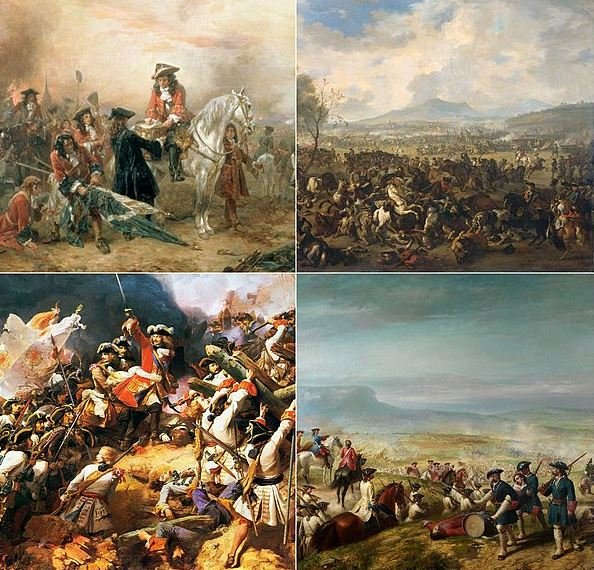
The War of the Spanish Succession was a complex and far-reaching conflict that not only resolved the question of who would inherit the Spanish throne but also reshaped the political, colonial, and economic order of Europe and the world.
Consequences of the War
The War of the Spanish Succession had significant long-term effects on Europe and the world, reshaping the political, colonial, and economic landscape for decades to come.
- Balance of Power in Europe: The war helped to establish a new balance of power in Europe. While France retained significant influence, its territorial ambitions were checked, and it was forced to cede important territories to Britain and Austria. The Austrian Habsburgs gained control of much of Italy and the Spanish Netherlands, while Britain emerged as a dominant naval power.
- Decline of Spain: The war confirmed the decline of Spain as a great European power. Although Philip V retained the Spanish throne, Spain lost much of its European territory and influence. The once-mighty Spanish Empire was now significantly reduced, though it still retained its vast overseas colonies.
- Rise of Britain: The war marked the beginning of Britain’s rise as a global superpower. With the acquisition of key territories like Gibraltar, Minorca, Newfoundland, and Acadia, Britain strengthened its naval and colonial position. The asiento agreement gave Britain control over the lucrative slave trade to Spanish America, further boosting its economic power.
- Colonial Consequences: The war had significant effects on the colonial world, particularly in North America. Britain’s acquisition of Acadia and Newfoundland from France, as well as its control of the Hudson Bay region, gave it a stronger foothold in North America. This set the stage for further colonial rivalry between Britain and France, which would culminate in the French and Indian War (1754–1763).
- Impact on Indigenous Nations: The war, particularly in the Americas, involved various Indigenous nations, who were often drawn into the conflict as allies of the European powers. The Treaty of Utrecht did not address the concerns or territorial claims of these Indigenous groups, leading to further conflict and displacement in the years following the war.
Legacy of the War
The War of the Spanish Succession had a lasting legacy, shaping the political and colonial order of Europe and the wider world. It confirmed the rise of Britain as a dominant global power, while the decline of Spain and the checking of French ambitions marked a shift in the European balance of power. The treaties that ended the war laid the groundwork for future conflicts, particularly between Britain and France, as they competed for dominance in Europe and the Americas.
The war also had important consequences for the development of diplomacy and international relations. The Treaty of Utrecht, in particular, is often seen as a landmark in the history of diplomacy, as it established principles of territorial sovereignty and the balance of power that would shape European politics for much of the 18th century.
Questions and Answers on the War of the Spanish Succession
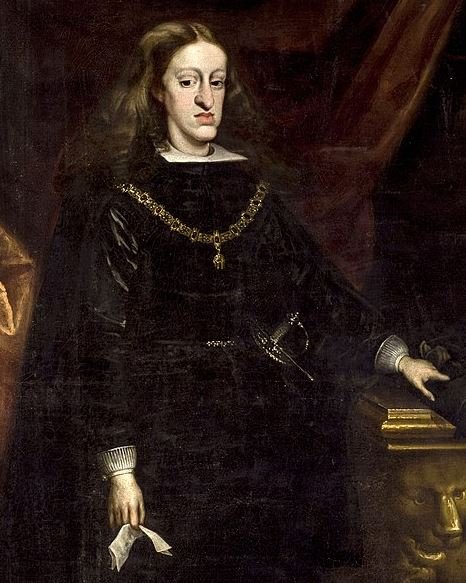
The war was triggered by the death of Charles II of Spain in 1700, who left no heirs. This led to a power struggle between supporters of the Bourbon and Habsburg dynasties for control of the Spanish Empire. Image: Charles II.
Who were the main claimants to the Spanish throne after Charles II’s death?
The main claimants were Philip of Anjou, grandson of Louis XIV of France, supported by France and most of Spain, and Archduke Charles of Austria, backed by the Grand Alliance, which included Austria, Great Britain, and the Dutch Republic.
What was the Grand Alliance, and who were its primary members?
The Grand Alliance was a coalition formed to oppose the Bourbon claim to the Spanish throne. Its primary members were Austria, Great Britain, and the Dutch Republic.
What other related conflicts were occurring during the War of the Spanish Succession?
Related conflicts during this period included the Great Northern War (1700–1721) and Queen Anne’s War in North America, which were connected to the larger struggle for European dominance.
Why was control over Spain’s empire so significant in Europe at the time?
Although Spain’s power had diminished by 1701, its empire still included territories like the Spanish Netherlands, parts of Italy, and vast lands in the Americas. Control of these regions by either France or Austria could upset the balance of power in Europe.
What was the initial advantage in the war, and how did it change?
France held the early advantage in the war, but by 1706, the Allies (Austria, Great Britain, and the Dutch Republic) gained ground, pushing France onto the defensive. By 1709, Philip V had secured his position as King of Spain.
How did the death of Emperor Joseph I of Austria affect the war?
Joseph I’s death in 1711, which led to Archduke Charles becoming Holy Roman Emperor, made a union of Spain and Austria as undesirable as one between Spain and France. This shifted British policy, with the new government arguing that continuing the war was pointless.
What role did British subsidies play in the war?
British subsidies were the main financial support for the Grand Alliance. When Britain withdrew from the war, it led to peace negotiations that eventually ended the conflict.
What were the key outcomes of the Peace of Utrecht in 1713?
The Peace of Utrecht confirmed Philip V as King of Spain, but he and his descendants renounced their claims to the French throne, preventing a union between Spain and France. Spain ceded territories such as the Spanish Netherlands and parts of Italy to Austria and Savoy, and Britain gained Gibraltar, Menorca, and trade concessions in Spanish America.
How did the war affect the Dutch Republic?
Despite securing the Barrier Treaty, which granted the Dutch defensive fortifications in the Spanish Netherlands, the war marked the beginning of the Dutch Republic’s decline as a significant European power.
What was the impact of the war on France?
Although Louis XIV succeeded in placing his grandson on the Spanish throne, France emerged from the war financially weakened due to the immense costs of fighting the conflict.





