What was Mao Zedong’s Cultural Revolution?

On September 4, 1966, the Cultural Revolution was officially launched by Mao Zedong. This movement aimed to enforce communism by removing capitalist, traditional, and cultural elements from Chinese society, leading to widespread chaos and persecution. Image: A propaganda oil painting of Mao during the Cultural Revolution (1967)
Mao Zedong’s Cultural Revolution, initiated in 1966, stands as one of the most tumultuous and consequential periods in modern Chinese history. Officially known as the “Great Proletarian Cultural Revolution,” this socio-political movement was aimed at preserving Chinese communism by purging remnants of capitalist and traditional elements from Chinese society. It was also intended to consolidate Mao Zedong’s control over the Communist Party of China (CPC) and to revive the revolutionary spirit that he believed was waning. The Cultural Revolution lasted until Mao’s death in 1976 and profoundly impacted Chinese society, politics, and economy.
Origins and Objectives

Mao Zedong
The origins of the Cultural Revolution can be traced back to the late 1950s and early 1960s, when Mao Zedong’s leadership faced significant challenges. The failure of the Great Leap Forward, a radical economic and social campaign launched in 1958 to rapidly industrialize China, led to widespread famine and economic distress. The disastrous outcomes of this campaign undermined Mao’s authority and exposed the failures of his policies. By 1966, Mao, seeking to reassert his control and renew revolutionary fervor, launched the Cultural Revolution.
The stated objectives of the Cultural Revolution were to:
- Combat Bourgeois Elements: Mao aimed to eliminate what he perceived as capitalist, traditional, and revisionist elements within the Communist Party, government, and society at large. He believed that these elements threatened the purity of Marxist ideology and the socialist path of China.
- Revitalize the Communist Party: Mao sought to purge the Communist Party of perceived inefficiencies and corruption. He aimed to revitalize the party’s revolutionary zeal and commitment to Marxist-Leninist principles.
- Empower the Youth: The movement was designed to mobilize China’s youth, particularly students, to challenge established authority and push for radical changes. Mao saw the youth as a revolutionary force capable of driving the Cultural Revolution forward.
The Role of the Red Guards
One of the most recognizable features of the Cultural Revolution was the formation and activities of the Red Guards. These were radical student groups that emerged in 1966 and were instrumental in implementing Mao’s policies. The Red Guards were encouraged to attack the “Four Olds”—old customs, old culture, old habits, and old ideas. Their activities included raiding homes, destroying historical artifacts, and persecuting individuals deemed counter-revolutionary.
The Red Guards played a significant role in the violent and chaotic nature of the Cultural Revolution. They targeted intellectuals, professionals, and perceived enemies of the revolution, often subjecting them to public humiliation, violence, and forced labor. The movement also led to widespread purges within the Communist Party, with many high-ranking officials being accused of treason, counter-revolutionary activities, or other crimes.
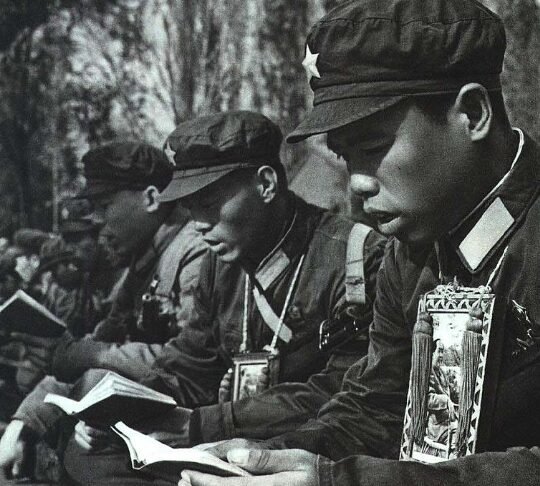
People’s Liberation Army
Cultural and Social Impact
The Cultural Revolution had profound cultural and social impacts on China. The campaign to eradicate the “Four Olds” led to the destruction of numerous historical and cultural sites. Temples, monuments, and ancient texts were destroyed in the name of revolutionary zeal. Traditional Chinese customs and practices were also heavily criticized and often banned.
Education was severely disrupted as schools and universities were closed, and many educators were persecuted or sent to rural areas for re-education. The emphasis shifted from academic learning to ideological training, which had long-term effects on China’s intellectual and educational development.

Image: Mao and Lin Biao surrounded by rallying Red Guards in Beijing, December 1966
Political Repercussions
The Cultural Revolution had significant political repercussions for China. It created a power struggle within the Communist Party and among China’s leadership. Mao’s actions led to the downfall of several prominent figures, including President Liu Shaoqi and General Secretary Deng Xiaoping, who were accused of being “capitalist roaders” and counter-revolutionaries. The purge of these leaders allowed Mao to consolidate his power and assert his ideological dominance.
However, the Cultural Revolution also led to a chaotic and unstable political environment. The constant upheaval created uncertainty and weakened the central authority. The movement’s radicalism eventually led to factionalism and violence, with different groups vying for influence and power.
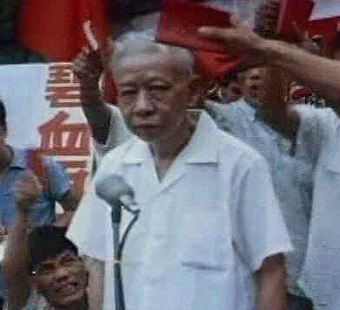
Once considered as the successor to Chairman Mao, Liu Shaoqi and some of his family members were heavily persecuted, with Shaoqi being labelled “commander of China’s bourgeoisie headquarters” and even China’s foremost “capitalist-roader” after his big fallout with Mao. Image: Liu Shaoqi being subjected to public humiliation at a rally during the Cultural Revolution
Economic Consequences
The economic consequences of the Cultural Revolution were severe. The disruption of education and the targeting of skilled professionals led to a shortage of qualified personnel in various sectors. Economic development was hindered as the focus shifted away from production and modernization toward ideological purity. The upheaval also caused significant damage to industrial and agricultural production, exacerbating the economic difficulties that China faced during this period.
The End of the Cultural Revolution
The Cultural Revolution began to wind down after Mao Zedong’s death in 1976. The movement lost momentum as Mao’s health deteriorated, and his death marked the end of an era. The new leadership, led by Deng Xiaoping, began to dismantle the policies of the Cultural Revolution and restore order.
In 1978, the CPC officially denounced the Cultural Revolution as a “catastrophe” and began a process of political and economic reform. Deng Xiaoping, who had been rehabilitated, played a key role in this process, advocating for economic modernization and opening up China to the global market. The end of the Cultural Revolution marked the beginning of a new era in China, characterized by economic reforms and a shift away from radical ideological campaigns.
Legacy and Reflection
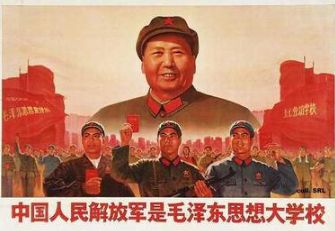
The Cultural Revolution remains a significant chapter in China’s history, shaping its political and cultural landscape and serving as a reminder of the consequences of extreme ideological campaigns. Image: A poster from the Cultural Revolution, featuring an image of Chairman Mao, and published by the government of the People’s Republic of China.
The legacy of the Cultural Revolution remains a contentious and sensitive issue in China. The movement left a deep scar on Chinese society, with millions of lives affected by persecution, violence, and political purges. The Cultural Revolution is often remembered as a period of extreme ideological fervor, social chaos, and cultural destruction.
In contemporary China, the Cultural Revolution is officially regarded as a historical error, and the Communist Party has sought to distance itself from the radicalism of that era. The period is studied in history books and academic research, but public discussion about it is often limited and controlled.
The Cultural Revolution also had lasting effects on Chinese politics and society. It reshaped the Communist Party, led to the rise of Deng Xiaoping and his reform policies, and influenced China’s approach to governance and economic development. The trauma of the Cultural Revolution also contributed to a cautious and pragmatic approach in the subsequent years, as China sought to avoid the mistakes of the past and focus on modernization and growth.
In Conclusion
Mao Zedong’s Cultural Revolution was a defining period in Chinese history, marked by ideological zeal, social upheaval, and political purges. It aimed to enforce communist ideals and reassert Mao’s authority but resulted in widespread chaos, cultural destruction, and economic setbacks. The movement’s legacy is complex, reflecting both the radical aspirations of its initiators and the profound suffering experienced by many during this turbulent era.
Questions and Answers about the Cultural Revolution
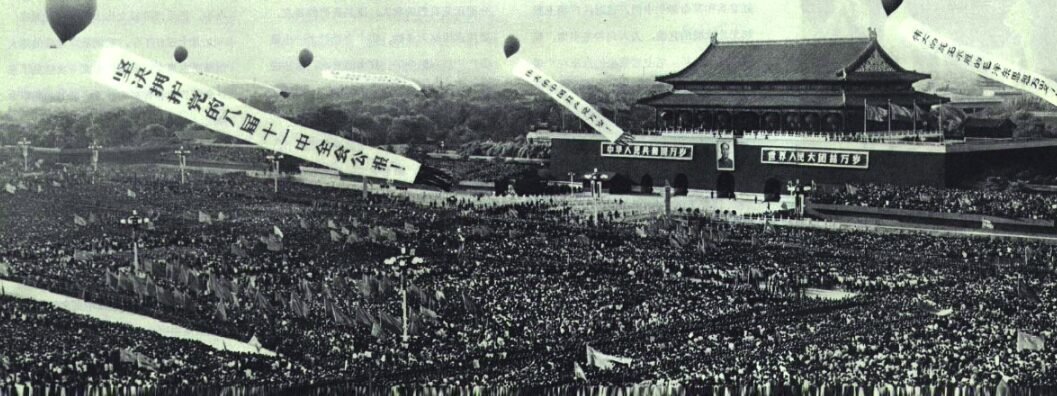
The Cultural Revolution, formally known as the Great Proletarian Cultural Revolution, was a sociopolitical movement launched by Mao Zedong in China from 1966 to 1976. Its goal was to preserve Chinese socialism by eliminating capitalist and traditional elements from Chinese society. Image: Tiananmen Square on 15 September 1966, the occasion of Chairman Mao’s third of eight mass rallies with Red Guards in 1966.
Why did Mao Zedong initiate the Cultural Revolution?
Mao Zedong initiated the Cultural Revolution to combat what he saw as bourgeois elements within the government and society that were threatening to restore capitalism. The movement aimed to reassert his control and to align Chinese society more closely with socialist ideals.
When did the Cultural Revolution begin and end?
The Cultural Revolution began in May 1966 and lasted until Mao Zedong’s death in September 1976.

Image: “Sweep Away All Cow Demons and Snake Spirits”, an editorial published on the front page of People’s Daily on 1 June 1966, calling for the proletariat to “completely eradicate” the “Four Olds that have poisoned the people of China for thousands of years, fostered by the exploiting classes”
What was the role of the Red Guards during the Cultural Revolution?
The Red Guards were groups of radical youth, primarily students, who were mobilized by Mao Zedong to enforce the goals of the Cultural Revolution. They targeted individuals and institutions they deemed representative of the “Four Olds” (old ideas, old culture, old customs, and old habits), leading to widespread violence and upheaval.
What was the “Little Red Book” and what role did it play in the Cultural Revolution?
The “Little Red Book,” officially titled “Quotations from Chairman Mao Tse-tung,” was a collection of Mao Zedong’s sayings and writings. It became a key symbol of Mao’s cult of personality and was widely used by Red Guards and supporters to promote and justify the principles of the Cultural Revolution.
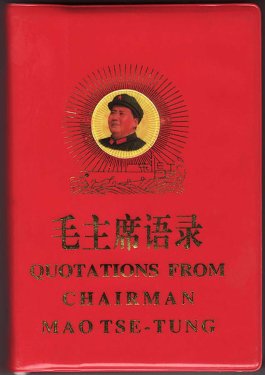
Mao ordered that every member of the communist party carry the “Little Red Book” on them in order to instill his philosophies and ideas (i.e. Maoism). Image: 1993 centenary reprint of the 1966 bilingual edition, published by the People’s Republic of China Printing Office
What were the “Four Olds,” and how were they targeted during the Cultural Revolution?
The “Four Olds” referred to old ideas, old culture, old customs, and old habits. During the Cultural Revolution, these were targeted for destruction by the Red Guards and other revolutionary groups. This included the vandalism of historical and cultural sites, as well as persecution of individuals associated with these old elements.
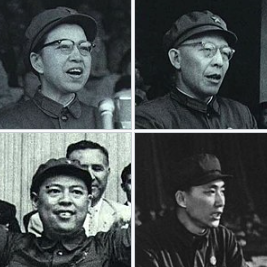
Gang of Four: Top row (L–R): Jiang Qing, Zhang Chunqiao
How did the Cultural Revolution affect China’s education system?
The Cultural Revolution had a devastating impact on China’s education system. Schools and universities were closed, and the National College Entrance Examination was cancelled. This disruption hindered educational development and left a lasting impact on generations of students.

Image: Red Guards marching in Guizhou, 1967. The banner in the center reads: “The People’s Liberation Army firmly supports the proletarian revolutionary faction.”
What were some of the major violent incidents associated with the Cultural Revolution?
The Cultural Revolution was marked by severe violence, including massacres in Guangxi, where reports of cannibalism emerged, and other mass killings in cities like Beijing, and regions such as Inner Mongolia, Guangdong, Yunnan, and Hunan. Estimates of the death toll vary widely but generally range from 1 to 2 million.
Who were the key figures involved in the Cultural Revolution?
Key figures in the Cultural Revolution included Mao Zedong, who launched the movement; Lin Biao, who initially supported Mao but fell from power in 1971; and the Gang of Four, including Jiang Qing, who were influential radicals during the later years of the Revolution. The Gang of Four were arrested following Mao’s death.
What was the Down to the Countryside Movement?
The Down to the Countryside Movement was a policy during the Cultural Revolution that relocated over 10 million urban youths to rural areas. This policy was intended to re-educate them through manual labor and align them more closely with revolutionary ideals.
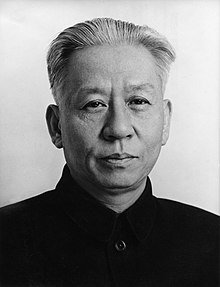
In 1966, Mao’s “Bombard the Headquarters” targeted Liu Shaoqi, then President, over the work-teams issue, branding him as part of the “bourgeois” party headquarters. Image: Liu Shaoqi
How did the Cultural Revolution end and what were its consequences?
The Cultural Revolution ended with Mao Zedong’s death in 1976. Deng Xiaoping emerged as a new leader and initiated the Boluan Fanzheng program, which sought to reverse many of the policies of the Cultural Revolution and introduce economic reforms. In 1981, the Communist Party officially condemned the Cultural Revolution, acknowledging its severe negative impact on the country. The period is remembered as a time of chaos and significant social and political disruption.





