What is the Dragon Boat Festival?
The Dragon Boat Festival (Duanwu Festival) is a traditional Chinese holiday celebrated on the fifth day of the fifth lunar month, usually in late May or early June, featuring dragon boat races and the eating of zongzi (sticky rice dumplings).
Summary
The Dragon Boat Festival, known in Chinese as Duānwǔ Jié (端午节), is one of the most culturally significant celebrations in China. Falling on the fifth day of the fifth month in the traditional Chinese calendar, this festival typically occurs in late May or early June in the Gregorian calendar. The holiday is deeply rooted in ancient traditions and customs, combining elements of mythology, history, and community festivities. It is widely recognized for its thrilling dragon boat races, the preparation and consumption of sticky rice dumplings called zongzi, and practices aimed at warding off evil spirits and diseases.
In 2009, UNESCO recognized the Dragon Boat Festival as part of the Representative List of the Intangible Cultural Heritage of Humanity. This marked a significant milestone, making it the first Chinese festival to be included in the list. Over time, the festival has not only retained its historical and cultural essence but has also gained international prominence.
Etymology and Regional Names
The festival’s name varies across different Chinese dialects and regions. The term “Duānwǔ” (端午) is interpreted as “Starting Five,” which references its occurrence on the fifth day of the fifth month. However, an alternative interpretation links “wǔ” (午) with “five” (五) due to their similar pronunciation, reinforcing the date association.
In Cantonese, the festival is known as “Tuen Ng Festival” (端五节) in Hong Kong and “Tun Ng” in Macau. The Portuguese translation, “Festividade do Barco-Dragão,” also references the festival’s iconic dragon boat races. Outside China, the festival shares similarities with Korean Dano and Vietnamese Tết Đoan Ngọ, both of which occur around the same time and involve similar cultural elements.
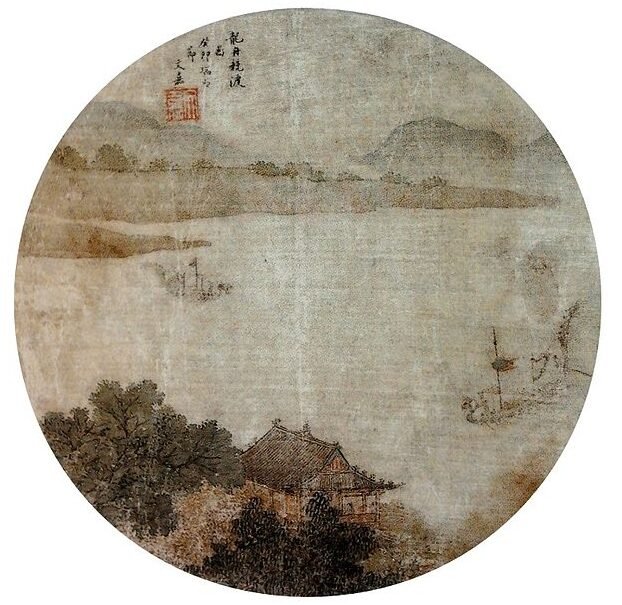
An 18th century depiction of the Dragon Boat Festival.
The Historical Origins
Historically, the fifth lunar month was considered an unlucky period, often associated with plagues, poisonous creatures, and misfortune. The fifth day of this month was believed to be particularly inauspicious. To counteract these threats, people developed rituals that included hanging calamus and artemisia leaves, burning incense, and drinking realgar wine, all believed to ward off evil spirits and diseases.
The Dragon Boat Festival is a remarkable blend of legend, tradition, and communal celebration.
The most popular legend associated with the Dragon Boat Festival revolves around Qu Yuan, a patriotic poet and minister of the ancient state of Chu during the Warring States Period (c. 340–278 BCE). Qu Yuan was known for his loyalty and wisdom, but when he opposed his king’s decision to ally with the rival state of Qin, he was exiled. Overcome with despair after learning that the Chu capital had fallen to Qin forces, he drowned himself in the Miluo River.
According to legend, local villagers rushed out in their boats to search for Qu Yuan, but they were unable to recover his body. To prevent fish from eating his remains, they threw balls of sticky rice into the river—a practice that evolved into the modern tradition of making and eating zongzi. The boat races, symbolizing the villagers’ efforts to save Qu Yuan, became a central feature of the festival.
While Qu Yuan’s story is the most widely accepted, other historical figures are also linked to the festival.
- Wu Zixu (died 484 BCE): A minister from the state of Wu, Wu Zixu was forced to commit suicide by King Fuchai. His body was thrown into the river, and in some parts of China, he is commemorated during the Dragon Boat Festival.
- Cao E (130–144 CE): In Zhejiang Province, the festival honors Cao E, a young girl who drowned while searching for her father’s body in a river. Her self-sacrifice is remembered through local ceremonies.
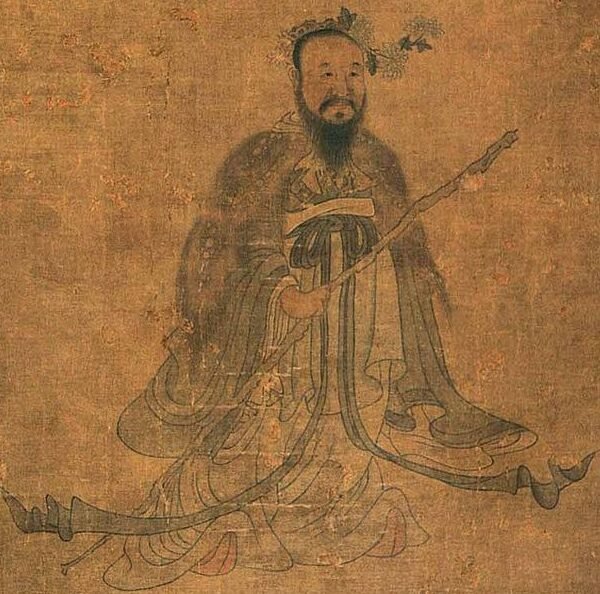
A portrait of Qu Yuan by Chinese painter Chen Hongshou.
Dragon Boat Racing: A Competitive Tradition
Dragon boat racing is one of the most exhilarating aspects of the festival. These races involve long, narrow boats adorned with dragon heads and tails, manned by teams that paddle in rhythmic unison to the beat of a drum. The tradition of dragon boat racing dates back more than 2,000 years, likely originating from agricultural celebrations or rituals honoring river deities.
Today, dragon boat races are held in various countries, particularly in Chinese communities abroad. Modern competitions emphasize teamwork, endurance, and coordination, often drawing participants from around the world.
The Role of Zongzi
Zongzi, or sticky rice dumplings wrapped in bamboo or reed leaves, are an essential part of the festival. The shape and filling of zongzi vary by region:
- Northern China: Sweet zongzi with fillings such as red bean paste, dates, or nuts.
- Southern China: Savory zongzi filled with salted egg yolk, pork, mushrooms, and other ingredients.
The preparation of zongzi is a communal activity, often involving family members coming together to make and share these delicacies. This practice reinforces family bonds and cultural traditions.
Protective Rituals and Folk Practices
In addition to dragon boat races and zongzi, several other customs are observed during the festival to ward off evil and promote well-being.
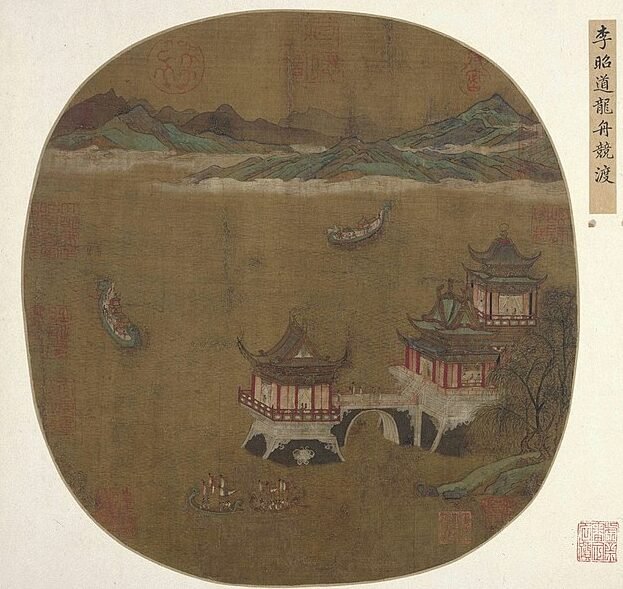
A depiction of Dragon boat race by Chinese artist Li Zhaodao.
Drinking Realgar Wine
Realgar wine (雀黄酒) is an alcoholic beverage infused with realgar, a mineral believed to have protective properties. In ancient times, it was thought to repel evil spirits and toxins. Though less commonly consumed today due to safety concerns, some people still mark the festival by dabbing realgar on children’s foreheads as a symbolic gesture of protection.
Hanging Herbs and Warding Off Disease
People hang medicinal herbs such as mugwort and calamus around their doors to deter pests and evil spirits. These herbs are believed to purify the air and prevent illnesses, a practice rooted in traditional Chinese medicine.
Five-Colored Silk Threads
In some regions, children wear silk-threaded bracelets in five colors (red, blue, yellow, white, and black), representing the five elements in Chinese cosmology. These bracelets are worn throughout the festival and later discarded in running water to carry away bad luck.
Egg Balancing Tradition
A popular belief states that balancing an egg at exactly noon on the Dragon Boat Festival brings good fortune. This practice is particularly prevalent in Taiwan and some parts of China.

The Dragon Boat Festival in the Modern Era
After being overlooked as a public holiday in mainland China for much of the 20th century, the Dragon Boat Festival was reinstated as a national holiday in 2008. Today, it is widely celebrated in China, Taiwan, Hong Kong, Macau, and among Chinese communities worldwide.
The festival has gained international appeal, with dragon boat races held in various countries, including the United States, Canada, Australia, and the United Kingdom. Cities with significant Chinese populations often organize cultural events featuring traditional music, dance, and food to introduce the festival to a broader audience.
With its UNESCO recognition and growing international presence, the Dragon Boat Festival continues to thrive as a symbol of cultural heritage and collective spirit.
Questions and Answers
What is the origin of the Dragon Boat Festival?
The festival is traditionally associated with Qu Yuan, a poet and minister from the Warring States period who drowned himself in the Miluo River. Villagers raced to save him, which is said to have inspired dragon boat races, and threw rice into the river to prevent fish from eating his body, leading to the tradition of zongzi.
What are dragon boat races?
Dragon boat races are competitive rowing events where teams paddle in long, narrow boats decorated like dragons, often accompanied by drumming. These races honor Qu Yuan and symbolize unity and teamwork.
What is zongzi, and why is it eaten during the festival?
Zongzi are pyramid-shaped sticky rice dumplings wrapped in bamboo or reed leaves, filled with various ingredients. They commemorate Qu Yuan by representing the rice offerings thrown into the river.
Why is the festival associated with warding off evil?
The fifth lunar month was historically considered unlucky, linked to disease and poisonous creatures. People hung herbs like mugwort and calamus, drank realgar wine, and wore five-colored silk threads to protect against misfortune.
Are there other figures linked to the festival?
Yes, Wu Zixu, a statesman forced to commit suicide, and Cao E, a girl who drowned trying to save her father, are commemorated in certain regions instead of Qu Yuan.
Are there similar festivals in other cultures?
Yes, related festivals include Korea’s Dano, Japan’s Tango no Sekku, and Vietnam’s Tết Đoan Ngọ, all sharing themes of purification, summer rituals, and traditional foods.