What was the Toyota War? – History and Major Facts
The Toyota War, also known as the Great Toyota War, was a decisive military conflict that unfolded in 1987 between Chad and Libya along their northern border. This war marked the final and most critical phase of the prolonged Chadian–Libyan War, a struggle characterized by territorial disputes, ideological differences, and regional power dynamics.
The conflict earned its distinctive name from the extensive use of Toyota pickup trucks—particularly the Toyota Hilux and Toyota Land Cruiser—by Chadian forces. These vehicles, commonly referred to as technicals, provided unparalleled mobility and adaptability, enabling Chadian troops to execute rapid and effective maneuvers against the more traditionally organized Libyan military.
The Toyota War not only demonstrated the effectiveness of unconventional warfare strategies but also had lasting implications for military doctrines and geopolitical relationships in Africa and beyond.
Origins and Background
The Chadian–Libyan War
The roots of the Toyota War can be traced back to the early 1980s when tensions between Chad and Libya escalated into open conflict. Chad, a landlocked country in Central Africa, was experiencing internal strife marked by political instability and civil war. Muammar Gaddafi, the ambitious and authoritarian leader of Libya, sought to extend his influence across Africa and secure territorial claims, particularly over the resource-rich Aouzou Strip—a narrow strip of land along the Chad–Libya border that was strategically significant due to its mineral wealth.
In 1983, Libya launched a full-scale invasion of northern Chad with the intent of annexing the Aouzou Strip and supporting the Transitional Government of National Unity (GUNT), an opposition group aiming to overthrow Chad’s President Hissène Habré. Gaddafi did not recognize Habré’s legitimacy and viewed the conflict as an opportunity to assert Libya’s dominance in the region. The invasion was part of Gaddafi’s broader strategy to position Libya as a pan-African power and to exploit Chad’s natural resources to bolster his own regime.
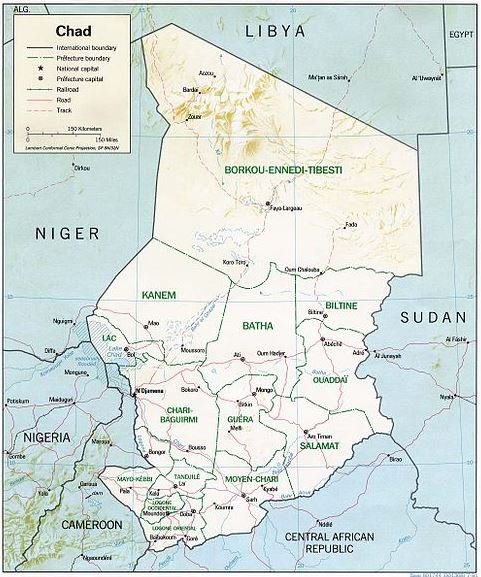
This is a map of Chad highlighting the Borkou-Ennedi-Tibesti Prefecture, where the war occurred.
French Intervention: Operation Manta and Operation Epervier
The Libyan expansion into Chad faced significant resistance, particularly from France, Chad’s former colonial power, which had vested interests in maintaining stability in its former colonies. France intervened militarily to support the Chadian government and counteract Libya’s aggressive maneuvers. This intervention took the form of two major military operations: Operation Manta and Operation Epervier.
Operation Manta, initiated in 1983, was France’s initial response to Libya’s invasion. The operation aimed to provide immediate military assistance to Chad, stabilizing the situation and preventing further Libyan advances. French forces engaged in combat operations to protect strategic locations and support Chadian troops in their resistance efforts. The presence of French military advisors and troops was crucial in halting Libya’s progress and preventing the annexation of additional Chadian territories.
Following the success of Operation Manta, France launched Operation Epervier in 1986, which served as a more sustained and comprehensive military support mission for Chad. Operation Epervier involved a larger deployment of French forces, including infantry, armored units, and air support, to reinforce the Chadian military and provide ongoing assistance in combating Libyan forces. These interventions were instrumental in containing Libya’s expansion beyond the 16th parallel, effectively restricting their presence to the arid and sparsely populated northern regions of Chad. This containment strategy allowed Chad to regroup, reorganize its military forces, and prepare for future confrontations against the Libyan invaders.
Escalation and Strategic Shifts
The GUNT Rebellion and Shifting Alliances
By 1986, the dynamics of the Chadian–Libyan conflict began to shift dramatically. The Transitional Government of National Unity (GUNT), initially supported by Libya, started to rebel against Gaddafi’s influence. This rebellion effectively stripped Libya of its primary justification for maintaining a military presence in Chad, as the GUNT’s defiance highlighted the growing discontent and fragmentation within the opposition movement.
Capitalizing on this opportunity, President Hissène Habré sought to unify the Chadian population against the Libyan occupation. Recognizing the need for a coordinated and strategic offensive to reclaim Chadian sovereignty, Habré directed his forces to move south of the 16th parallel. This maneuver was aimed at linking up with the GUNT rebels operating in the Tibesti Mountains—a region known for its challenging terrain and strategic significance.
Strategic Maneuvering in the Tibesti Mountains
In December 1986, Habré ordered his forces to advance into the Tibesti Mountains, a remote and rugged area that provided natural defenses and strategic advantages against the Libyan military. The movement into the Tibesti allowed Chadian forces to launch a coordinated and multifaceted offensive against the Libyans, integrating guerrilla tactics with conventional warfare strategies.
The Chadian troops, leveraging their superior mobility and intimate knowledge of the local terrain, began executing rapid and unexpected attacks on Libyan positions. The use of Toyota technicals—lightweight and highly maneuverable pickup trucks—proved to be a game-changer. These vehicles facilitated swift deployments, hit-and-run attacks, and the rapid repositioning of forces, allowing Chadian troops to outmaneuver the more traditionally organized Libyan army. The Toyota technicals provided Chadian forces with the flexibility to exploit gaps in Libyan defenses, conduct surprise assaults, and sustain prolonged engagements despite limited resources.
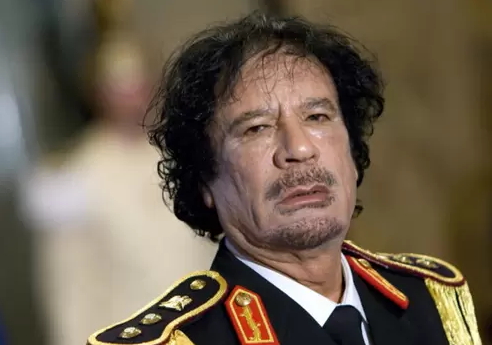
Muammar Gaddafi
The Course of the Toyota War
Rapid Offensive and Key Victories
The Toyota War, spanning approximately three months in 1987, was characterized by a series of rapid offensives and decisive victories by Chadian forces. One of the most significant engagements occurred during the assault on Fada, where Habré’s troops launched a well-coordinated attack on the local Libyan garrison. The Chadian forces, utilizing their mobility and tactical ingenuity, succeeded in destroying the Libyan military presence in Fada. This victory was a turning point, severely weakening Libya’s control over northern Chad and boosting the morale of the Chadian military and populace.
The Chadian military’s focus on mobility, speed, and the element of surprise allowed them to exploit the logistical and operational weaknesses of the Libyan army. Libya, burdened by extended supply lines and operating in hostile desert environments, struggled to counter the swift and adaptable maneuvers of the Chadian forces. The combination of guerrilla tactics and conventional warfare employed by Chad maximized the effectiveness of their limited resources, enabling them to achieve significant battlefield successes against a larger and better-equipped Libyan force.
Heavy Libyan Losses and Strategic Impact
The Toyota War inflicted heavy losses on the Libyan military, with American sources reporting that approximately 7,500 Libyan soldiers were killed and around US$1.5 billion worth of military equipment was either destroyed or captured. In stark contrast, Chadian forces suffered relatively minimal casualties, with around 1,000 fatalities. This disparity in losses underscored the effectiveness of Chad’s strategic approaches and the limitations of Libya’s military capabilities in the face of unconventional warfare.
The decisive victories achieved by Chadian forces during the Toyota War significantly diminished Libya’s military presence and its ability to sustain its occupation in northern Chad. The heavy losses inflicted on the Libyan army not only weakened their operational capacity but also eroded the morale and cohesion of their troops. The rapid and effective Chadian offensives disrupted Libyan supply lines and communication networks, further hampering their ability to mount a sustained resistance.
Aftermath and Legacy
Ceasefire and Resolution
The Toyota War concluded with a ceasefire in September 1987, effectively ending the Chadian–Libyan conflict. However, the ceasefire did not resolve all outstanding issues, particularly regarding the disputed Aouzou Strip. This narrow strip of land, rich in mineral resources, remained a contentious point between Chad and Libya. The International Court of Justice eventually adjudicated the dispute in 1994, awarding the Aouzou Strip to Chad. This resolution solidified Chad’s territorial claims and marked the end of Libya’s ambitions in the region.
Asymmetric Warfare and Military Doctrine
The Toyota War is frequently cited as a quintessential example of asymmetric warfare, where a smaller, highly mobile force successfully defeats a larger, conventional army through superior tactics and adaptability. This conflict highlighted the critical importance of mobility, flexibility, and unconventional strategies in modern warfare. The effective use of Toyota technicals by Chadian forces demonstrated how innovative use of available resources could compensate for disadvantages in size and firepower.
The lessons learned from the Toyota War have influenced military doctrines globally, emphasizing the value of rapid deployment, hit-and-run tactics, and the exploitation of terrain advantages. Modern military strategies increasingly incorporate elements of asymmetric warfare, recognizing the need to adapt to evolving combat environments and to leverage mobility and agility to achieve strategic objectives.
Impact on African Geopolitics
The Toyota War had significant implications for the geopolitical landscape of Africa. The conflict underscored the challenges of regional power struggles and the influence of external actors in African conflicts. France’s intervention in the Chadian–Libyan War reinforced its role as a key player in maintaining stability in its former colonies and in countering external aggression in the region.
The war also highlighted the complexities of African sovereignty and territorial integrity, with Libya’s ambitions clashing against Chad’s efforts to assert its independence and territorial claims. The resolution of the Aouzou Strip dispute by the International Court of Justice set a precedent for the peaceful resolution of territorial conflicts in Africa, emphasizing the role of international arbitration in maintaining regional stability.
Technological and Tactical Innovations
The Toyota War showcased the effectiveness of using technical vehicles in military operations, a tactic that has been replicated in various conflicts since. The adaptability and versatility of technicals allowed Chadian forces to conduct operations that were previously unattainable with traditional military vehicles. This innovation has influenced contemporary military strategies, where the use of light, mobile vehicles continues to play a crucial role in enhancing operational flexibility and effectiveness.
Moreover, the integration of guerrilla tactics with conventional warfare strategies demonstrated the potential of hybrid warfare approaches. This combination allowed Chadian forces to maximize their strengths while minimizing their vulnerabilities, providing a blueprint for other militaries facing similar asymmetrical challenges.
Socio-Political Consequences in Chad and Libya
The Toyota War had profound socio-political consequences for both Chad and Libya. In Chad, the
victory solidified Hissène Habré’s position as a strong and capable leader, capable of uniting disparate factions and effectively countering external aggression. The successful repulsion of Libyan forces fostered a sense of national pride and unity among the Chadian populace, reinforcing the legitimacy of Habré’s government. However, the prolonged conflict also exacerbated existing social and economic challenges within Chad, including displacement, infrastructure damage, and resource depletion.
For Libya, the defeat in the Toyota War was a significant blow to Muammar Gaddafi’s ambitions and his vision of regional dominance. The heavy losses and the inability to sustain the occupation in Chad weakened Libya’s military capabilities and exposed the limitations of its interventionist policies. The conflict underscored the difficulties of maintaining prolonged military engagements in hostile and challenging environments, leading to a reevaluation of Libya’s foreign policy strategies.
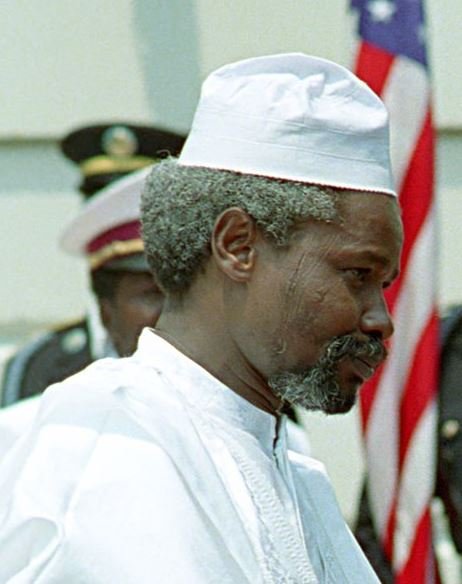
Image: A 1987 picture of Hissène Habré.
Influence on International Relations and Conflict Resolution
The Toyota War also had broader implications for international relations and conflict resolution. The involvement of France as an external actor in the Chadian–Libyan conflict highlighted the complexities of colonial legacies and the role of former colonial powers in contemporary African politics. France’s decisive intervention played a crucial role in shaping the outcome of the conflict, demonstrating the impact that external military support can have on regional disputes.
The resolution of the Aouzou Strip dispute by the International Court of Justice (ICJ) in 1994 emphasized the importance of international legal mechanisms in resolving territorial conflicts. The ICJ’s decision not only affirmed Chad’s territorial claims but also reinforced the principle of territorial integrity, setting a precedent for the peaceful arbitration of similar disputes in the future. This approach underscored the role of international institutions in maintaining peace and stability in regions affected by protracted conflicts.
Lessons Learned and Strategic Insights
The Toyota War provided several key lessons and strategic insights that have influenced military and political strategies in subsequent conflicts:
- Mobility and Flexibility: The success of Chadian forces was largely due to their ability to move quickly and adapt to changing battlefield conditions. The use of technicals allowed for rapid deployment and repositioning, enabling Chadian troops to exploit weaknesses in the Libyan defenses.
- Terrain Utilization: Understanding and leveraging the local terrain was crucial for the Chadian offensive. The rugged and inhospitable environment of the Tibesti Mountains provided natural defenses and strategic advantages that Chadian forces effectively utilized against the Libyans.
- Hybrid Warfare: The integration of guerrilla tactics with conventional military strategies allowed Chadian forces to maximize their strengths while minimizing their vulnerabilities. This hybrid approach proved to be highly effective in overcoming a larger and better-equipped adversary.
- Resource Optimization: The innovative use of available resources, such as Toyota technicals, demonstrated the importance of resource optimization in military operations. By effectively leveraging lightweight and versatile vehicles, Chadian forces were able to enhance their operational capabilities and achieve significant battlefield successes.
- International Support: The role of external actors, such as France, underscored the importance of international support in shaping the outcomes of regional conflicts. Effective intervention by allied forces can significantly influence the balance of power and the trajectory of a conflict.
- Asymmetric Strategies: The Toyota War highlighted the effectiveness of asymmetric strategies in overcoming conventional military disadvantages. Smaller forces can achieve decisive victories through superior tactics, mobility, and the ability to exploit the enemy’s weaknesses.
Conclusion
The Toyota War was a defining conflict in the history of Chad and Libya, marking the culmination of the Chadian–Libyan War and showcasing the transformative impact of unconventional warfare strategies. The conflict demonstrated how mobility, adaptability, and strategic innovation could enable a smaller force to decisively defeat a larger, more conventional army. The extensive use of Toyota technicals by Chadian forces was a testament to the effectiveness of leveraging available resources to overcome military challenges.
The Toyota War had lasting implications for military doctrines, emphasizing the importance of mobility and hybrid warfare approaches in modern conflicts. It also influenced geopolitical relationships in Africa, highlighting the role of external actors and the significance of international legal mechanisms in resolving territorial disputes. The legacy of the Toyota War continues to inform contemporary military strategies and conflict resolution practices, serving as a powerful example of how innovative tactics and strategic ingenuity can shape the outcomes of regional conflicts.
In retrospect, the Toyota War stands as a testament to the resilience and ingenuity of the Chadian forces, who, against formidable odds, succeeded in defending their sovereignty and repelling foreign aggression. The conflict not only secured Chad’s territorial integrity but also reinforced the broader principles of national unity and strategic adaptability in the face of external threats. As such, the Toyota War remains a significant chapter in African military history, offering valuable lessons for future generations on the dynamics of asymmetric warfare and the enduring quest for national independence and territorial integrity.
Frequently Asked Questions
Why is the Toyota War also known as the Great Toyota War?
The Toyota War, also referred to as the Great Toyota War, was a significant conflict that took place in 1987 between Chad and Libya along their northern border. It marked the final phase of the extended Chadian–Libyan War. The war earned its name from the extensive use of Toyota pickup trucks—specifically the Toyota Hilux and Toyota Land Cruiser—by Chadian forces. These vehicles, known as technicals, provided exceptional mobility and versatility, enabling Chadian troops to conduct rapid and effective operations against the Libyan military.
What were the origins of the Toyota War?
The origins of the Toyota War can be traced back to 1983 when Libya, led by Muammar Gaddafi, invaded northern Chad. Gaddafi did not recognize the legitimacy of Chad’s President Hissène Habré and aimed to support the Transitional Government of National Unity (GUNT), an opposition faction striving to overthrow Habré. This military intervention was part of Gaddafi’s broader ambition to expand his influence across Africa and assert territorial claims, particularly over the resource-rich Aouzou Strip—a region of significant strategic importance.
How did France respond to Libya’s expansion into Chad?
France intervened to resist Libya’s expansion into Chad through military operations named Operation Manta and later Operation Epervier. These interventions were crucial in halting Libya’s advance beyond the 16th parallel, restricting their presence to the harsh and sparsely populated northern areas of Chad. This containment strategy allowed Chad to reorganize and prepare for future confrontations against Libyan forces.
What strategic shifts occurred in 1986 that escalated tensions leading to the Toyota War?
In 1986, tensions escalated when the GUNT rebels rose against Gaddafi’s influence, effectively removing Libya’s primary justification for maintaining a military presence in Chad. Seizing this opportunity, President Hissène Habré sought to unify the Chadian populace against the Libyan occupation. In December of that year, Habré directed his forces to move south of the 16th parallel to join the GUNT rebels operating in the Tibesti Mountains, a region known for its challenging terrain and strategic value. This strategic maneuver enabled Habré’s forces to launch a coordinated and multifaceted offensive against the Libyans.
How did Chadian forces utilize Toyota technicals during the Toyota War?
Chadian forces extensively used Toyota technicals, such as the Toyota Hilux and Toyota Land Cruiser pickup trucks, to enhance their military operations. These vehicles provided exceptional mobility and adaptability, allowing Chadian troops to conduct rapid deployments and execute effective hit-and-run attacks. The technicals enabled the Chadians to maneuver swiftly across the rugged terrain, exploiting their familiarity with the local environment to overwhelm the more traditionally organized Libyan forces.
What were the key tactics employed by Chadian forces during the Toyota War?
Chadian military strategies emphasized mobility, speed, and the element of surprise. By leveraging guerrilla tactics combined with conventional warfare, Chadian troops exploited the vulnerabilities of the Libyan army, which struggled with logistical issues and extended supply lines. The rapid and adaptable maneuvers facilitated by Toyota technicals allowed the Chadians to execute swift attacks that significantly weakened Libyan military presence in the region.
What was the significance of the assault on Fada during the Toyota War?
The assault on Fada was a pivotal moment in the Toyota War. Hissène Habré’s troops successfully destroyed the local Libyan garrison in Fada, which not only boosted the morale of the Chadian forces but also significantly diminished the Libyan military presence in the region. This victory demonstrated the effectiveness of Chadian tactics and further weakened Libya’s ability to sustain its military operations in northern Chad.
What were the reported losses for Libya and Chad during the Toyota War?
According to American sources, Libya sustained heavy losses during the Toyota War, with approximately 7,500 Libyan soldiers killed and around US$1.5 billion worth of military equipment either destroyed or captured. In contrast, Chadian forces suffered significantly fewer fatalities, with around 1,000 deaths, highlighting the effectiveness and efficiency of their tactical approaches.
When and how did the Toyota War conclude?
The Toyota War concluded with a ceasefire in September 1987, effectively ending the Chadian–Libyan conflict. Despite the ceasefire, disputes over the Aouzou Strip remained unresolved until the International Court of Justice adjudicated the dispute in 1994, ultimately awarding the territory to Chad.
Why is the Toyota War considered an example of asymmetric warfare?
The Toyota War is considered a classic example of asymmetric warfare because it involved a smaller, highly mobile force (Chad) successfully defeating a larger, conventional army (Libya) through superior tactics and adaptability. The conflict underscored the importance of mobility and unconventional strategies in modern warfare, demonstrating how innovative use of available resources, such as Toyota technicals, can compensate for disadvantages in size and firepower.
What impact did the Toyota War have on military doctrines worldwide?
The Toyota War influenced military doctrines globally by highlighting the critical importance of mobility and unconventional strategies in overcoming more traditionally powerful adversaries. The success of Chadian forces against the Libyans demonstrated the effectiveness of guerrilla tactics and rapid mobility, leading to the adoption of similar strategies in various military contexts around the world.
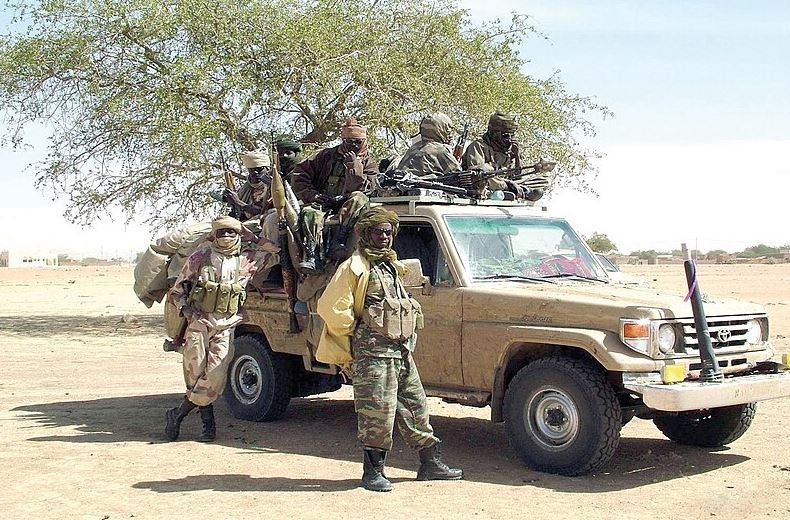
Image: Chadian military personnel pictured on a Toyota Land Cruiser pickup truck.
How did the Toyota War affect the geopolitical landscape of Africa?
The Toyota War had a significant impact on the geopolitical landscape of Africa by ending Libya’s ambitions in northern Chad and reinforcing Chad’s sovereignty over disputed territories like the Aouzou Strip. The conflict also underscored the challenges of regional power struggles and the influence of external actors, such as France, in African conflicts. Additionally, the war’s outcome strengthened Chad’s position in the region and contributed to the broader dynamics of African politics during the late 20th century.
What role did the Aouzou Strip play in the Toyota War and its aftermath?
The Aouzou Strip was a strategically significant region rich in resources, making it a focal point of the Chadian–Libyan conflict. During the Toyota War, control over this area was a primary objective for both Libya and Chad. The ceasefire in September 1987 left the Aouzou Strip as an unresolved issue, which was eventually adjudicated by the International Court of Justice in 1994, awarding the territory to Chad. This resolution affirmed Chad’s sovereignty over the Aouzou Strip and marked the end of Libya’s territorial ambitions in the region.
In what ways did the Toyota War demonstrate the effectiveness of combining guerrilla tactics with conventional warfare?
The Toyota War demonstrated the effectiveness of combining guerrilla tactics with conventional warfare by allowing Chadian forces to leverage their mobility and intimate knowledge of the terrain to conduct swift and unexpected attacks. This hybrid approach enabled the Chadians to disrupt Libyan operations, exploit logistical weaknesses, and achieve decisive victories despite being outnumbered. The integration of these tactics proved that flexibility and adaptability could overcome the advantages of a larger, more conventional military force.