When and how did American women earn the right to vote?
The journey to securing the right to vote for American women is one of the most significant social and political transformations in United States history. The fight for women’s suffrage began in the early 19th century and culminated in the passage of the 19th Amendment to the U.S. Constitution in 1920, which granted women the right to vote. This battle was long, complex, and involved numerous leaders, activists, movements, and strategies across different eras.
In this detailed account, American historians at World History Edu delve into the struggle American women had to go through before they earned the right to vote, highlighting the key moments, organizations, and individuals who made this achievement possible.
Early Beginnings of the Women’s Suffrage Movement (1800s)
The early 19th century was a time of rapid social and political change in the United States. The reform spirit of the time, including movements such as abolitionism and temperance, also gave rise to the early women’s rights movement. Women began to question their limited roles in society, particularly their exclusion from political participation.
The Seneca Falls Convention (1848)
The formal beginning of the women’s suffrage movement is often traced back to the Seneca Falls Convention held in Seneca Falls, New York, in July 1848. Organized by Elizabeth Cady Stanton and Lucretia Mott, this was the first women’s rights convention in the United States. It attracted over 300 attendees, including both women and men, and aimed to address the social, civil, and religious rights of women.
At the convention, Stanton and Mott, along with other activists, drafted the “Declaration of Sentiments,” a document modeled after the Declaration of Independence. It outlined the grievances and demands of women, including the right to vote. The demand for voting rights was controversial even among the participants, but it was included in the document with the help of Frederick Douglass, an abolitionist who supported women’s suffrage.
The Seneca Falls Convention marked a turning point in the movement by formally introducing women’s suffrage as a central goal of the broader struggle for women’s rights. However, progress was slow in the years following the convention.

Image: Elizabeth Cady Stanton during the early 1880s.
Abolitionism and Women’s Rights
In the mid-19th century, many women’s rights activists were also involved in the abolitionist movement, which sought to end slavery in the United States. Women like Susan B. Anthony, Sojourner Truth, and Lucy Stone were leaders in both movements. However, the end of the Civil War in 1865 and the subsequent passage of the 13th, 14th, and 15th Amendments, which granted rights to formerly enslaved people, created divisions within the suffrage movement.
The 15th Amendment, ratified in 1870, granted African American men the right to vote but did not extend that right to women. This exclusion frustrated many women’s rights advocates, who felt betrayed by their allies in the abolitionist movement. This led to a split in the women’s suffrage movement, resulting in the formation of two major organizations with differing strategies.
Susan B. Anthony: Timeline of the Life of One of America’s Greatest Social Reformers
The Split in the Suffrage Movement
In 1869, the women’s suffrage movement fractured into two separate organizations due to disagreements over the 15th Amendment.
- National Woman Suffrage Association (NWSA): Founded by Elizabeth Cady Stanton and Susan B. Anthony, the NWSA opposed the 15th Amendment because it excluded women. The organization focused on securing a constitutional amendment for women’s suffrage and emphasized broader women’s rights issues beyond voting, including divorce and property rights.
- American Woman Suffrage Association (AWSA): Led by Lucy Stone, Henry Blackwell, and Julia Ward Howe, the AWSA supported the 15th Amendment and believed that women’s suffrage could be achieved by working within the framework of the existing political system. The AWSA focused on state-level campaigns to secure voting rights for women.
For two decades, these two organizations worked separately, each using different tactics to push for women’s suffrage. The NWSA prioritized a federal constitutional amendment, while the AWSA concentrated on winning voting rights state by state.
The Late 19th Century: Progress and Challenges
During the late 19th century, women’s suffrage activists achieved some victories at the state and territorial levels. In 1869, Wyoming became the first U.S. territory to grant women the right to vote, followed by Utah in 1870. These early victories demonstrated that women’s suffrage was achievable, but progress remained slow on a national scale.
Several factors contributed to the slow pace of progress:
- Opposition from Conservative Groups: Many politicians, religious leaders, and business interests opposed women’s suffrage, fearing that it would disrupt traditional gender roles and weaken the family structure. Some argued that women were too emotional or uneducated to vote responsibly.
- Internal Divisions: The split between the NWSA and AWSA weakened the movement, as activists were divided over strategy and priorities. This division delayed a unified push for suffrage at the national level.
- Lack of Political Support: Most political leaders were unwilling to support women’s suffrage, either because they believed it was unnecessary or because they feared losing male voters who opposed the idea.
Despite these challenges, the suffrage movement continued to grow, with increasing numbers of women becoming involved in political activism.
Reunification and the Rise of the NAWSA (1890)
By 1890, leaders of both the NWSA and AWSA recognized the need for unity if they were to succeed in securing women’s voting rights. The two organizations merged to form the National American Woman Suffrage Association (NAWSA). Elizabeth Cady Stanton was chosen as the first president of the NAWSA, but Susan B. Anthony soon became the dominant figure in the organization.
The NAWSA adopted a dual strategy, continuing to push for a federal constitutional amendment while also working on state-by-state campaigns to win women the right to vote. This approach allowed suffrage activists to make progress in some states, particularly in the western United States, where women were granted the right to vote in several states, including Colorado (1893), Idaho (1896), and Washington (1910).

Image: A 1890 photo of Susan B. Anthony.
The Progressive Era and the Expansion of the Movement (1900s)
At the turn of the 20th century, the United States entered the Progressive Era, a period of widespread social and political reform. The suffrage movement benefited from the broader progressive spirit, as activists linked women’s voting rights to other progressive causes, such as labor reform, child welfare, and public health. Women’s involvement in these reform movements helped to increase support for their right to vote.
Key Figures and Organizations
Several key figures emerged during this period who would help lead the movement to victory:
- Carrie Chapman Catt: Catt succeeded Susan B. Anthony as the president of the NAWSA in 1900 and played a crucial role in the final push for women’s suffrage. She developed the “Winning Plan,” which focused on a combination of state and federal efforts to achieve suffrage. Under her leadership, the NAWSA grew into a powerful national organization with millions of members.
- Alice Paul and the National Woman’s Party (NWP): Alice Paul was a more radical activist who broke away from the NAWSA to form the National Woman’s Party (NWP) in 1916. Inspired by the militant tactics of British suffragettes, Paul and the NWP organized protests, pickets, and hunger strikes to demand a constitutional amendment for women’s suffrage. The NWP’s more confrontational approach brought increased attention to the cause but also led to arrests and harsh treatment of activists.
- Ida B. Wells: A journalist and civil rights activist, Wells was a key figure in advocating for the rights of African American women. She founded the Alpha Suffrage Club, one of the first African American suffrage organizations, and played an important role in highlighting the intersection of race and gender in the fight for voting rights.
World War I and Women’s Contributions
The outbreak of World War I in 1914 had a significant impact on the suffrage movement. As men went off to fight in the war, women took on greater responsibilities at home and in the workforce. Women’s contributions to the war effort, including their roles as nurses, factory workers, and volunteers, helped to shift public opinion in favor of granting them the right to vote. Suffragists argued that if women were capable of supporting the country during wartime, they deserved the right to participate in the political process.
President Woodrow Wilson, initially opposed to women’s suffrage, was eventually persuaded to support the cause. He cited women’s contributions during the war as one of the reasons for his change of heart. In 1918, Wilson gave a speech to Congress urging them to pass a women’s suffrage amendment.
The Passage of the 19th Amendment (1920)
The final push for women’s suffrage came in the years following World War I. After decades of activism, the 19th Amendment to the U.S. Constitution, which granted women the right to vote, was finally passed by Congress on June 4, 1919. The amendment was then sent to the states for ratification.
The text of the 19th Amendment is simple but powerful:
“The right of citizens of the United States to vote shall not be denied or abridged by the United States or by any State on account of sex. Congress shall have power to enforce this article by appropriate legislation.”
The ratification process was intense and contentious. Suffragists lobbied state legislators, held rallies, and organized campaigns to secure the necessary support. The amendment required the approval of 36 states to become law. By mid-1920, 35 states had ratified the amendment, and the fate of the 19th Amendment rested in the hands of Tennessee.
Tennessee’s state legislature held a dramatic vote on the amendment in August 1920. The vote was tied until a young legislator named Harry Burn cast the deciding vote in favor of ratification, reportedly after receiving a letter from his mother urging him to support women’s suffrage. With Tennessee’s ratification, the 19th Amendment officially became part of the U.S. Constitution on August 18, 1920.

Image: Carrie Chapman Catt
Impact and Legacy of the 19th Amendment
The passage of the 19th Amendment was a monumental victory for the women’s suffrage movement, but it did not mark the end of the struggle for voting rights. While the amendment granted voting rights to women across the United States, it did not guarantee that all women would be able to exercise that right.
- Barriers for African American Women: In the southern states, Jim Crow laws, poll taxes, literacy tests, and other forms of voter suppression continued to disenfranchise African American women, just as they had disenfranchised African American men. It would take the Civil Rights Movement of the 1960s and the passage of the Voting Rights Act of 1965 to secure voting rights for many African American women.
- Native American, Asian American, and Latina Women: Many Native American women, as well as Asian American and Latina women, were also excluded from voting due to discriminatory laws that denied citizenship to people of certain ethnic groups. The Indian Citizenship Act of 1924 granted Native Americans U.S. citizenship, but many states continued to deny them the right to vote. Similarly, Asian American and Latina women faced barriers to voting that persisted for decades.
Despite these challenges, the 19th Amendment was a transformative moment in American history. It expanded the electorate, giving millions of women a voice in the political process. Women’s participation in voting and political activism grew in the years that followed, and women began to run for office in greater numbers.
Conclusion
The fight for women’s suffrage in the United States was a long and arduous struggle that spanned nearly a century. From the early days of the Seneca Falls Convention to the ratification of the 19th Amendment in 1920, women’s rights activists worked tirelessly to secure the right to vote. Their efforts not only expanded the democratic process but also helped to redefine the role of women in American society.
The victory of the suffrage movement was not just about winning the right to vote—it was about challenging deeply entrenched gender roles and advocating for equality. The 19th Amendment was a major step forward, but it was just one part of the ongoing struggle for civil rights and social justice in the United States.
Today, the legacy of the women’s suffrage movement continues to inspire activists fighting for gender equality, voting rights, and social justice around the world. The right to vote, hard-won by women like Elizabeth Cady Stanton, Susan B. Anthony, Ida B. Wells, and countless others, remains a cornerstone of democracy and a symbol of the power of collective action.
Questions and Answers about the Nineteenth Amendment and Women’s Suffrage

When was the Nineteenth Amendment ratified?
The Nineteenth Amendment was ratified on August 18, 1920, and officially certified on August 26, 1920.
What was the broader movement behind the Nineteenth Amendment?
The Nineteenth Amendment was part of a global movement for women’s suffrage and the broader women’s rights movement, which sought to secure equal rights for women, including the right to vote.
When did the movement for women’s suffrage in the U.S. formally begin?
The movement for women’s suffrage in the U.S. formally began in the mid-19th century, with key events such as the 1848 Seneca Falls Convention.
What was the significance of the Seneca Falls Convention?
The Seneca Falls Convention in 1848 was the first women’s rights convention in the U.S. It adopted the Declaration of Sentiments, which called for equality between men and women and advocated for women’s right to vote.
What organizations were key in advocating for women’s suffrage?
The National Woman Suffrage Association (NWSA) and the American Woman Suffrage Association (AWSA) were two prominent organizations that used various strategies to push for women’s voting rights.
What was the outcome of the first suffrage amendment introduced in Congress in 1878?
The first women’s suffrage amendment introduced in Congress in 1878 was rejected in 1887.
Which regions of the U.S. first granted women the right to vote?
By the late 1800s, several western states and territories, including Wyoming and Utah, granted women the right to vote, contributing to the momentum for a national suffrage amendment.

Who were Alice Paul and Lucy Burns, and how did they contribute to the suffrage movement?
Alice Paul and Lucy Burns were key suffrage leaders who employed more aggressive tactics such as protests, hunger strikes, and marches through the National Woman’s Party (NWP). They helped raise awareness of the contradictions between fighting for democracy abroad during World War I while denying voting rights to women at home.
What role did Carrie Chapman Catt and the National American Woman Suffrage Association (NAWSA) play in securing women’s suffrage?
Carrie Chapman Catt led NAWSA, which took a more moderate approach by supporting the war effort and advocating that women’s contributions during World War I warranted the right to vote. NAWSA’s efforts complemented more radical approaches to winning suffrage.
How did World War I influence public opinion on women’s suffrage?
World War I helped shift public opinion in favor of women’s suffrage, as women’s contributions to the war effort demonstrated their capability and strengthened the argument that they deserved the right to vote.
What was President Woodrow Wilson’s stance on the Nineteenth Amendment?
Initially hesitant, President Woodrow Wilson publicly supported the suffrage amendment in 1918, recognizing women’s important contributions during World War I.

Image: Woodrow Wilson
How did the Nineteenth Amendment pass through Congress?
The Nineteenth Amendment passed the House of Representatives on May 21, 1919, and the Senate on June 4, 1919. It was then sent to the states for ratification.
What was the immediate impact of the Nineteenth Amendment on the U.S. electorate?
The Nineteenth Amendment enfranchised approximately 26 million American women, allowing them to vote in the 1920 U.S. presidential election.
Did the Nineteenth Amendment immediately create a strong women’s voting bloc?
Despite fears from politicians, the strong women’s voting bloc that many anticipated did not immediately materialize. It took decades for women’s political influence to fully emerge.
Did the Nineteenth Amendment enfranchise all women?
No, the Nineteenth Amendment did not fully enfranchise all women. African American women in southern states faced barriers like Jim Crow laws, literacy tests, and poll taxes. Native American, Asian American, and Hispanic women also faced legal obstacles to voting.
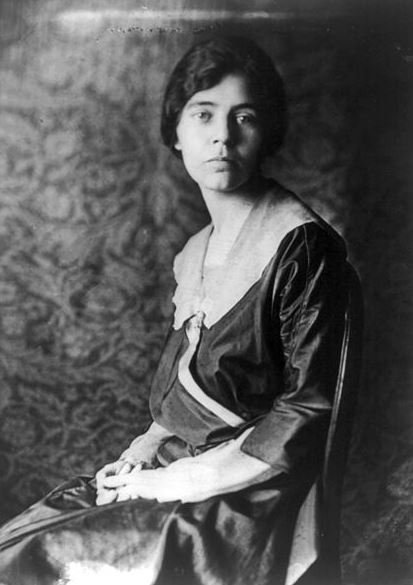
Image: Alice Paul (1885 – 1977)
How were African American women affected by the Nineteenth Amendment?
While African American women technically gained the right to vote under the Nineteenth Amendment, discriminatory practices such as literacy tests and poll taxes in southern states continued to prevent many from voting until the Voting Rights Act of 1965.
What legal barriers prevented Native American, Asian American, and Hispanic women from voting?
Native American women were not considered U.S. citizens until the Indian Citizenship Act of 1924, and some Asian American and Hispanic women faced legal barriers due to state laws and immigration status.
How did the Voting Rights Act of 1965 relate to the Nineteenth Amendment?
The Voting Rights Act of 1965 was crucial in addressing racial discrimination in voting, particularly practices like literacy tests and poll taxes that had disenfranchised African American and other minority voters.
What did Alice Paul and the National Woman’s Party pursue after the Nineteenth Amendment?
After the passage of the Nineteenth Amendment, Alice Paul and the National Woman’s Party recognized that full legal equality had not been achieved and began advocating for the Equal Rights Amendment (ERA), which sought to ensure equal rights for all citizens regardless of sex.
What is the significance of the Equal Rights Amendment (ERA)?
The ERA, introduced in Congress in 1923, aimed to guarantee equal rights under the law for all citizens, regardless of sex. It became a focal point of the women’s rights movement, though it has yet to be ratified.